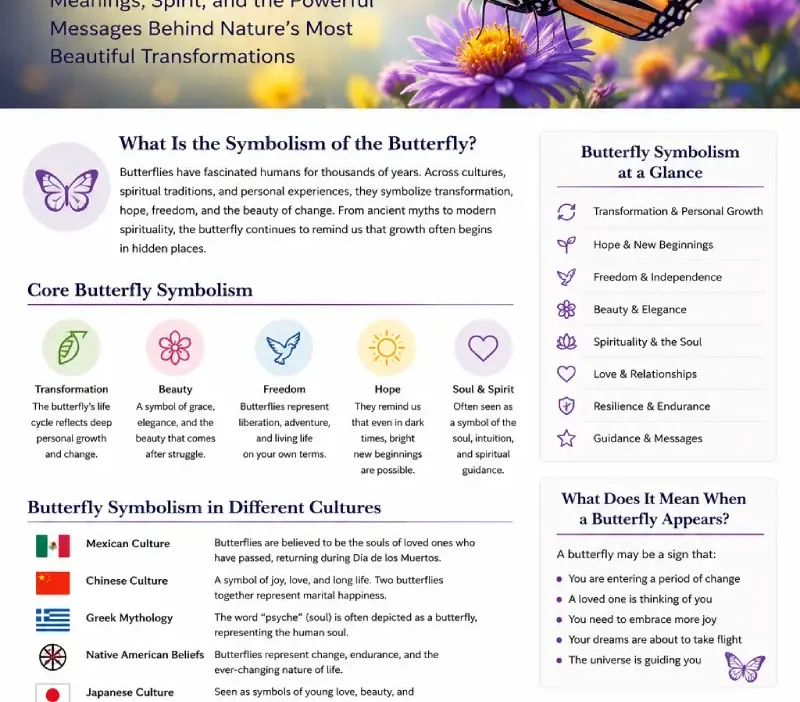
Butterfly symbolism most commonly represents transformation, renewal, freedom, hope, personal growth, beauty, resilience, and the temporary nature of life. Few animals offer such a clear visual metaphor for change: a caterpillar develops through a pupal stage and emerges as a winged adult with a completely different appearance and way of life.
Butterflies also have meanings that reach beyond transformation. Their flight suggests freedom, their seasonal appearances encourage ideas of renewal, their colors influence emotional interpretations, and their delicate appearance can remind people that beautiful experiences are often temporary. Historical traditions add still more complexity. In ancient Mesoamerican art, butterflies could be associated with warriors, fire, fertility, death, rebirth, abundance, and concepts related to the soul.
For modern Americans, butterflies are especially familiar through gardens, tattoos, memorial imagery, weddings, jewelry, conservation campaigns, and species such as the monarch. Around 750 butterfly species occur in the United States, giving the symbol a strong connection with everyday nature as well as art and spirituality.
Quick Answer
Butterfly symbolism most often represents transformation, hope, renewal, freedom, growth, and the ability to enter a new stage of life. Different cultures and modern traditions add meanings involving the soul, remembrance, beauty, mortality, endurance, and spiritual change, so the exact meaning depends on context rather than one universal definition.
TL;DR
- Butterflies symbolize transformation, renewal, hope, and freedom.
- Metamorphosis makes them powerful symbols of personal growth.
- Flight adds independence, release, and new possibilities.
- Different colors change the emotional meaning of the symbol.
- Monarchs add migration, endurance, remembrance, and homecoming.
- Tattoos often represent recovery, identity, freedom, or memorials.
What Butterfly Symbolism Really Means
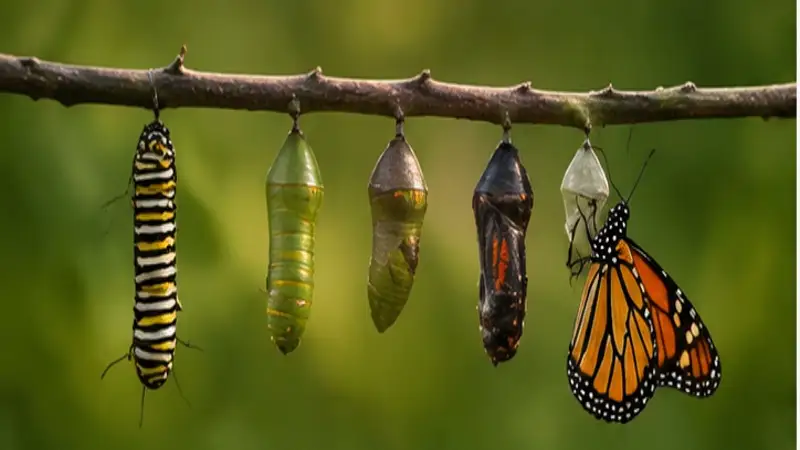
At its simplest, butterfly symbolism is about moving from one state of life into another.
That meaning comes directly from butterfly biology.
Butterflies belong to the order Lepidoptera, along with moths. Their wings are covered with tiny scales, and they undergo complete metamorphosis as they develop from egg to caterpillar, pupa, and adult. Smithsonian sources estimate roughly 17,500 butterfly species worldwide and around 750 species in the United States.
Humans naturally see metaphor in that process.
The caterpillar does not simply grow larger. The adult butterfly develops a different body form, wings, feeding structures, reproductive role, and behavior.
That is why butterfly imagery works especially well for major life changes rather than ordinary improvement.
Someone might choose a butterfly to mark recovery after hardship, leaving an unhealthy relationship, becoming a parent, moving somewhere new, rebuilding confidence, changing careers, or simply recognizing that an earlier version of life no longer fits.
Butterfly Symbolism: 9 Powerful Core Meanings
| Meaning | Why the Butterfly Fits | Modern Interpretation |
|---|---|---|
| Transformation | Complete metamorphosis | Major personal change |
| Renewal | Adult emerges into a new stage | Starting again |
| Freedom | Winged flight | Independence and release |
| Hope | Change occurs before the outcome is visible | Possibility after difficulty |
| Growth | Several distinct life stages | Personal development |
| Resilience | Survival through vulnerable stages | Continuing through hardship |
| Beauty | Extraordinary colors and patterns | Self-expression and individuality |
| Impermanence | Adult life is only one life stage | Appreciating temporary moments |
| Remembrance | Widely used in memorial imagery | Continuing emotional connection |
These meanings are broad modern interpretations. Historical traditions may use butterfly imagery differently.
Butterfly Symbolism of Transformation
Transformation is the meaning most strongly associated with butterflies.
The reason is straightforward: butterfly metamorphosis produces a visible difference between the larval and adult stages that few familiar animals can match.
A caterpillar crawls and spends much of its time eating.
An adult butterfly has wings and lives differently.
Symbolically, that creates the idea that a person can remain connected to their past while still becoming substantially different.
Butterfly symbolism can therefore represent:
- emotional recovery
- growing into adulthood
- rebuilding life after loss
- becoming more confident
- leaving restrictive expectations
- changing beliefs or priorities
- beginning a different career
- creating a healthier identity
The symbolism becomes weaker when transformation is presented as effortless.
Real human change can involve uncertainty, grief, mistakes, and periods when progress is difficult to see.
The butterfly is valuable not because it promises easy change, but because it makes change of form and direction visible.
Renewal, Rebirth, and New Beginnings
Renewal is closely related to transformation, but the emphasis is different.
Transformation means becoming different.
Renewal means beginning again.
That makes butterfly imagery especially suitable for graduations, marriages, recovery milestones, birthdays, relocation, retirement, and other points when one stage ends and another begins.
The pupa can appear quiet from the outside while major biological development is happening within it. That contrast makes butterflies useful symbols for periods when a person is privately recovering or preparing for what comes next.
Someone may not look dramatically different while studying, healing, grieving, learning, or reconsidering priorities.
Yet those periods can still reshape the future.
Butterfly symbolism therefore supports a simple idea: a new beginning may start before anyone else can see it.
Freedom, Independence, and Letting Go
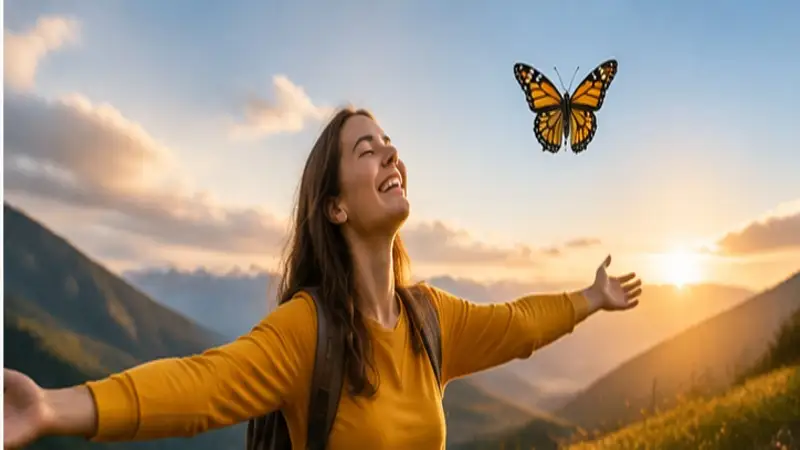
Flight gives butterfly symbolism another major meaning: freedom.
The caterpillar stage remains closely tied to plants and surfaces. The adult develops functional wings and can move through the landscape in an entirely different way.
Humans naturally interpret that change as release.
A butterfly can symbolize freedom from:
fear,
old expectations,
self-doubt,
an unhealthy relationship,
a restrictive role,
or an earlier identity.
Butterflies flying upward are especially common in tattoos and memorial art because upward movement visually suggests release.
Broken chains combined with butterflies make the meaning even more explicit.
However, freedom does not necessarily mean abandoning every responsibility or relationship.
The healthier symbolic interpretation is the ability to choose a direction instead of feeling permanently trapped.
Hope and Resilience During Difficult Times
Butterfly symbolism can also represent hope.
This meaning comes partly from metamorphosis and partly from the fact that important development occurs before the adult butterfly becomes visible.
That makes the butterfly useful during uncertain periods.
Someone facing grief, illness, unemployment, loneliness, or another difficult transition may identify with the possibility that the present stage is not the final form of life.
This does not mean suffering automatically produces something beautiful.
Nor does butterfly imagery guarantee that every difficult experience will have a positive ending.
Its more grounded message is that current circumstances do not necessarily reveal every future possibility.
That distinction makes the butterfly a useful symbol of resilience without turning it into unrealistic optimism.
Beauty, Individuality, and Self-Expression
Butterflies display enormous variety in wing patterns and colors.
The United States alone has hundreds of species belonging to groups such as swallowtails, skippers, blues, hairstreaks, whites, sulphurs, metalmarks, and brush-footed butterflies.
Their colors are not merely decorative.
Butterfly wing coloration can come from pigment or from microscopic structures that interact with light. Patterns may help with camouflage, warning, mimicry, or communication.
Humans turn this natural diversity into a symbol of individuality.
A butterfly can represent becoming comfortable with qualities that make someone distinct.
That may involve appearance, creativity, personality, beliefs, sexuality, career choices, or another part of identity.
A multicolored butterfly often intensifies this meaning because it resists being reduced to one visual trait.
The broader symbolic idea is that transformation does not have to make everyone look the same.
Butterfly Symbolism and the Meaning of Impermanence
Butterflies can also represent the temporary nature of life.
The adult stage is only one part of the insect’s complete life cycle.
This makes butterfly imagery compatible with themes of mortality, youth, changing seasons, memory, and the importance of appreciating experiences while they are present.
This meaning is common in poetry and memorial art.
It can sound sad, but it does not have to be.
A sunset matters even though it ends.
Childhood matters even though children grow.
Relationships may change and still have been meaningful.
A particular phase of life can be valuable precisely because it cannot be repeated forever.
The butterfly can therefore communicate a quieter lesson:
temporary does not mean unimportant.
Butterfly Symbolism in Ancient Mesoamerica
Historical butterfly symbolism becomes much more complex in ancient Mesoamerican art.
The Metropolitan Museum of Art notes that butterfly imagery had a long history in Mesoamerica and could carry several associations depending on period and setting. At Teotihuacan and Cholula, butterflies were connected with themes including warriors, fire, fertility, death, and rebirth. Later Mixtec and Mexica imagery also associated butterflies with gods, pleasure, abundance, funerary contexts, regeneration, and concepts resembling the soul.
This is important because modern articles often reduce ancient butterfly meaning to a single word such as “transformation.”
The historical evidence is richer than that.
For example, butterfly imagery associated with flower deities could communicate pleasure or abundance, while the figure Itzpapalotl, whose name is commonly translated as “Obsidian Butterfly”, belongs to a darker symbolic context.
Butterfly imagery could also relate to the afterlife. A Teotihuacan object discussed by the Met connects butterfly imagery with ideas about a flower-filled afterlife for people who died valiantly, including warriors and women who died in childbirth.
These traditions should be understood within their specific cultural contexts rather than generalized into one universal “ancient butterfly meaning.”
Monarch Butterfly Symbolism
The monarch adds several meanings to broader butterfly symbolism.
Monarchs are famous for long-distance migration. The eastern population travels between breeding areas across the United States and Canada and overwintering grounds in central Mexico. Multiple shorter-lived generations move northward, while a longer-lived generation makes the major southward migration.
That extraordinary life cycle naturally supports symbolism involving:
Endurance. The migration covers a remarkable distance.
Journey. Movement becomes central to survival.
Return. Later generations return to areas used by earlier ones.
Continuity. No single butterfly completes the entire multigenerational cycle.
Homecoming. Migration connects distant landscapes.
This makes monarch symbolism especially relevant to family history, immigration, relocation, travel, and identities connected with more than one place.
Butterfly Symbolism and Día de los Muertos
Monarchs also have an important cultural connection with Día de los Muertos in central Mexico.
The arrival of migrating monarchs at their overwintering grounds overlaps with Day of the Dead celebrations. National Park Service material describes folklore connecting the migrating butterflies with the souls of ancestors returning during this period.
That connection gives monarch imagery meanings involving:
ancestry,
memory,
family continuity,
return,
and relationships between the living and the dead.
It is important not to turn this into a universal claim that every Mexican person interprets monarch butterflies identically.
Cultural traditions vary by region, family, and community.
Still, the documented connection between monarch migration and Día de los Muertos gives butterfly remembrance symbolism a deeper cultural basis in this particular context.
Butterfly Colors and Their Meanings
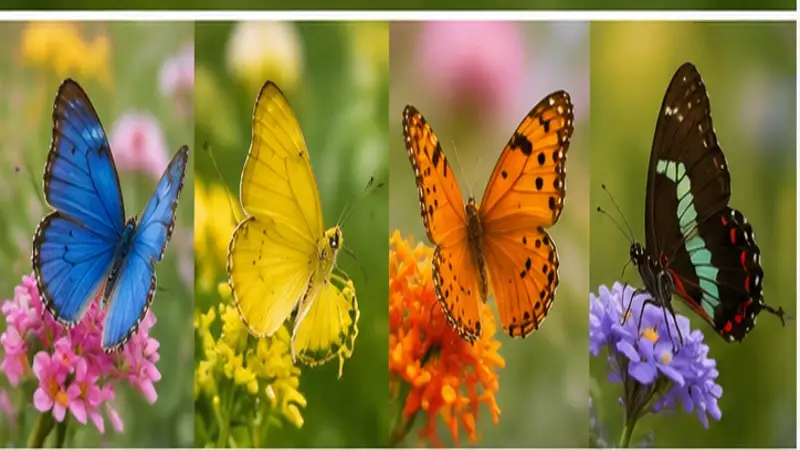
Color changes the emotional tone of butterfly symbolism.
White Butterfly Symbolism
White butterflies commonly represent peace, innocence, remembrance, simplicity, and fresh beginnings.
They are often used in weddings and memorial imagery because white carries strong associations with purity and calm in modern American culture.
Black Butterfly Symbolism
Black butterflies commonly symbolize mystery, endings, profound transformation, resilience, and hidden strength.
Black does not automatically mean death or bad luck. It can also represent seriousness, privacy, elegance, and power.
Blue Butterfly Symbolism
Blue butterflies often represent hope, calm, freedom, reflection, and perspective.
Iridescent blue species make this meaning especially interesting because structural color can change in appearance depending on light and viewing conditions.
Yellow Butterfly Symbolism
Yellow commonly adds meanings of joy, optimism, warmth, and opportunity.
Whites and sulphurs are well represented among U.S. butterflies, including many yellow species.
Orange Butterfly Symbolism
Orange butterflies often symbolize energy, confidence, creativity, endurance, and active change.
The monarch’s famous orange wings also add migration and persistence.
Purple Butterfly Symbolism
Purple butterfly imagery usually represents creativity, introspection, individuality, and spiritual reflection in modern symbolism.
Green Butterfly Symbolism
Green tends to add growth, renewal, balance, healing, and connection with nature.
These color meanings are human interpretations. Butterfly colors themselves developed through biological processes rather than to communicate spiritual messages to people.
Butterfly Symbolism in Modern American Culture
Butterflies have become remarkably versatile symbols in the United States.
They appear in:
- jewelry
- tattoos
- wedding decor
- memorial art
- fashion
- children’s rooms
- garden design
- wellness imagery
- conservation campaigns
- social media graphics
Part of their popularity comes from visual flexibility.
Butterflies can express transformation without appearing aggressive.
They can represent grief without feeling entirely dark.
They can suggest freedom without requiring imagery of conflict.
And because roughly 750 species occur in the United States, butterflies are not purely abstract symbols; they are familiar animals encountered in gardens, parks, forests, and meadows across the country.
Butterfly Symbolism in Tattoos
Butterfly tattoos can communicate many different personal stories.
Common meanings include:
Transformation: marking a major life change.
Freedom: leaving something restrictive behind.
Recovery: surviving emotional or physical hardship.
Individuality: becoming more comfortable with personal identity.
Hope: choosing to continue after a difficult period.
Remembrance: honoring someone who has died.
New beginnings: recognizing the start of another life chapter.
Design changes meaning.
A butterfly emerging from a chrysalis emphasizes transformation.
A butterfly with flowers adds growth and beauty.
Broken chains emphasize freedom.
A date or name usually turns the design toward memorial meaning.
A black butterfly can communicate a darker or more difficult transformation, while blue or yellow designs can create a more hopeful tone.
The wearer’s personal story matters more than any universal tattoo dictionary.
Spiritual Meaning of Butterfly Symbolism
In contemporary spiritual interpretation, butterflies often represent rebirth, spiritual growth, the soul, guidance, hope, and transformation.
Some of these themes have historical precedents in specific traditions. Mesoamerican art, for example, includes documented connections between butterflies, funerary contexts, regeneration, and ideas resembling the soul.
Modern spiritual claims often go further.
People may interpret a butterfly as a message that:
a deceased loved one is nearby,
a major life change is coming,
good luck is approaching,
or they are being spiritually guided.
These beliefs can be personally meaningful, but they are not scientifically testable predictions.
A more grounded spiritual use is to treat the butterfly as a reminder to reflect on what is changing, what needs to be released, or what new direction has become possible.
Do Butterflies Symbolize Deceased Loved Ones?
Butterflies are widely used as memorial symbols.
Their connection with transformation, their light movement, and their brief visible adult stage make them emotionally compatible with remembrance and mortality.
Some people view a butterfly appearing after a death as a sign from the person who died.
Others use butterfly imagery without making a supernatural claim. The symbol may simply mean that love, influence, or memory continues even though someone’s physical presence has ended.
Monarch traditions connected with Día de los Muertos provide one culturally specific example in which butterflies are associated with returning ancestors.
For personal grief, however, the meaning of a butterfly often comes from memory rather than a universal rule.
Butterfly Symbolism and Conservation
Modern environmental concerns have added another layer to butterfly symbolism.
Butterflies depend on plants, suitable habitat, climate conditions, and ecological relationships throughout their life cycles. Caterpillars often have specific host-plant relationships, while adults interact with flowers and other food sources.
This means butterflies can symbolize not only transformation but also interdependence.
A beautiful adult butterfly cannot exist without the less glamorous caterpillar, host plant, habitat, weather, and ecosystem that made its development possible.
That ecological reality adds meanings involving:
biodiversity,
habitat stewardship,
native plants,
and responsibility toward living systems.
It also offers a useful human metaphor: individual growth rarely happens completely alone.
Common Misunderstandings About Butterfly Symbolism
One common mistake is claiming that butterflies have one universal meaning.
They do not.
Different historical traditions have connected butterflies with themes ranging from warriors and fire to fertility, death, rebirth, abundance, pleasure, and the soul.
Another misconception is that every butterfly emerges from a silk cocoon.
Butterflies generally form a pupa or chrysalis; silk cocoons are more strongly associated with many moth species.
It is also misleading to claim butterfly colors exist because they represent human emotions. Butterfly wing colors and patterns have biological functions, and their scales can produce color through pigment or interactions with light.
Finally, a butterfly encounter does not objectively predict love, wealth, death, pregnancy, or another specific future event.
Symbolism is most useful when it helps people interpret experience rather than pretending to predict it.
How Butterfly Symbolism Has Evolved
Butterfly symbolism has grown through several layers.
The first was the animal itself.
Metamorphosis created an obvious image of dramatic change.
Historical cultures then interpreted butterflies according to their own religious, artistic, and social systems. Mesoamerican traditions alone demonstrate meanings involving warriors, fire, fertility, death, regeneration, abundance, and concepts associated with the soul.
Modern Western culture increasingly emphasized personal transformation, freedom, hope, and self-expression.
Tattoo culture made the symbol even more individual.
Monarch migration added strong meanings of endurance, journey, return, and remembrance in North American contexts.
Environmental awareness has now added biodiversity and habitat protection.
As a result, the modern butterfly can simultaneously symbolize personal transformation, cultural memory, ecological connection, and the temporary beauty of life.
Frequently Asked Questions
What does a butterfly symbolize spiritually?
A butterfly commonly symbolizes transformation, renewal, spiritual growth, freedom, and hope. Some specific historical traditions also connect butterflies with death, rebirth, or concepts related to the soul.
Is seeing a butterfly a good sign?
Many people interpret butterflies positively because they are associated with transformation, freedom, hope, and new beginnings. There is no scientific rule, however, that makes a butterfly encounter a guaranteed omen.
What does a butterfly tattoo mean?
A butterfly tattoo commonly represents transformation, freedom, recovery, individuality, remembrance, or a new beginning. Color and surrounding imagery can change the meaning significantly.
What does a butterfly mean after someone dies?
Butterflies often symbolize remembrance, transition, continuing love, and the persistence of memory after death. Some people interpret them as signs from loved ones, although that remains a personal or spiritual belief.
What does a monarch butterfly symbolize?
Monarchs commonly symbolize transformation, endurance, migration, journey, homecoming, and continuity. In central Mexican Día de los Muertos traditions, migrating monarchs can also be associated with returning ancestors.
What color butterfly symbolizes transformation?
Every butterfly color can symbolize transformation because metamorphosis belongs to the butterfly itself. Black often gives the meaning a more serious tone, while blue, white, yellow, and orange can make it feel more hopeful or energetic.
Does a butterfly symbolize freedom?
Yes. Butterfly flight naturally supports modern meanings of freedom, independence, release, and the ability to choose a new direction.
Conclusion
Butterfly symbolism most commonly represents transformation, renewal, hope, freedom, resilience, individuality, and the recognition that life moves through changing stages. Its power as a symbol begins with real biology: the butterfly’s adult form emerges after one of the most dramatic developmental changes found among familiar animals.
History adds more depth. Mesoamerican art connected butterflies with multiple ideas including warriors, fire, fertility, death, rebirth, abundance, and concepts resembling the soul, while modern monarch traditions add migration, endurance, remembrance, and homecoming.
The most useful meaning is therefore broader than “change.” Butterfly symbolism reminds us that a new stage does not erase the earlier one; each stage can become part of what makes the next possible.