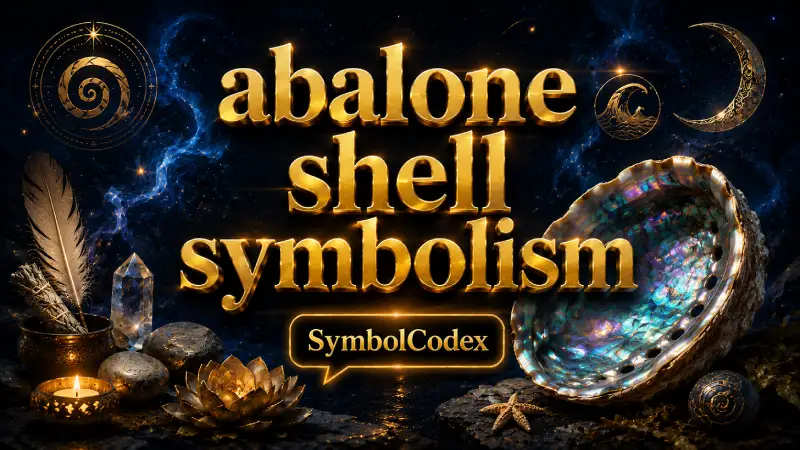
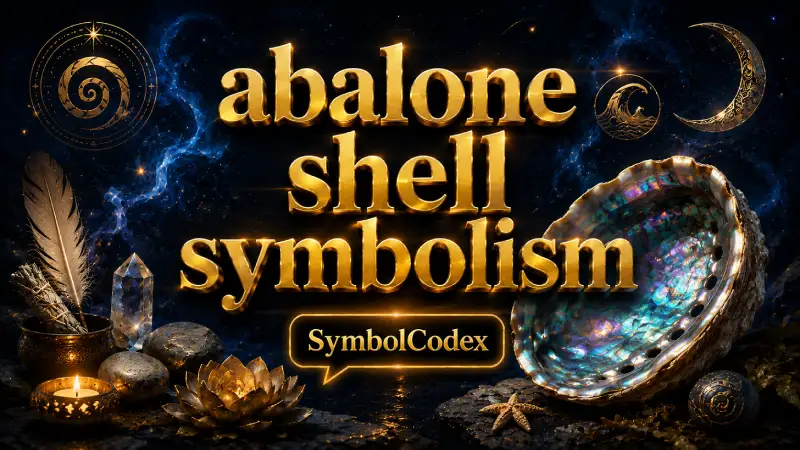
Abalone shell symbolism is usually associated with resilience, emotional balance, beauty, change, and connection to the ocean. Its shifting blue, green, pink, silver, and purple colors make the shell especially attractive in jewelry, art, spiritual objects, and coastal decor.
Those meanings did not appear from a single ancient tradition. Abalone has been food, material, ornament, trade goods, ceremonial decoration, and a valued marine resource in different communities. Indigenous peoples of California, for example, have long worked with abalone shell in culturally specific ways, while the shell later became part of commercial fishing, decorative arts, and modern coastal culture.
Understanding the shell therefore requires separating documented cultural history from newer spiritual interpretations that are often promoted online.
Quick Answer
Abalone shell symbolism commonly represents resilience, emotional balance, transformation, individuality, and connection with the sea in modern American culture. Historically, abalone also carried practical, social, economic, and ceremonial importance for several Indigenous communities of western North America, although its meaning differs among individual peoples and traditions.
TL;DR
- Abalone commonly represents resilience, change, beauty, and ocean connection.
- Its iridescent colors encourage associations with emotional complexity and individuality.
- California Indigenous communities have longstanding, culturally specific relationships with abalone.
- Shells historically served as ornaments, trade goods, tools, and ceremonial materials.
- Modern spiritual meanings should not be presented as universal Indigenous beliefs.
- Conservation now shapes how Americans think about wild abalone.
What an Abalone Shell Looks Like
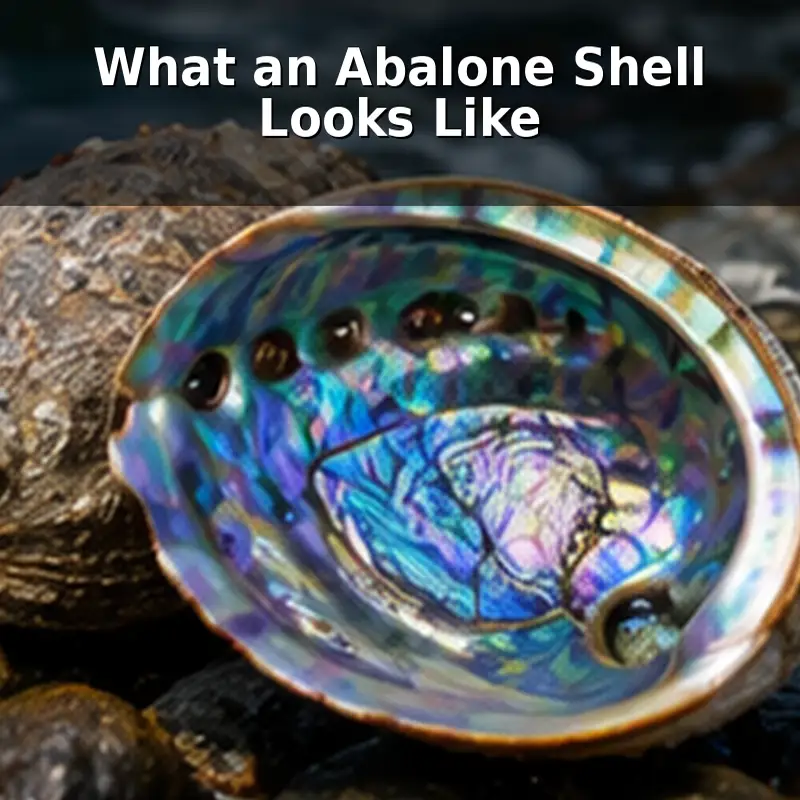
Abalone are marine gastropods, sea snails belonging to the genus Haliotis. Their flattened shells generally have an open, ear-like shape and a row of characteristic holes along one edge. Those openings are part of the living animal’s respiratory system rather than decorative markings.
The outside can look surprisingly rough. Depending on the species and environment, it may appear brownish, greenish, reddish, encrusted, or weathered.
Inside is the feature people usually recognize: nacre, commonly called mother-of-pearl. It reflects light in changing shades that may include turquoise, blue, silver, green, violet, and pink. The effect comes from the shell’s microscopic layered structure rather than from painted pigmentation.
That contrast, plain exterior and luminous interior, helps explain many contemporary symbolic interpretations.
What Abalone Commonly Means in the United States
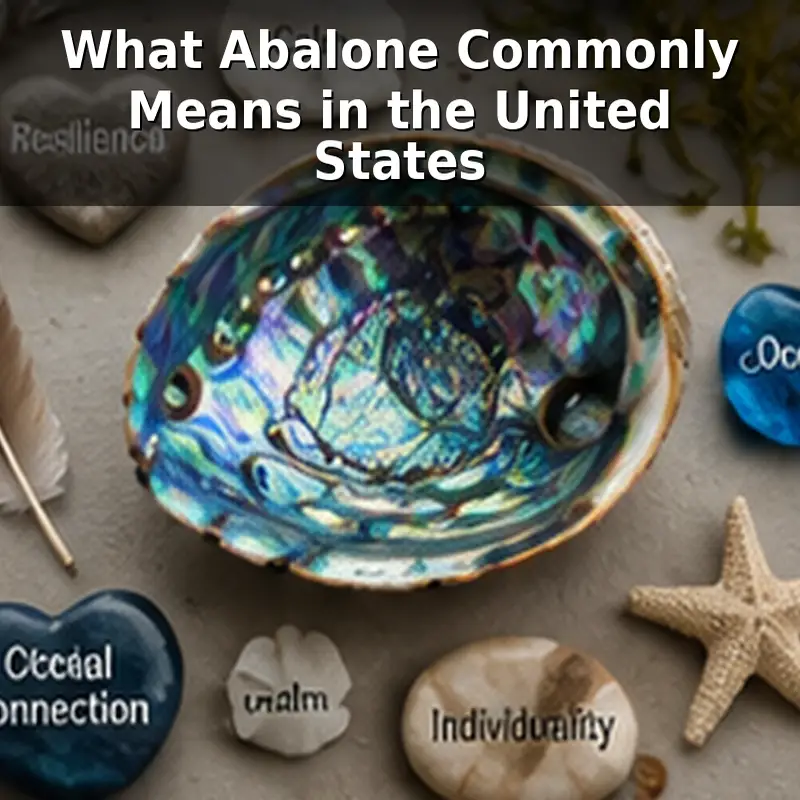
There is no single official American meaning for abalone. In present-day jewelry, decor, personal symbolism, and spiritual culture, however, several interpretations appear repeatedly.
| Context | Common U.S. Meaning | Why the Association Fits |
|---|---|---|
| Jewelry | Individuality and beauty | Every iridescent surface looks slightly different |
| Personal symbolism | Resilience | The shell protects a living animal in a rough marine habitat |
| Coastal decor | Ocean connection | Abalone immediately evokes shorelines and marine life |
| Memorial objects | Memory and continuity | Shells can become lasting keepsakes |
| Spiritual use | Calm, cleansing, emotional balance | Modern practices associate shells and water with reflection |
| Conservation | Respect for marine ecosystems | Several U.S. abalone populations have suffered major declines |
The first four meanings mainly come from visual appearance, physical characteristics, and modern cultural interpretation. Claims that the shell possesses literal healing forces or guaranteed spiritual effects belong to belief traditions rather than scientifically established properties.
Why Abalone Became a Symbol of Resilience
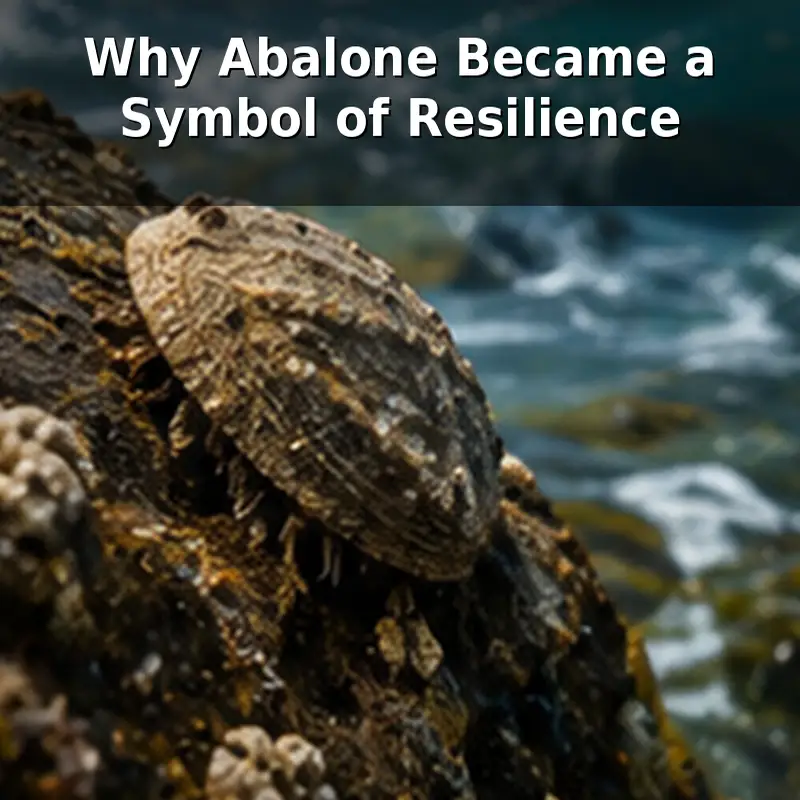
Resilience is one of the easiest modern meanings to understand without relying on mythology.
An abalone lives attached firmly to rocky surfaces and uses a broad muscular foot to hold its position. Its shell is also a sophisticated biological composite built largely from calcium carbonate and organic material. Researchers have studied nacre because its layered structure can resist cracking more effectively than a simple brittle mineral would.
Modern symbolism turns those biological traits into metaphor.
A person wearing abalone may interpret it as:
- staying grounded during uncertainty
- remaining flexible without losing strength
- protecting a sensitive inner life
- surviving difficult conditions
- becoming stronger through accumulated experience
These are contemporary interpretations rather than fixed ancient definitions. Even so, the metaphor works naturally because the physical shell provides a clear foundation for it.
Iridescence and the Meaning of Change
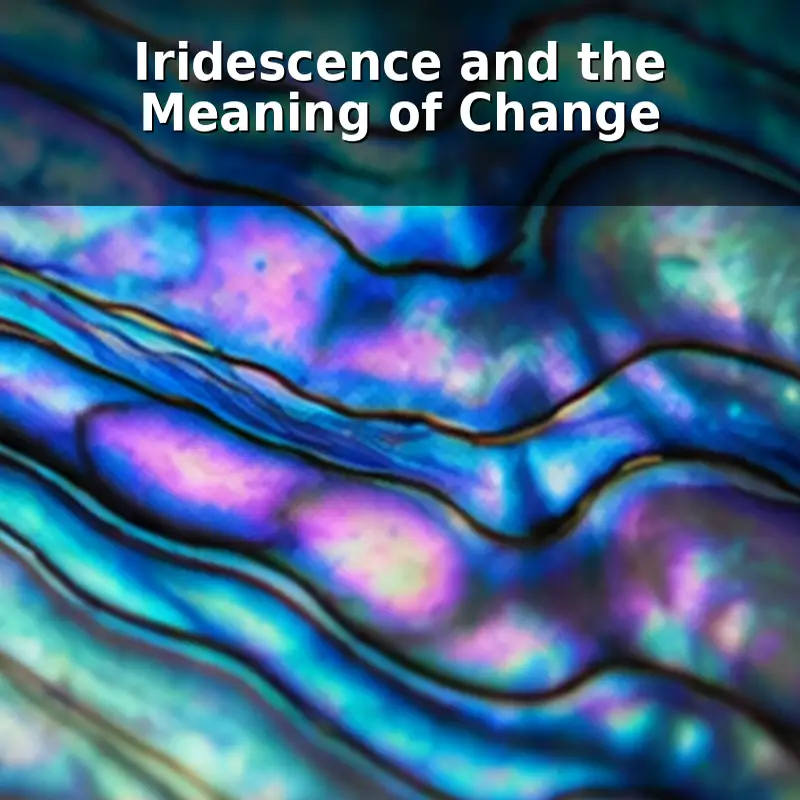
Abalone never seems to show exactly one color.
Move the shell beneath a light source and turquoise may shift toward violet. Silver can become green. Pink may appear along one edge and disappear from another angle.
That optical change has encouraged a modern association with transformation and changing perspective.
Unlike a symbol of abrupt reinvention, abalone often suggests that identity can contain several qualities at the same time. Someone can be confident and uncertain, practical and imaginative, grieving and hopeful.
This helps explain the shell’s appeal in contemporary jewelry. Its color does not remain visually fixed, making it an appropriate personal symbol for people who see growth as a gradual process rather than a single dramatic turning point.
Beauty Beneath a Rough Exterior
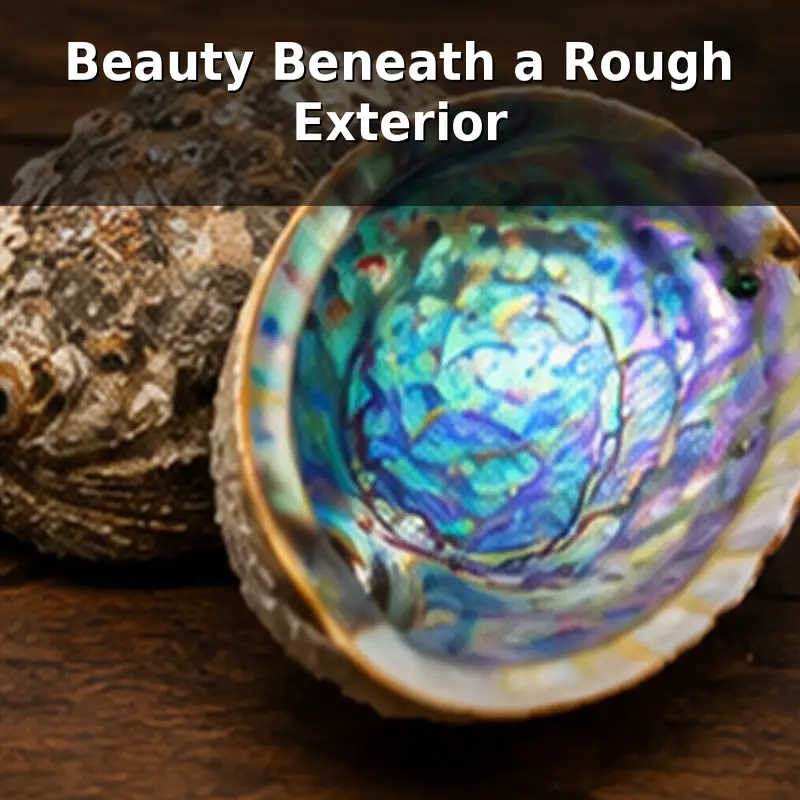
Few natural objects demonstrate contrast as clearly as an abalone shell.
The exterior of a shell recovered from the coast may be dull, textured, eroded, or covered with marine growth. The polished inner surface can look almost jewel-like.
That difference has created a popular metaphor: outer appearance does not reveal inner value.
In personal symbolism, the shell can therefore represent private beauty, hidden creativity, or emotional depth that is not immediately visible to other people.
This interpretation should not be confused with an ancient cultural teaching unless a specific tradition documents it. It is primarily a modern visual metaphor built from the shell itself.
Still, it has obvious emotional appeal. The shell asks very little imagination from the viewer: something weathered on one side can remain brilliant on the other.
Indigenous California and the Historical Importance of Abalone

Any account of abalone in the United States is incomplete without Indigenous California.
Native communities along and beyond the California coast developed relationships with marine shells long before European colonization. Abalone could function as food, ornament, trade material, clothing decoration, basket decoration, and other culturally meaningful material. Archaeological and museum records document abalone objects across numerous California communities.
Among the Island Chumash, abalone shells were used as adornment and exchanged with mainland communities. National Park Service accounts place this within a much larger maritime economy in which shell products moved between islands and the mainland.
Farther north, Smithsonian collections include Hupa jewelry made with abalone shell, while California records document shell materials moving through extensive Indigenous trade systems.
The important point is that there was never one universal “Native American abalone meaning.” California contains many distinct Native peoples, languages, histories, and ceremonial traditions. A specific use should be attributed to the specific community whenever possible.
Abalone in Ceremony, Clothing, and Adornment

Abalone’s reflective surface made it especially effective as decoration.
Historical and contemporary collections include necklaces, pendants, garments, baskets, and other objects incorporating abalone. A Smithsonian record, for example, identifies a Hupa necklace made from abalone and glass beads. Another records a Northern California gorget carved from abalone shell.
The shell also remains present in living cultural traditions.
The California Native American Heritage Commission documents abalone in connection with a Tsnungwe Flower Dance, a coming-of-age ceremony marking a young woman’s transition into womanhood. Meanwhile, the National Museum of the American Indian has documented contemporary Ohlone basketry incorporating dangling pieces of abalone shell.
These examples demonstrate cultural continuity, but they should not be generalized into claims such as “Native Americans believed abalone always meant protection.”
Objects gain meaning through community, ceremony, relationships, and context, not simply through the material from which they are made.
Trade, Value, and the Idea of Prosperity

Abalone is sometimes described online as a universal ancient symbol of wealth or prosperity. The historical picture is more precise.
Marine shells unquestionably had economic value in parts of Indigenous California. Shell beads and other shell materials circulated through sophisticated regional exchange systems, sometimes traveling considerable distances inland. California educational materials note that shell beads were made and used for thousands of years and that some forms functioned as money.
Abalone itself also moved through trade networks. National Park Service material describes Channel Islands abalone shell as an item exchanged with mainland populations.
That documented economic importance helps explain modern associations with abundance and value.
But “prosperity” should be understood as a later symbolic interpretation, not as proof that every community historically assigned the shell the same spiritual definition.
Abalone and the Pacific Coast Identity
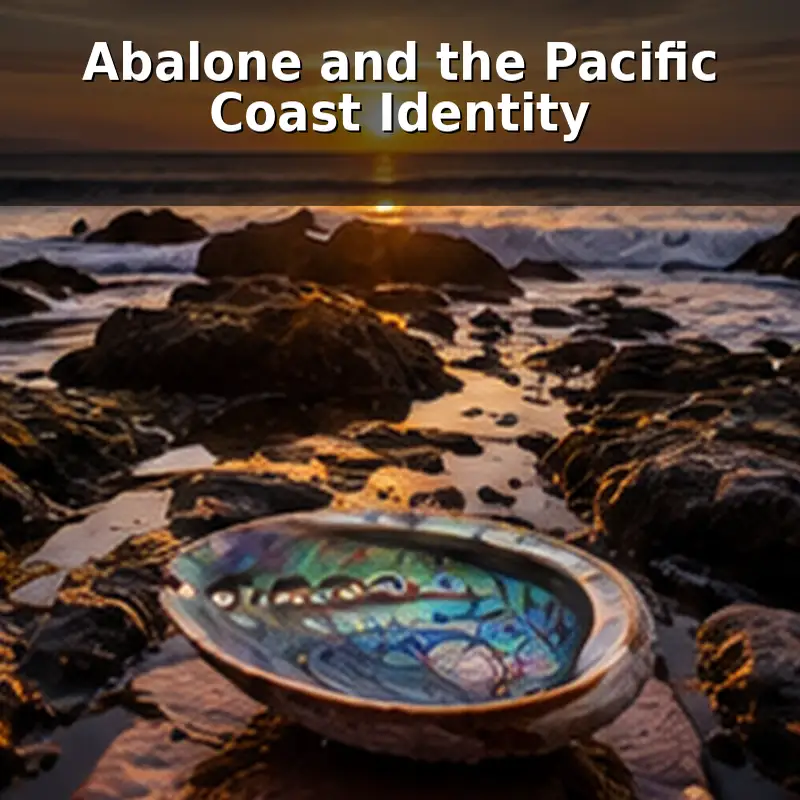
In American culture, abalone has particularly strong associations with California.
Its history intersects with Indigenous life, immigration, fishing, restaurants, diving, coastal art, and marine conservation.
After Spanish colonization disrupted Indigenous lifeways in coastal California, commercial exploitation expanded during the nineteenth and twentieth centuries. Chinese and later Japanese fishermen became important participants in California’s abalone industry, especially around the Channel Islands.
Later generations of Californians developed their own recreational abalone-diving traditions, particularly in Northern California.
As a result, the shell can mean something different to a Californian coastal family than to someone who simply encounters polished abalone in a jewelry store. It can evoke food traditions, diving trips, shoreline communities, family memories, and an increasingly fragile marine environment.
Pāua and New Zealand Māori Culture
New Zealand abalone is commonly known as pāua, and it offers an important cross-cultural comparison.
Pāua has longstanding importance to Māori as food and remains connected with hospitality and the care of visitors. New Zealand’s government describes pāua as highly valued by Māori and notes its role in manaakitanga ki ngā manuhiri, hospitality and care toward guests.
Its intensely colored shell is also familiar in New Zealand decorative arts and jewelry.
American commercial descriptions sometimes claim that pāua universally means peace, fertility, love, or good fortune. Such lists often collapse the meaning of Māori artistic motifs into the meaning of the shell material itself.
The distinction matters.
A Māori motif carved or represented with pāua may carry specific cultural meaning because of its form and context. That does not automatically make every loose piece of pāua shell a universal symbol of the same concept.
Emotional Meaning: Calm, Reflection, and Self-Expression
Modern Americans often connect shells with the emotional atmosphere of the coast: rhythmic water, open space, vacation memories, and distance from ordinary routines.
Abalone intensifies that association because its colors resemble changing water, sunlight, and coastal skies.
As a result, people frequently use it to symbolize:
Calm. Its cool colors can visually suggest quiet and relaxation.
Reflection. The reflective interior creates an obvious metaphor for looking inward.
Emotional flexibility. Changing colors suggest that feelings can shift without destroying identity.
Self-expression. No two polished fragments display exactly the same pattern.
Memory. Jewelry or shells collected from meaningful places may become personal keepsakes.
These associations belong primarily to psychology, aesthetics, and individual interpretation rather than to a single established religious doctrine.
Spiritual Uses and the Meaning of an Abalone Smudging Bowl
One of the most visible spiritual uses of abalone in the United States involves shells used as vessels during ceremonies in which plant materials are burned.
Abalone shells do appear within the practices of some Indigenous people. Indigenous reporting has documented ceremonies in which sage is held in an abalone shell, for example.
The subject becomes complicated when commercial wellness culture presents a standardized “abalone smudging kit” as though it represents all Native American spirituality.
It does not.
Indigenous ceremonial traditions differ substantially between nations, communities, families, and regions. Practices involving smoke, plants, prayer, and shells have their own protocols. Commercial versions frequently remove those practices from their cultural setting or combine traditions that were historically separate. Indigenous writers have criticized this broader commercialization of sacred practices.
For non-Indigenous users, it is more accurate to say that an abalone shell can function as a heat-resistant ceremonial or incense vessel without claiming that a particular ritual is an authentic universal Native tradition.
Abalone Shell in Tattoos
Abalone tattoos are less standardized than symbols such as roses, anchors, snakes, or butterflies. That gives them considerable room for personal interpretation.
Someone may choose an abalone design to represent:
- resilience after hardship
- love of the Pacific Coast
- emotional growth
- an adaptable personality
- beauty that changes with perspective
- a connection to diving or marine life
- memories of a coastal home
- respect for the ocean
Color makes a major difference.
An artist can emphasize blue and turquoise for a stronger ocean association, purple and pink for a more expressive design, or realistic rainbow nacre to emphasize transformation and individuality.
People drawing inspiration from Indigenous imagery should distinguish between a general shell tattoo and culturally specific designs, ceremonial patterns, or regalia belonging to particular Indigenous communities.
Jewelry, Fashion, and Home Decor
Abalone has long been attractive as a decorative material because nacre can be cut and polished into luminous pieces. Today it appears in earrings, pendants, rings, bracelets, buttons, boxes, furniture inlay, instrument decoration, mosaics, and coastal interiors.
The meaning changes according to how it is used.
A simple necklace may communicate a love of the sea. A vintage piece may carry family history. A modern statement ring may emphasize individuality because each section of nacre has its own pattern.
In interiors, abalone usually contributes to a coastal or organic aesthetic rather than communicating a fixed spiritual message.
Its strongest modern symbolic characteristic remains variability: the same object looks different as the viewer moves.
Protection, Healing, and Other Spiritual Claims
Online descriptions frequently assign abalone a long list of properties: protection from negativity, emotional healing, psychic awareness, fertility, prosperity, intuition, compassion, and even physical healing.
These claims require careful wording.
There is no scientific evidence that wearing abalone shell can directly heal illness, change a person’s energy field, guarantee protection, or produce specific psychological outcomes.
As symbolic language, however, protection is understandable. A shell literally protects a vulnerable living organism. Emotional healing is also an understandable metaphor when a person associates the ocean with restoration or uses a shell as a reminder of recovery.
The distinction is between symbolic meaning and measurable effect.
A person can genuinely use abalone as a private reminder to remain calm without needing to claim that the shell itself chemically or spiritually causes calmness.
Common Misunderstandings About Abalone Symbolism
The biggest misconception is that abalone has one ancient spiritual definition shared around the world.
It does not.
Another mistake is treating “Native American symbolism” as one belief system. Museum, archaeological, historical, and contemporary records show abalone being used by particular Indigenous communities in particular ways. Those uses cannot automatically be transferred to hundreds of unrelated Native nations.
A third misconception is that every modern crystal-shop meaning must have ancient origins.
Words such as “chakra alignment,” “energy cleansing,” and standardized lists of metaphysical properties often reflect contemporary spiritual marketplaces. They should be identified as modern interpretations unless there is reliable evidence connecting them to a specific older tradition.
Respecting uncertainty does not make a symbol less interesting. It makes its real history clearer.
Conservation Has Changed the Shell’s Modern Meaning
Abalone can no longer be discussed only as a beautiful object or historical resource.
Several American abalone populations experienced severe declines from combinations of fishing pressure, disease, ecological disruption, and changing ocean conditions. White abalone became the first marine invertebrate listed under the U.S. Endangered Species Act, while black abalone has also received federal protection.
California’s recreational red abalone fishery, closed since 2018, is now scheduled to remain closed through April 1, 2036 under regulations adopted in December 2025. California officials cited the need to protect and restore the population.
That conservation story adds a distinctly twenty-first-century meaning to the shell: environmental responsibility.
For coastal communities that remember abundant abalone, the shell may now represent both heritage and loss. For younger Americans, it can serve as a reminder that beautiful natural materials come from living ecosystems rather than existing merely as decorative commodities.
How the Meaning of Abalone Has Evolved
Abalone’s meaning has never remained static.
For coastal Indigenous communities, abalone existed within systems of food gathering, trade, artistry, ceremony, community relationships, and marine knowledge. Its importance came from lived cultural practice rather than from a generic symbolism list.
Colonization and commercial fisheries transformed that relationship. Abalone increasingly became a commodity: meat could be sold, shells could become decorative material, and commercial harvesting grew into a significant coastal industry.
In the twentieth and twenty-first centuries, jewelry, tourism, recreational diving, wellness culture, and online spiritual communities layered additional meanings onto the material.
Now conservation adds another chapter.
That evolution explains why a single shell can represent Indigenous cultural continuity, family memories, artistic beauty, spirituality, commercial history, marine loss, or personal transformation depending on who is looking at it.
Frequently Asked Questions
Is abalone shell a symbol of good luck?
It can symbolize good fortune in modern jewelry or personal spiritual practice, but good luck is not a universal historical meaning of abalone. Its documented cultural meanings vary by community, so claims that every ancient culture treated it as a luck charm should be viewed cautiously.
What does abalone shell mean spiritually?
In contemporary spiritual settings, people often associate abalone with emotional balance, protection, calmness, transformation, and connection with water. These meanings are best understood as symbolic beliefs rather than scientifically proven effects or universal Indigenous teachings.
What does abalone shell jewelry symbolize?
Abalone jewelry commonly represents individuality, resilience, ocean connection, and changing perspective. Because every piece reflects a different mixture of colors, it also works naturally as a symbol of uniqueness.
What does an abalone shell tattoo mean?
An abalone tattoo can represent survival, personal transformation, emotional complexity, coastal identity, or love of marine life. Unlike highly standardized tattoo symbols, its meaning usually depends heavily on the wearer’s personal story.
Is abalone shell sacred to Native Americans?
Abalone has ceremonial and cultural importance within some Indigenous communities, especially in western North America, but there is no single Native American belief about the shell. Specific traditions should be attributed to individual nations and communities rather than generalized across all Indigenous peoples.
Why is abalone associated with protection?
The association partly comes from the shell’s natural function: it protects the living mollusk beneath it. Modern symbolism turns that physical protection into a metaphor for emotional boundaries, resilience, and safeguarding one’s inner self.
Is abalone the same as mother-of-pearl?
Abalone shells contain an iridescent inner layer of nacre, commonly called mother-of-pearl, but “mother-of-pearl” is a broader material term. Nacre occurs in several kinds of mollusk shells, while abalone refers specifically to marine gastropods of the genus Haliotis.
Conclusion
The most useful way to understand abalone shell symbolism is not as a list of supernatural properties, but as a collection of meanings that developed from the shell’s physical beauty, marine life, cultural history, and modern use. Resilience, transformation, individuality, emotional balance, and ocean connection all make sense as contemporary interpretations because they grow naturally from what the shell looks like and how people experience it.
Its deeper history deserves equal attention. For Indigenous communities of California, abalone belongs to specific living histories involving food, exchange, artistry, adornment, ceremony, and relationships with the coast, not to a single generic “Native American meaning.”
Today, conservation adds another layer. The luminous interior that makes abalone desirable also comes from an animal whose populations have faced serious ecological pressure. That reality gives the shell a grounded modern message: beauty carries more meaning when the living world that produces it is treated with respect.