Introduction
Zinnia symbolism centers on lasting affection, friendship, remembrance, and the ability to find joy in everyday life. With their bright, daisy-like blooms and long flowering season, zinnias are popular in American gardens, bouquets, and floral arrangements. Their cheerful appearance makes them a natural choice for expressing appreciation, celebrating relationships, and remembering people who remain important even when they are far away.
Unlike roses, which are strongly associated with romantic love, zinnias often communicate a broader kind of affection. They can represent a dependable friendship, a family bond, or a connection that continues despite distance and time. Their meanings also vary by flower color, personal experience, and cultural context.
The zinnia has an especially interesting place in American floral tradition because its symbolism combines the nineteenth-century language of flowers with its modern reputation as an easy-to-grow summer garden favorite. Understanding both sides reveals why this colorful bloom can represent much more than happiness.
Quick Answer
Zinnia symbolism commonly represents lasting friendship, affection, remembrance, and joy in modern American culture, especially in gardens, bouquets, and gifts. In Victorian flower traditions, zinnias were associated with thoughts of absent friends and lasting affection, while different colors could communicate additional sentiments.
TL;DR
- Core meaning: Lasting affection, friendship, remembrance, and happiness.
- Historical roots: Zinnias originated in Mexico and spread through international horticulture.
- Victorian symbolism: The flower represented thoughts of absent friends.
- Color meanings: White, yellow, red, and magenta zinnias carry different traditional associations.
- Modern American use: Popular in gardens, summer bouquets, celebrations, and memorial arrangements.
- Personal significance: A zinnia can honor a friendship or preserve a meaningful memory.
What Does a Zinnia Flower Look Like?
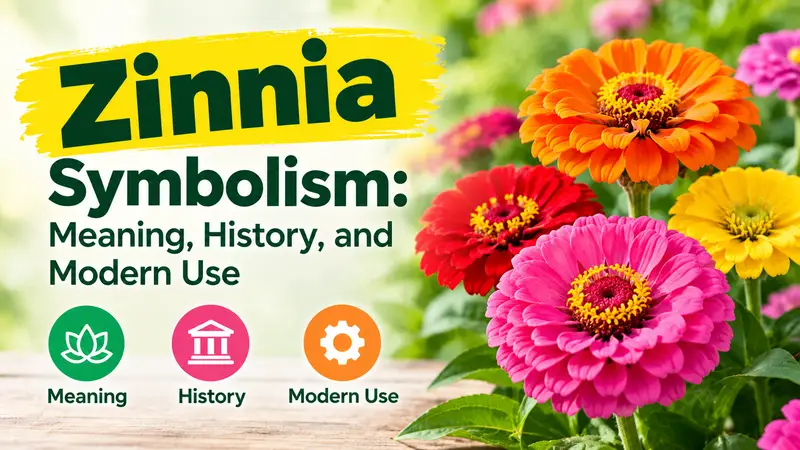
Zinnias are flowering plants in the daisy family, Asteraceae, which also includes sunflowers and chrysanthemums. Their blooms range from simple, single-layered flowers to dense, many-petaled varieties that resemble dahlias. Depending on the variety, zinnias can grow as compact border plants or reach several feet tall.
Their colors include red, pink, orange, yellow, purple, white, and greenish shades, along with multicolored combinations. Most varieties thrive in sunny conditions and bloom through much of the warm season. Their sturdy stems and long-lasting cut flowers make them especially useful in home gardens and floral arrangements.
These physical qualities contribute to their modern associations. A plant that continues producing colorful blooms throughout summer naturally suggests persistence, vitality, and an ongoing source of pleasure.
Zinnias also attract butterflies and other pollinators, making them familiar features of wildlife-friendly gardens. Their presence in an outdoor space can therefore connect the flower with summer, nature, and the simple satisfaction of watching a garden flourish.
The Core Meaning of Zinnia Symbolism
Zinnias carry several related meanings, but four are particularly common: lasting affection, friendship, remembrance, and joy.
Lasting affection refers to a relationship that remains meaningful over time. Unlike a flower chosen primarily for romantic passion, a zinnia can express appreciation for someone whose presence has made a lasting difference in life.
Friendship is closely connected to this idea. The flower is appropriate for a friend who has moved away, someone who has supported you during a difficult period, or a person whose companionship you value without needing a special occasion to say so.
Remembrance gives the zinnia a more reflective meaning. Victorian floral traditions associated it with thoughts of absent friends, making it suitable for expressing affection across distance or remembering someone who is no longer present.
Joy and vitality come largely from the flower’s bright colors, abundant blooms, and summer-garden character. In contemporary American settings, zinnias often communicate warmth, optimism, and an appreciation for ordinary pleasures.
These meanings are connected rather than interchangeable. A bouquet sent to a longtime friend may emphasize affection, while flowers planted in memory of a loved one may focus on remembrance.
Historical Origins of the Zinnia
Zinnias originated in Mexico and surrounding regions of the Americas. Wild forms were generally less elaborate than the large, densely layered varieties commonly grown today. Their transformation into familiar ornamental flowers took place through botanical study, cultivation, and selective breeding.
The genus was named in honor of Johann Gottfried Zinn, an eighteenth-century German botanist and anatomist who described the plants. European horticultural interest helped introduce and develop zinnias as garden flowers, and they became increasingly popular during the nineteenth century.
In the United States, zinnias have been cultivated since the early 1800s. By the middle of the nineteenth century, growers were developing fuller flowers and additional forms. Later breeding introduced larger blooms, more colors, and varieties suited to different garden settings.
Their history is important because the flower’s modern appearance is partly the result of human cultivation. Today’s familiar zinnia, with its many petals and vivid colors, reflects generations of gardeners selecting plants for beauty and performance.
Claims about the flower’s symbolism in ancient Mexican societies should be approached cautiously. Although zinnias have American botanical origins, the specific meanings assigned to them in modern flower dictionaries cannot automatically be attributed to pre-Columbian traditions.
Zinnia Symbolism in the Victorian Language of Flowers
During the nineteenth century, the language of flowers became a popular way to communicate feelings through bouquets. In Britain and America, floral dictionaries assigned meanings to particular plants, allowing people to express sentiments that might otherwise have been difficult to say openly.
Zinnias acquired an association with thoughts of absent friends. This interpretation suited a period when letters, travel, and social expectations could make relationships difficult to maintain through frequent personal contact.
A zinnia could therefore function as a small message: someone remembered a friend who was far away, or affection continued even when people could not spend time together. The flower’s association with lasting affection developed alongside this idea of enduring connection.
Some historical flower guides also assigned meanings to particular zinnia colors. White zinnias could represent goodness, scarlet varieties constancy, and yellow blooms daily remembrance. Magenta zinnias were associated with lasting affections in certain nineteenth-century references.
These meanings were not a universal code followed by every Victorian household. Flower dictionaries sometimes disagreed, and interpretations changed between publications. They are best understood as historical conventions rather than fixed rules governing every bouquet.
What Zinnias Mean in Modern American Culture
In the United States, zinnias are best known as cheerful garden flowers, but their traditional associations with friendship and remembrance remain useful when choosing meaningful gifts.
A bunch of zinnias can celebrate a dependable friendship without the romantic implications that roses sometimes carry. Their varied colors and informal appearance also make them suitable for birthdays, summer gatherings, thank-you bouquets, and everyday gestures of appreciation.
In gardens, zinnias often represent a love of nature and the pleasure of growing something beautiful. They are accessible to beginner gardeners, thrive in sunny locations, and can produce flowers throughout the summer with appropriate care.
Their symbolism is also shaped by personal experience. Someone who grew zinnias with a parent may associate them with family memories. Another person may remember a childhood garden, a favorite neighbor, or a friend who always kept fresh flowers at home.
In other words, the modern American meaning of a zinnia comes from both inherited floral traditions and the memories people attach to the flower themselves.
Zinnia Color Meanings Explained
Color adds another layer to zinnia symbolism. Historical flower dictionaries offered specific color associations, while contemporary interpretations are often influenced by general color symbolism, the occasion, and individual preference.
| Zinnia Color | Common Symbolic Meaning | Suitable Occasion |
|---|---|---|
| White | Goodness, sincerity, and remembrance | Sympathy gifts or thoughtful gestures |
| Yellow | Happiness, warmth, and remembrance | Friendship gifts and summer celebrations |
| Red or scarlet | Constancy, affection, and devotion | Honoring a lasting relationship |
| Pink | Affection, tenderness, and appreciation | Birthdays and family gifts |
| Orange | Enthusiasm, energy, and celebration | Parties and congratulatory bouquets |
| Magenta | Lasting affection | Celebrating an enduring bond |
These meanings are interpretive rather than universal. White zinnias, for example, do not always signify remembrance, and yellow flowers do not have one fixed message across all cultures. The recipient’s preferences and the circumstances of the gift often matter more than a traditional color chart.
When choosing zinnias for a specific purpose, consider the feeling you want the arrangement to communicate. A mixture of bright colors can express celebration, while a restrained arrangement may feel more reflective.
The Emotional and Psychological Meaning of Zinnias
Flowers can help people express emotions that are difficult to summarize in words. Zinnias are particularly well suited to messages of appreciation because they combine a cheerful appearance with associations of lasting connection.
Giving zinnias to a friend can acknowledge the importance of a relationship without making the gesture feel overly formal. Their colorful blooms can communicate warmth, while their traditional association with absent friends makes them meaningful when distance separates people.
The flower can also serve as a reminder of continuity. Planting zinnias each summer may become a family tradition, or tending them may help someone preserve a connection to a person who once enjoyed gardening.
Their symbolism does not depend on any special psychological effect unique to zinnias. Rather, people develop meaning through memory, ritual, and association. A flower becomes significant when it helps connect an ordinary object with a person, event, or value.
For someone who finds comfort in gardening, the process of planting seeds, caring for growing plants, and seeing the first blooms may itself become an expression of patience and renewal.
Why Zinnias Are Meaningful Gifts for Friends
Zinnias are particularly suitable for friendship because their traditional meaning centers on affection that can endure separation. They can be given to a childhood friend, a former colleague, a neighbor, or someone who has offered support over many years.
They also work well for relationships that are important but not romantic. A colorful bouquet can communicate gratitude, celebrate a shared memory, or simply remind someone that they are appreciated.
For a friend who has moved to another state, zinnias can carry the traditional message of remembering someone who is absent. For a friend beginning a new chapter, their bright appearance may suggest encouragement and optimism.
The meaning becomes even more personal when the flowers are connected to a shared experience. A handwritten note explaining why you chose zinnias can make the gift more meaningful than relying on flower symbolism alone.
Zinnias are also practical gifts for people who enjoy gardening. Seeds or a small flowering plant allow the recipient to grow the flowers themselves, extending the gesture beyond a single bouquet.
Zinnia Symbolism in Weddings and Celebrations
Although roses, peonies, and lilies are common wedding flowers, zinnias can offer a more relaxed and colorful alternative. Their broad range of shades makes them suitable for outdoor weddings, summer receptions, rustic arrangements, and informal celebrations.
In a wedding bouquet, zinnias may be chosen to express lasting affection and commitment. This interpretation aligns with the historical association between certain zinnia colors and constancy, although it is not a universal wedding tradition.
Their availability in varied colors also makes them useful for matching a wedding palette. Orange and yellow blooms can complement a lively summer setting, while pink, white, or burgundy varieties may suit a softer or more formal arrangement.
Outside weddings, zinnias can brighten graduation parties, family reunions, birthdays, and anniversary gatherings. Their connection with friendship and remembrance makes them particularly appropriate for events that bring together people who may not see one another often.
The flower does not have a fixed ceremonial role in mainstream American life. Its significance generally comes from the message the giver wants to communicate and the visual style of the occasion.
Zinnias in Memorial Gardens and Remembrance
The association between zinnias and absent friends makes them a natural choice for gardens created in memory of someone important. A person may plant them in honor of a relative, a close friend, or someone who loved spending time outdoors.
Unlike a bouquet that eventually fades, a garden can become a recurring act of remembrance. Planting zinnias each year may help a family maintain a tradition connected to a loved one.
Their long flowering season is especially suitable for this purpose. A sunny memorial garden can provide color over several months, while butterflies visiting the blooms may add to the sense of a living, active space.
Zinnias are not a standard symbol of mourning in every American community, and their bright appearance may feel more celebratory than solemn. For some families, that is precisely the appeal: the flowers honor the happiness a person brought into their lives rather than focusing only on loss.
When selecting flowers for a memorial, the preferences of the person being remembered and the family receiving the arrangement should guide the decision.
Zinnia Tattoos, Jewelry, and Personal Style
Zinnia imagery can be used in tattoos, illustrations, and accessories to express friendship, remembrance, or a connection with nature. Unlike a highly standardized emblem, a zinnia tattoo often derives its meaning from the person’s own experiences.
Someone might choose a zinnia to remember a grandparent who loved gardening, while another person may associate the flower with a longtime friend or a meaningful summer spent at home. The design can preserve that memory without needing to include names or dates.
Color may contribute to the personal message. A white zinnia might be chosen for simplicity or remembrance, while a vivid orange or pink design may reflect the wearer’s love of gardening and bright floral art. These choices are personal interpretations, not universal symbolic rules.
Zinnia motifs also appear in printed clothing, botanical jewelry, greeting cards, and home decorations. Their layered petals create a recognizable shape that works in both detailed illustrations and minimalist designs.
If a zinnia design is intended to honor someone, a personal connection to the flower often gives it more meaning than a generic color interpretation.
Cross-Cultural Meanings and the Limits of Flower Symbolism
Zinnias are native to the Americas, and their botanical history should be distinguished from the nineteenth-century European and American practice of assigning coded meanings to flowers.
The language of flowers became particularly popular in Victorian-era Britain and the United States. Its meanings were shaped by literature, symbolism, botanical characteristics, and the conventions of individual flower dictionaries.
Other cultures have their own traditions involving flowers, but those traditions should not automatically be applied to zinnias. A flower’s presence in a region does not establish that it held a specific spiritual or ceremonial meaning there.
Even within the United States, floral interpretations vary. One family may regard zinnias as symbols of friendship because of a personal tradition, while another may simply enjoy their appearance.
This flexibility is part of what makes flowers useful symbols. They can carry historical associations without being restricted to a single interpretation.
Common Misunderstandings About Zinnia Symbolism
One common misconception is that every zinnia color has a universally accepted meaning. Historical flower dictionaries offered different interpretations, and contemporary meanings often reflect personal preference rather than a formal tradition.
Another misunderstanding is that the zinnia’s association with absent friends means it is appropriate only when someone is far away. In practice, the flower can express affection for friends who live nearby just as easily as for those who live across the country.
It is also misleading to assume that all modern zinnia symbolism comes from ancient Mexican traditions. The flower’s origins in Mexico are botanical facts, but many familiar symbolic meanings come from later floral customs and modern personal associations.
Finally, zinnias are not exclusively friendship flowers. They can be chosen for celebrations, home gardens, memorials, weddings, or simply because the recipient likes them.
Understanding these distinctions allows the flower to be appreciated without treating symbolic meanings as rigid rules.
How Zinnia Symbolism Has Changed Over Time
The zinnia’s history shows how a flower can acquire new meanings as it moves between cultures and settings. Its botanical origins lie in the Americas, while its development as a widely cultivated ornamental flower involved international horticulture and selective breeding.
During the nineteenth century, the language of flowers gave zinnias associations with absent friends and lasting affection. These meanings provided a way to communicate personal feelings through bouquets at a time when floral symbolism was a popular social pastime.
In modern America, the flower’s role as a garden favorite has become equally important. Its vivid colors, extended blooming season, and usefulness as a cut flower have made it a familiar part of summer gardens and everyday floral design.
Traditional meanings have not disappeared, but they now coexist with personal memories and contemporary associations with happiness, nature, and friendship.
A zinnia can therefore communicate a historical sentiment or a completely individual message. Its meaning depends on the person choosing it, the occasion, and the relationship the flower is intended to honor.
FAQs
What does a zinnia symbolize spiritually?
Zinnias are commonly associated with enduring affection, remembrance, and the continuation of meaningful relationships. These are primarily floral and personal associations rather than a single established religious doctrine.
What does a zinnia mean in the language of flowers?
In Victorian-era flower traditions, zinnias were associated with thoughts of absent friends and lasting affection. Some historical references also assigned different sentiments to specific colors, although meanings varied between publications.
What does a yellow zinnia symbolize?
A yellow zinnia can represent happiness, warmth, and friendship in modern floral arrangements. Some historical flower guides associated yellow zinnias with daily remembrance, but this interpretation is not universal.
Are zinnias good flowers to give a friend?
Yes, zinnias are a thoughtful choice for friends because they are associated with lasting affection and remembrance. Their bright colors also make them suitable for birthdays, thank-you gifts, and everyday expressions of appreciation.
What does a zinnia tattoo mean?
A zinnia tattoo may represent a lasting friendship, a loved one, or a personal memory connected to gardening or family. Its meaning is usually individual, so color, placement, and accompanying details can reflect the wearer’s own story.
Are zinnias suitable for memorial flowers?
Yes, zinnias can be used in memorial bouquets or remembrance gardens, especially when they recall a loved one or a shared gardening tradition. Their traditional connection with absent friends makes them a meaningful option, although they are not a universal mourning symbol.
What is special about the history of zinnias?
Zinnias originated in Mexico and became popular ornamental flowers through centuries of botanical interest and selective breeding. Their modern symbolic associations developed alongside their horticultural history, particularly through nineteenth-century flower dictionaries
Conclusion
Zinnia symbolism brings together lasting affection, friendship, remembrance, and the happiness associated with colorful summer blooms. Its historical connection with absent friends gives the flower a special place in floral traditions, while its popularity in American gardens has made it a familiar expression of warmth and appreciation.
Whether given to a friend, planted in memory of a loved one, or grown simply for its beauty, a zinnia can carry a message shaped by both history and personal experience. The most meaningful interpretation is often the one that connects the flower to a real relationship, a cherished memory, or a reason to celebrate.