
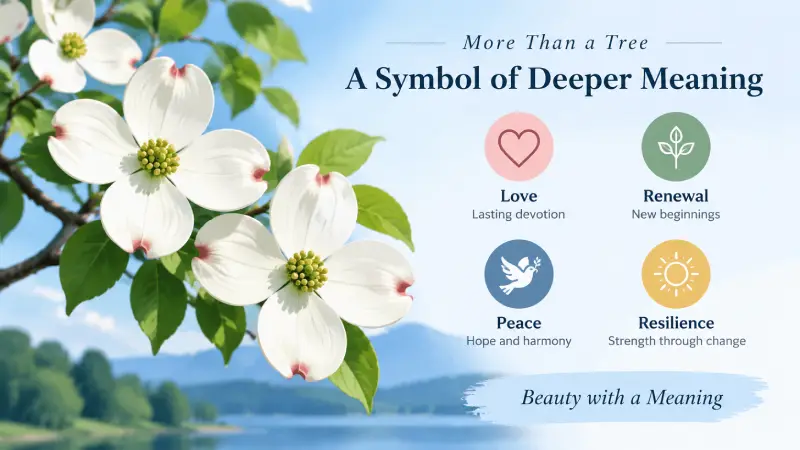
The dogwood tree symbolism is commonly connected with renewal, resilience, beauty, and hope in American culture. Known for its delicate spring blossoms and ability to thrive through changing seasons, the dogwood tree has become a meaningful symbol of new beginnings, strength, remembrance, and natural beauty.
Dogwood trees are widely recognized across the United States, appearing in gardens, parks, forests, and residential landscapes. Their flowers often arrive after winter, creating a visual reminder that growth can follow periods of difficulty. Over time, different communities have connected the tree with personal memories, religious traditions, regional identity, and emotional meaning.
The symbolism of the dogwood tree comes from a combination of its natural characteristics, cultural stories, and the way people use it in everyday life. From Christian legends to modern landscaping choices, the dogwood continues to represent ideas of renewal and connection.
Quick Answer
Dogwood tree symbolism commonly represents renewal, resilience, and hope in modern American culture, especially through its spring blossoms and seasonal transformation. Historically, dogwoods have also been connected with Christian traditions, Native American uses, and American regional heritage.
TL;DR
- Dogwoods symbolize renewal, hope, and seasonal change.
- Their blossoms represent beauty after hardship.
- Christian traditions connect dogwoods with faith stories.
- Native cultures valued dogwoods for practical uses.
- Americans plant dogwoods for memories and landscapes.
- Modern designs use dogwoods as meaningful symbols.
What the Dogwood Tree Looks Like and Where It Grows
Dogwood trees belong mainly to the Cornus plant family and are known for their attractive flowers, branching patterns, and seasonal colors. The flowering dogwood (Cornus florida) is one of the most recognized species in the United States.
In spring, dogwoods produce clusters of tiny flowers surrounded by larger white or pink bracts. These showy structures create the appearance of petals and make the tree popular in gardens and public spaces.
The tree changes throughout the year, giving it symbolic connections to different stages of life:
- Spring blossoms represent renewal and fresh opportunities.
- Summer leaves represent growth and stability.
- Autumn colors represent transition and maturity.
- Winter branches represent endurance and survival.
Because dogwoods return with new growth each year, many people view them as reminders that difficult periods can lead to new beginnings.
The Main Symbolic Meanings of Dogwood Trees
The meanings connected with dogwood trees developed from their appearance, natural cycle, and cultural associations. Although interpretations differ between individuals and communities, several symbolic themes appear frequently.
| Context | Meaning in the USA | Common Associations | Notes |
|---|---|---|---|
| Spring flowers | Renewal and hope | Growth, fresh starts | Connected with seasonal change |
| Tree structure | Strength and endurance | Stability, resilience | Reflects survival through seasons |
| White blossoms | Purity and peace | Simplicity, innocence | Common in decorative use |
| Memorial planting | Remembrance | Family, honor, legacy | Used to remember loved ones |
| Christian traditions | Faith and sacrifice | Spiritual reflection | Based on religious legend |
The dogwood is often viewed as a symbol of continuing growth because it survives seasonal changes and returns with fresh blossoms.
Why Dogwoods Represent Renewal and New Beginnings
The strongest symbolic connection of the dogwood tree comes from its yearly cycle. After appearing quiet during colder months, the tree produces flowers when spring arrives.
This natural process has made dogwoods symbols of:
- personal transformation
- recovery after challenges
- new life stages
- emotional renewal
- positive change
Many people plant flowering dogwoods during important moments, such as moving into a new home, celebrating achievements, or creating a memorial garden. The tree’s yearly blossoms can become a reminder of growth and the passing of time.
In American landscapes, dogwoods often represent a relationship between people, nature, and the changing seasons.
Ancient Roots and Early Cultural Connections
Dogwood trees have existed in North American environments for thousands of years and were recognized by Indigenous communities before becoming popular ornamental plants.
Various Native American groups used dogwood wood because it was dense and durable. The material was useful for making tools, weapons, and practical objects. Some communities also developed plant knowledge that connected trees with natural balance and survival.
However, symbolic meanings were not identical among all Indigenous cultures. Each community had its own traditions, stories, and relationships with local plants.
Later European settlers introduced new interpretations of dogwoods, especially through gardening practices and religious storytelling.
Christian Symbolism and the Dogwood Tree Legend
A well-known association with dogwood trees comes from a Christian legend that connects the tree with the crucifixion of Jesus. According to this tradition, the dogwood was once a larger tree used for the cross and was later changed into a smaller flowering tree as a reminder of that event.
The legend describes symbolic details of the flower:
- Four petals represent the shape of a cross.
- Red markings represent sacrifice.
- The flower arrangement represents the crown of thorns.
This story is popular among many Christians, especially in the United States. However, it is considered a religious legend rather than a documented historical explanation of the tree’s botanical origin.
Even so, the story has influenced how many people understand the dogwood as a symbol of faith and reflection.
Dogwood Tree Symbolism in American Culture
In the United States, dogwoods have become closely connected with regional identity, especially in the eastern and southern states where flowering dogwoods naturally grow.
People commonly associate dogwoods with:
- family gardens
- community parks
- spring celebrations
- hometown memories
- local traditions
North Carolina, for example, recognizes the flowering dogwood as its state flower and tree, showing the importance of this species in regional culture.
For many Americans, seeing a dogwood bloom can create a sense of familiarity and connection. The tree often represents home, childhood memories, and the beauty of local landscapes.
Dogwood Symbolism in Weddings and Celebrations
Dogwood trees are often connected with celebrations because their blossoms appear during spring, a season commonly associated with renewal and fresh starts. In weddings, the flowers may represent commitment, purity, and the beginning of a shared journey.
Although dogwoods are not as traditional as roses or lilies in wedding arrangements, they appear in some floral designs, outdoor ceremonies, and decorative themes. Their soft white or pink blooms can create a natural atmosphere that reflects simplicity and elegance.
Some couples choose dogwood imagery because it represents ideas they value in marriage:
- growing together through changing seasons
- building strength over time
- creating lasting memories
- starting a new chapter
The meaning comes less from a fixed wedding tradition and more from the tree’s connection with growth and continuity.
Dogwood Trees in Mourning and Remembrance Traditions
Dogwoods are also used as symbols of remembrance. Their ability to bloom again each spring makes them meaningful choices for memorial gardens and places dedicated to loved ones.
Planting a dogwood after a loss can represent:
- continued love and connection
- memories that remain
- the cycle of life
- hope after grief
Unlike symbols that focus only on sadness, the dogwood often carries a message of continuation. The tree acknowledges loss while also representing the possibility of renewal.
In American cemeteries, gardens, and private landscapes, flowering trees are sometimes chosen because they create living memorials. A dogwood can become a place where families return each year and reconnect with memories.
Emotional and Psychological Meaning of Dogwood Trees
The emotional symbolism of dogwoods comes largely from how people experience the tree rather than from a single cultural meaning. Its seasonal changes create associations with patience, recovery, and stability.
People may connect dogwoods with feelings such as:
- comfort during difficult times
- appreciation for natural beauty
- connection to family and place
- optimism about future growth
The tree’s small size compared with larger forest trees also gives it a personal quality. A dogwood often feels connected to homes, neighborhoods, and familiar spaces rather than distant wilderness.
For many people, the sight of a blooming dogwood can trigger memories of childhood homes, springtime traditions, or important moments shared outdoors.
Dogwood Meaning in Native American Traditions
Before dogwoods became popular landscape trees in American gardens, Indigenous communities had their own relationships with these plants. Dogwood species were valued for their strong wood and practical qualities.
Some Indigenous groups used dogwood materials for tools, hunting equipment, and everyday objects because the wood was dense and durable. Plant knowledge was often connected with careful observation of nature and local ecosystems.
It is important to recognize that Native American symbolism was not one single tradition. Different nations and communities developed their own beliefs and uses based on geography, language, and cultural practices.
Modern interpretations sometimes combine Native plant knowledge with broader environmental symbolism, but these meanings should not be treated as universal across all Indigenous cultures.
Dogwood Symbolism in Home Decor and Design
Dogwood imagery appears in American design because of its connection with natural beauty and peaceful environments. The flowers and branches are often used in:
- wall art
- fabric patterns
- garden decorations
- seasonal decorations
- ceramics
- jewelry designs
In home decor, dogwood designs often create a feeling of calm and connection with nature. The flower’s simple shape works well in traditional, rustic, and modern styles.
White dogwood blossoms are especially popular because they can represent cleanliness, simplicity, and peaceful surroundings. Pink varieties may create associations with warmth, affection, and gentle beauty.
Unlike some symbols with strong religious or political meanings, dogwood imagery is usually considered broadly positive and suitable for many personal spaces.
Dogwood Tattoos and Personal Expression
Dogwood tattoos have become a way for people to express personal stories connected with nature, family, and life changes. The meaning of a dogwood tattoo depends on the person wearing it, but common interpretations include resilience, renewal, and remembrance.
People may choose dogwood tattoos to represent:
- overcoming a difficult experience
- honoring a family connection
- remembering someone important
- celebrating personal growth
- maintaining a connection to nature
The design can vary widely. Some tattoos show realistic branches and flowers, while others use simplified outlines or watercolor styles.
Because dogwoods have both natural and cultural associations, they allow people to create personal meanings without being limited to one interpretation.
Dogwood Tree Symbolism Compared With Other Flowering Trees
Different flowering trees carry different cultural meanings. Dogwoods are often compared with cherry blossoms, magnolias, and apple blossoms because all are associated with beauty and seasonal change.
| Tree | Common Symbolism in the USA | Main Association |
|---|---|---|
| Dogwood | Renewal, resilience, remembrance | Spring growth and endurance |
| Cherry blossom | Beauty and temporary moments | Change and appreciation |
| Magnolia | Strength and dignity | Southern heritage |
| Apple blossom | Growth and abundance | Nature and renewal |
Dogwoods stand out because they combine delicate flowers with a reputation for strength. Their meaning often focuses on continuing through change rather than only celebrating beauty.
Dogwood Symbolism in Modern American Life
Today, dogwoods continue to appear in many parts of American culture. They are planted in yards, displayed in artwork, featured in regional celebrations, and used as personal symbols.
Modern uses include:
- landscaping projects
- environmental appreciation
- memorial gardens
- nature photography
- handmade crafts
- personal artwork
Many Americans view dogwoods as symbols of connection with the natural world. As interest in native plants and sustainable gardening grows, flowering dogwoods have gained attention as attractive trees that also support local ecosystems.
The modern meaning of the dogwood is often less about strict symbolism and more about personal connection. Someone may value the tree because it reminds them of a hometown, a loved one, a spiritual belief, or a meaningful life moment.
Common Misunderstandings About Dogwood Symbolism
Because dogwoods have many stories connected with them, some meanings are sometimes presented as universal facts when they are actually cultural interpretations.
One common misunderstanding is that every dogwood flower has a historical connection to the crucifixion story. This idea comes from Christian tradition, but it is a symbolic legend rather than botanical history.
Another misunderstanding is that all cultures view dogwoods in exactly the same way. In reality, meanings change depending on location, religion, family traditions, and personal experiences.
The most accurate way to understand dogwood symbolism is to view it as a combination of nature, history, and human interpretation.
How Dogwood Symbolism Has Changed Over Time
The meaning of the dogwood tree has evolved as different communities interacted with it. Early uses focused mainly on practical value, especially the strength of its wood. Later traditions added religious meanings, regional identity, and emotional associations.
In earlier American communities, dogwoods were often appreciated as useful native trees. Over time, they became connected with gardens, celebrations, and personal memories.
Today, dogwoods represent a mixture of older traditions and modern values:
- environmental awareness
- family connections
- personal growth
- cultural heritage
- appreciation of natural beauty
The tree remains meaningful because its symbolism continues to adapt while staying connected to its natural qualities.
Dogwood Symbolism Across Different Cultures
Although dogwood symbolism is especially important in the United States, similar ideas appear in other cultures through the broader meaning of flowering trees and seasonal renewal. The exact symbolism of dogwoods varies because the tree is native mainly to North America and parts of Asia, where different species developed their own cultural connections.
In some East Asian traditions, related dogwood species have been valued for their beauty and seasonal qualities. Flowering trees often represent renewal, harmony, and the relationship between humans and nature.
Across many cultures, flowering trees commonly share themes such as:
- the return of life after winter
- the balance between change and stability
- appreciation of natural beauty
- the passing of time
However, dogwood-specific meanings are strongly shaped by American traditions, especially Christian storytelling, regional identity, and landscape culture.
Dogwood Trees and Environmental Symbolism
Modern environmental movements have added another layer to dogwood symbolism. Native flowering trees are often appreciated not only for their appearance but also for their role in supporting local ecosystems.
Dogwoods provide benefits such as:
- food sources for birds through their berries
- habitat for small wildlife
- seasonal beauty in natural landscapes
- connections between communities and native plants
For many gardeners, planting a native dogwood represents care for the local environment. The tree can symbolize responsibility toward nature and appreciation for regional biodiversity.
This modern interpretation expands the meaning of the dogwood beyond personal symbolism. It connects the tree with conservation, sustainability, and respect for natural spaces.
Dogwood Symbolism in Literature and Art
Artists and writers often use flowering trees as symbols because they naturally connect with themes of life, change, and memory. Dogwoods appear in some American creative works as visual reminders of seasons, landscapes, and personal experiences.
In art, dogwood branches and flowers are often used to create feelings of:
- peacefulness
- simplicity
- connection with nature
- nostalgia
The tree’s appearance makes it suitable for both realistic artwork and decorative designs. White blossoms can create a calm visual style, while pink varieties may suggest warmth and affection.
Rather than having one fixed meaning in art, dogwoods often allow creators and viewers to bring their own experiences into the symbol.
Dogwood Symbolism in Modern Identity and Personal Meaning
Symbols often become meaningful because people connect them with their own lives. The dogwood tree is frequently chosen as a personal symbol because it combines beauty with endurance.
A person may associate a dogwood with:
- their childhood home
- a family tradition
- a meaningful location
- a personal recovery journey
- a loved one’s memory
Unlike symbols that depend on one official interpretation, dogwood meaning is flexible. The same tree may represent faith for one person, family heritage for another, and simple appreciation of nature for someone else.
This ability to hold different meanings is one reason dogwood imagery continues to appear in personal designs and everyday spaces.
Positive and Negative Associations of Dogwood Symbolism
Dogwood trees are generally viewed positively, but symbolic meanings can change depending on context.
Common positive associations include:
- hope
- renewal
- resilience
- beauty
- peace
- remembrance
Negative or complicated interpretations are less common. However, some people may connect flowering trees with themes of passing time, loss, or change because their blossoms appear briefly before fading.
In memorial settings, for example, a dogwood can represent both sadness and comfort. It acknowledges absence while also suggesting that life continues.
Understanding both sides creates a more balanced view of the symbol. A dogwood is not only about happiness; it also reflects the natural cycles of growth, change, and memory.
Why Dogwood Trees Remain Meaningful Today
The continued popularity of dogwoods comes from their ability to connect everyday experiences with larger ideas. People do not need to follow a specific tradition to appreciate what the tree represents.
A dogwood in a backyard, park, or community space can represent:
- a connection to local history
- appreciation for seasonal beauty
- a reminder of personal growth
- respect for nature
- memories connected with a place
In a rapidly changing world, symbols connected with nature often provide a sense of stability. The dogwood’s yearly return offers a simple reminder that change is part of life.
Frequently Asked Questions About Dogwood Tree Symbolism
What does a dogwood tree symbolize?
A dogwood tree commonly symbolizes renewal, resilience, hope, and remembrance. In the United States, its spring blossoms often represent new beginnings, while its cultural traditions connect it with faith and personal memories.
What does a dogwood tattoo symbolize?
A dogwood tattoo can represent personal growth, strength, family connections, or remembrance of someone important. The meaning depends on the person’s experience and the design they choose.
Are dogwood trees connected to Christianity?
Yes, many Christians associate dogwoods with a traditional legend about the crucifixion of Jesus. The story gives symbolic meaning to the flower’s shape and markings, although it is considered a religious legend rather than historical botanical evidence.
Why are dogwoods important in American culture?
Dogwoods are important in American culture because they are native flowering trees associated with spring, regional identity, gardens, and family landscapes. Some states and communities recognize them as important symbols of local heritage.
Do dogwood trees have meanings in Native American traditions?
Some Indigenous communities used dogwood trees for practical purposes, especially because of their strong wood. Symbolic meanings varied between different Native nations and should not be treated as one universal tradition.
What does a white dogwood flower symbolize?
A white dogwood flower is often associated with purity, peace, simplicity, and renewal. These meanings come from cultural interpretations of the flower’s appearance rather than from a single universal rule.
Is dogwood symbolism always positive?
Dogwood symbolism is usually positive, but it can also represent change, memory, and the passing of time. In memorial settings, the tree may express both grief and hope.
Conclusion
The dogwood tree symbolism represents renewal, resilience, remembrance, and connection with nature in many parts of American culture. Its spring blossoms, seasonal changes, and long history have allowed different communities to attach personal, spiritual, and cultural meanings to the tree.
From Christian legends and regional traditions to modern gardens, tattoos, and environmental appreciation, dogwoods continue to represent ideas that remain relevant today. Their meaning does not come from one single story but from the relationship between people, landscapes, and the experiences they associate with this familiar flowering tree.
A dogwood reminds many people that growth can follow difficult seasons and that beauty can return even after periods of change.