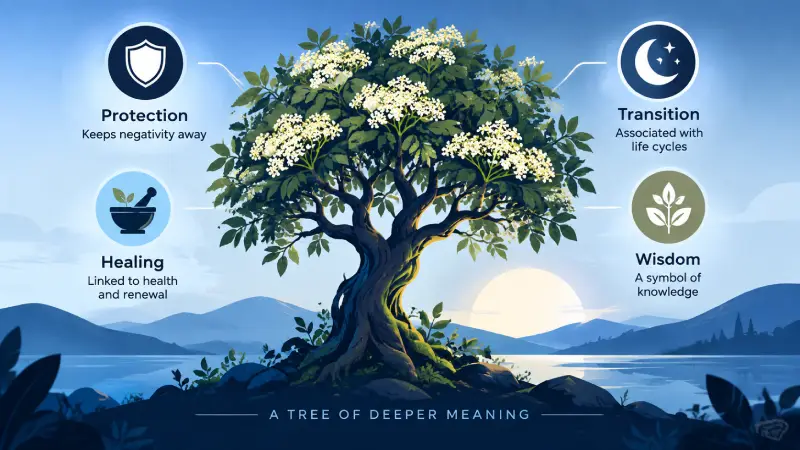
The elder tree symbolism is commonly associated with protection, healing, wisdom, transformation, and connection with nature. For centuries, elder trees have appeared in European folklore, traditional medicine, and cultural stories because of their unusual appearance, practical uses, and relationship with human communities.
The elder tree (Sambucus) is recognized for its clusters of small flowers, dark berries, and ability to grow near homes, forests, and rural landscapes. Unlike some trees valued mainly for their size or strength, elder trees gained meaning through their relationship with people. They provided food, remedies, tools, and inspiration for stories.
Today, elder trees continue to represent ideas such as care, renewal, ancestral connections, and respect for the natural world. Their symbolism combines ancient traditions with modern interest in herbal knowledge, gardening, and environmental awareness.
Quick Answer
Elder tree symbolism commonly represents protection, healing, wisdom, and transformation in modern interpretations. Historically, elder trees were connected with folklore, traditional medicine, and beliefs about nature spirits and household protection.
TL;DR
- Elder trees symbolize protection, healing, and wisdom.
- Folklore connected elders with nature spirits.
- Traditional uses included food and herbal remedies.
- The tree represents renewal through seasonal cycles.
- Modern uses include gardens, wellness, and symbolism.
- Meanings vary across cultures and traditions.
What Is the Elder Tree?
The elder tree belongs to the Sambucus genus and is known for its small white flowers and clusters of dark berries. The European elder (Sambucus nigra) is one of the most culturally significant species, while related species grow in different regions, including North America.
Elder trees are often found near:
- gardens
- woodland edges
- farms
- roadsides
- village landscapes
The tree is not usually one of the tallest forest species, but it has a strong presence because of its close relationship with human settlements.
Its seasonal changes also contribute to its symbolism:
- Spring flowers represent renewal and growth.
- Summer berries represent abundance.
- Autumn changes represent transition.
- Winter dormancy represents rest and protection.
The Main Symbolic Meanings of Elder Trees
| Context | Meaning | Common Associations | Notes |
|---|---|---|---|
| Folklore | Protection | Spirits, guardianship | Common in European traditions |
| Traditional medicine | Healing | Remedies, wellness | Based on historical plant use |
| Seasonal cycle | Renewal | Growth and change | Connected with nature cycles |
| Family traditions | Wisdom | Ancestors and memory | Represents continuity |
| Modern gardens | Balance | Nature connection | Used as a meaningful plant |
The elder tree became symbolic because people experienced it as both useful and mysterious. It provided practical benefits while also appearing in stories about nature and human relationships.
Ancient Roots of Elder Tree Symbolism
Elder trees have a long history in European folklore and traditional practices. Ancient communities often viewed certain trees as more than natural resources. Trees could represent protection, life cycles, and connections between humans and the environment.
Because elder trees commonly grew near homes and settlements, people developed strong relationships with them. Some traditions considered the tree a guardian of the household, while others treated it with caution and respect.
The exact beliefs differed across regions. Some communities celebrated the elder tree, while others developed warnings about disturbing it without permission. These differences show that tree symbolism was shaped by local traditions rather than one universal belief.
Elder Tree Symbolism in European Folklore
European folklore contains many stories connected with elder trees. In some traditions, elders were believed to have protective qualities or connections with supernatural beings associated with forests and nature.
Stories often described the tree as having a special presence because it grew close to human homes while remaining connected to wild landscapes.
Common folklore associations include:
- protection from harm
- respect for nature
- ancestral wisdom
- communication between humans and the natural world
These stories helped establish the elder tree as a symbol of boundaries between everyday life and the natural world.
Elder Tree Meaning in Traditional Medicine
One reason elder trees gained symbolic importance was their role in traditional healing practices. Elder flowers and berries were historically used in various cultures for food and herbal preparations.
Traditional uses included:
- teas made from flowers
- berry-based foods
- natural preparations for seasonal wellness
Because plants used for healing were often respected by traditional societies, elder trees became associated with care and restoration.
Modern scientific research continues to examine elderberry products, but traditional beliefs and modern health practices should be understood separately. Historical use does not automatically prove every traditional claim.
Elder Tree Symbolism in Modern American Culture
Although elder tree symbolism has stronger roots in European traditions, it has also found meaning among many Americans interested in gardening, folklore, and native plant appreciation.
In modern American culture, elder trees may represent:
- connection with nature
- sustainable living
- family heritage
- traditional knowledge
- personal growth
Gardeners often value elder plants because they attract wildlife and produce flowers and berries. For some people, planting an elder tree represents creating a healthier relationship with the environment.
The tree’s symbolism today is often personal rather than based on strict cultural rules.
Elder Tree Symbolism in Spiritual and Personal Practices
Some people use elder tree imagery in spiritual practices, meditation spaces, and personal artwork. These interpretations often focus on themes of protection, transformation, and natural wisdom.
The elder tree may appear in:
- nature-inspired artwork
- seasonal rituals
- jewelry designs
- symbolic decorations
- personal gardens
However, meanings differ widely. Not everyone who uses elder imagery follows the same spiritual beliefs. For many people, the tree simply represents respect for nature and appreciation of traditional plant knowledge.
Elder Tree Symbolism in Art, Tattoos, and Design
Elder tree imagery is used in creative designs because it carries associations with history and natural beauty.
Elder tree tattoos may symbolize:
- personal transformation
- healing after challenges
- connection with ancestors
- respect for nature
- protection
Artists often include elder flowers, berries, branches, or roots to create designs connected with growth and continuity.
In home decor, elder tree imagery can create a feeling of natural simplicity and connection with traditional landscapes.
Common Misunderstandings About Elder Tree Symbolism
Many stories about elder trees come from folklore, which means they represent cultural beliefs rather than proven facts.
One misunderstanding is that all cultures viewed elder trees in exactly the same way. In reality, meanings changed between regions and communities.
Another misunderstanding is that folklore descriptions of magical protection represent historical evidence. These stories are valuable as cultural traditions but should not be confused with scientific explanations.
Understanding elder symbolism requires separating folklore, traditional practices, and modern interpretations.
How Elder Tree Symbolism Has Changed Over Time
The meaning of elder trees has changed as human relationships with nature have evolved.
In earlier societies, elder trees were valued for practical reasons, including food, medicine, and materials. Folklore later added stories about protection and spiritual connections.
Today, elder trees are often viewed through several perspectives:
- cultural history
- environmental appreciation
- traditional gardening
- personal symbolism
- artistic expression
The elder tree remains meaningful because it connects practical usefulness with ideas about memory, renewal, and respect for nature.
Frequently Asked Questions About Elder Tree Symbolism
What does an elder tree symbolize?
An elder tree commonly symbolizes protection, healing, wisdom, and transformation. These meanings come from folklore, traditional uses, and the tree’s close relationship with human communities.
Why is the elder tree important in folklore?
Elder trees became important in folklore because they often grew near homes and were used for practical purposes. Many traditions connected them with protection and respect for nature.
What does an elder tree tattoo mean?
An elder tree tattoo can represent healing, personal growth, ancestral connections, or a person’s relationship with nature. The meaning depends on the individual’s experience and design.
Is the elder tree considered sacred?
Some cultural traditions have treated elder trees as special or sacred because of their connection with healing, folklore, and household protection. These beliefs vary between communities.
Does elder tree symbolism have negative meanings?
Some folklore traditions included warnings about disturbing elder trees, but these stories reflected cultural beliefs rather than universal meanings. Modern interpretations are usually focused on nature, healing, and renewal.
What does an elder tree represent spiritually?
In spiritual interpretations, elder trees may represent protection, transformation, wisdom, and connection with natural cycles. These meanings depend on personal beliefs and traditions.
Conclusion
The elder tree symbolism represents protection, healing, wisdom, and transformation through a combination of folklore, traditional plant knowledge, and modern appreciation of nature. Its flowers, berries, and long relationship with human communities have made it a meaningful symbol across generations.
From European legends to modern gardens and personal artwork, the elder tree continues to represent the connection between people and the natural world. Its meaning is not limited to one tradition but continues to evolve as people create new relationships with plants, history, and the environment.