
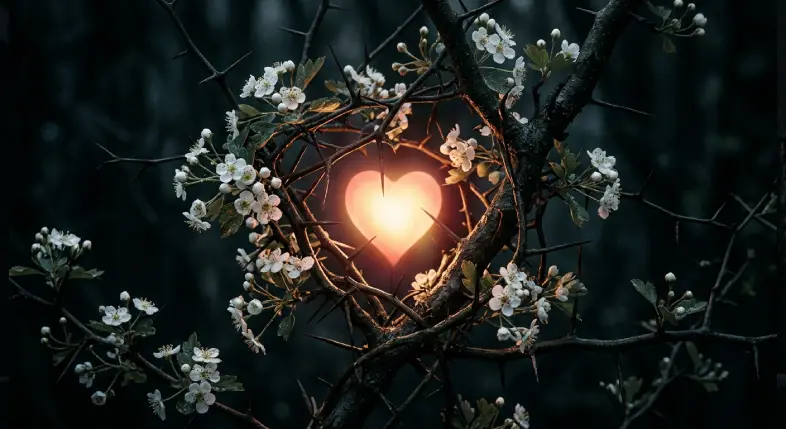
Hawthorn symbolism is often connected with protection, love, hope, renewal, fertility, boundaries, and the changing seasons. The hawthorn tree has a distinctive place in European folklore and traditional culture, while its flowers, thorns, berries, and springtime blooming have all contributed to its symbolic meaning.
Hawthorn can represent both beauty and defense. Its delicate white or pink flowers create a soft appearance, but its branches carry sharp thorns. Because of this contrast, hawthorn symbolism often reflects the idea that something beautiful can also have strong boundaries.
Today, hawthorn can be interpreted as a symbol of emotional protection, resilience, love, new beginnings, and respect for nature.
[Featured Image: Hawthorn tree with blossoms]
Alt text: Hawthorn tree covered with white blossoms in spring
Quick Answer: What Does Hawthorn Symbolize?
Hawthorn commonly symbolizes:
- Protection and personal boundaries
- Love and emotional connection
- Hope and optimism
- Renewal and springtime
- Fertility and new life
- Resilience and inner strength
- Beauty with boundaries
- Transformation and seasonal change
- Community and celebration
- Respect for nature and tradition
The exact meaning depends on the culture, context, and personal experience associated with the hawthorn.
Hawthorn Symbolism at a Glance
| Hawthorn Trait | Symbolic Meaning | Modern Interpretation |
|---|---|---|
| White or pink flowers | Love, beauty, renewal | Fresh beginnings |
| Sharp thorns | Protection, boundaries | Emotional strength |
| Spring blooming | Hope, rebirth | Starting over |
| Red berries | Life, abundance | Growth and vitality |
| Dense branches | Shelter, protection | Creating security |
| Long-lived growth | Resilience | Endurance through change |
[Image: Hawthorn flowers and berries]
Alt text: Hawthorn blossoms and red berries representing renewal and resilience
1. Hawthorn Symbolizes Protection
One of the strongest meanings associated with hawthorn is protection.
The tree’s thorns naturally create a barrier around its branches. Symbolically, this makes hawthorn a useful image for protecting yourself, your home, your relationships, and the things you value.
Hawthorn can represent the idea that being kind does not mean having no boundaries.
Its symbolism suggests that protection and gentleness can exist together.
Modern Meaning of Protection
Today, hawthorn can symbolize:
- Setting healthy boundaries
- Protecting your emotional energy
- Defending what matters
- Creating a safe home
- Staying strong during difficult periods
[Image: Hawthorn branch with visible thorns]
Alt text: Hawthorn branch with sharp thorns symbolizing protection and boundaries
2. Hawthorn Symbolizes Love
Hawthorn has long been connected with love, courtship, and relationships in European traditions.
Its flowers appear in spring, a season often associated with romance, growth, and new beginnings. The contrast between soft blossoms and sharp thorns also creates a powerful metaphor for relationships.
Love can be beautiful, but it can also require care, honesty, and boundaries.
For this reason, hawthorn symbolism can represent a love that is both tender and strong.
3. Hawthorn Symbolizes Hope and Renewal
Because hawthorn blooms in spring, it is naturally associated with renewal and hope.
After the colder months, new leaves and flowers signal a change in the landscape. Symbolically, this can represent moving forward after a difficult chapter.
Hawthorn may therefore be meaningful to someone beginning a new stage of life.
Its message is simple: change can create room for new growth.
[Image: Hawthorn blooming in spring]
Alt text: Hawthorn tree blooming in spring symbolizing hope and renewal
4. Hawthorn Symbolizes Fertility and New Life
Spring flowering has also connected hawthorn with fertility, growth, and new life.
In older traditions, flowering plants were often associated with the arrival of warmer weather and the renewal of the natural world. Hawthorn’s seasonal transformation made it a natural symbol for this cycle.
In modern symbolism, fertility does not have to refer only to having children. It can also mean:
- Creative growth
- New ideas
- Personal development
- New relationships
- New opportunities
- A productive stage of life
5. Hawthorn Symbolizes Resilience
Hawthorn’s thorns provide another important symbolic layer: resilience.
The tree can look delicate when covered with flowers, yet its thorny branches provide protection. This contrast makes hawthorn a strong metaphor for people who remain gentle while developing greater strength.
Hawthorn can therefore represent someone who has experienced difficulty without allowing hardship to remove their compassion.
Its symbolism encourages strength without unnecessary hardness.
[Image: Mature hawthorn tree in a natural landscape]
Alt text: Mature hawthorn tree symbolizing resilience, strength, and natural endurance
6. Hawthorn Symbolizes Beauty With Boundaries
Perhaps one of the most interesting meanings of hawthorn comes from the relationship between its flowers and thorns.
The blossoms are delicate and attractive, while the branches can be difficult to approach.
This creates a useful symbolic message:
Beauty does not require unlimited access.
In modern life, hawthorn can represent the importance of being welcoming while still maintaining personal boundaries.
This meaning can be especially relevant to relationships, friendships, family life, and emotional well-being.
7. Hawthorn Symbolizes Transformation
Hawthorn changes noticeably throughout the year.
It develops new leaves, produces flowers, and later forms berries. These seasonal changes make it a natural symbol of transformation.
Rather than viewing change as something negative, hawthorn symbolism can encourage people to see it as part of a natural cycle.
A person may move through different stages of life while still remaining connected to who they are.
[Image: Hawthorn changing through the seasons]
Alt text: Hawthorn tree showing seasonal growth and transformation
8. Hawthorn Symbolizes Community and Celebration
Hawthorn has also been associated with seasonal celebrations and community traditions, particularly in parts of Europe.
Its spring flowers became part of traditional May celebrations in some regions. This connection gives hawthorn a symbolic association with community, joy, gathering, and the arrival of a new season.
In modern interpretations, this can translate into celebrating milestones and appreciating the people around you.
Hawthorn can represent the idea that personal growth is often strengthened by community.
9. Hawthorn Symbolizes Respect for Nature
Hawthorn’s long history in folklore and traditional landscapes has made it an enduring symbol of the relationship between people and the natural world.
Its flowers, berries, branches, and seasonal cycle all invite attention to the smaller details of nature.
For modern audiences, hawthorn can symbolize:
- Environmental awareness
- Appreciation of native landscapes
- Respect for traditional knowledge
- Connection with seasonal cycles
- Protecting natural spaces
This interpretation does not require a supernatural belief. It can simply reflect a deeper appreciation for nature.
10. Hawthorn Symbolizes Balance
Hawthorn brings several apparent opposites together:
- Beauty and defense
- Softness and strength
- Growth and protection
- Love and boundaries
- Spring and the memory of winter
Because of this, hawthorn can symbolize balance.
Its message is not that a person must choose between being gentle and being strong. Instead, it suggests that both qualities can exist at the same time.
[Image: Close-up of hawthorn blossom and thorn]
Alt text: Hawthorn blossom beside a thorn representing balance between beauty and protection
Hawthorn Symbolism in History and Folklore
Hawthorn has a long cultural history, particularly in Europe.
The tree appears in folklore, seasonal customs, poetry, and traditional landscapes. In some traditions, hawthorn was treated with particular respect, while in others it was associated with boundaries between ordinary life and the mysterious or unfamiliar.
These beliefs varied considerably by region and historical period.
It is important not to treat every hawthorn legend as a universal meaning. Folklore changes from one community to another, and modern interpretations may be very different from historical ones.
Today, many people appreciate hawthorn primarily for its ecological value, seasonal beauty, and cultural history.
Hawthorn Symbolism in Celtic Traditions
Hawthorn is especially well known in discussions of Celtic folklore.
Some modern interpretations connect hawthorn with sacred or otherworldly landscapes, protection, and traditional beliefs about particular trees. However, popular modern descriptions sometimes combine different traditions and present them as if they were one universal Celtic belief.
A more careful interpretation is that hawthorn held important places in several regional traditions, with meanings that changed across time and location.
For modern readers, the most useful takeaway is the tree’s association with nature, protection, seasonal change, and respect for old traditions.
Hawthorn Spiritual Symbolism
Spiritually, hawthorn may be interpreted as a symbol of protection, renewal, love, boundaries, and personal transformation.
These are cultural and personal interpretations rather than universal supernatural rules.
Someone who feels drawn to hawthorn might use its symbolism as a reminder to:
- Protect what matters
- Welcome new beginnings
- Maintain healthy boundaries
- Stay connected to nature
- Allow personal growth
- Balance softness with strength
The meaning ultimately depends on the person’s own beliefs and circumstances.
Hawthorn Symbolism in Dreams
Seeing hawthorn in a dream can have different interpretations depending on what happens in the dream.
Seeing a Hawthorn Tree
A healthy hawthorn tree may symbolize strength, stability, protection, or personal growth.
Seeing Hawthorn Flowers
Hawthorn flowers may represent love, hope, renewal, or a new beginning.
Seeing Hawthorn Thorns
Thorns may suggest boundaries, caution, emotional protection, or a difficult situation that requires care.
Seeing Hawthorn Berries
Berries may symbolize growth, abundance, maturity, or the results of something that developed over time.
Planting Hawthorn
Planting a hawthorn may represent building something for the future, such as a relationship, home, career, or personal goal.
Dream symbolism is highly personal, so the emotions and circumstances surrounding the dream matter more than any single fixed interpretation.
[Image: Hawthorn tree at dawn]
Alt text: Hawthorn tree at dawn representing reflection, dreams, and personal renewal
Hawthorn Symbolism in Love and Relationships
Hawthorn can carry a particularly interesting meaning in relationships because of its combination of flowers and thorns.
The flowers suggest affection, beauty, and emotional connection, while the thorns suggest boundaries and self-protection.
Together, they can represent a healthy relationship where love does not require losing your individuality.
Hawthorn may therefore symbolize:
- Romantic love
- Loyalty
- Emotional protection
- Mutual respect
- Healthy boundaries
- Growing together
Hawthorn Symbolism in Death and Mourning
Hawthorn is not universally a flower or tree of death, but its symbolism can sometimes connect with life cycles, remembrance, and transition.
Because it changes with the seasons, hawthorn can represent the natural movement from one stage of life to another.
In a memorial context, it may symbolize continuing growth, memory, and the idea that life remains connected to the natural world.
This makes hawthorn a gentler symbol of transition rather than a direct symbol of death.
Hawthorn Symbolism in Tattoos
A hawthorn tattoo can represent several personal ideas.
Popular symbolic interpretations include:
- Protection: guarding yourself or loved ones
- Love: honoring an important relationship
- Renewal: starting a new chapter
- Resilience: surviving difficult experiences
- Boundaries: learning to protect your peace
- Nature: maintaining a connection with the natural world
- Transformation: embracing personal change
A hawthorn tattoo can also be designed with flowers, leaves, berries, or thorns to emphasize different parts of its symbolism.
Hawthorn Symbolism in Modern Life
Today, hawthorn symbolism can be understood without relying on folklore alone.
The tree offers several practical metaphors for modern life:
Protection: Know what deserves your attention and care.
Boundaries: Being compassionate does not mean accepting everything.
Renewal: A difficult season does not last forever.
Growth: Change can be part of becoming stronger.
Love: Healthy relationships include respect as well as affection.
Nature: Seasonal change can remind us that life is always moving.
These interpretations make hawthorn relevant even for people who are not interested in traditional folklore.
Is Hawthorn Symbolism Positive or Negative?
Hawthorn symbolism is generally balanced rather than purely positive or negative.
Its flowers can represent love, beauty, hope, and renewal. Its thorns can represent protection, caution, boundaries, and difficulty.
The same feature can therefore have different meanings depending on context.
For example, thorns may symbolize a painful experience, but they can also represent the strength needed to protect yourself.
This duality is one of the most meaningful aspects of hawthorn symbolism.
Hawthorn Symbolism and the Meaning of Thorns
Thorns deserve special attention because they change how the tree is interpreted.
A thorn can represent:
- Protection
- Self-defense
- Caution
- Personal boundaries
- Strength
- Pain
- Lessons learned through experience
When paired with a flower, the thorn can suggest that vulnerability and strength are not opposites.
You can remain open-hearted while still protecting yourself.
Hawthorn Symbolism and the Meaning of Flowers
Hawthorn flowers are often associated with spring, which gives them a natural connection with:
- Hope
- Renewal
- Love
- Beauty
- New beginnings
- Seasonal change
Their appearance after winter can make them especially meaningful when representing a fresh start.
Hawthorn Symbolism and the Meaning of Berries
Hawthorn berries appear later in the growing cycle and can therefore symbolize maturity, abundance, continuity, and the results of growth.
In a symbolic sense, the berries can represent what develops after patience and time.
This makes the complete hawthorn plant a useful metaphor for the stages of life: growth, flowering, maturity, and renewal.
Frequently Asked Questions About Hawthorn Symbolism
What is the main symbolism of hawthorn?
Hawthorn commonly symbolizes protection, love, renewal, hope, resilience, fertility, and healthy boundaries.
What does hawthorn symbolize spiritually?
In spiritual and symbolic traditions, hawthorn may represent protection, transformation, renewal, and connection with nature. These interpretations vary by culture and personal belief.
Is hawthorn a symbol of love?
Yes. Hawthorn has historical associations with love, courtship, spring, and celebration in some traditions.
What does a hawthorn tree symbolize in dreams?
A hawthorn tree in a dream may represent protection, growth, stability, or a new stage of life. The dream’s specific setting and emotional tone can change the interpretation.
What do hawthorn thorns symbolize?
Hawthorn thorns can symbolize protection, boundaries, caution, resilience, and the need to defend what is important.
What does a hawthorn tattoo symbolize?
A hawthorn tattoo can represent protection, love, resilience, renewal, personal boundaries, or a connection with nature.
Is hawthorn associated with death?
Hawthorn is not universally a symbol of death. It is more commonly connected with nature, protection, love, renewal, and seasonal cycles. In some contexts, it can symbolize transition or remembrance.
What does hawthorn symbolize in love?
In love, hawthorn can symbolize affection, loyalty, emotional protection, mutual respect, and the balance between vulnerability and boundaries.
Final Thoughts
Hawthorn symbolism is powerful because the tree brings together qualities that may initially seem opposite. Its flowers suggest beauty, love, and renewal, while its thorns suggest protection, boundaries, and resilience.
Across history and folklore, hawthorn has carried different meanings in different places. Modern interpretations often focus on its connection with nature, personal strength, healthy boundaries, love, and new beginnings.
Whether you encounter hawthorn in a garden, landscape, dream, artwork, or tattoo, its symbolism can serve as a reminder that strength and softness can grow together.


