Deception symbolism represents hidden truth, illusion, secrecy, manipulation, betrayal, and the gap between appearance and reality. It often appears through symbols such as masks, mirrors, shadows, disguises, false appearances, and misleading paths.
Unlike symbols that represent a single emotion or idea, deception can carry several meanings at once. It may point to dishonesty and betrayal, but it can also symbolize self-protection, privacy, cleverness, or the need to look beyond appearances.
In modern American culture, deception symbolism appears in literature, movies, art, psychology, relationships, advertising, social media, and everyday expressions. Its meaning usually depends on whether the deception protects someone, harms someone, or reveals a deeper truth.
Quick Answer: What Does Deception Symbolize?
Deception commonly symbolizes secrecy, illusion, hidden truth, manipulation, betrayal, uncertainty, and false appearances.
In a positive context, deception can represent strategy, discretion, protection, or cleverness. In a difficult context, it may symbolize lying, broken trust, manipulation, emotional confusion, or betrayal.
Deception Symbolism: TL;DR
- Deception often represents hidden truth and false appearances.
- Masks symbolize identities that conceal what lies underneath.
- Mirrors can represent distorted or incomplete reality.
- Shadows often suggest secrets, uncertainty, or concealed motives.
- Deception may symbolize betrayal in relationships.
- Dreams about deception can reflect uncertainty or mistrust.
- Some forms of deception represent protection or strategic thinking.
9 Powerful Meanings of Deception Symbolism
1. Hidden Truth
One of the strongest meanings of deception is something concealed beneath the surface.
A deceptive symbol may suggest that what appears obvious is not the whole story. This idea is common in stories where characters discover that a person, situation, or promise was different from what they initially believed.
Symbolically, deception can encourage a person to question appearances and search for additional information before making a judgment.
2. Illusion and False Appearance
Deception is closely connected with illusion because both involve a difference between appearance and reality.
An illusion may look convincing even when it does not represent the truth. Mirrors, optical illusions, disguises, and theatrical effects can therefore symbolize deceptive appearances.
This meaning is especially relevant in modern culture, where edited images, advertising, carefully constructed online identities, and staged appearances can influence how people perceive reality.
3. Secrecy and Concealment
Deception can symbolize keeping something hidden.
Not every secret is necessarily harmful. People may keep information private to protect themselves, preserve someone else’s privacy, or avoid revealing a plan too early.
However, secrecy becomes more troubling when important information is deliberately hidden from someone who has a legitimate reason to know it.
For this reason, deception symbolism often sits between privacy and dishonesty.
4. Betrayal and Broken Trust
Deception can represent betrayal, especially when someone deliberately misleads another person.
Trust depends partly on honesty. When a person discovers that important information was deliberately concealed, the emotional result may include disappointment, anger, sadness, or a sense of betrayal.
This makes deception a powerful symbol in stories about friendship, family, romance, business partnerships, and political conflict.
5. Manipulation and Control
Another difficult meaning of deception is manipulation.
In this context, deception is not simply hiding information. It involves controlling another person’s understanding so they make decisions based on false or incomplete information.
Symbols associated with manipulation may include puppets, strings, disguises, false doors, misleading signs, or distorted reflections.
The symbolism highlights the loss of informed choice.
6. Mystery and Uncertainty
Deception can also symbolize mystery, confusion, and uncertainty.
When the truth is hidden, people may not know what to believe. This creates an atmosphere of suspicion and unanswered questions.
For this reason, deception frequently appears in detective stories, mystery novels, thrillers, and psychological dramas.
Symbolically, the unknown does not always mean that something bad is happening. Sometimes it simply means that the complete picture has not yet been revealed.
7. Cleverness and Strategy
Deception does not always carry a completely negative meaning.
In mythology, folklore, literature, and popular storytelling, clever characters sometimes use deception to survive, escape danger, protect others, or defeat a stronger opponent.
This creates a different interpretation: deception can symbolize intelligence, strategy, adaptability, and resourcefulness.
The moral meaning depends heavily on the purpose and consequences of the deception.
8. Self-Protection
Deception can sometimes symbolize defense and self-protection.
A person may conceal personal information because they feel threatened or unsafe. In symbolic storytelling, disguises and hidden identities can therefore represent protection rather than manipulation.
This interpretation is particularly important when discussing deception without automatically labeling every form of concealment as morally wrong.
The key question becomes: What is being protected, and who is being harmed?
9. The Difference Between Appearance and Reality
At its deepest level, deception symbolizes the tension between what something seems to be and what it actually is.
A beautiful exterior may hide damage. A friendly appearance may conceal harmful intentions. Conversely, something that initially appears frightening may turn out to be harmless.
This makes deception a powerful symbol of perception and judgment.
It reminds us that first impressions can be incomplete and that understanding often requires patience.
Deception Symbolism Table
| Symbol | Possible Meaning | Common Interpretation |
|---|---|---|
| Mask | Hidden identity | Concealment or false appearance |
| Mirror | Distorted reality | Self-image, illusion, or truth |
| Shadow | Hidden side | Secrets or uncertainty |
| Disguise | Concealed identity | Protection or deception |
| Locked door | Hidden information | Mystery or secrecy |
| Forked path | Uncertainty | Misleading choices or confusion |
Deception Symbolism in History and Culture
Deception has appeared in human storytelling for thousands of years because the conflict between truth and falsehood is easy to recognize across cultures.
Folklore frequently includes trickster figures who use cleverness, disguise, exaggeration, or manipulation. These characters are not always presented as purely evil. Sometimes they expose hypocrisy, challenge authority, escape danger, or teach lessons through their schemes.
Other traditions emphasize the destructive side of deception, particularly when dishonesty causes betrayal, conflict, or loss.
Because cultural meanings differ, deception should not be assigned one universal interpretation. A symbol that represents clever survival in one story may represent betrayal in another.
Deception Symbolism in Masks
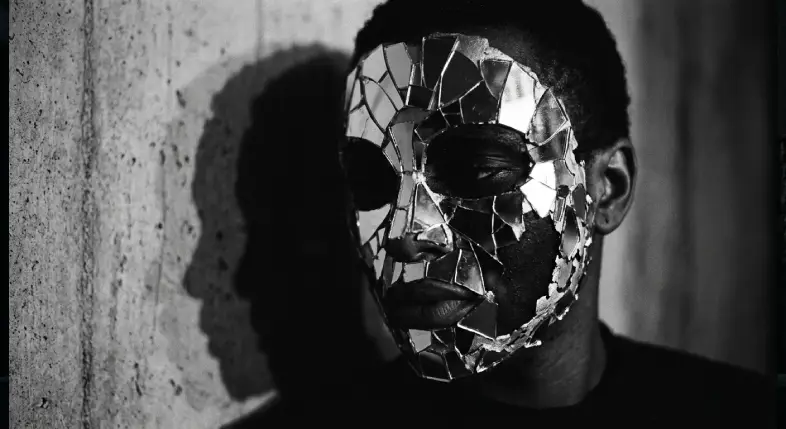
The mask is one of the clearest visual symbols of deception.
A mask hides a person’s actual face and presents another appearance. Because of this, it can symbolize hidden identity, secrecy, performance, social roles, and concealed emotions.
Masks can also have meanings unrelated to dishonesty. Theater, festivals, ceremonies, and artistic traditions have used masks for cultural and expressive purposes.
In symbolic art, the context determines whether the mask represents deception, transformation, protection, or performance.
Deception Symbolism in Mirrors
Mirrors often symbolize the relationship between appearance and reality.
A normal mirror reflects what is in front of it, but a distorted or broken mirror can suggest an incomplete or unreliable perception.
A mirror in deception symbolism may therefore represent:
- False self-image
- Distorted perception
- Hidden identity
- Self-deception
- Uncomfortable truth
- Confusion between appearance and reality
A person looking into a mirror may be confronting not only how others see them but also how honestly they see themselves.
Deception Symbolism in Shadows
Shadows are frequently associated with the hidden or unknown side of something.
A shadow can represent information that has not yet been revealed, an uncomfortable part of the self, or motives that remain unclear.
Because shadows change with lighting and perspective, they can also symbolize uncertainty. What looks threatening from one angle may appear harmless from another.
This makes the shadow a useful symbol for stories about suspicion, secrets, and incomplete knowledge.
Deception Symbolism in Relationships
In romantic relationships and friendships, deception commonly symbolizes broken trust.
Lying, hiding important information, pretending to feel something that is not genuine, or deliberately creating a false impression can all become symbols of emotional deception.
However, symbolic interpretation should distinguish between deliberate deception and ordinary privacy. Not sharing every thought or personal detail does not automatically mean someone is being deceptive.
In relationships, deception symbolism often raises a deeper question:
What happens when trust depends on information that one person is intentionally hiding?
Deception Symbolism in Love
In love, deception may symbolize hidden feelings, unspoken intentions, betrayal, jealousy, or fear of vulnerability.
A disguised heart or hidden face may represent someone who is afraid to reveal their true emotions.
Deception can also symbolize self-deception in love. A person may convince themselves that a relationship is healthy, that someone will change, or that warning signs do not matter.
The symbolism therefore works in two directions: someone may deceive another person, or someone may avoid acknowledging the truth within themselves.
Deception Symbolism in Dreams
Dreams involving deception can have many possible interpretations, and there is no universal meaning for a particular dream.
If you dream that someone is lying to you, the dream may reflect uncertainty, mistrust, fear of betrayal, or unresolved concerns.
If you dream that you are deceiving someone, it may symbolize guilt, secrecy, avoidance, fear of judgment, or a desire to protect yourself.
Common examples include:
- Being deceived: fear of betrayal or uncertainty.
- Deceiving someone: hidden feelings or internal conflict.
- Wearing a mask: concealed identity or emotions.
- Discovering a lie: desire for clarity or truth.
- Being unable to see clearly: confusion or lack of information.
- Seeing a false reflection: concerns about identity or self-perception.
Dream symbolism is personal. Your experiences, emotions, and circumstances matter more than any fixed dream dictionary definition.
Spiritual Meaning of Deception Symbolism
In spiritual and religious storytelling, deception may represent temptation, false appearances, moral testing, hidden intentions, or the search for truth.
Different traditions interpret these themes differently, so spiritual meanings should be understood as cultural or personal interpretations rather than universal facts.
For some people, deception symbolism encourages greater honesty and self-awareness. It may serve as a reminder to examine intentions, question appearances, and avoid misleading others.
For others, it can represent the challenge of distinguishing genuine guidance from fear, illusion, or manipulation.
Positive Deception Symbolism
Although deception is usually associated with negative behavior, some symbolic interpretations are more positive.
Deception can represent:
- Strategic thinking
- Cleverness
- Adaptability
- Privacy
- Self-protection
- Resourcefulness
- Survival
- Creative problem-solving
For example, a disguised character escaping danger may symbolize intelligence and adaptability rather than dishonesty.
The intention behind the deception is therefore important.
Negative Deception Symbolism
The darker side of deception is strongly associated with:
- Lying
- Betrayal
- Manipulation
- Distrust
- Emotional harm
- False promises
- Hidden motives
- Exploitation
- Confusion
These meanings often appear when deception benefits one person while deliberately harming or misleading another.
Deception Symbolism in Tattoos
A deception-themed tattoo can represent different personal ideas depending on the design.
A mask may represent hidden identity or the difference between a public and private self. A broken mirror may symbolize distorted perception, self-discovery, or overcoming a false image.
Other designs may use shadows, snakes, theatrical masks, hidden eyes, or divided faces to express themes of secrecy and duality.
For some people, the symbolism may represent a past experience with betrayal. For others, it may simply express an interest in mystery, psychology, or the contrast between appearance and reality.
Deception Symbolism in Modern American Culture
Modern American culture frequently explores deception through movies, television, novels, advertising, politics, social media, and popular psychology.
Social media has made the symbolism especially relevant because people can carefully control what they show publicly. Photos, profiles, captions, and personal branding may present only one part of someone’s life.
This does not mean that every curated online identity is deceptive. Privacy and presentation are normal parts of communication. The symbolic issue appears when the difference between the public image and reality becomes intentionally misleading.
In entertainment, deception remains a major storytelling device because it creates suspense and forces characters to question whom they can trust.
Deception and Personal Growth
Deception symbolism can also encourage self-reflection.
Sometimes the most important question is not whether another person is lying but whether we are being completely honest with ourselves.
Self-deception may involve ignoring uncomfortable facts, making excuses, refusing to recognize harmful patterns, or believing something simply because it is easier than accepting the truth.
From this perspective, deception symbolism can represent a journey from illusion toward awareness.
Deception Symbolism in Art and Literature
Artists and writers often use deception to explore identity and perception.
A painting may show a face hidden behind a mask. A novel may reveal that a trusted character has been misleading everyone. A photograph may use mirrors, shadows, or reflections to create uncertainty.
These techniques allow audiences to experience the central symbolic question:
Can appearances always be trusted?
Deception therefore works especially well in creative forms that depend on mystery, contrast, symbolism, and revelation.
What Does Deception Symbolize in Everyday Life?
In everyday life, deception symbolism can appear whenever there is a significant difference between what is presented and what is actually true.
Examples include:
- A false promise representing broken trust
- A disguise representing hidden identity
- A carefully edited image representing controlled appearance
- A misleading sign representing confusion
- A secret representing concealed information
- A distorted mirror representing unreliable perception
These examples show why deception is more than simply a symbol of lying. It represents the broader human experience of trying to distinguish truth from appearance.
How Deception Symbolism Can Be Used Positively
Deception symbolism can be useful when it encourages people to think critically rather than simply become suspicious of everyone.
Its positive lesson can be:
Look beyond appearances, ask better questions, protect healthy boundaries, and value honesty.
The goal is not to assume that everything is false. Instead, the symbolism encourages balanced judgment.
Healthy skepticism asks for evidence. Unhealthy suspicion assumes dishonesty without evidence.
That distinction is important when applying deception symbolism to real-life relationships.
Frequently Asked Questions
What does deception symbolize?
Deception commonly symbolizes hidden truth, secrecy, illusion, manipulation, betrayal, and false appearances. In some contexts, it can also represent cleverness, strategy, privacy, or self-protection.
What does a mask symbolize in deception?
A mask often symbolizes a hidden identity, concealed emotions, or a difference between public appearance and private reality. Depending on the context, it can also represent performance, transformation, or protection.
What does deception mean in dreams?
Dreams about deception may reflect uncertainty, mistrust, fear of betrayal, guilt, secrecy, or unresolved emotional concerns. Dream meanings are personal and should be interpreted in the context of the dreamer’s experiences.
Is deception always a negative symbol?
No. Deception usually has negative associations, but stories and cultural traditions sometimes portray it as cleverness, survival, strategy, or protection. The intention and consequences help determine its symbolic meaning.
What does deception symbolize in love?
In love, deception can symbolize hidden feelings, dishonesty, betrayal, fear of vulnerability, or self-deception. It often highlights the importance of trust and emotional honesty.
What does deception symbolize spiritually?
Spiritual interpretations may associate deception with temptation, false appearances, moral testing, or the search for truth. These meanings vary among cultures and personal belief systems and should not be treated as universal facts.
What symbols are commonly associated with deception?
Common symbols include masks, mirrors, shadows, disguises, locked doors, divided faces, misleading paths, and distorted reflections. Each can represent a different aspect of hidden truth or uncertain perception.
Conclusion
Deception symbolism represents the complicated relationship between truth and appearance. Its strongest meanings include hidden information, illusion, secrecy, betrayal, manipulation, uncertainty, and concealed identity.
At the same time, deception can sometimes symbolize strategy, protection, cleverness, or survival. Its meaning depends on the circumstances, the intention behind the deception, and its effect on other people.
Ultimately, deception symbolism encourages a useful lesson: appearances are not always the complete story. Looking carefully, questioning assumptions, and valuing honest communication can help reveal what lies beneath the surface.