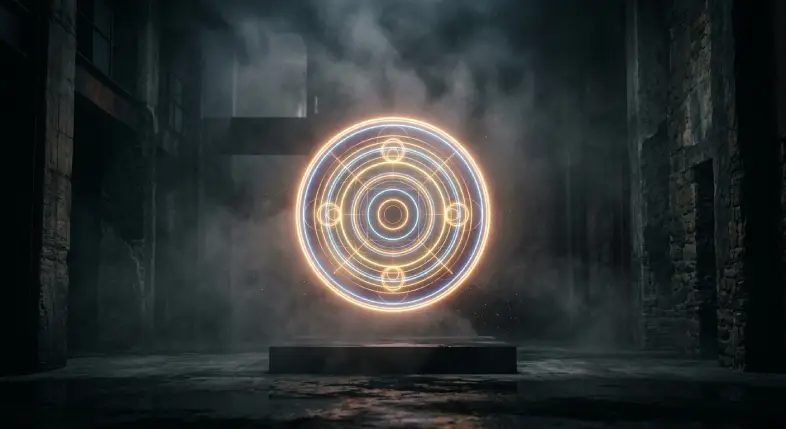
Circle symbolism is closely connected with wholeness, unity, eternity, balance, protection, completion, and the cycles of life. With no beginning or end, the circle has become one of the most recognizable symbolic shapes across cultures.
You can find circles in nature, art, architecture, religious traditions, jewelry, logos, ceremonies, and everyday objects. The shape is simple, but its meaning can be surprisingly deep.
In modern American culture, circles can represent connection, inclusion, community, continuity, and personal growth. Their interpretation depends heavily on context, since a wedding ring, a traffic sign, a spiritual symbol, and a simple geometric design may all communicate something different.
Quick Answer
Circle symbolism commonly represents unity, wholeness, eternity, balance, protection, completion, and the repeating cycles of life. Because a circle has no obvious beginning or ending point, it is often used to express continuity and something that remains connected.
TL;DR
- Circles symbolize unity, wholeness, and completeness.
- Their continuous shape represents eternity and continuity.
- Circles can represent balance and harmony.
- They may symbolize protection and safe boundaries.
- Circular patterns often represent life’s repeating cycles.
- In modern use, circles can suggest inclusion and community.
9 Powerful Circle Symbolism Meanings
1. Wholeness and Completeness
One of the strongest meanings of a circle is wholeness.
A circle forms a complete shape with no visible break. Because of this, it can symbolize something that feels complete, integrated, or whole.
In personal symbolism, a circle may represent emotional balance, self-acceptance, or reaching an important stage of development.
A completed circle can also suggest that separate parts have come together to form one unified whole.
2. Unity and Connection
A circle can represent unity because every point along its edge belongs to the same continuous form.
This makes the shape useful for representing families, communities, teams, partnerships, and social groups.
When people stand in a circle, everyone can face toward the center and share a common space. This physical arrangement can reinforce ideas of equality and participation.
Modern organizations often use circular designs to communicate collaboration and inclusion for similar reasons.
3. Eternity and Continuity
A circle has no obvious beginning or end.
This characteristic has made it a powerful symbol of eternity, continuity, and lasting connection.
The meaning can be spiritual, philosophical, emotional, or simply visual.
A circular design may suggest that something continues rather than stops at a fixed endpoint.
This is one reason circles frequently appear in symbols connected with time, life, relationships, and remembrance.
4. Balance and Harmony
The circle is symmetrical and evenly distributed around its center, making it a natural symbol of balance and harmony.
Unlike shapes with sharp corners or irregular sides, a circle has a smooth continuous boundary.
This can represent emotional stability, peaceful relationships, and a sense of equilibrium.
In personal symbolism, seeing or drawing a circle may be associated with the desire to restore balance during a stressful period.
5. Protection
Circles can also symbolize protection and boundaries.
A circle creates an enclosed space. Something placed inside the circle is visually separated from what exists outside it.
This idea appears in many symbolic and cultural practices, although the specific meanings vary widely.
In everyday life, a circle can represent a safe space, personal boundary, family unit, or protected community.
The meaning does not necessarily imply fear. It can simply suggest keeping something valuable together.
6. Cycles and Repetition
The circular shape naturally represents cycles.
The sun rises and sets in repeating patterns. Seasons return. The moon changes through recurring phases. Plants grow, reproduce, and begin another generation.
Although these processes are not literally perfect circles, the circle provides a simple visual representation of repeated movement.
For this reason, circle symbolism can represent:
- Life cycles
- Seasons
- Growth
- Change
- Renewal
- Time
- Repetition
The circle suggests that an ending can also become the starting point for something new.
7. Infinity and Eternity
Circles are often associated with infinity because their form continues without a visible endpoint.
This does not mean every circle is an infinity symbol. Rather, the visual structure makes the circle useful for expressing the idea of something that continues indefinitely.
A circular wedding ring, for example, can symbolize enduring commitment.
A circle used in remembrance can suggest that love and memories continue even after circumstances change.
8. Community and Belonging
A circle can represent community and belonging.
People sitting together in a circle are often positioned so that no single person automatically occupies a dominant corner or edge.
This makes the shape useful for representing discussion, cooperation, support groups, classrooms, families, and shared experiences.
In modern American culture, circular logos and group designs often use this visual quality to suggest openness and connection.
9. Transformation and Renewal
A circle can symbolize transformation because many natural processes appear to move through repeating stages.
A person may move from childhood to adulthood, experience challenges, develop new understanding, and enter another stage of life.
The circle does not necessarily mean returning to exactly the same place.
Instead, it can represent returning to familiar themes while changing through experience.
This makes circle symbolism particularly relevant to personal growth.
Circle Symbolism in History
Circular shapes have been used in human art and symbolic systems for thousands of years.
People have naturally observed circular forms in the sun, moon, eyes, seeds, fruits, stones, and other parts of the environment.
Because circles occur so frequently in nature, humans have repeatedly incorporated them into art, architecture, objects, and cultural traditions.
However, there is no single historical meaning of the circle.
Different societies have used circular forms for different purposes, including decoration, religious symbolism, architecture, calendars, social organization, and representations of celestial bodies.
Circle Symbolism Across Cultures
The circle appears in many cultural traditions, but its meaning is not identical everywhere.
In some traditions, circular forms have been associated with the sun, moon, cycles, sacred space, or cosmic order.
In others, circles appear in architecture, ceremonial objects, artwork, jewelry, or patterns without necessarily having one specific spiritual meaning.
This is important because popular discussions sometimes present “the circle meaning” as though every culture interpreted it in exactly the same way.
A better approach is to treat the circle as a broad symbolic form whose meaning changes according to cultural context.
Circle Symbolism in Spiritual Traditions
Circles have appeared in many spiritual and religious contexts.
They may represent unity, eternity, divine order, sacred space, cycles of existence, or connection between different parts of life.
However, these meanings are cultural and personal interpretations rather than universal spiritual facts.
For example, a circular design used in one tradition may have a very specific theological meaning that should not automatically be applied to every other circular symbol.
The shape itself provides a visual foundation for ideas such as continuity and wholeness, while individual traditions add their own interpretations.
Circle Symbolism in Nature
Nature provides many examples of circular or approximately circular forms.
The sun and moon appear circular from Earth. Tree rings record growth over time. Flowers often arrange their petals around a center. Fruits, seeds, stones, and bubbles can also form circular or rounded shapes.
These natural examples help explain why circles are often associated with life, growth, cycles, and continuity.
The symbolism comes partly from observation: people see repeating patterns and use simple shapes to represent them.
Circle Symbolism in Relationships
Circles can carry meaningful symbolism in relationships.
A circle may represent a bond that feels continuous and supportive. It can also symbolize equality because no point on the circumference is inherently the “top” or “bottom.”
This makes circular imagery useful for:
- Friendship
- Marriage
- Family
- Loyalty
- Partnership
- Community
- Emotional support
A circle does not automatically mean a perfect relationship. Instead, it can represent the desire for connection, continuity, and mutual support.
Circle Symbolism in Love
In love, the circle is strongly associated with commitment and lasting connection.
The most familiar example is the wedding ring.
Its circular form has become a widely recognized symbol of an ongoing relationship. The ring itself does not prove that a relationship will last, but its shape provides a visual metaphor for continuity.
A circle can also represent emotional completeness, shared identity, and two people building a life together.
Circle Symbolism in Weddings
Circles are especially common in wedding symbolism.
Wedding rings are the clearest example, but circular arches, floral arrangements, table designs, and ceremony structures can also use the shape.
Common symbolic associations include:
- Commitment
- Unity
- Continuity
- Partnership
- Wholeness
- Shared future
- Enduring love
A circular wedding design can therefore reinforce the idea of two lives becoming connected.
Circle Symbolism in Funerals and Memorials
Circle symbolism can also be meaningful in funerals and memorials.
The circle can represent continuity, remembrance, and the ongoing influence of someone who has died.
Circular wreaths are particularly relevant because their shape has no obvious beginning or ending. They can create a visual reminder of enduring memory.
A memorial circle may also represent the continuing bond between family members and the person being remembered.
These meanings are symbolic rather than universal funeral rules. Different families and cultures may understand circular memorial designs differently.
Circle Symbolism in Dreams
Dream interpretation is personal, but circles can suggest several common themes.
Seeing a complete circle may represent wholeness, completion, or emotional balance.
Being inside a circle may suggest safety, belonging, or feeling protected.
Moving around in circles could reflect repetition, uncertainty, or feeling unable to move forward.
A broken circle may symbolize disruption, separation, unfinished business, or a relationship that has changed.
Drawing a circle could represent an attempt to create order, boundaries, or completion.
Your feelings during the dream are important. A peaceful circle may have a very different meaning from a frightening or restrictive one.
Circle Symbolism in Personal Growth
A circle provides a useful metaphor for personal development.
Growth is not always a straight line. People often revisit old challenges, relationships, habits, or questions from a different perspective.
The circle can represent this process.
You may return to a familiar situation, but you are not necessarily the same person you were before.
This makes the circle a strong symbol for reflection, learning, recovery, and personal transformation.
Circle Symbolism and Protection
A circle can create a visual boundary around something important.
This makes it useful as a symbol of protection, privacy, and personal space.
In modern life, the idea can apply to emotional boundaries as well.
Someone might think of their family as their “inner circle,” for example. The phrase suggests a group of people who are trusted and protected within a larger social environment.
This modern expression shows how ancient geometric ideas can continue to influence everyday language.
Negative and Difficult Circle Symbolism
Circle symbolism is usually positive, but it can also represent difficult experiences.
Possible negative meanings include:
- Feeling trapped
- Repetition without progress
- Going through the same problems repeatedly
- Emotional isolation
- Obsessive patterns
- Lack of direction
- Fear of change
The phrase “going in circles” illustrates this negative interpretation.
Instead of representing healthy cycles, the circle can sometimes suggest that someone is repeating the same behavior without reaching a solution.
The surrounding context determines whether the circle feels comforting or restrictive.
Circle Symbolism in Tattoos
Circle tattoos can have highly personal meanings.
Common interpretations include:
- Wholeness
- Balance
- Eternity
- Family
- Unity
- Personal growth
- Protection
- Life cycles
- Completion
A simple circle can be intentionally minimal, while additional elements can make its meaning more specific.
For example, a circle containing mountains might represent connection with nature, while a circle containing family initials could represent unity and belonging.
Circle Symbolism in Modern American Culture
Circles are everywhere in modern American life.
They appear in logos, sports symbols, jewelry, architecture, technology interfaces, road signs, packaging, art, and home décor.
Their modern meanings often include community, simplicity, friendliness, inclusion, continuity, and modern design.
The shape can feel approachable because it lacks sharp corners.
Businesses and organizations sometimes use circular designs to create a visual impression of cooperation and connection.
Circle Symbolism in Art and Design
Artists often use circles to create visual balance and draw attention toward a central point.
A circle can frame an image, separate one element from another, or create a sense of movement.
Because it is visually simple, it can communicate a concept without requiring many details.
In minimalist design, a single circle may suggest completeness or calm.
In complex artwork, repeated circles can suggest movement, cycles, community, or time.
Circle Symbolism in Nature and Seasons
The circle can represent the repeating rhythm of the natural world.
Spring leads to summer, summer to autumn, autumn to winter, and winter eventually returns to spring.
The exact experience differs across regions, but the larger concept of seasonal repetition provides a strong symbolic framework.
For this reason, circular imagery is often used when discussing renewal and the passage of time.
It reminds us that change can be part of a larger pattern rather than simply an ending.
What Does a Circle Symbolize Spiritually?
Spiritually, a circle may be interpreted as a symbol of unity, eternity, wholeness, sacred space, or connection.
However, there is no single spiritual meaning that applies to every circle or every tradition.
The interpretation depends on the specific religious, cultural, or personal context.
For some people, a circle may simply represent balance and continuity without having any spiritual meaning at all.
What Does It Mean to See a Circle?
Seeing a circle can symbolically represent completion, balance, unity, protection, or a repeating cycle.
The context matters.
A circle appearing in a peaceful setting might suggest harmony and wholeness. A person trapped inside a circle might instead associate it with limitation or feeling stuck.
The most useful interpretation considers both the symbol and the circumstances surrounding it.
Circle Symbolism in Numbers and Geometry
The mathematical structure of a circle contributes to some of its symbolic appeal.
Every point on the circumference is the same distance from the center, creating a strong sense of symmetry.
This can support symbolic ideas of equality, balance, and order.
The center can represent a point of stability, while the circumference creates a boundary around it.
Together, these elements make the circle useful for representing both inner identity and external protection.
Conclusion
Circle symbolism centers on unity, wholeness, eternity, balance, protection, cycles, completion, and connection. Its simple continuous shape allows it to communicate ideas that are difficult to express with more angular forms.
Across history and modern American culture, circles have been used to represent relationships, community, nature, ceremonies, remembrance, and personal growth. Their meaning is not universal, but the shape’s lack of a clear beginning or ending makes it especially powerful as a symbol of continuity.
Frequently Asked Questions
What does a circle symbolize?
A circle commonly symbolizes unity, wholeness, balance, eternity, protection, completion, and cycles. Its exact meaning depends on the cultural and personal context.
What does a circle symbolize spiritually?
A circle may be interpreted spiritually as a symbol of unity, eternity, sacred space, wholeness, or connection. These meanings vary among traditions and should not be treated as universal spiritual facts.
What does a circle symbolize in love?
In love, a circle can represent commitment, unity, lasting connection, and partnership. Wedding rings are one of the most familiar examples of this symbolism.
What does a circle mean in a dream?
A complete circle in a dream may suggest wholeness or completion, while moving in circles may suggest repetition or feeling stuck. A broken circle can symbolize separation or unfinished matters.
Does a circle symbolize protection?
Yes. Because a circle creates an enclosed boundary, it can symbolize protection, safety, privacy, and personal space. The meaning can be positive or restrictive depending on the context.
What does a circle symbolize at a funeral or memorial?
A circle can represent continuity, remembrance, and an enduring connection with someone who has died. Circular wreaths and memorial designs can visually express these ideas.
What does a circle tattoo symbolize?
A circle tattoo may represent wholeness, balance, eternity, unity, personal growth, protection, or life cycles. Additional symbols can make the meaning more personal.