Introduction
The orange lily is a striking flower known for its vivid petals, dark speckles, and upward-facing blooms. In flower symbolism, orange lily symbolism commonly connects the flower with confidence, enthusiasm, passion, and positive energy. Its bright color makes it an expressive choice for gardens, floral arrangements, gifts, and personal artwork.
Unlike flowers with meanings tied to a single religious story or historical event, orange lilies have associations shaped by several influences. Their symbolism draws on the broader language of flowers, the cultural associations of the color orange, and the appearance of lilies themselves. These influences help explain why the bloom can suggest both bold self-expression and a warm, encouraging spirit.
In the United States, orange lilies are often appreciated for their cheerful appearance and strong visual impact. They can suit celebrations, summer bouquets, and gardens designed to attract attention. However, a flower’s meaning depends on its setting: an orange lily given as a gift may communicate enthusiasm, while the same flower in a garden may simply reflect a love of vivid color and natural beauty.
Quick Answer
Orange lily symbolism commonly represents confidence, enthusiasm, passion, and positive energy in modern American culture, particularly in gifts, floral arrangements, and garden design. More broadly, lilies have historical associations with beauty, renewal, and ceremonial traditions, while the orange color adds a sense of warmth, vitality, and bold expression.
TL;DR
- Orange lilies commonly symbolize enthusiasm, confidence, passion, and vitality.
- Their meanings combine traditional lily associations with the emotional associations of orange.
- In American culture, they suit celebrations, summer bouquets, and expressive garden designs.
- Their spotted petals and vivid color make them distinctive in art and personal style.
- Their symbolism is flexible rather than fixed by one universal historical tradition.
- Lilies can be toxic to cats, making placement important in pet-owning households.
What Does an Orange Lily Look Like?
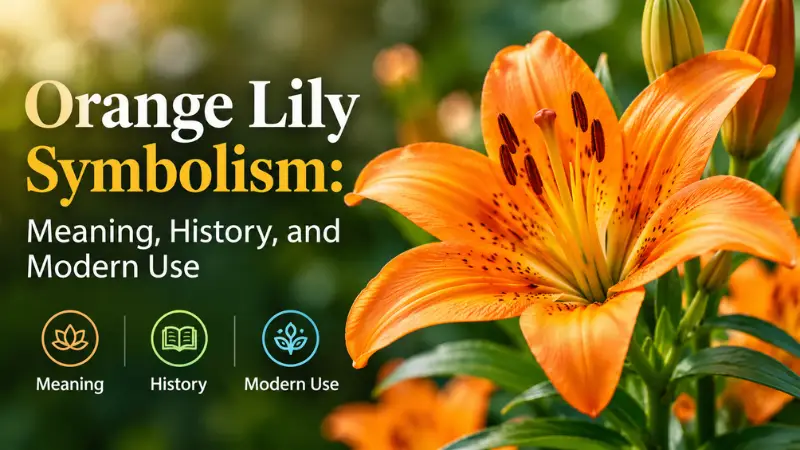
Orange lilies are recognizable by their saturated orange, golden-orange, or reddish-orange petals. Many varieties have dark spots or markings, and some have petals that curve backward, creating a dramatic, star-like or recurved shape. Depending on the variety, the flowers may grow upright or outward from tall stems.
The name lily can refer to different plants, so identifying the species matters. True lilies belong to the genus Lilium, which includes many garden varieties and hybrids. The popular tiger lily, Lilium lancifolium, is a well-known example with orange petals and dark spots. Other orange-flowering lilies have different shapes, patterns, and growth habits.
These physical qualities contribute to the flower’s symbolic appeal. Orange is visually warm and energetic, while the dark markings add contrast and individuality. Tall stems and prominent blooms can make orange lilies appear confident and expressive, even when they are growing among other flowers.
The Core Symbolic Meanings of Orange Lilies
Orange lilies do not have one universally accepted symbolic definition. Their modern meanings are better understood as a combination of traditional flower associations and the cultural meanings attached to orange.
Confidence and Self-Assurance
Orange is often associated with visibility, boldness, and outward expression. An orange lily can therefore serve as a visual emblem of confidence, especially when used in a bouquet or piece of artwork intended to celebrate an achievement.
For example, orange lilies may suit a graduation arrangement, a congratulatory gift, or a display honoring someone’s willingness to take on a challenge. This interpretation is a contemporary symbolic choice rather than a fixed historical rule.
Passion and Enthusiasm
The warm intensity of orange makes the flower a natural choice for expressing excitement and strong interest. Unlike the romantic associations commonly attached to red roses, orange lilies can suggest enthusiasm that is lively, friendly, or directed toward a personal goal.
They may be used to celebrate a new project, a creative milestone, or a relationship marked by shared interests. The meaning comes largely from the flower’s color and presentation, not from a universal floral code.
Joy and Positive Energy
Orange lilies can represent happiness, encouragement, and an optimistic outlook. Their bright blooms stand out against green foliage, making them popular choices for arrangements intended to feel welcoming rather than solemn.
A vase of orange lilies in a home or office can communicate a preference for warmth and visual liveliness. In this context, the symbolism is often less formal than a message attached to a gift.
Individuality and Bold Expression
The spotted petals of certain orange lilies give them a distinctive appearance. For some people, that pattern suggests originality, independence, or comfort with standing out.
This is a modern interpretation rather than a traditional meaning shared across cultures. It works particularly well in tattoos, illustrations, and decorative designs where the flower represents a person’s style or outlook.
Historical Origins of Lily Symbolism
Lilies have appeared in art, gardens, ceremonial settings, and symbolic traditions for centuries. Their meanings, however, vary according to species, location, and historical period. It would be misleading to assume that all the associations of white lilies, for example, automatically apply to orange varieties.
In European art and Christian traditions, lilies—especially white lilies—have often been associated with purity, innocence, and the Virgin Mary. In other settings, lilies have appeared in decorative motifs and have been appreciated for their beauty and formal shape. These traditions helped establish the lily as a flower capable of carrying meanings beyond its physical appearance.
Orange-flowering lilies have their own horticultural histories. Several species originated in parts of Asia, and plants such as the tiger lily became familiar in gardens far beyond their native ranges. As lilies spread through cultivation and hybridization, people encountered a wider variety of colors and forms.
The specific symbolism of orange lilies is less historically standardized than that of some other flowers. Their modern associations with enthusiasm and confidence are largely color-based interpretations layered onto the broader cultural recognition of lilies.
Why the Color Orange Matters
Color plays an important role in how people interpret flowers. Orange sits between red and yellow on the familiar color spectrum, combining some of red’s visual intensity with the brightness associated with yellow.
In contemporary American design, orange frequently suggests warmth, activity, friendliness, and creativity. It appears in seasonal decorations, sports branding, promotional graphics, and interiors intended to feel lively. These associations are not universal, but they help explain why orange flowers often appear celebratory.
Orange can also carry seasonal meaning. In the United States, it is strongly associated with autumn because of changing leaves, pumpkins, harvest displays, and Halloween decorations. Orange lilies in a fall arrangement may therefore evoke the season even when the flowers themselves are not traditionally tied to a particular holiday.
The shade makes a difference. Golden-orange blooms may appear cheerful and welcoming, while deeper reddish-orange petals can look more dramatic or passionate. Neither interpretation is definitive; surrounding colors and the purpose of the arrangement help shape the message.
What Orange Lilies Symbolize in the United States
In American culture, orange lilies are generally understood through personal expression, garden aesthetics, and the broader language of flowers rather than through one nationally established tradition.
They can be used to celebrate accomplishments, brighten a room, or create a vivid focal point in a bouquet. Their color also works well in informal gatherings and seasonal displays, particularly when paired with yellow, red, cream, or green.
Orange lilies may appear in arrangements for birthdays, congratulations, and other happy occasions. They can be especially suitable when the giver wants something more visually adventurous than a traditional pastel bouquet. However, they are not a universal choice for every event, and their meaning should not be treated as a guaranteed message understood identically by every recipient.
In public and commercial design, orange flowers can help communicate energy and visibility. In a home garden, the same lilies may simply express a preference for bold colors. The symbolism is strongest when the person choosing the flower has a clear intention behind it.
Orange Lily Symbolism in Gifts and Special Occasions
Orange lilies can make expressive gifts because they are noticeable without requiring an elaborate explanation. Their warm color can communicate encouragement, celebration, or admiration, depending on the relationship and occasion.
| Context | Common Interpretation in the USA | Why It Fits |
|---|---|---|
| Birthday bouquet | Joy and enthusiasm | Bright color creates a celebratory mood |
| Graduation gift | Confidence and achievement | The bloom can represent a bold new beginning |
| Thank-you arrangement | Warmth and appreciation | Orange feels friendly and energetic |
| Creative milestone | Individuality and inspiration | The flower’s color and markings stand out |
| Autumn centerpiece | Seasonal warmth | Orange complements fall colors and decorations |
For romantic occasions, orange lilies may suggest attraction or enthusiasm, but they do not carry the same widely recognized romantic convention as red roses. They can be a good option for couples who prefer distinctive flowers or want a bouquet that feels cheerful and unconventional.
For professional gifts, consider the recipient’s preferences and the setting. A small arrangement may communicate congratulations without the stronger personal implications that some flowers can carry.
Emotional and Psychological Associations
People often respond to flower colors before they consciously think about symbolic meanings. Bright orange can attract attention and create a sense of visual warmth, while the natural variation in petals and markings makes each bloom interesting to observe.
Orange lilies may therefore be associated with feelings such as optimism, excitement, courage, and creative motivation. Someone who chooses them for a workspace may appreciate their vivid appearance, while someone who gives them to a friend may intend them as an expression of encouragement.
These are cultural and personal associations, not guaranteed psychological effects. There is no reliable basis for claiming that orange lilies automatically improve mood, increase confidence, or produce a particular emotional response in everyone.
Personal memories also matter. If someone associates orange lilies with a family garden, a meaningful celebration, or a person they love, those experiences may become more important than general flower symbolism. The flower’s meaning can be both culturally recognizable and personally specific.
Orange Lilies in Spirituality and Religious Traditions
Lilies appear in several religious and spiritual settings, but their interpretations depend on the tradition, the flower’s color, and the context in which it is used.
In Christianity, the lily is especially associated with purity and the Virgin Mary in European devotional art. White lilies are particularly prominent in these representations. Orange lilies do not have an equally established place in Christian symbolism, so it is better to interpret their color as a contemporary artistic choice than to assign them a specific biblical meaning.
In broader spiritual practices, flowers may be used to represent growth, gratitude, renewal, or an appreciation of the natural world. An orange lily might be chosen to symbolize personal development, enthusiasm for a new chapter, or a desire to approach life with greater confidence.
However, there is no single spiritual doctrine that assigns orange lilies one universal message. People may give the flower a personal spiritual meaning, but that interpretation should be distinguished from documented religious tradition.
Orange Lily Symbolism in Tattoos and Personal Style
An orange lily tattoo can combine the flower’s natural beauty with a message chosen by the person wearing it. Because orange lilies are visually distinctive, they can work as both decorative designs and personal symbols.
Common interpretations include:
- Confidence: A reminder to express yourself openly and trust your abilities.
- Personal growth: A flower representing a new stage of life or a change in outlook.
- Passion: An emblem of enthusiasm for a relationship, creative pursuit, or personal ambition.
- Individuality: A design that celebrates an unconventional style or willingness to stand out.
- Positive memories: A tribute to someone associated with lilies, gardening, or a meaningful event.
The design can change the impression. A single orange lily with a fine outline may look understated and reflective, while a large, vividly colored bloom can feel expressive and energetic. Adding leaves, a stem, or other flowers can introduce additional personal meaning.
There is no established rule that an orange lily tattoo must represent a particular personality trait or life experience. The most meaningful interpretation is often the one the wearer can explain through their own story.
Orange Lilies in Art, Fashion, and Home Decor
Orange lilies offer designers a way to introduce color without relying on abstract shapes or purely decorative patterns. Their recognizable petals and dark markings give them a strong visual identity.
In floral design, they can serve as focal flowers surrounded by greenery or lighter blooms. Pairing them with cream-colored flowers creates contrast without overwhelming the arrangement, while combining them with yellow and red can produce a warmer, more dramatic effect.
In home decor, orange lilies can suit spaces that benefit from a seasonal or cheerful accent. A vase of fresh blooms may complement a neutral room, and botanical illustrations can bring the flower’s shape into interiors throughout the year.
Fashion and accessories offer other possibilities. Lily motifs can appear on scarves, fabrics, jewelry, prints, and embroidered designs. When rendered in orange, the flower may suggest creativity, warmth, or an appreciation for nature.
On social media, a photograph of an orange lily might accompany a message about gardening, a personal milestone, or the arrival of autumn. Such uses reflect individual interpretation rather than a formal symbolic convention. The caption, occasion, and accompanying imagery usually provide more context than the flower alone.
How Orange Lilies Differ From Other Lily Colors
Lily colors can influence the impression a bouquet creates, although their meanings are not universal or fixed. Comparing colors helps explain what makes orange lilies distinctive.
| Lily Color | Common Symbolic Association | Typical Impression |
|---|---|---|
| White | Purity, innocence, remembrance | Calm and formal |
| Pink | Affection, admiration, femininity | Gentle and warm |
| Orange | Enthusiasm, confidence, vitality | Bright and expressive |
| Yellow | Cheerfulness, friendship, happiness | Sunny and welcoming |
| Red | Passion and romantic intensity | Bold and dramatic |
These are broad contemporary associations, not rules that apply to every culture or flower variety. A person’s memories, the occasion, and the other flowers in an arrangement can change the interpretation.
Orange lilies stand out because they often feel celebratory without being limited to romance. They can suit friendship, personal achievement, creative expression, and seasonal decoration. For someone who wants to communicate enthusiasm rather than formal elegance, they may be an appealing choice.
Common Misunderstandings About Orange Lily Symbolism
One common mistake is assuming that every lily carries the same meaning. The genus Lilium includes many species and hybrids, and the symbolism associated with one variety or color does not necessarily apply to all the others.
Another misconception is that orange lilies have a single ancient meaning that has remained unchanged across cultures. Their modern associations with confidence and enthusiasm are largely influenced by contemporary interpretations of orange. The broader history of lily symbolism is much older and more varied, but the exact meaning of the orange lily is not consistently documented across historical traditions.
It is also easy to mistake personal interpretations for established cultural beliefs. Someone might describe an orange lily as a sign of courage or new beginnings, but that does not mean every recipient will recognize the same message.
Finally, a flower’s symbolic appeal should not distract from practical considerations. True lilies are highly toxic to cats, including through exposure to pollen and vase water. Anyone with a cat should avoid bringing true lilies into the home and seek veterinary advice immediately if exposure occurs. This safety issue is separate from the flower’s symbolism but important when choosing it as a gift or decoration.
How Orange Lily Meanings Have Evolved
The meaning of the orange lily is best understood as an evolving combination of horticulture, color symbolism, and personal expression.
Older European traditions gave lilies ceremonial and religious associations, particularly around white flowers. As lily varieties spread through cultivation and gardeners developed new hybrids, people encountered more colors and forms. The symbolic vocabulary available to flower lovers expanded along with the plants themselves.
Modern American culture places considerable emphasis on personal choice. A flower can be selected because it represents an emotion, matches a celebration, recalls a loved one, or simply looks beautiful. Orange lilies fit this flexible approach because their vivid color makes them expressive without tying them to a single formal tradition.
Today, an orange lily might represent enthusiasm in a congratulatory bouquet, individuality in a tattoo, or seasonal warmth in an autumn centerpiece. These interpretations are not necessarily competing meanings. They reflect the different reasons people use flowers to communicate.
The central idea remains straightforward: orange lilies offer a recognizable way to express energy, confidence, and a positive outlook, while their wider meaning depends on the person and the occasion.
FAQs
What does an orange lily symbolize spiritually?
An orange lily may represent personal growth, enthusiasm, gratitude, or a fresh outlook when someone assigns it a spiritual meaning. These interpretations are personal and contemporary rather than part of one universally recognized religious teaching.
Is an orange lily a symbol of love?
An orange lily can express attraction, admiration, or enthusiasm in a relationship. Its meaning is generally more flexible than the familiar romantic symbolism of a red rose, making it suitable for people who prefer a less conventional floral gift.
What does an orange lily tattoo mean?
An orange lily tattoo can represent confidence, individuality, passion, or an important personal transition. Its meaning depends on the wearer’s experiences, the design, and any additional symbols incorporated into the tattoo.
Are orange lilies considered lucky?
Orange lilies are sometimes chosen to express optimism and celebrate new opportunities, which can make them feel like symbols of good fortune. However, they are not universally established as lucky flowers across American culture or other traditions.
Do orange lilies have a negative meaning?
Orange lilies do not have one widely recognized negative meaning in modern American flower symbolism. Some people may associate them with excessive brightness or an overly dramatic style, but such reactions are matters of personal taste rather than established cultural rules.
What is the difference between orange lilies and tiger lilies?
Tiger lilies are a particular type of lily, commonly identified by their orange petals and dark spots. Not every orange lily is a tiger lily, and the exact appearance and horticultural characteristics depend on the species or hybrid.
Are orange lilies appropriate for funerals?
Orange lilies can be included in funeral arrangements when their color suits the family’s wishes or reflects the personality of the person being remembered. White flowers are more conventionally associated with solemnity in many American funeral settings, but there is no universal rule excluding orange blooms.
Conclusion
Orange lily symbolism most commonly centers on confidence, enthusiasm, passion, and vitality. Its meaning combines the broader cultural associations of orange with the beauty and ceremonial history of lilies, creating a flower that can suit celebrations, personal artwork, garden displays, and thoughtful gifts.
In modern American culture, the orange lily does not have one fixed message. It may express encouragement, celebrate an achievement, recall a meaningful memory, or simply bring warmth to a space. Ultimately, orange lily symbolism is most meaningful when its bright, expressive character matches the feeling or intention behind choosing the flower.