Introduction
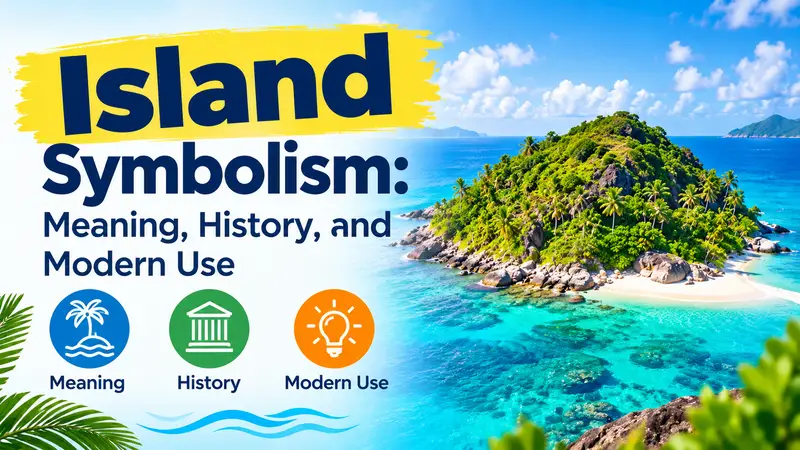
Islands have a distinctive place in the human imagination. Surrounded by water and separated from the mainland, they can represent freedom, solitude, adventure, and the possibility of starting over. Island symbolism draws on this physical separation to express ideas about independence, isolation, refuge, and the search for belonging.
In the United States, islands appear throughout literature, movies, travel culture, and personal storytelling. A tropical island may suggest a peaceful escape from everyday responsibilities, while a remote island in a survival story can become a test of courage and resourcefulness. An island can also represent home, cultural identity, or a community that has developed its own traditions.
These meanings are not always positive. The same distance that offers privacy can create loneliness, and the same ocean that protects a community can make travel, communication, and access to resources more difficult. Understanding the symbolism of an island means looking at both sides of separation: what it makes possible and what it keeps apart.
Quick Answer
Island symbolism commonly represents freedom, solitude, escape, independence, and new beginnings in modern American culture, especially in travel imagery, literature, and film. Historically, islands have also symbolized sacred places, isolated communities, exile, survival, and the boundary between the familiar world and the unknown.
TL;DR
- Freedom: Islands can represent independence from social expectations and everyday pressures.
- Isolation: Separation from the mainland may suggest loneliness or emotional distance.
- Escape: Tropical islands often symbolize rest, adventure, and a break from routine.
- Survival: Remote islands test human adaptability, courage, and resourcefulness.
- Identity: Island communities can represent cultural heritage and belonging.
- Transformation: An island journey may mark a new stage of life.
What Makes an Island a Symbol?
An island is a piece of land surrounded by water. It may be a small rocky outcrop, a forested island in a lake, a tropical destination, or a large inhabited landmass. Its defining feature is not its size or climate but its separation from surrounding land.
That physical boundary gives the island its symbolic flexibility. Water can act as a barrier, a protective border, a route to adventure, or a force that makes departure difficult. The island itself becomes a contained setting in which ordinary rules may seem distant or different.
In stories, this containment makes an island especially useful. Characters can become separated from society, communities can develop their own customs, and unfamiliar environments can reveal qualities that remain hidden in everyday life. In personal symbolism, an island may represent a place where someone can think independently or step away from outside demands.
The island’s meaning therefore depends on the surrounding circumstances. A welcoming island home suggests security, while an island with no safe way to leave may represent confinement.
The Core Meanings of Island Symbolism
Several recurring meanings explain why islands appear so often in art, storytelling, and personal reflection.
Freedom and independence arise from the idea of living apart from mainland institutions and expectations. An island may suggest the chance to make decisions without constant interference.
Solitude and isolation emerge from physical distance. Being separated from other people can provide needed privacy, but it can also create a sense of abandonment.
Escape and renewal are especially common in contemporary American travel culture. An island vacation may represent time away from work, stress, or familiar routines. In fiction, arriving on an island can mark the beginning of a different life.
Survival and self-reliance appear when characters must find food, shelter, and safety without their usual support systems. The island becomes a setting where practical skills and judgment matter.
Mystery and discovery develop because islands can conceal unfamiliar landscapes, communities, or histories. Reaching an island may feel like crossing into a world with its own rules.
These meanings can exist together. An island may offer freedom precisely because it is isolated, yet that isolation may eventually become a problem.
Ancient Roots and Historical Meanings of Islands
Islands have carried spiritual, political, and practical significance across many societies. Their surrounding waters could make them difficult to reach, giving them roles as places of refuge, defense, pilgrimage, exile, or contact with unfamiliar worlds.
In ancient Greek mythology, islands frequently appear as settings for encounters that challenge travelers. In Homer’s Odyssey, the hero visits islands inhabited by figures and communities that test his judgment, endurance, and loyalty. These settings turn travel across water into more than a physical journey: each destination becomes a test of character.
Islands also served practical purposes in history. Some became centers of trade and navigation, while others housed monasteries, fortifications, or settlements separated from mainland political life. Their isolation could support religious contemplation, but it could also make them useful places for imprisonment or exile.
There is no single ancient meaning shared by all islands. Their symbolism developed from geography, local history, religious traditions, and the stories people told about particular places.
Island Symbolism in American Culture
In the United States, islands often represent the promise of a different kind of life. Travel advertisements portray places such as Hawaii and the Florida Keys as destinations for relaxation, outdoor exploration, and distance from ordinary responsibilities. The island becomes an imagined break from schedules, traffic, and workplace demands.
American popular culture also uses islands to explore independence and social organization. A character stranded on an island may discover personal strengths, while a group of people isolated from the mainland may develop new rules or expose existing conflicts.
Islands can also represent community rather than escape. For residents of places such as Puerto Rico, Hawaii, and Alaska’s island communities, island life is not simply a vacation fantasy. It involves family networks, local economies, cultural traditions, transportation needs, and relationships with mainland institutions.
These perspectives matter because an island can mean very different things to a visitor and a resident. A tourist may see a remote paradise, while someone who lives there may think about housing costs, employment, storms, or the challenges of traveling to medical appointments.
American island symbolism is therefore shaped by both imagination and lived experience.
What Islands Represent in Dreams and Personal Reflection
People sometimes interpret islands in dreams as images of independence, emotional distance, or the desire for privacy. Someone dreaming of a peaceful island might associate it with rest or the need to withdraw from competing demands. A frightening or deserted island could reflect concerns about loneliness or a lack of support.
These interpretations are possibilities rather than established rules. Dream symbols do not have universal meanings, and an island in a dream cannot reliably diagnose a person’s emotional state.
Personal reflection can be more useful than relying on a fixed interpretation. Consider whether the island feels welcoming or threatening, whether other people are present, and whether leaving is possible. Those details may help someone connect the image with their own circumstances.
In everyday life, people also use island imagery to describe a desire for a quiet place to think. A small island in a lake, for example, may become a personal metaphor for setting boundaries without completely abandoning relationships.
Islands as Symbols of Freedom and Independence
An island can represent the freedom to shape one’s own life. Because it is physically separated from the mainland, it offers a convenient image of a place where someone can establish different priorities, make independent decisions, or live outside familiar expectations.
This interpretation appears frequently in stories about people leaving their former lives behind. An island settlement may represent the possibility of building a new community, while a private island may symbolize control over one’s surroundings.
However, independence has limits. Islands depend on connections with other places for varying combinations of food, energy, transportation, communication, and trade. Even a seemingly self-sufficient island may rely on outside networks.
This tension gives the symbol more substance. Freedom does not necessarily mean having no connections; it may mean choosing which connections to maintain and how much influence they have over daily life.
For an individual, an island may represent healthy boundaries. For a community, it may represent self-determination and the desire to preserve local traditions while remaining connected to the wider world.
Isolation, Loneliness, and Emotional Distance
The ocean surrounding an island can make it an image of separation. In literature and film, an isolated island often removes characters from their normal sources of comfort, authority, and assistance. The absence of familiar people forces them to confront their fears or adapt to circumstances they cannot easily control.
In personal symbolism, an island may represent feeling misunderstood or disconnected. Someone who describes themselves as living on an island may mean that they feel alone even when other people are nearby.
Yet solitude and loneliness are not the same thing. Solitude can be voluntary and restorative, giving someone time to reflect without interruption. Loneliness involves an unwanted lack of connection, even if other people are physically present.
The island image captures this difference particularly well. A peaceful island with a clear path to the mainland can suggest chosen privacy, while an inaccessible island surrounded by rough water can suggest unwanted separation.
The emotional meaning depends on whether the distance feels protective or restrictive.
Islands as Places of Escape, Healing, and Renewal
The idea of an island retreat is familiar in American travel culture. Images of beaches, clear water, and quiet coastal landscapes encourage the belief that leaving everyday surroundings can create room for rest and perspective.
An island can consequently symbolize a pause between two stages of life. A person might associate a trip to an island with recovering from burnout, celebrating a milestone, or taking time to consider a major decision.
In fiction, a character’s arrival on an island may initiate a period of transformation. Removed from familiar routines, the character must reconsider priorities and develop different habits. The island becomes a setting for change rather than merely a beautiful location.
Still, the idea of escape can be idealized. Travel does not automatically resolve grief, conflict, or financial pressure, and island residents face the same range of human challenges as people elsewhere. The symbol is most useful when it represents the opportunity to pause and gain perspective, not a promise that changing locations will solve every problem.
Island Symbolism in Mythology, Religion, and Folklore
Islands appear in many mythological and religious traditions, often as places where ordinary experience meets the extraordinary. Their separation from familiar territory makes them natural settings for sacred encounters, trials, hidden knowledge, and encounters with supernatural beings.
In Greek mythology, the island of Delos became associated with Apollo and Artemis, while other islands in classical stories served as homes for gods, monsters, or legendary communities. The meaning depends on the individual story rather than on islands as a single category.
In Celtic traditions and later literary interpretations of Celtic mythology, islands sometimes appear as places associated with the Otherworld, extraordinary encounters, or journeys beyond ordinary human experience. The details differ across texts and traditions, so these associations should not be applied to every island in Celtic culture.
Religious communities have also used islands as locations for retreat and contemplation. Their relative separation can support a deliberate withdrawal from everyday distractions, although the purpose and practices vary by tradition.
These examples show how an island can function as a threshold: a place that lies between the familiar and the unfamiliar, the ordinary and the sacred, or the life a person knows and the life they have yet to encounter.
What Different Types of Islands Symbolize
Not every island creates the same impression. Climate, landscape, accessibility, and human presence influence the associations attached to it.
| Island Type | Common Symbolic Meaning | Typical Associations |
|---|---|---|
| Tropical island | Escape and relaxation | Beaches, leisure, travel |
| Deserted island | Isolation and survival | Self-reliance, uncertainty |
| Rocky island | Endurance and solitude | Exposure, resilience |
| Sacred or historic island | Spirituality and memory | Pilgrimage, heritage |
| Inhabited island | Community and identity | Family, tradition, belonging |
| Private island | Independence and exclusivity | Privacy, wealth, control |
These are common cultural associations, not universal definitions. A tropical island can be the setting for a survival story, and a rocky island can serve as a cherished home. The surrounding narrative determines which meaning becomes most important.
Island Symbolism in Literature, Film, and Popular Culture
Writers and filmmakers often choose islands because they create natural boundaries around a story. A limited setting makes it easier to explore survival, power, cooperation, and conflict without the constant influence of the outside world.
William Golding’s Lord of the Flies uses an isolated island to examine how a group of boys organizes itself when familiar adult authority disappears. The island is not simply a symbol of freedom; it becomes a setting for questions about social rules, fear, and human behavior.
Daniel Defoe’s Robinson Crusoe presents isolation through the experience of a castaway who must develop practical skills and establish a life in unfamiliar surroundings. The story has also prompted discussion of colonial attitudes, labor, and the relationship between individual survival and power over others.
Modern films and television continue to use island settings for mysteries, adventure stories, competitions, and speculative fiction. The island may conceal danger, offer a chance to start over, or expose tensions that remain hidden in ordinary society.
Because the setting is separated from the mainland, it can function as a contained world in which the consequences of human decisions become easier to see.
Islands, Cultural Identity, and Belonging
For island communities, geography can contribute to a shared sense of identity. Local food, language, music, maritime traditions, and relationships with the surrounding environment may become important markers of belonging.
In Hawaii, island identity is connected with Native Hawaiian history and culture, as well as the experiences of other communities that have shaped the state’s population. Understanding that identity requires more than treating the islands as a vacation destination.
Puerto Rico offers another example of how island geography intersects with history, language, culture, and political status. Its relationship with the United States is distinct from that of a state, and its residents’ experiences cannot be reduced to the idea of a remote or isolated place.
At the same time, island communities are not culturally uniform. Differences in history, migration, class, language, and personal experience shape how people understand their home.
In this context, an island can symbolize continuity and belonging rather than separation. The surrounding water may distinguish a community geographically, but its connections to other places remain an important part of its history and identity.
Island Tattoos, Jewelry, and Modern Design
Island imagery appears in tattoos, travel-inspired jewelry, wall art, clothing, and graphic design. People may choose these images to commemorate a meaningful trip, express a connection to a coastal home, or represent independence and the desire for a simpler life.
A small island silhouette can evoke personal memories without needing detailed imagery. A design featuring an island beneath a sunrise may suggest a new chapter, while an island surrounded by waves can emphasize the relationship between stability and change.
For some people, island tattoos also represent a place where they feel accepted or connected to family. In these cases, the symbol is less about escape than about having a home that remains important even when distance separates people.
The context matters. A generic palm-tree design may communicate vacation and leisure, whereas a detailed map outline may identify a particular place with cultural or personal significance.
Anyone choosing an island design should consider whether it represents a real community or heritage. If it does, learning about the place’s history and local meanings can make the design more thoughtful and accurate.
Common Misunderstandings About Island Symbolism
One common misconception is that islands always represent freedom. In reality, their separation can limit transportation, restrict access to services, or leave people vulnerable when severe weather interrupts travel and supply routes.
Another mistake is treating islands as empty spaces waiting to be discovered. Many islands have long histories of habitation, cultural development, and connections with neighboring regions. Describing them only as remote paradises can erase the people who live there and the challenges they face.
The idea that island life is naturally peaceful can also be misleading. Islands experience political disagreements, economic pressures, environmental risks, and social change, just as mainland communities do.
Finally, island symbolism should not be confused with a universal spiritual code. An island may represent refuge in one story, exile in another, and home in someone’s personal experience.
The most accurate reading considers who is describing the island, what circumstances surround it, and whether the separation is chosen or imposed.
How Island Symbolism Has Changed Over Time
Island symbolism has shifted as societies have changed their relationships with geography, travel, and communication. In older stories, islands could be difficult-to-reach places associated with sacred encounters, dangerous journeys, or exile. Their distance from familiar territory made them useful settings for testing people and beliefs.
With the development of modern travel and tourism, many islands acquired an additional image as destinations for leisure and escape. Advertising and popular entertainment helped establish the tropical island as a visual shorthand for relaxation, luxury, and freedom from routine.
Contemporary interpretations are more varied. Environmental concerns, discussions of cultural preservation, and the experiences of island residents have encouraged greater attention to the realities behind the vacation image.
Today, an island may represent independence, vulnerability, cultural continuity, ecological importance, or a temporary retreat. These meanings do not cancel one another out. They reflect the different ways people experience the same geographical feature.
FAQs
What does an island symbolize spiritually?
An island can symbolize retreat, contemplation, sacred separation, or a journey toward greater understanding. Its spiritual meaning depends on the religious tradition or story in which it appears.
Is an island a symbol of freedom or loneliness?
It can represent either, because physical separation offers both privacy and distance from others. Whether the island feels liberating or lonely depends on whether that separation is chosen and welcomed.
What does a deserted island symbolize?
A deserted island commonly represents survival, self-reliance, uncertainty, and separation from society. In stories, it can also provide a setting for characters to discover their abilities or confront their limitations.
What does an island symbolize in dreams?
An island in a dream may reflect a desire for privacy, a feeling of isolation, or a wish to begin again. These are personal interpretations rather than scientifically established meanings, so the dreamer’s circumstances are important.
Why are islands often used in movies and books?
Islands provide a contained setting where characters can be separated from familiar institutions and resources. This makes them useful for exploring survival, social behavior, adventure, mystery, and personal change.
What does an island tattoo mean?
An island tattoo may represent independence, a meaningful travel experience, cultural heritage, or a place associated with home. Its meaning is usually shaped by the wearer’s personal history and the design itself.
Are islands positive or negative symbols?
Islands can carry positive, negative, or mixed meanings. They may suggest peace and independence, but they can also represent exile, loneliness, confinement, or vulnerability.
Conclusion
Island symbolism reflects the tension between separation and connection. An island can offer privacy, independence, and a chance to begin again, but it can also create distance, uncertainty, and dependence on limited resources. Its meaning changes according to the landscape, the people who inhabit it, and the circumstances surrounding it.
In modern American culture, islands remain familiar images of escape, adventure, and self-discovery, while their roles in literature, mythology, and community identity reveal more complex interpretations. Island symbolism is ultimately less about land surrounded by water than about the human experience of being apart, finding belonging, and deciding what to do with the space in between.