
Introduction
Wolfsbane is a striking flowering plant with hood-shaped blossoms, a long history in European folklore, and a reputation for toxicity. In wolfsbane symbolism, the plant commonly represents danger, protection, mystery, and the boundary between beauty and harm. Its unusual appearance and poisonous nature have made it a natural fit for stories involving witches, werewolves, and hidden threats.
Known scientifically as Aconitum, wolfsbane belongs to a group of plants that includes monkshood and aconite. Depending on the species, its flowers may appear blue, purple, yellow, or white. Although it can look elegant in a garden, many aconite species contain highly toxic compounds, giving the plant a serious real-world association with danger.
In the United States, wolfsbane is most familiar through fantasy novels, horror films, supernatural television, and Halloween imagery. Its reputation also draws on older European beliefs about poisonous plants, witchcraft, and wolves. Understanding the symbol means separating documented folklore from fictional traditions that became popular through modern entertainment.
Quick Answer
Wolfsbane symbolism commonly represents danger, protection, mystery, and hidden power in modern American culture, especially in fantasy, horror, and supernatural storytelling. Historically, aconite plants were associated with poison, magic, and frightening folklore, while their modern image is particularly connected with werewolves and other supernatural threats.
TL;DR
- Core meaning: Danger, mystery, protection, and concealed threats.
- Historical roots: Aconite appears in ancient stories and European folklore.
- Werewolf connection: Modern fiction often portrays wolfsbane as harmful to werewolves.
- American culture: Horror, fantasy, Halloween, and supernatural entertainment keep it recognizable.
- Emotional meaning: The plant suggests caution, fascination, and beauty with a dangerous edge.
- Real-world warning: Wolfsbane is highly toxic and should never be treated as a harmless herb.
What Is Wolfsbane and What Does It Look Like?
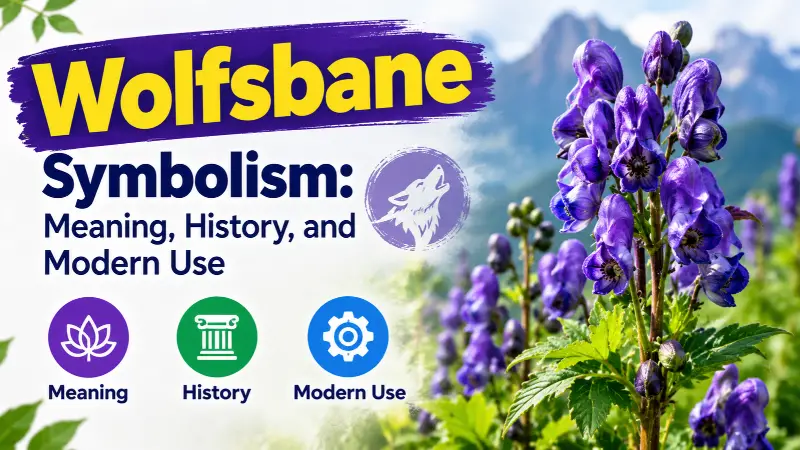
Wolfsbane is a common name for plants in the genus Aconitum, particularly species known as monkshood. These plants often grow upright stems bearing distinctive flowers shaped like small helmets or hoods. Their unusual form makes them easy to recognize in botanical illustrations, traditional gardens, and fantasy artwork.
The name monkshood refers to the hoodlike shape of the flower, which resembles the head covering associated with a monk. The name wolfsbane, by contrast, emphasizes the plant’s historical reputation as a poison and its connection with wolf-related folklore.
Aconite species grow in parts of Europe and Asia, and some are cultivated as ornamental plants in North American gardens. Their attractive appearance can conceal their toxicity. All parts of many commonly called wolfsbane species can be dangerous, and poisoning can cause serious or potentially fatal effects.
This contrast between an appealing flower and a hazardous plant forms the foundation of much of its symbolism. Wolfsbane looks delicate, but its reputation warns that appearances do not always reveal the risks beneath the surface.
The Core Meaning of Wolfsbane Symbolism
Wolfsbane carries several overlapping meanings, most of which arise from its poisonous properties and its place in folklore.
Danger is the most direct association. Because aconite can cause severe poisoning, the plant has become an image of something attractive but unsafe. In literature, it may represent a threat that is difficult to recognize until it is too late.
Protection appears in stories where wolfsbane is used to repel or injure a supernatural enemy. This meaning is especially common in werewolf fiction, although the idea of wolfsbane as a reliable supernatural defense is a fictional convention rather than an established historical fact.
Mystery comes from the plant’s links with magic, old remedies, and legends. Its unfamiliar name and dramatic appearance make it suitable for stories about hidden knowledge or secret intentions.
Transformation is another modern association, particularly in stories about werewolves and other beings who change between human and animal forms. Here, wolfsbane can represent the struggle between ordinary identity and a dangerous or uncontrollable side of nature.
These meanings are not universal. A botanist may view wolfsbane primarily as a toxic plant, while a fantasy reader may immediately associate it with werewolves. The context determines which interpretation is most relevant.
Ancient Roots: Aconite in Greek Mythology
Aconite appears in ancient Greek mythology, where poisonous plants and dangerous substances often connect the natural world with divine punishment, monsters, and the underworld.
One well-known story links aconite to Cerberus, the multiheaded dog that guards the entrance to the underworld. In some versions of the myth, the plant arose where Cerberus’s poisonous saliva touched the ground when Heracles brought the creature into the world above during his twelfth labor. This account helps explain why later writers associated aconite with monstrous creatures and dangerous supernatural forces.
Aconite also became associated with the sorceress Medea in ancient literary traditions. Stories involving Medea frequently feature poison, deception, and magical knowledge, making the plant a fitting symbol for the dangerous use of hidden expertise.
These accounts belong to mythology rather than botanical history. They do not establish that ancient people understood every aconite species in the same way, nor do they explain the origin of every later wolfsbane legend. They do, however, show how the plant acquired a literary identity tied to poison and supernatural danger.
Wolfsbane in European Folklore and Witchcraft
European folklore strengthened the plant’s association with poison, magic, and fear. Aconite was known as a dangerous substance, and its toxicity made it relevant to historical discussions of poisoning, including stories about political plots and suspected sorcery.
Plants with poisonous properties often occupied an uneasy position in traditional medicine. Knowledge of them could be associated with specialized expertise, but their potential for harm also made them objects of suspicion. This tension helped poisonous plants become familiar features in tales about witches, enchantment, and secret preparations.
The word wolfsbane also invites a connection with wolves. The name reflects a historical association between the plant and attempts to poison wolves or protect livestock, although the details and prevalence of particular practices varied. It should not be assumed that every community used the plant in the same way.
Modern stories sometimes present wolfsbane as an ancient, standardized anti-werewolf remedy. That specific idea is better understood as a development of supernatural fiction than as a single, well-documented European folk belief shared across the continent.
Why Wolfsbane Became Connected With Werewolves
The connection between wolfsbane and werewolves is one of the plant’s most recognizable modern associations. Werewolf stories explore the fear that a familiar person can become dangerous, uncontrollable, or fundamentally different under certain conditions. A poisonous plant makes a convenient symbol for confronting that threat.
In modern supernatural fiction, wolfsbane may injure a werewolf, prevent transformation, weaken supernatural abilities, or serve as a defensive ingredient. The details vary from one fictional world to another. There is no universal rule governing how wolfsbane works in these stories.
Its appeal comes partly from the contrast between the natural and supernatural worlds. The plant is real, and its toxicity is genuine, while the werewolf’s vulnerability to it belongs to the fictional setting. Giving a supernatural creature a specific weakness creates tension and offers human characters a way to respond to a threat that might otherwise seem impossible to control.
For American audiences, this connection is reinforced by horror films, fantasy novels, games, and television series. The plant has become a shorthand for werewolf lore, even among people who have never encountered it outside fiction.
Wolfsbane Symbolism in Modern American Culture
In the United States, wolfsbane is most recognizable as a symbol in popular entertainment rather than as a common element of everyday cultural practice. It frequently fits stories involving witches, werewolves, curses, dark forests, secret knowledge, and supernatural danger.
Horror and fantasy writers use the plant to establish atmosphere quickly. Mentioning wolfsbane can suggest that a character knows something about the supernatural world, is preparing to defend against a threat, or has access to dangerous knowledge.
The plant also fits Halloween aesthetics. Its dramatic name and unusual flowers suit gothic illustrations, haunted-house decorations, costume concepts, and fictional potion imagery. In these settings, it often represents the unsettling side of nature rather than a specific religious or spiritual belief.
Some Americans encounter wolfsbane through gardening or botanical interests. In that context, its meaning is more practical: it is an ornamental plant that requires informed handling because of its toxicity. The contrast between its real botanical identity and its fictional reputation is an important part of its modern cultural appeal.
The Emotional and Psychological Meaning of Wolfsbane
Wolfsbane often represents the uneasy relationship between attraction and fear. Its blossoms can look beautiful, yet its toxicity makes the plant dangerous. That contrast gives it a natural place in stories about people, objects, or situations that appear harmless but conceal serious risks.
Psychologically, the plant can suggest caution, mistrust, or awareness of hidden motives. In a mystery novel, for example, wolfsbane might appear in a garden belonging to a character whose outward gentleness conceals a threatening nature. The plant helps create suspicion before the story reveals what is happening.
It can also symbolize knowledge that carries responsibility. A character who understands wolfsbane may possess specialized botanical knowledge, but that knowledge can be used to protect others or cause harm. This duality makes the plant more interesting than a simple emblem of evil.
These interpretations are literary associations, not universal psychological responses. A person who enjoys gothic gardening may associate wolfsbane with beauty and historical interest rather than fear.
Wolfsbane in Tattoos, Jewelry, and Personal Style
Wolfsbane can appeal to people who prefer darker botanical imagery or have an interest in folklore, fantasy, and gothic aesthetics. Unlike a rose or sunflower, it carries a recognizable association with danger, making it suitable for designs that explore contradiction and complexity.
A wolfsbane tattoo might represent caution, an interest in supernatural stories, or an appreciation for plants with unusual histories. Someone who identifies with gothic art may choose the flower because it combines elegance with an unsettling reputation.
In jewelry and fashion, the plant may appear as a pendant, embroidered flower, illustration, or decorative motif. Its hooded blossoms and branching stems offer a distinctive shape that works well in detailed artwork.
There is no fixed meaning attached to wearing wolfsbane imagery. A tattoo does not prove that someone practices witchcraft, believes in werewolves, or identifies with a particular spiritual tradition. The individual’s intentions and the surrounding design provide more useful clues than the flower alone.
Wolfsbane in Witchcraft, Gothic Art, and Halloween
Wolfsbane is frequently associated with witchcraft in contemporary fantasy and gothic art. It may appear beside candles, old books, moon imagery, dark forests, and other plants traditionally connected with folklore.
This visual language draws on historical stories about poisonous herbs and magical preparations, but modern representations often combine several periods and traditions. A fictional witch’s garden may contain plants from different regions and eras simply because they contribute to a recognizable atmosphere.
During Halloween, wolfsbane suits decorations and illustrations built around supernatural danger. Its association with werewolves makes it especially useful in artwork featuring full moons, haunted woods, and shapeshifting creatures.
However, popular images should not be confused with evidence about historical witchcraft practices. Stories about magical uses of plants varied widely, and some claims were shaped by rumor, literary invention, or later retellings. The modern gothic image of wolfsbane is a mixture of real botanical danger and imaginative storytelling.
Wolfsbane Across Cultures and Traditions
Although wolfsbane is particularly associated with European folklore in American popular culture, aconite plants have a broader history.
In ancient Greek and Roman writing, aconite was known as a dangerous poison. Mythological stories connected it with Cerberus and Medea, reinforcing associations with the underworld, deception, and lethal knowledge.
In parts of Asia, aconite species have also appeared in traditional medicinal systems. Certain preparations have been used in Chinese medicine, but processing and professional controls are essential because the plant’s toxic compounds can cause severe poisoning. Historical medicinal use does not mean that the raw plant is safe or suitable for home remedies.
These different traditions show why wolfsbane cannot be assigned one universal cultural meaning. In European-inspired fiction, it may function as a defense against supernatural creatures; in botanical history, it is a poisonous plant; and in historical medical discussions, it represents the complicated relationship between therapeutic knowledge and risk.
Understanding these distinctions allows readers to appreciate the symbolism without confusing fictional beliefs with cultural or medical facts.
Common Misunderstandings About Wolfsbane Symbolism
One common misconception is that wolfsbane has always been recognized as a werewolf’s weakness. Its association with dangerous animals and its poisonous reputation have historical roots, but the familiar supernatural rules belong largely to later storytelling.
Another misunderstanding is that wolfsbane is simply an evil plant. Toxicity explains much of its frightening reputation, but a plant does not have moral intentions. In a garden, it is a living organism whose risks must be understood and managed.
It is also inaccurate to assume that every historical reference to wolfsbane describes the same botanical species. Common plant names can refer to different species or be used inconsistently, complicating attempts to connect a particular legend with a particular plant.
Finally, fictional portrayals sometimes suggest that wolfsbane can safely be handled or prepared as a magical ingredient. In reality, aconite is highly toxic, and ingestion or other significant exposure can cause a medical emergency. It should never be used as a homemade remedy or as a practical defense against animals or people.
How Wolfsbane Symbolism Has Changed Over Time
Wolfsbane’s reputation developed from the real dangers associated with aconite, its place in ancient literature, and its use in stories about poison and magic. Over time, the plant accumulated additional associations with witchcraft, frightening animals, and supernatural threats.
Literature helped preserve its image as a dangerous substance. Later horror and fantasy entertainment gave it a more specialized role by making it a recognizable feature of werewolf stories.
A notable example is the 1941 film The Wolf Man, which helped popularize the association between wolfsbane and lycanthropy in American popular culture. The film’s treatment of the plant contributed to the idea that even an ordinary flower could become significant in a supernatural struggle.
Today, the plant carries several overlapping identities. It is a real ornamental perennial, a historically documented poison, a feature of European folklore, and a familiar fictional symbol. Its meaning depends on whether someone encounters it in a botanical garden, a history book, or a supernatural story.
FAQs
What does wolfsbane symbolize spiritually?
Wolfsbane does not have one universally established spiritual meaning. In modern symbolic interpretations, it may represent protection, caution, hidden knowledge, or the need to recognize danger beneath an attractive appearance.
Why is wolfsbane associated with werewolves?
The association grew through supernatural storytelling that connected a poisonous plant with dangerous wolf-like creatures. Modern American films, books, and television helped establish wolfsbane as a fictional weakness or deterrent for werewolves.
Is wolfsbane a symbol of protection?
Yes, particularly in fantasy and horror, where characters use it as a defense against supernatural threats. This is a fictional symbolic role rather than evidence that the plant can protect people from werewolves or other real-world dangers.
What does a wolfsbane tattoo mean?
A wolfsbane tattoo may express an interest in gothic art, folklore, supernatural fiction, or themes involving danger and hidden knowledge. Its meaning depends on the wearer and the other elements included in the design.
Is wolfsbane associated with witches?
Wolfsbane appears in folklore and later fictional portrayals of witchcraft because of its poisonous properties and historical reputation. However, its presence in a modern witch-themed design does not establish a connection to any particular historical or contemporary spiritual practice.
Is wolfsbane evil or unlucky?
There is no universal tradition establishing wolfsbane as inherently evil or unlucky. Its negative reputation largely reflects its toxicity and its role in frightening stories, while some people value it as an ornamental plant.
Is wolfsbane poisonous in real life?
Yes. Many plants in the Aconitum genus contain highly toxic compounds that can affect the heart and nervous system. Never ingest or prepare wolfsbane as a remedy; suspected exposure requires urgent professional medical or poison-control guidance.
Conclusion
Wolfsbane symbolism combines danger, protection, mystery, and the uneasy contrast between beauty and harm. Its historical reputation as a poison, its appearance in European folklore, and its role in modern American supernatural entertainment have given it several distinct meanings.
The most useful way to understand wolfsbane is to distinguish the real plant from the stories built around it. Its toxicity is a botanical fact, its mythological associations come from older traditions, and its role as a werewolf deterrent belongs to fiction. Together, these layers explain why wolfsbane remains such a recognizable symbol of hidden danger and the knowledge needed to confront it.


