Introduction
Yellow lily symbolism is commonly associated with joy, friendship, gratitude, and optimism. With its bright petals and graceful shape, the yellow lily often communicates warmth and appreciation, making it a popular choice for bouquets, garden displays, celebrations, and thoughtful gifts in the United States.
Unlike flowers that are strongly associated with romance or mourning, yellow lilies can convey a welcoming, cheerful message without requiring a romantic relationship. They may be given to celebrate a personal achievement, thank a friend, brighten someone’s day, or express encouragement during a difficult period.
However, flower meanings are not universal rules. Yellow lilies belong to a broader tradition of floral symbolism shaped by color associations, cultural practices, art, and changing social customs. Understanding these influences explains why the flower can communicate happiness in one setting and carry a more personal or reflective meaning in another.
Quick Answer
Yellow lily symbolism most commonly represents joy, friendship, gratitude, and optimism in modern American culture, especially in gifts, celebrations, and floral arrangements. More broadly, lilies have historical associations with beauty, renewal, affection, and ceremonial traditions, while the color yellow often suggests warmth, sunlight, and happiness.
TL;DR
- Joy and happiness: Yellow petals create a cheerful, welcoming impression.
- Friendship: Yellow lilies can express appreciation without implying romance.
- Gratitude: They make thoughtful gifts for thanking someone.
- Historical background: Lilies have appeared in religious art, mythology, and ceremonial flower traditions.
- Modern American use: Popular for birthdays, congratulations, home décor, and seasonal bouquets.
- Context matters: The occasion and relationship influence the flower’s intended message.
What Does a Yellow Lily Look Like?
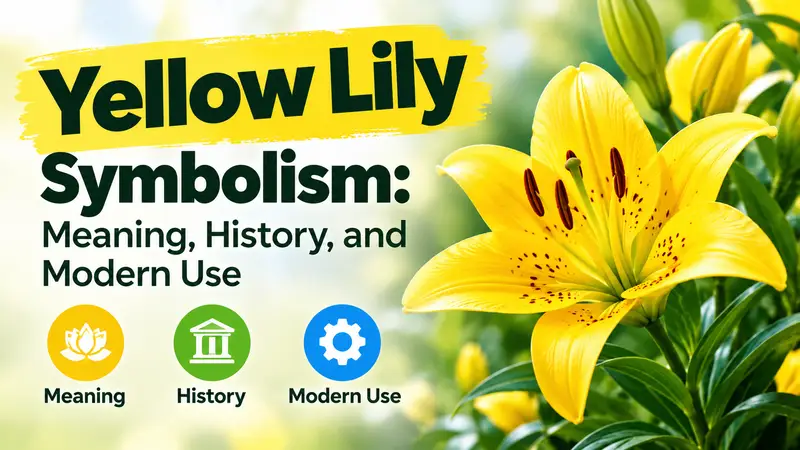
A yellow lily is a flowering plant from the genus Lilium, recognized by its prominent petals, central stamens, and upright or outward-facing blossoms. Depending on the variety, the petals may be pale butter yellow, golden, lemon yellow, or deep yellow with darker markings.
Some varieties have trumpet-shaped flowers, while others open into broad, star-like forms. Many produce several blossoms along a single stem, making them useful in bouquets and garden displays.
Yellow lilies are often confused with yellow daylilies, water lilies, and other flowers that share the word “lily” in their common names. True lilies belong to the genus Lilium, whereas daylilies belong to Hemerocallis and water lilies belong to a separate aquatic plant family. This distinction matters when discussing botanical history, even though everyday flower symbolism often overlaps.
In American floristry, yellow lilies are valued for their bright appearance and ability to complement white, orange, pink, or purple flowers. Their color makes them especially suitable for arrangements intended to feel lively, friendly, and welcoming.
The Core Meaning of Yellow Lily Symbolism
Yellow lilies are commonly connected with four ideas: joy, friendship, gratitude, and optimism. These meanings overlap, but each expresses a slightly different intention.
Joy is the flower’s most immediate association. Yellow resembles sunlight and is frequently used in American visual culture to communicate cheerfulness. A bouquet of yellow lilies can therefore celebrate a happy occasion or offer a little encouragement.
Friendship makes the flower appropriate for relationships that are affectionate without being explicitly romantic. It can communicate, “I’m glad you’re in my life,” without the intensity that red roses may suggest.
Gratitude gives yellow lilies a place in thank-you bouquets and appreciation gifts. They can recognize a favor, celebrate someone’s generosity, or show appreciation to a colleague, teacher, host, or family member.
Optimism connects the flower with fresh opportunities and positive expectations. A person might send yellow lilies to congratulate someone on a new job, celebrate a graduation, or encourage a friend beginning a new chapter.
These associations are conventional rather than universal. A recipient may interpret the flower according to personal memories, family customs, or the circumstances in which it is given.
Historical Origins of Lily Symbolism
Lilies have appeared in art, religious imagery, literature, and ceremonial traditions for thousands of years. Their distinctive shape and seasonal flowering made them recognizable subjects for artists and useful symbols in cultures that assigned meanings to plants.
In ancient Mediterranean societies, lilies appeared in decorative and sacred imagery. Greek and Roman mythology also connected lilies with divine figures and ideas of beauty and purity. Over time, European traditions associated lilies with weddings, virtue, and religious devotion.
In Christian art, the white Madonna lily became particularly associated with the Virgin Mary and the Annunciation. This history is important to understanding the wider symbolism of lilies, although those associations should not automatically be assigned to yellow varieties.
In East Asian cultures, lilies developed their own associations through poetry, gardening, family customs, and seasonal traditions. In China, for example, lilies have been linked with family harmony and marriage-related wishes.
Yellow lilies do not have one universally documented historical meaning across all these traditions. Their modern associations with gratitude, happiness, and optimism are better understood as part of the broader language of flower colors and gifting customs than as a single ancient doctrine.
What Yellow Lilies Mean in American Culture
In the United States, yellow lilies are often chosen for occasions that call for happiness, appreciation, or encouragement. Their color makes them suitable for celebrations where the sender wants to express warmth without making a strongly romantic statement.
For birthdays, yellow lilies can communicate good wishes and excitement about another year. For graduations and promotions, they can acknowledge hard work while expressing confidence in what comes next. They can also be included in housewarming arrangements because their bright appearance creates a welcoming atmosphere.
In workplaces, yellow lilies may be appropriate as part of a group bouquet for a colleague’s retirement, promotion, or professional achievement. Their message is generally friendly and appreciative rather than intimate.
American flower-giving customs also depend on the recipient. Some people associate yellow flowers with friendship because of their use in cheerful, informal bouquets. Others simply appreciate their color or fragrance without assigning a particular symbolic meaning.
The practical lesson is straightforward: yellow lilies are a versatile choice when the goal is to celebrate, thank, or encourage someone. A short message explaining the occasion can make the intended meaning even clearer.
Yellow Lily Symbolism in Love and Relationships
Yellow lilies can express affection, appreciation, and happiness within a relationship, but their message is generally different from that of flowers traditionally associated with passionate romance.
A person might give yellow lilies to a partner to celebrate a shared achievement, recognize a kind gesture, or mark a happy memory. In a long-term relationship, they can communicate companionship and appreciation rather than focusing exclusively on romantic desire.
They can also be suitable for friendships that have become especially important. Giving someone a bouquet of yellow lilies may be a way to celebrate loyalty, acknowledge years of support, or reconnect after a long separation.
However, yellow flowers do not have one fixed meaning in relationships. Some people associate yellow with jealousy or separation because of older European flower-language traditions. These interpretations are not universal, and they should not be treated as the standard meaning of a yellow lily in contemporary American culture.
If the flowers are intended as a romantic gesture, the accompanying message matters more than an assumed color code. A note that explains why the recipient is special prevents a cheerful bouquet from being interpreted in an unintended way.
The Spiritual and Religious Meaning of Lilies
Lilies have appeared in several religious and spiritual traditions, although their significance varies by culture and flower variety.
In Christianity, lilies are especially associated with purity, renewal, and the Virgin Mary in traditional religious art. White lilies are particularly prominent in depictions of the Annunciation and in Easter arrangements. These associations are much more established than any specific religious meaning assigned exclusively to yellow lilies.
In some Asian traditions, lilies are associated with family harmony, beauty, and ceremonial wishes. Their meanings may be shaped by the language of flowers, local customs, and the occasion for which they are displayed.
Yellow can add another layer of interpretation. In contemporary spiritual or personal settings, people may associate it with illumination, hope, warmth, or mental clarity. These are broad color associations, however, rather than a universal religious doctrine.
A yellow lily used in a meditation room or personal altar may represent a person’s own understanding of gratitude or joy. It should not automatically be interpreted as a formal symbol within a particular religion.
Yellow Lily Meaning in Different Situations
The meaning of a yellow lily can change with the occasion, the relationship between the people involved, and the surrounding arrangement.
| Context | Common Meaning in the United States | Typical Use |
|---|---|---|
| Friendship | Appreciation and companionship | Thank-you gifts or friendship bouquets |
| Birthdays | Joy and good wishes | Bright, celebratory arrangements |
| Graduation | Optimism and achievement | Congratulatory flowers |
| Workplace recognition | Respect and appreciation | Promotions, retirements, and milestones |
| Home décor | Warmth and cheerfulness | Dining tables, entryways, and living spaces |
| Personal encouragement | Hope and a positive outlook | Support during transitions or challenges |
These are common interpretations rather than strict rules. The same bouquet can communicate different things depending on what the sender wants to express.
The Emotional and Psychological Associations of Yellow Lilies
Color can influence the impression people form of a flower arrangement. Yellow is frequently associated with sunlight, warmth, and visibility, so yellow lilies often create a more energetic impression than flowers in muted or darker shades.
Their emotional effect also depends on personal experience. Someone who remembers yellow lilies from a family garden may associate them with childhood, summer afternoons, or a loved one. Another person may connect them with a celebration or an important gift.
This personal dimension helps explain why flower symbolism remains useful even when people do not follow traditional flower-language conventions. Flowers can communicate feelings through appearance, memory, and social context.
Yellow lilies may also serve as a visual expression of encouragement. A bouquet sent to someone starting a new job, moving to another city, or completing a difficult project can mark the transition in a tangible way.
There is no scientific rule that a particular flower or color produces the same emotional response in everyone. The most reliable meaning comes from the intention behind the gift and the relationship between the sender and recipient.
Yellow Lilies for Weddings, Birthdays, and Celebrations
Yellow lilies can bring brightness and warmth to many American celebrations, although their suitability depends on the event’s style and the preferences of the people involved.
At weddings, they may be used in reception arrangements, seasonal centerpieces, or bouquets designed around yellow and white flowers. Their cheerful appearance can complement a spring or summer palette. Couples who want a traditional purity-centered floral theme may prefer white lilies, while yellow varieties offer a more vivid, contemporary look.
For birthdays, yellow lilies can express happiness and appreciation. They work particularly well for recipients who enjoy colorful flowers or prefer a bouquet that feels cheerful rather than romantic.
Graduations, promotions, retirements, and housewarmings are also natural occasions for yellow lilies. The flowers can acknowledge an achievement or welcome someone into a new stage of life without implying that the event has a formal religious meaning.
For American holidays, yellow lilies can fit into spring and summer decorations, Mother’s Day arrangements, and general seasonal displays. They are not a universally established holiday emblem in the way certain other flowers are associated with particular observances.
Why People Choose Yellow Lily Tattoos and Artwork
Although roses, lotus flowers, and cherry blossoms are familiar tattoo subjects, lilies also offer a recognizable floral shape that can be adapted to many artistic styles.
A yellow lily tattoo may represent optimism, appreciation, friendship, or a personal memory. Someone might choose it to honor a family member who loved gardening or to mark a period when they learned to value joy after a difficult experience.
In tattoo design, color may be used literally or symbolically. A bright yellow flower can create a cheerful focal point, while a more subdued yellow may suggest nostalgia or understated warmth. These interpretations depend on the design and the wearer rather than on an established universal code.
Yellow lilies also appear in paintings, illustrations, textile patterns, greeting cards, and digital artwork. Their large petals and strong color contrast make them effective subjects for both realistic botanical art and simplified decorative designs.
People choosing a lily for personal artwork should consider whether the flower has a particular meaning in their family or community. A design connected to a personal story may communicate more than a general symbolism chart ever could.
Yellow Lilies in Home Décor and Garden Design
In American homes, yellow lilies are often used to add color to spaces that might otherwise feel neutral. Their blossoms stand out against green foliage, white walls, and natural wood, making them suitable for living rooms, entryways, patios, and garden borders.
As cut flowers, lilies can create a focal point in a vase without requiring a large arrangement. Yellow varieties pair well with white flowers for a light, restrained display or with orange and red flowers for a warmer, more energetic palette.
In gardens, the symbolic message is often less formal. A homeowner may plant yellow lilies simply because they enjoy the color or want a reliable seasonal display. Others may associate a particular planting with a family member, a former home, or a meaningful period in life.
When choosing cut lilies, it is worth remembering that many true lilies are highly toxic to cats. Households with cats should avoid bringing true lilies into spaces where the animals could contact or ingest any part of the plant, including pollen and vase water. For a pet-friendly home, a different flower is the safer choice.
Common Misunderstandings About Yellow Lily Symbolism
One common misconception is that yellow lilies always symbolize friendship. Friendship is a familiar modern association, but the flower can also express gratitude, celebration, encouragement, or simple appreciation.
Another misunderstanding is that yellow flowers necessarily communicate jealousy or separation. Those meanings appear in some historical flower-language traditions, but they are not universal and do not define how yellow lilies are generally used in the United States today.
It is also inaccurate to assume that all lilies share the same symbolism. White lilies are strongly associated with purity and remembrance in several Western traditions, while yellow lilies are more commonly linked with cheerfulness and appreciation in contemporary floral gifting.
Finally, the meaning of a flower should not be confused with a botanical characteristic. A lily does not biologically possess happiness, friendship, or optimism. These are cultural associations people have developed around its appearance and use.
Understanding these distinctions makes it easier to select flowers thoughtfully without relying on rigid rules.
How Yellow Lily Symbolism Has Changed Over Time
Flower symbolism has never remained completely fixed. Meanings have developed through religious art, folklore, poetry, commercial floristry, and social customs, with different communities placing different emphasis on the same flower.
Earlier European traditions often focused on lilies as images of purity, beauty, and religious virtue. Modern floral gifting has broadened their uses, with color playing a more visible role in how people choose bouquets for specific occasions.
Yellow lilies now fit comfortably into a culture where flowers are used to express appreciation, celebrate achievements, decorate homes, and maintain relationships. Their cheerful appearance makes them suitable for occasions that might not have a traditional floral symbol.
Social media and online flower shops have also encouraged short descriptions of flower meanings. These can help people choose gifts, but they sometimes present symbolic associations as universal facts. In practice, flower language is flexible and shaped by personal experience.
The modern meaning of a yellow lily is therefore best understood as a combination of established floral traditions, contemporary color associations, and the intention of the person giving it.
FAQs
What does a yellow lily mean when someone gives it to you?
A yellow lily commonly expresses happiness, appreciation, or friendly affection. The occasion and your relationship with the sender help clarify whether the intended message is gratitude, celebration, encouragement, or simply a thoughtful gesture.
Do yellow lilies symbolize friendship or love?
They can represent both, but friendship and appreciation are more common contemporary associations than passionate romance. In a romantic relationship, they may communicate companionship, shared happiness, or gratitude for the other person.
Are yellow lilies a good choice for a thank-you gift?
Yes, yellow lilies are a suitable choice when you want to express gratitude in a warm, cheerful way. They can work for friends, relatives, colleagues, teachers, and hosts, especially when paired with a short personal note.
What is the spiritual meaning of a yellow lily?
A yellow lily may personally represent hope, warmth, gratitude, or illumination. However, its exact spiritual significance depends on the tradition and context; there is no single religious interpretation that applies to every yellow lily.
Do yellow lilies have a negative meaning?
Yellow lilies do not have one universally recognized negative meaning. Although some flower-language traditions associate yellow flowers with jealousy or separation, contemporary American gifting more commonly uses yellow to communicate joy, friendship, and appreciation.
What is the difference between yellow lilies and yellow lotus flowers?
Yellow lilies belong to the genus Lilium, while lotus flowers belong to a different botanical group. Their symbolism also differs: yellow lilies are often associated with friendship and cheerfulness, whereas lotus imagery is frequently connected with spiritual development in Asian religious traditions.
Can I give yellow lilies to someone who is going through a difficult time?
Yes, yellow lilies can be a thoughtful way to offer encouragement and remind someone that they are supported. If the situation involves bereavement or a formal memorial, consider the recipient’s preferences and cultural customs before choosing a bright celebratory arrangement.
Conclusion
Yellow lily symbolism centers on joy, friendship, gratitude, and optimism, making the flower a natural choice for expressing appreciation and celebrating life’s milestones. Its broader history connects lilies with religious imagery, beauty, and ceremonial traditions, while modern American culture often emphasizes the cheerful associations of yellow.
Whether given as a birthday bouquet, displayed in a garden, or chosen for personal artwork, a yellow lily can communicate warmth without requiring an elaborate explanation. The most meaningful flower is ultimately the one that fits the occasion and expresses what the giver genuinely wants to say.