Introduction
Water lily symbolism connects an elegant aquatic flower with renewal, peace, beauty, and the ability to flourish in changing conditions. With floating leaves and blossoms that rise above still water, the water lily has inspired artistic, spiritual, and personal interpretations across different cultures.
In the United States, water lilies appear in garden ponds, landscape paintings, botanical photography, jewelry, tattoos, and home décor. Their calm appearance makes them a natural choice for designs associated with reflection and balance, while their growth in muddy or shallow water can suggest the possibility of beauty emerging from imperfect circumstances.
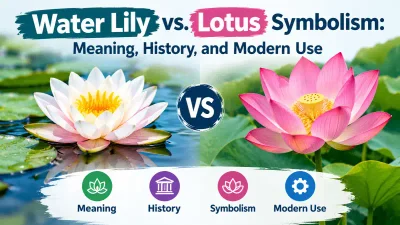
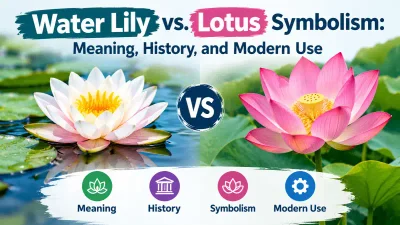
Although water lilies are sometimes confused with lotus flowers, they belong to different plant groups and have distinct botanical characteristics. Understanding that difference helps explain why their symbolic meanings overlap in some traditions but should not automatically be treated as identical.
Quick Answer
Water lily symbolism most commonly represents peace, renewal, purity, beauty, and emotional balance in modern American culture. Historically, water lilies have also carried spiritual and religious associations in particular cultures, including ancient Egyptian connections with creation and rebirth.
TL;DR
- Water lilies commonly symbolize tranquility, renewal, beauty, and purity.
- Ancient Egyptian art associated the blue water lily with the sun and rebirth.
- American gardens and artwork often use water lilies to suggest calm and reflection.
- White, pink, blue, and yellow blossoms can convey different personal associations.
- Water lily tattoos frequently represent growth, peace, and a fresh beginning.
- Water lilies and lotus flowers are related in appearance but botanically distinct.
1. What Does a Water Lily Look Like?
A water lily is an aquatic flowering plant that grows in ponds, lakes, and other relatively calm bodies of freshwater. Its rounded leaves often float on the surface, while its flowers rise above or rest close to the water. Depending on the species, the blossoms may be white, pink, yellow, red, or blue.
The familiar shape contributes to the flower’s visual appeal. Broad floating leaves create a sense of shelter, while open petals give the blossom a balanced, orderly appearance. Reflections on the surrounding water can make the flower seem almost separate from the landscape.
Water lilies are also living parts of aquatic ecosystems. Their leaves provide shade and shelter for small organisms, and their flowers support pollinators. These practical qualities can add associations with protection, natural harmony, and the relationship between living things.
The flower’s environment is central to its symbolism. A water lily does not grow in isolation; it exists within water, mud, sunlight, and an interconnected habitat. That setting makes it especially suitable for interpretations involving balance and adaptation.
2. The Core Symbolic Meanings of Water Lilies
Water lilies do not have one universally accepted meaning. Their symbolism depends on cultural background, flower color, artistic context, and the intentions of the person using the image. Several interpretations, however, recur in contemporary American settings.
Peace and tranquility: A water lily floating on a quiet pond naturally evokes stillness. It often appears in spaces intended for relaxation, meditation, or quiet appreciation of nature.
Renewal and fresh beginnings: The appearance of new leaves and blossoms can suggest growth after a dormant period. This interpretation makes the flower suitable for marking personal transitions or a new chapter in life.
Purity and innocence: Light-colored blossoms are often associated with cleanliness, sincerity, and simplicity. These are common visual associations rather than fixed meanings shared by every culture.
Beauty and grace: The contrast between delicate petals and the aquatic environment creates an impression of elegance. Water lilies can symbolize appreciating beauty without needing elaborate decoration.
Emotional balance: The combination of still water, floating leaves, and open flowers can represent composure. For some people, the image expresses a desire to remain steady when circumstances are uncertain.
Adaptation and resilience: Because water lilies grow in aquatic environments, people may interpret them as reminders that living things can thrive under conditions different from those on dry land. This is a modern metaphor, not a universal traditional belief.
3. Ancient Egyptian Water Lily Symbolism
One of the best-known historical associations of water lilies comes from ancient Egypt. Blue water lilies, particularly Nymphaea caerulea, appear in Egyptian art and imagery connected with religious ceremonies, feasting, and the natural world.
The flower’s opening and closing cycle made it a compelling image for ideas about the sun and recurring life. In Egyptian religious imagery, the blue water lily was associated with the sun, creation, and regeneration. Its appearance in tomb paintings, decorative objects, and other artistic settings helped preserve these connections.
The flower was also represented in scenes involving people, offerings, and celebrations. Such depictions suggest that it had aesthetic and ceremonial importance, although the exact meaning depended on the setting rather than following one simple rule.
It is important to distinguish ancient Egyptian blue water lilies from the lotus flowers commonly discussed in Asian religious traditions. Some ancient Egyptian plants called lotuses in older English translations were actually water lilies botanically. This naming overlap has contributed to confusion in modern discussions of flower symbolism.
The Egyptian example demonstrates how a flower’s daily behavior and natural environment can shape its cultural meaning. The water lily’s relationship with light and its recurring bloom helped make it a fitting image for renewal.
4. Water Lily Symbolism in the United States
In American culture, water lilies are more often associated with nature, serenity, beauty, and artistic expression than with one formal religious tradition. Their meaning frequently develops through personal experience rather than a shared national belief.
A person who regularly visits a pond may associate water lilies with summer afternoons, family outings, or a favorite natural place. Someone who encounters them in a botanical garden may connect them with careful cultivation and environmental appreciation.
Water lilies also suit the American interest in outdoor living. They appear in backyard ponds, landscaped gardens, public parks, and botanical collections. In these settings, the flowers can suggest a slower pace of life and a deliberate connection with the natural world.
Their artistic role is equally recognizable. Claude Monet’s famous Water Lilies paintings, created across several decades, helped establish water lilies and their reflections as enduring subjects in modern art. Although Monet was French, his work has had a major presence in American museums and art education.
There is no single official American interpretation of the flower. Its meaning varies between viewers, but calm, natural beauty, reflection, and renewal are common contemporary associations.
5. Spiritual and Religious Interpretations
Water lilies can carry spiritual meaning, but those interpretations should be understood within their particular traditions rather than applied universally.
In ancient Egyptian religious imagery, the blue water lily could be connected with creation, solar imagery, and regeneration. These associations came from a specific historical and religious setting.
In contemporary personal spirituality, a water lily may serve as a reminder to pause, reflect, or approach difficulties with greater patience. Someone might include its image in a meditation space because the flower’s natural setting feels peaceful, not because a religious authority has assigned it a prescribed meaning.
Water lilies are sometimes given Buddhist or Hindu meanings that properly belong to the lotus. The lotus holds important symbolic and religious roles in several South Asian traditions, including associations with spiritual development and purity. Water lilies may resemble lotus flowers, but that visual similarity does not make them interchangeable in religious iconography.
For respectful interpretation, identify the actual flower and the tradition in which it appears. A symbol’s meaning is more accurate when it reflects its historical context rather than a generalized idea of spirituality.
6. What Different Water Lily Colors Symbolize
Flower colors influence modern interpretations, especially in gifts, tattoos, floral artwork, and decorative design. These associations are flexible conventions, not a universal symbolic code.
| Water lily color | Common modern association | Possible use |
|---|---|---|
| White | Peace, simplicity, purity | Memorial art, calm interior décor |
| Pink | Affection, gentleness, appreciation | Personal gifts and romantic designs |
| Blue | Serenity, reflection, spiritual curiosity | Artwork, meditation spaces, tattoos |
| Yellow | Warmth, optimism, vitality | Summer gardens and cheerful decoration |
| Red | Passion, intensity, strong emotion | Expressive art and statement designs |
Color meanings depend on the viewer and setting. A white water lily may represent remembrance for one person and peaceful simplicity for another. Likewise, a blue blossom may suggest spirituality to one viewer and simply reflect a preference for cool colors to someone else.
Botanical accuracy also matters. Not every water lily species produces every color, and naturally occurring blue water lilies should not be confused with artificially colored flowers or lotus varieties.
When choosing a flower for a gift or personal design, the intended association matters more than following a rigid color chart.
7. Water Lily Symbolism in Art and Literature
Water lilies have a special place in visual art because they combine recognizable natural forms with changing reflections, light, and color. Artists can depict the same pond in different ways depending on the time of day, weather, and viewing angle.
Monet’s water lily paintings are among the best-known examples. Rather than treating the flower simply as a botanical subject, he explored how light and reflections transform the appearance of a pond. In his work, the water lily becomes part of a larger study of perception, atmosphere, and the relationship between nature and the observer.
In literature and poetry, water lilies can suggest stillness, solitude, contemplation, or beauty within an ordinary landscape. Their associations are usually shaped by the surrounding passage rather than by a fixed literary tradition.
For American viewers, these flowers may also recall museum visits, school art lessons, or familiar reproductions of Impressionist paintings. That cultural exposure reinforces the connection between water lilies and peaceful observation.
Their artistic appeal lies partly in their openness to interpretation. A water lily can be a specific flower in a pond and, at the same time, a way for an artist to explore time, attention, and the natural world.8. Emotional and Psychological Meaning of Water Lilies
Water lilies often appeal to people who want a visual reminder of calm, patience, or emotional steadiness. Their connection with quiet water makes them especially suitable for representing a peaceful state of mind.
A water lily can also symbolize the ability to appreciate life without requiring everything around you to be perfect. The plant grows with its roots anchored in the pond bottom, while its leaves and flowers occupy the water’s surface. People sometimes interpret this arrangement as a metaphor for staying connected to one’s foundations while continuing to grow.
For someone recovering from a difficult period, the flower might represent the gradual return of confidence or hope. For another person, it may simply recall a peaceful place where they felt comfortable and unhurried.
These associations are personal interpretations, not established psychological rules. Seeing or wearing a water lily does not necessarily reveal someone’s emotional state. Its meaning depends on the memories, experiences, and intentions attached to it.
The flower’s understated appearance is part of its appeal. It can communicate composure and sensitivity without making an aggressive or overly dramatic statement.
9. Water Lily Tattoos and Personal Identity
Water lily tattoos are popular choices for people who prefer botanical imagery with room for personal interpretation. Their circular leaves, layered petals, and connection with water make them adaptable to small, delicate designs as well as larger compositions.
Common personal meanings include:
- A fresh start: A reminder of a new chapter after a major life change.
- Inner peace: A visual expression of wanting greater calm and balance.
- Personal growth: An image connected with learning, maturity, or changing priorities.
- Nature appreciation: A lasting tribute to ponds, gardens, wildlife, or a meaningful outdoor experience.
- Remembering someone: A flower used in a memorial tattoo because it evokes a shared place, memory, or personal association.
Design choices can influence the message. A single white water lily may communicate simplicity, while a colorful blossom surrounded by pond leaves can emphasize the natural setting. Adding ripples, a landscape, or other botanical elements can make the design more personal.
Placement can also be practical. Small flowers may work on the wrist, ankle, or forearm, while larger pond scenes can fit the shoulder, back, or thigh.
Before choosing a water lily tattoo for spiritual reasons, consider whether the intended symbolism actually belongs to the water lily or to the lotus. The two flowers are often confused in commercial tattoo designs, and the distinction can matter when a design is meant to represent a specific religious tradition.
Ultimately, a tattoo does not need a universally recognized meaning. Its significance can come from a private experience that the wearer wants to preserve.
10. Water Lilies in Jewelry, Fashion, and Home Décor
Water lilies appear in decorative objects because their symmetrical blossoms are easy to recognize and translate into attractive designs. Their shape works well in pendants, earrings, embroidered patterns, printed fabrics, and ornamental accessories.
In jewelry, a water lily motif can represent an appreciation for nature or a preference for graceful, understated imagery. A pendant featuring the flower may be chosen as a personal reminder of peace or renewal, although the design itself does not have a standardized meaning.
In home décor, water lilies are particularly suitable for rooms intended to feel restful. Botanical prints, pond-inspired artwork, ceramic ornaments, and floral textiles can introduce a natural element without overwhelming a space.
The surrounding colors affect the atmosphere. Pale green, soft blue, and white can create a restrained, peaceful appearance, while yellow and pink may bring warmth and brightness.
Water lily imagery also works in gardens and outdoor living spaces. A pond with flowering water lilies can suggest a deliberate retreat from busy routines, but it also serves a practical landscaping purpose by adding vegetation and creating habitat.
These modern uses reflect a preference for natural forms and calm visual environments. The flower’s decorative appeal does not depend on a religious or spiritual interpretation.
11. Water Lilies in Weddings, Memorials, and Meaningful Gifts
Water lilies can be appropriate for personal occasions when their associations fit the recipient or setting. However, they do not have the same established place in American ceremonial traditions as roses, lilies, or certain other familiar flowers.
For weddings, a water lily may represent harmony, a peaceful partnership, or the beginning of a shared chapter. It can appear in invitations, illustrations, venue decorations, or pond-side celebrations. Because fresh water lilies are aquatic plants rather than conventional cut flowers, using them in bouquets may require specialized arrangements.
For memorials, the flower can serve as a symbol of remembrance, serenity, or the continuation of life. This use is particularly meaningful when the person being remembered loved ponds, gardens, painting, or the outdoors.
As a gift, a water lily illustration or decorative object may suit someone who appreciates gardening, aquatic landscapes, or botanical art. It can also acknowledge a personal milestone, such as completing a difficult project or beginning a new stage of life.
Context matters more than a presumed universal meaning. A water lily chosen because it recalls a shared memory may communicate more than one selected solely because it is associated with a particular color or symbolic category.
12. Common Misunderstandings About Water Lily Symbolism
Several misconceptions can lead to inaccurate interpretations of the flower.
Water lilies and lotus flowers are the same plant. They are not. Water lilies belong to the genus Nymphaea, while true lotus plants belong to the genus Nelumbo. Their similar appearance and overlapping common names have contributed to centuries of confusion. New York Botanical Garden provides botanical guidance distinguishing their leaves, petals, and growth patterns.
Every water lily symbolizes spiritual enlightenment. This claim usually borrows meanings associated with lotus imagery in Buddhist and Hindu traditions. A water lily can have personal spiritual meaning, but enlightenment is not a universal or automatic interpretation of the plant.
Water lilies always represent purity. Purity is one possible modern association, particularly with white blossoms, but other interpretations include beauty, calm, renewal, or simply a love of aquatic plants.
The flower has one fixed meaning in every culture. Historical symbolism differs by region and period. Ancient Egyptian associations with solar renewal, for example, should not be treated as evidence that every culture understood the flower in the same way.
A water lily can only grow in clean water. Water lilies are rooted aquatic plants and can grow in ponds with muddy bottoms. Their beauty does not establish that the water is pristine or that the ecosystem is free of pollution.
These distinctions do not make the flower less meaningful. They help separate documented cultural history from personal interpretation and popular claims.
13. How Water Lily Meaning Has Evolved
The meaning of the water lily has changed as people have encountered it in different environments and cultural settings.
In ancient Egypt, the blue water lily was associated with the sun, creation, and daily renewal. Its opening and closing behavior offered a natural image for the return of light. The flower also appeared in decorative and ceremonial objects, connecting it with everyday artistic practice as well as religious imagery.
In later botanical and landscape traditions, water lilies became subjects of cultivation and artistic observation. Gardeners appreciated their ability to transform ponds, while painters explored the changing effects of water, color, and light.
Modern American culture has added more individualized interpretations. A water lily may now symbolize emotional balance, environmental appreciation, a meaningful memory, or a personal transition. Its appearance in tattoos and decorative design allows people to use the image without adopting a specific historical or religious belief.
The internet has also helped circulate simplified explanations of flower symbolism. Some are useful starting points, but others combine the meanings of water lilies, lotuses, and unrelated flowers without distinguishing their origins.
The most accurate interpretation recognizes both continuity and change: water lilies have long attracted symbolic attention, but their meaning depends on the people, practices, and circumstances surrounding them.
FAQs
What does a water lily symbolize spiritually?
A water lily may represent reflection, renewal, peace, or a connection with nature in personal spiritual practice. Historically, the blue water lily held associations with solar renewal and creation in ancient Egyptian imagery, but its meaning varies across traditions.
What does a water lily tattoo mean?
A water lily tattoo commonly represents personal growth, tranquility, beauty, or a fresh beginning. Its meaning can be entirely individual, especially when the flower recalls a particular memory or life experience.
Are water lilies a symbol of good luck?
Water lilies do not have a universal, established meaning of good luck. Some people choose them as hopeful symbols of renewal and positive change, but this is a personal or cultural interpretation rather than a guaranteed traditional association.
What does a white water lily represent?
A white water lily often suggests peace, simplicity, innocence, or purity in modern floral imagery. In a memorial setting, it may also express remembrance or a wish for serenity.
What is the difference between water lily and lotus symbolism?
Water lily symbolism often emphasizes tranquility, natural beauty, and renewal in contemporary decorative use, while lotus symbolism has more explicitly established religious meanings in traditions such as Buddhism and Hinduism. The plants are botanically distinct, so their cultural associations should not automatically be exchanged.
Why are water lilies associated with rebirth?
The association is particularly well documented in ancient Egyptian imagery, where the blue water lily’s daily opening and closing was connected with the sun’s recurring appearance. In modern use, people may extend that idea into a more general metaphor for starting again.
Are water lilies considered romantic flowers?
They can represent affection, grace, or harmony when chosen for a romantic gift, but they are not as firmly established in American romantic traditions as roses. Their appeal is often more personal, especially for someone who appreciates nature or botanical art.
Conclusion
Water lily symbolism brings together several recognizable ideas: peace, beauty, renewal, purity, and emotional balance. Its history includes the ancient Egyptian association between the blue water lily, the sun, and recurring life, while its modern American meaning is often shaped by gardens, paintings, personal memories, and decorative design.
The flower does not need a single fixed interpretation to be meaningful. Its significance may come from a cultural tradition, a work of art, a tattoo chosen during a life transition, or the simple pleasure of seeing a blossom resting on a pond.
A water lily offers a practical reminder that symbolism depends on context. Understanding the flower’s botanical identity and cultural history makes it easier to appreciate what it represents to different people today.