
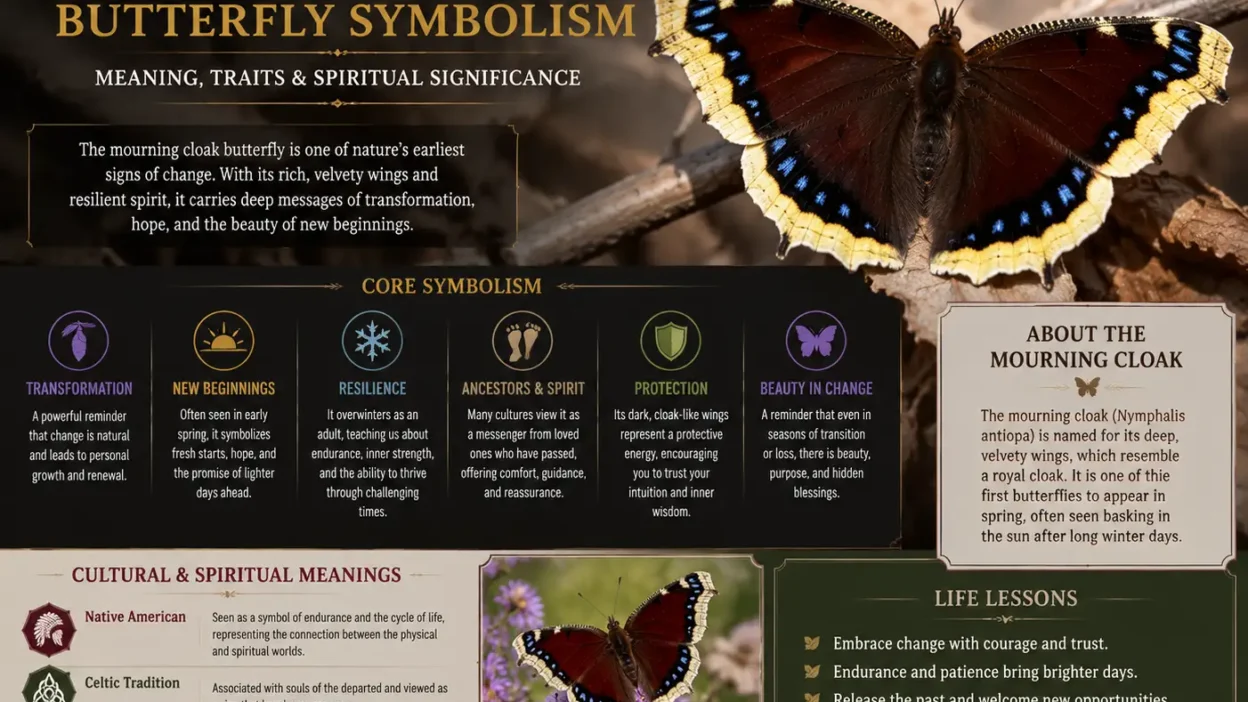

The mourning cloak butterfly is one of North America’s most distinctive butterflies, recognized by its dark velvety wings, bright yellow border, and small blue markings. Unlike many colorful butterflies associated only with joy and beauty, this species carries a more complex image that combines darkness with renewal. Mourning cloak butterfly symbolism often represents transformation, resilience, remembrance, survival, and hope after difficult periods.
In the United States, the mourning cloak butterfly has a special connection with seasonal change because it is one of the earliest butterflies to appear in spring. Its ability to survive winter and emerge again has made it a natural symbol of endurance and new beginnings.
The butterfly’s name itself suggests a connection with mourning because its dark wings resemble traditional clothing worn during periods of grief. However, its symbolism is not limited to sadness. The bright edges on its wings create a contrast between sorrow and hope, showing how difficult experiences can exist alongside renewal and growth.
Quick Answer
Mourning cloak butterfly symbolism commonly represents transformation, resilience, remembrance, renewal, and hope in modern American culture. Its dark wings connect it with reflection and loss, while its survival through winter represents endurance, rebirth, and new beginnings.
TL;DR
- Mourning cloaks symbolize resilience after hardship.
- Dark wings connect them with remembrance and reflection.
- Early spring appearances represent renewal.
- Their life cycle reflects personal transformation.
- Tattoos often represent survival and change.
- The butterfly combines sorrow with hope.
What the Mourning Cloak Butterfly Represents Today
The mourning cloak butterfly represents the ability to continue through difficult circumstances and emerge into a new stage of life. Its meaning comes from both its appearance and its unusual behavior.
Unlike butterflies that disappear during cold months, mourning cloaks survive winter as adults by sheltering in protected places. When warmer weather arrives, they return before many other butterflies appear. This behavior has helped create associations with endurance, patience, and returning after periods of hardship.
For many Americans, this butterfly represents:
- surviving personal struggles
- adapting to change
- remembering loved ones
- finding hope after loss
- beginning again after difficult seasons
The mourning cloak does not symbolize change as something easy or instant. Instead, it represents a quieter form of transformation built through patience.
The Appearance Behind Mourning Cloak Symbolism
The mourning cloak butterfly gets much of its symbolic meaning from its unusual appearance. It has dark brown or purplish-black wings with a pale yellow border and small blue spots near the edges.
The contrast between dark and bright colors creates several symbolic interpretations.
| Feature | Symbolic Meaning | Common Interpretation |
|---|---|---|
| Dark wings | Reflection and transition | Life changes and remembrance |
| Yellow border | Hope and renewal | Light after difficult periods |
| Blue spots | Beauty and individuality | Hidden strength |
| Butterfly form | Transformation | Personal growth |
| Early spring appearance | Survival | New beginnings |
The butterfly’s appearance suggests that sadness and beauty can exist together. It is not a symbol of only darkness; it represents finding possibility within challenging experiences.
Transformation and Personal Growth
Like all butterflies, the mourning cloak undergoes complete metamorphosis. It develops through egg, caterpillar, chrysalis, and adult stages before becoming a winged insect.
This process makes it a natural symbol of transformation.
The mourning cloak’s symbolism is especially connected with changes that happen quietly. A person may experience a difficult period where growth is not immediately visible, just as a butterfly’s development happens before its final form appears.
People may connect this butterfly with:
- emotional healing
- rebuilding confidence
- leaving behind old identities
- adapting to new circumstances
- personal maturity
Its message is not that change removes the past. Instead, transformation allows earlier experiences to become part of a new identity.
Resilience and Survival Through Difficult Seasons
One of the strongest meanings associated with the mourning cloak butterfly is resilience.
This butterfly survives cold conditions and can appear during early spring when the environment is still recovering from winter. Its survival ability makes it a symbol of strength during uncertain times.
In personal symbolism, the mourning cloak can represent someone who has:
- experienced loss
- faced major life changes
- overcome challenges
- remained strong during difficult periods
The butterfly reminds people that survival can happen quietly. Strength does not always appear as dramatic action; sometimes it looks like simply continuing forward.
Mourning, Memory, and Remembrance
The word “mourning” gives this butterfly a special connection with grief and remembrance. Its dark coloring resembles historical mourning clothing, which influenced the name.
Because of this association, some people view the mourning cloak butterfly as a symbol of:
- honoring someone who has passed away
- keeping memories alive
- accepting the cycle of life
- finding comfort after loss
In American memorial culture, butterflies are often used on artwork, jewelry, and tattoos to represent continuing emotional connections. The mourning cloak’s darker appearance can add a more reflective meaning compared with brighter butterfly designs.
Hope and Renewal After Loss
Although the mourning cloak has connections with sadness, its strongest message is often renewal.
The butterfly appears after surviving winter, making it a symbol of returning life. This creates a balance between remembering what has been lost and recognizing what can still grow.
The mourning cloak can represent:
- recovery after grief
- hope after difficult experiences
- emotional renewal
- a fresh chapter
Its symbolism is similar to the natural cycle of seasons: winter represents a period of stillness, while spring represents returning possibilities.
Mourning Cloak Butterfly Symbolism in American Culture
In the United States, mourning cloak butterflies are closely connected with nature, seasonal awareness, and personal reflection.
Many people encounter them in:
- gardens
- forests
- parks
- wildlife photography
- conservation activities
Because they appear early in the year, some nature enthusiasts view them as signs that spring has returned. Their presence creates a connection between the natural world and human experiences of renewal.
The butterfly also appears in creative fields where artists use its unusual appearance to express themes of change, memory, and endurance.
Spiritual Interpretations of the Mourning Cloak Butterfly
Some people interpret the mourning cloak butterfly through spiritual symbolism, viewing it as a reminder of transformation and the continuation of life.
Common spiritual interpretations include:
- personal awakening
- connection with memories
- inner strength
- guidance during transitions
- renewal after hardship
However, spiritual meanings differ between individuals and cultures. The butterfly does not have one universal spiritual interpretation.
A grounded interpretation is that the mourning cloak encourages reflection on change, resilience, and the different stages of life.
Cross-Cultural Views of Dark Butterflies
Butterflies have different meanings across cultures, and dark-colored butterflies often receive varied interpretations.
Some traditions connect butterflies with:
- the soul
- transformation
- renewal
- communication between life stages
Other interpretations focus on their connection with endings or mystery because of their darker appearance.
The mourning cloak’s symbolism should be understood within specific cultural settings rather than treated as one fixed worldwide meaning.
Mourning Cloak Butterfly Tattoos and Personal Meaning
Mourning cloak butterfly tattoos often carry deeply personal meanings. People may choose this design because it represents a difficult experience they survived or a person they want to remember.
Common tattoo meanings include:
- transformation after hardship
- resilience
- honoring someone special
- emotional healing
- acceptance of change
The design style can influence the meaning.
A mourning cloak with flowers may emphasize renewal and beauty. A darker design may focus more on memory and reflection. A butterfly combined with dates or names often becomes a memorial symbol.
Mourning Cloak Butterfly in Art and Design
The mourning cloak butterfly is popular in art because of its unusual color combination. The dark wings and bright border create a strong visual contrast.
Modern uses include:
- paintings
- jewelry
- illustrations
- clothing designs
- home decor
- nature-inspired artwork
Artists often use this butterfly when they want to communicate ideas of balance: darkness and light, endings and beginnings, memory and hope.
Positive and Negative Interpretations
The mourning cloak butterfly can have both positive and negative associations depending on context.
| Interpretation | Meaning |
| Positive | Resilience, hope, renewal, strength |
| Reflective | Memory, change, life transitions |
| Negative | Sadness, loss, endings |
| Balanced | Accepting both hardship and growth |
The butterfly’s symbolism is not about sadness alone. Its deeper meaning comes from the relationship between difficult experiences and the possibility of renewal.
Common Misunderstandings About Mourning Cloak Symbolism
A common misunderstanding is that the mourning cloak butterfly represents only death or grief because of its name and dark appearance.
In reality, the symbol is more balanced. The butterfly’s ability to survive winter and appear again in spring creates strong associations with life continuing after difficult periods.
Another misconception is that butterfly symbolism always means a sudden positive change. The mourning cloak suggests something different: transformation often requires patience and endurance.
How Mourning Cloak Butterfly Meaning Has Evolved
The meaning of the mourning cloak butterfly has developed through both observation and human interpretation.
Its appearance created connections with mourning and reflection. Its survival habits added ideas of endurance and renewal. Modern tattoo culture and nature appreciation expanded its meaning into personal identity and emotional growth.
Today, the mourning cloak butterfly represents a complete cycle:
- facing difficult seasons
- surviving change
- remembering the past
- moving toward renewal
Frequently Asked Questions
What does a mourning cloak butterfly symbolize?
A mourning cloak butterfly symbolizes resilience, transformation, remembrance, and renewal. Its dark wings suggest reflection, while its survival through winter represents hope and endurance.
Why is it called a mourning cloak butterfly?
The name comes from its dark wings, which resemble traditional mourning clothing. The butterfly’s appearance inspired associations with grief and remembrance.
Is seeing a mourning cloak butterfly a good sign?
Many people view it positively because it represents survival, renewal, and new beginnings. However, symbolic meanings depend on personal beliefs.
What does a mourning cloak butterfly tattoo mean?
A mourning cloak butterfly tattoo often represents overcoming hardship, remembering someone important, or entering a new stage of life.
Are mourning cloak butterflies rare?
Mourning cloaks are widely distributed across North America and are known for appearing earlier than many other butterflies. They are distinctive because adults survive winter and return in spring.
What does a black or dark butterfly symbolize?
Dark butterflies can symbolize reflection, transformation, mystery, resilience, and life transitions. Their meaning depends on cultural and personal interpretation.
Conclusion
Mourning cloak butterfly symbolism represents resilience, transformation, remembrance, and hope after difficult seasons. Its dark wings connect it with reflection and loss, while its ability to survive winter gives it a powerful connection with renewal.
In American culture, this butterfly is appreciated not only for its unusual beauty but also for what it represents: the ability to endure change and continue forward. It reminds people that difficult periods can become part of a larger story of growth.
The mourning cloak butterfly shows that renewal does not erase the past. Instead, it carries previous experiences into a new stage of life.