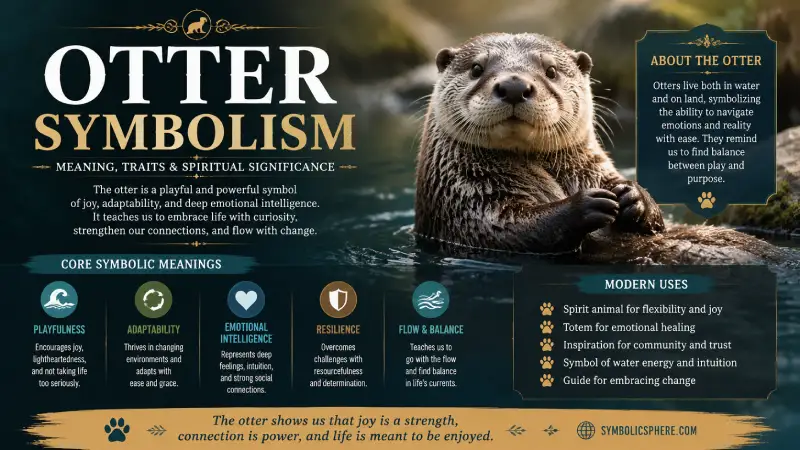
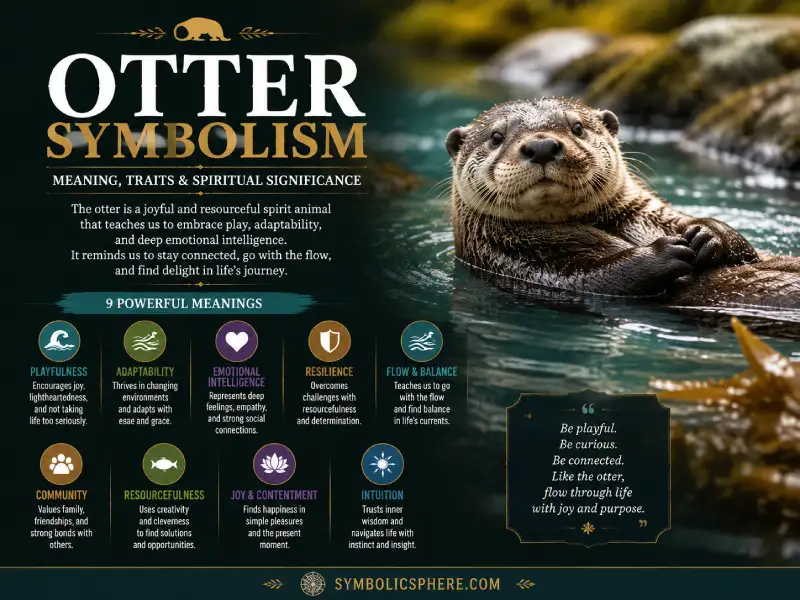
Otters are playful aquatic mammals known for their intelligence, curiosity, strong family bonds, and ability to adapt between land and water. Otter symbolism commonly represents joy, creativity, emotional connection, balance, and resilience in modern American culture. Their playful nature and close social relationships have made them meaningful symbols of happiness, friendship, and harmony with nature.
In the United States, otters are often connected with rivers, oceans, wildlife conservation, and environmental awareness. Their image appears in artwork, jewelry, tattoos, children’s stories, and nature-inspired designs. Many people are drawn to otters because they represent a balance between independence and connection with others.
The symbolic meaning of otters comes from observing their real behavior. They are skilled swimmers, intelligent problem-solvers, caring parents, and highly adaptable animals. These qualities have shaped interpretations of otters as symbols of emotional strength, playfulness, and living in harmony with the world around them.
Otters are strongly associated with joy and playfulness. Their energetic behavior reminds us to enjoy simple moments, stay curious, and make time for creativity.
Quick Answer
Otter symbolism commonly represents joy, playfulness, friendship, emotional balance, adaptability, and creativity in modern American culture. Historically, otters have also been connected with transformation, protection, family bonds, and respect for water in several Indigenous traditions.
TL;DR
- Otters symbolize joy, connection, and emotional balance.
- Their playfulness represents creativity and happiness.
- Strong family bonds inspire loyalty meanings.
- Water habitat connects them with renewal.
- Indigenous traditions respect otters as meaningful animals.
- Tattoos often represent friendship and resilience.
Table of Contents
- What Otter Symbolism Means Today
- The Natural Traits Behind Otter Meaning
- Otter Symbolism: 9 Powerful Core Meanings
- Joy and Playfulness
- Friendship and Emotional Connection
- Adaptability and Resilience
- Family and Protection
- Indigenous and Historical Connections
- Otters in American Culture
- Otter Tattoos and Personal Identity
- Otters in Art and Design
- Spiritual Interpretations
- Common Misunderstandings
- How Otter Meaning Has Evolved
- Frequently Asked Questions
What Otter Symbolism Means Today
Today, otters are widely viewed as symbols of happiness, connection, and emotional well-being. Their playful behavior makes them one of the animals most commonly associated with enjoyment and positive energy.
Unlike symbols that focus mainly on power or dominance, otters represent softer qualities such as cooperation, affection, and curiosity. They show that strength can exist alongside kindness and social connection.
Modern interpretations of otter symbolism often include:
- happiness during everyday moments
- strong relationships
- emotional openness
- creativity
- enjoying life’s experiences
The otter reminds people that play and relaxation can be important parts of a balanced life.
The Natural Traits Behind Otter Meaning
Otters are semi-aquatic mammals that live in rivers, lakes, and coastal waters. They are known for their swimming ability, intelligence, and social behavior.
Their natural traits influence their symbolic meanings.
| Otter Feature | Symbolic Meaning | Modern Interpretation |
|---|---|---|
| Playful behavior | Joy and creativity | Enjoying life |
| Water habitat | Emotions and renewal | Emotional balance |
| Social groups | Friendship | Strong relationships |
| Intelligence | Problem-solving | Adaptability |
| Swimming ability | Movement and flow | Handling change |
The otter’s ability to move comfortably between land and water also creates symbolism connected with flexibility and adjustment.
Otter Symbolism: 9 Powerful Core Meanings
Joy and Playfulness
The strongest association with otters is joy.
Otters are famous for behaviors such as sliding on snow, floating together, and playing with objects. These actions have made them symbols of happiness and enjoying simple experiences.
Otter symbolism can represent:
- finding happiness in daily life
- maintaining curiosity
- allowing creativity to grow
- appreciating small moments
The otter suggests that playfulness is not childish; it can be a source of emotional health and connection.
Friendship and Emotional Connection
Otters are social animals that often form strong bonds with family members and groups. Sea otters are especially known for floating together while resting, which has become a popular image of companionship.
Because of this behavior, otters symbolize:
- friendship
- trust
- loyalty
- emotional support
- community
Many people connect with otter imagery because it represents relationships built on care and cooperation.
Adaptability and Resilience
Otters survive in changing environments, from freshwater rivers to coastal oceans. Their ability to adjust makes them symbols of flexibility.
They represent:
- overcoming challenges
- adapting to new situations
- emotional recovery
- finding solutions
The otter teaches that survival does not always require force. Intelligence and adaptability can be equally powerful.
Family and Protection
Otters are caring parents that invest significant effort in raising their young. This has created symbolic connections with family, nurturing, and protection.
Otter symbolism may represent:
- parental love
- responsibility
- caring relationships
- emotional security
For many people, otters reflect the importance of protecting and supporting those closest to them.
Balance Between Independence and Connection
Otters represent an interesting balance. They are capable hunters and survivors, but many species also depend on social relationships.
This creates symbolism around:
- healthy independence
- cooperation
- personal freedom
- meaningful connections
The otter suggests that independence does not require isolation.
Indigenous and Historical Connections
Otters have held symbolic importance in several Indigenous cultures, especially among communities connected with rivers and coastal environments.
Meanings vary between nations and traditions, but otters have often been associated with:
- intelligence
- playfulness
- transformation
- protection
- connection with water
In some Indigenous stories, animals are understood as teachers that reveal important lessons about relationships between humans, animals, and the natural world.
These interpretations should be understood within their specific cultural contexts rather than combined into one universal meaning.
Otters in American Culture
In the United States, otters are strongly connected with wildlife appreciation and conservation.
They appear in:
- nature documentaries
- aquarium education
- environmental campaigns
- children’s media
- wildlife artwork
Sea otters, in particular, have become symbols of ocean ecosystem protection because of their important role in coastal environments.
For many Americans, otters represent a connection with clean water, healthy habitats, and the importance of protecting wildlife.
Otter Tattoos and Personal Identity
Otter tattoos often represent positive personal qualities and emotional connections.
Common meanings include:
- happiness
- friendship
- family bonds
- creativity
- resilience
- love of nature
Some people choose otter tattoos because the animal reflects their personality: playful, caring, curious, and adaptable.
Design choices can change the meaning:
- Two otters may symbolize partnership.
- An otter in water may represent emotional balance.
- A cartoon-style otter may emphasize joy and creativity.
Otters in Art, Fashion, and Design
Otters are popular in creative fields because their appearance naturally creates warm and friendly imagery.
Common uses include:
- illustrations
- jewelry
- clothing designs
- home decorations
- children’s products
- digital artwork
Their playful image makes them especially common in designs focused on happiness, nature, and friendship.
Spiritual Interpretations of Otter Symbolism
Some people interpret otters as spiritual symbols connected with emotional healing, joy, and flowing through life’s changes.
Common personal interpretations include:
- trusting emotions
- embracing happiness
- building stronger relationships
- staying flexible
- reconnecting with nature
These meanings are personal interpretations rather than universal beliefs.
A grounded view of otter symbolism focuses on the lessons their behavior provides: cooperation, curiosity, and resilience.
Positive and Negative Interpretations
Otter symbolism is mostly positive, but different contexts can create different meanings.
| Interpretation | Meaning |
|---|---|
| Positive | Joy, friendship, creativity |
| Reflective | Emotional balance, adaptability |
| Negative | Avoiding responsibility, excessive playfulness |
| Balanced | Enjoying life while staying responsible |
Playfulness can be a strength, but too much focus on fun without responsibility may create imbalance.
Common Misunderstandings About Otter Symbolism
One misunderstanding is that otters symbolize only happiness. While joy is a major meaning, otters also represent survival, intelligence, and emotional strength.
Another misconception is that all otter species behave the same way. Different species have different lifestyles and adaptations.
The deeper meaning of otters comes from their combination of playfulness, intelligence, and connection with their environment.
How Otter Meaning Has Evolved
Otter symbolism has developed from both observation and cultural storytelling.
Earlier interpretations often focused on the animal’s relationship with water, nature, and community. Modern meanings have expanded to include:
- emotional wellness
- friendship
- conservation
- creativity
- personal identity
Today, the otter represents a reminder that a meaningful life can include both strength and happiness.
Frequently Asked Questions
What does an otter symbolize?
An otter symbolizes joy, friendship, adaptability, emotional connection, and creativity. Its behavior inspires meanings related to happiness and cooperation.
What does an otter tattoo mean?
An otter tattoo often represents friendship, love, family, playfulness, and connection with nature.
Are otters spiritual symbols?
Some people view otters as symbols of emotional healing, balance, and connection with nature. These meanings depend on personal beliefs.
Why are otters associated with happiness?
Otters are associated with happiness because of their playful behavior, social interactions, and energetic movements in water.
What do two otters symbolize?
Two otters often symbolize partnership, friendship, loyalty, and strong emotional bonds.
Are otters considered lucky symbols?
In some traditions, otters are viewed positively because they represent joy, intelligence, and harmony with nature.
Conclusion
Otter symbolism represents joy, friendship, adaptability, emotional balance, and connection with the natural world. Their playful behavior and strong relationships make them symbols of qualities many people value in everyday life.
In modern American culture, otters represent more than simple happiness. They remind people about the importance of community, curiosity, and finding balance between independence and connection.
The otter’s message is simple: strength and happiness can exist together, and a meaningful life includes both resilience and moments of joy.