
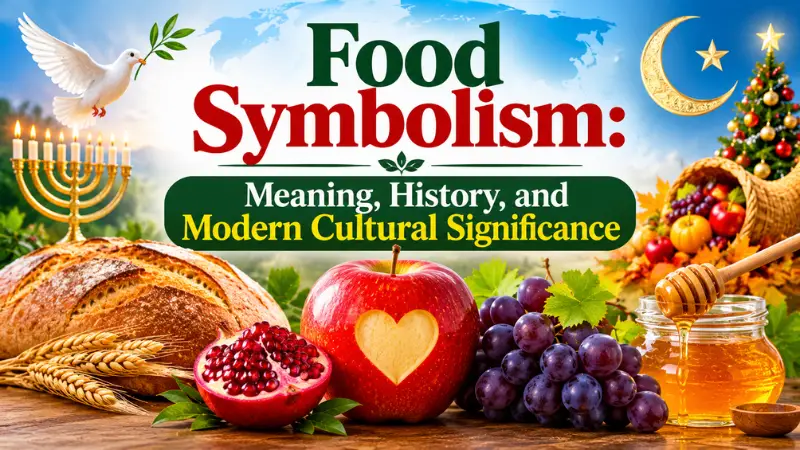
Food is more than something people eat to satisfy hunger. Across cultures, food symbolism represents love, family, prosperity, survival, gratitude, religious faith, and cultural identity. Particular ingredients and meals often carry meanings that extend beyond their nutritional value, connecting people to their ancestors, communities, traditions, and personal experiences.
In the United States, food plays an important role in expressing belonging and celebrating significant occasions. Thanksgiving turkey, birthday cakes, wedding meals, and family recipes all communicate feelings that are sometimes difficult to express through words alone. Even an ordinary homemade meal can represent care, hospitality, and emotional connection.
Understanding food symbolism helps explain why certain dishes appear at important moments in life and why people attach memories and cultural meanings to what they eat. These associations have developed over generations and continue to evolve through modern American life.
Quick Answer: What Does Food Symbolism Represent?
Food symbolism commonly represents nourishment, family, love, prosperity, gratitude, and cultural identity in modern American culture. Historically, food has also symbolized fertility, religious devotion, hospitality, social status, seasonal renewal, and the relationship between human communities and the natural world.
TL;DR: Key Meanings of Food Symbolism
- Nourishment: Food represents survival, health, comfort, and the necessities of life.
- Family: Shared meals symbolize belonging, togetherness, and intergenerational connections.
- Prosperity: Abundant harvests and celebratory dishes represent wealth and good fortune.
- Spirituality: Religious meals and fasting communicate faith, devotion, and remembrance.
- Cultural identity: Traditional recipes preserve heritage, ancestry, and community traditions.
- Celebration: Special foods mark weddings, birthdays, holidays, and important milestones.
1. The Core Symbolic Meaning of Food
Food is one of the most recognizable symbols of human life because everyone depends on it. Its symbolic meaning begins with the basic relationship between eating and survival but extends into emotional, social, and cultural experiences.
At its simplest level, food represents life, nourishment, and physical well-being. A meal provides energy, but offering that meal to someone can communicate kindness, responsibility, and affection.
Food also represents abundance and security. A fully stocked table can suggest that a household has enough resources to support its members and welcome visitors. In contrast, an empty plate or an insufficient meal can represent hardship, uncertainty, or economic inequality.
Several common symbolic meanings include:
- Life and survival: The ability to obtain food represents continued existence and physical security.
- Love and care: Preparing someone’s favorite meal communicates affection and attention.
- Community: Eating together establishes relationships and encourages cooperation.
- Prosperity: A plentiful harvest or generous feast represents material well-being.
- Tradition: Familiar recipes preserve memories and cultural practices.
These meanings explain why food frequently appears in celebrations, religious ceremonies, family traditions, and works of art.
2. Ancient Origins of Food Symbolism
Food symbolism developed alongside early human communities. Long before modern restaurants, grocery stores, and packaged products, food was closely connected to agriculture, seasonal changes, survival, and religious beliefs.
Early farming communities depended on successful harvests. Grains, fruits, vegetables, and livestock represented more than available resources because their abundance could determine whether a community survived the winter.
As agricultural societies developed, particular foods became associated with seasonal cycles and religious ceremonies. Grain could represent fertility and renewal, while fruit could symbolize reproduction and abundance.
Ancient Greek mythology provides several examples of these associations. Wheat was connected with Demeter, the goddess of agriculture and harvest, while grapes were associated with Dionysus, who represented wine, celebration, and fertility.
Food also appeared in ancient offerings to deities and in communal ceremonies. These practices expressed gratitude, requested protection, and established relationships between religious communities and their understanding of the divine.
Over time, food became an important language through which societies communicated beliefs, social relationships, and ideas about the natural world.
3. What Food Symbolism Means in American Culture
In the United States, food is closely associated with family gatherings, national holidays, regional traditions, and personal identity.
Americans often use meals to celebrate important events or reconnect with relatives. Thanksgiving dinner, for example, represents gratitude, family participation, and the idea of sharing an abundant meal.
Independence Day barbecues communicate a different but related meaning. Outdoor cooking, shared dishes, and neighborhood gatherings reflect recreation, community participation, and summer traditions.
Food also represents the country’s diverse cultural backgrounds. Italian American pasta dishes, Mexican American tamales, Southern soul food, Chinese American holiday meals, and many other culinary traditions help families maintain connections to their heritage.
There is no single food tradition that represents every American household. Regional differences, immigration, religion, personal preferences, and family history all influence what people consider meaningful.
In contemporary American culture, food can therefore communicate both national belonging and individual cultural identity.
4. Food as a Symbol of Family and Togetherness
Family meals are among the clearest examples of food symbolism in everyday life.
When relatives gather around a dining table, the food becomes part of a shared experience. The meal creates an opportunity to exchange stories, celebrate achievements, discuss problems, and maintain relationships.
Certain recipes become family traditions because they are prepared repeatedly for birthdays, holidays, reunions, and other special occasions.
For example, a grandmother’s homemade pie might represent childhood memories, family affection, and continuity between generations. Its significance comes not simply from its ingredients but from the experiences associated with preparing and sharing it.
Food can also represent reconciliation. Inviting someone to dinner or preparing a meal after an argument can communicate a willingness to reconnect.
In American households, Sunday dinners, holiday meals, and family barbecues often serve this purpose.
The symbolic message is straightforward: sharing food creates opportunities for people to feel included, valued, and connected.
5. Food Symbolism in American Holidays and Celebrations
American holidays demonstrate how particular foods become recognizable cultural symbols.
The dishes served at these occasions often represent shared values, historical memories, and family traditions.
Thanksgiving
Thanksgiving dinner commonly represents gratitude, abundance, and family gathering. Turkey, stuffing, cranberry sauce, mashed potatoes, and pumpkin pie have become familiar elements of the holiday.
However, the modern Thanksgiving menu developed over time. It should not be mistaken for an exact recreation of the 1621 gathering involving English colonists and Wampanoag people.
Christmas
Christmas foods vary considerably between American households. Roast meats, cookies, pies, breads, and regional specialties often represent hospitality, generosity, celebration, and family continuity.
Fourth of July
Barbecue foods, grilled corn, hamburgers, and hot dogs are associated with outdoor celebrations and community gatherings. They have become familiar features of American Independence Day traditions.
Halloween
Candy and sweet treats represent playful celebration, neighborhood participation, and childhood enjoyment. Trick-or-treating also creates a tradition of sharing small gifts with children.
Easter
Eggs, decorated sweets, and special meals are associated with springtime, renewal, and Christian resurrection traditions, although the meanings differ between religious and secular celebrations.
These holiday foods show how ordinary ingredients can acquire recognizable meanings through repeated cultural practices.
6. Common Foods and Their Symbolic Meanings
Individual foods often carry associations that depend on their appearance, availability, cultural history, and use in celebrations.
The following table highlights several familiar examples and their common symbolic interpretations.
| Food | Common Symbolic Meaning | Cultural Associations |
|---|---|---|
| Bread | Life, nourishment, hospitality | Religious ceremonies and family meals |
| Apples | Knowledge, health, temptation | Folklore, education, and popular culture |
| Grapes | Abundance, celebration, fertility | Harvest traditions and classical mythology |
| Rice | Prosperity, fertility, good fortune | Weddings and Asian cultural traditions |
| Honey | Sweetness, happiness, abundance | Wedding customs and hospitality |
| Fish | Faith, renewal, and provision | Christianity and religious traditions |
| Eggs | New life, fertility, renewal | Easter and spring celebrations |
These associations are not universal rules. The same food can communicate different meanings depending on the community, occasion, and individual experience.
7. Religious and Spiritual Symbolism of Food
Food has an important place in many religious traditions. It can represent devotion, gratitude, purification, remembrance, and a connection between physical and spiritual life.
In Christianity, bread and wine are central to the Eucharist or Communion. They carry specific theological meanings connected to the body and blood of Jesus Christ. Bread also appears in biblical stories as a symbol of provision and daily sustenance.
In Judaism, food traditions are connected to religious law, family identity, and historical remembrance. Passover foods, particularly matzah, recall the biblical story of the Israelites’ departure from Egypt. The Seder meal uses specific foods to communicate parts of that story.
In Islam, dates are commonly eaten to break the daily fast during Ramadan. Sharing meals after sunset represents community, gratitude, and hospitality. The practice of fasting also encourages reflection and spiritual discipline.
In Hindu traditions, food offerings known as prasada can represent devotion and the sharing of blessings after an offering has been made to a deity. Practices vary among Hindu communities.
Buddhist food traditions differ across schools and cultures, but vegetarian meals and mindful eating can express compassion, restraint, and awareness.
For many religious communities, food is not simply consumed. It becomes part of a structured practice through which people express their beliefs.
8. Food as a Symbol of Love, Hospitality, and Generosity
Offering food is one of the most familiar ways people demonstrate hospitality.
A host who prepares dinner for guests communicates that their presence matters. Serving additional portions, remembering someone’s dietary preferences, or preparing a special dish can express consideration without requiring an elaborate conversation.
In American culture, this symbolism appears in several everyday situations:
- Bringing a casserole to a neighbor experiencing a difficult time.
- Preparing meals for new parents.
- Inviting friends for a holiday dinner.
- Organizing a community food drive.
- Sharing homemade cookies with coworkers.
Food can also represent generosity because giving it involves sharing resources, time, and effort.
In many cultures, refusing to let a guest leave hungry is an important expression of hospitality. The specific customs differ, but the underlying idea is similar: providing nourishment communicates welcome and respect.
This meaning explains why food frequently appears in wedding receptions, religious celebrations, community gatherings, and charitable events.
9. Food Symbolism in Weddings and Romantic Relationships
Food is an important part of wedding traditions because sharing a meal can represent commitment, prosperity, and the beginning of a household.
In the United States, wedding cakes are among the most recognizable examples. The cake is traditionally associated with celebration, good wishes, and the couple’s shared future.
The custom of cutting the cake together provides a public moment that symbolizes cooperation and partnership.
Other wedding foods carry different cultural associations. In some Asian traditions, noodles are served to represent longevity, while rice is associated with fertility and prosperity in various wedding customs.
Honey also has historical associations with sweetness and married life. The word honeymoon is traditionally linked to an older European custom involving honey-based drinks, although the origins and development of the term are more complicated than one simple explanation.
Outside weddings, cooking for a romantic partner can represent affection, intimacy, and emotional attention.
A favorite dessert prepared for an anniversary or a meal shared on a first date can become personally meaningful because of the memories attached to it.
10. Food, Cultural Identity, and Family Heritage
Food provides a practical way for people to maintain connections with their cultural backgrounds.
Recipes are often passed between generations, preserving techniques, ingredients, and memories that might otherwise disappear.
In the United States, immigrant communities have contributed to a diverse food culture. Italian, Mexican, Chinese, Korean, Indian, Caribbean, Middle Eastern, and African culinary traditions have influenced American eating habits in different ways.
For many families, preparing a traditional dish is a way to maintain a connection to a country, region, or community of origin.
For example, making tamales during Christmas can preserve Mexican and Mexican American family traditions. Preparing dumplings for Lunar New Year can connect Chinese and other East Asian families with celebrations associated with reunion and good fortune.
Soul food also carries important cultural and historical associations in African American communities. Its dishes reflect African culinary influences, adaptation under slavery, regional ingredients, and generations of family knowledge.
Food identity is not limited to ancestry. Regional American dishes, including New England clam chowder, Louisiana gumbo, Texas barbecue, and Southern cornbread, also express a sense of place.
Food therefore acts as a cultural record, preserving stories through ingredients, cooking methods, and shared meals.
11. The Emotional and Psychological Meaning of Food
Food has a strong relationship with memory and emotion.
A particular smell or taste can remind someone of childhood, a family member, a holiday, or a significant period in life. These connections help explain why familiar dishes can feel comforting even when their ingredients are simple.
Comfort food is a common example. Chicken soup, macaroni and cheese, homemade bread, and familiar desserts may remind people of care, safety, and family routines.
Food can also communicate grief and remembrance.
When someone dies, friends and relatives may bring meals to the grieving family. This gesture provides practical support while expressing sympathy and concern.
Certain dishes may also become associated with deceased relatives. Preparing a loved one’s favorite recipe can provide a meaningful way to remember them.
However, food does not carry identical emotional meanings for everyone. Cultural background, personal memories, financial circumstances, and individual experiences influence how people interpret meals.
For some, a large family gathering creates comfort. For others, it may bring difficult memories or feelings of exclusion.
The emotional meaning of food is therefore personal as well as cultural.
12. Food Symbolism in Art, Literature, and Popular Culture
Artists and writers have used food to communicate ideas about wealth, morality, temptation, mortality, and human relationships.
In European still-life paintings, fruits, wine, bread, and elaborate meals frequently carried meanings beyond their physical appearance.
A table filled with fresh fruit could suggest prosperity and abundance. Rotting fruit, spoiled food, or an extinguished candle could suggest the passage of time and the temporary nature of earthly pleasures.
Literature also uses food to reveal character and social relationships.
A shared meal can represent reconciliation or belonging, while a character who refuses to share food might appear selfish, isolated, or suspicious.
In American popular culture, food frequently communicates identity and social status.
Restaurant scenes in movies can establish a character’s lifestyle. Family dinners can reveal relationships, while fast-food settings may represent convenience, commercial culture, or everyday working life.
Food imagery is also common in advertising. Colorful desserts, overflowing tables, and carefully arranged meals are used to associate products with enjoyment, comfort, and celebration.
These representations show how food communicates ideas even when eating is not the main subject.
13. Food Symbolism in Tattoos, Jewelry, and Personal Style
Food imagery has also become part of modern personal expression.
People sometimes choose food-related tattoos because a particular ingredient or dish represents a memory, personality trait, relationship, or cultural background.
Common examples include:
- Apple tattoos: Knowledge, personal growth, health, or temptation.
- Cherry tattoos: Sweetness, romance, femininity, or playfulness.
- Strawberry tattoos: Summer memories, affection, and natural abundance.
- Lemon tattoos: Freshness, optimism, and the ability to appreciate life’s contrasts.
- Bread tattoos: Simplicity, nourishment, comfort, and appreciation of everyday life.
These meanings are personal interpretations rather than established universal definitions.
Food-inspired jewelry and accessories can also represent cultural identity or personal interests. A miniature fruit pendant, coffee-themed necklace, or decorative food charm may communicate someone’s relationship with a particular tradition or everyday pleasure.
In fashion and home decor, food imagery frequently appears in playful patterns, kitchen illustrations, novelty accessories, and vintage-inspired designs.
The appeal comes from food’s familiarity. People can use recognizable images to express personality without needing elaborate explanations.
14. Negative Symbolism, Food Taboos, and Cultural Misunderstandings
Although food frequently represents positive ideas, it can also carry negative meanings.
Scarcity and hunger are among the clearest examples. An empty table may represent poverty, insecurity, displacement, or social inequality.
Food can also symbolize control and exclusion. Refusing someone access to a meal, imposing unnecessary restrictions, or deliberately excluding a person from a communal gathering can communicate rejection.
Religious food taboos are another important aspect of food symbolism. Many Jewish people follow kosher dietary laws, while many Muslims follow halal dietary requirements. Some Hindus avoid beef, and many Buddhists and Hindus practice vegetarianism for religious or ethical reasons.
These practices should not be interpreted as arbitrary dislikes. They can reflect religious commitments, moral principles, and cultural identity.
Food traditions can also be misunderstood when people assume that one community follows a single universal practice. Dietary habits vary significantly within religious and cultural groups.
Another source of misunderstanding is the tendency to assign fixed spiritual meanings to ordinary foods. For example, claiming that every apple represents temptation or every meal represents abundance overlooks the importance of context.
Respectful interpretation requires understanding where a food comes from, how it is used, and what it means to the people who prepare and consume it.
15. How Food Symbolism Is Changing in Modern American Society
Food symbolism continues to change as American society becomes more connected through immigration, technology, environmental awareness, and changing lifestyles.
Social media has made food an important form of visual communication. People share pictures of restaurant meals, homemade recipes, holiday dishes, and cultural celebrations to express personality and connect with others.
Food can also communicate ethical and environmental values. Plant-based diets, locally sourced ingredients, organic produce, and sustainable farming practices may reflect concerns about animal welfare, environmental protection, and responsible consumption.
At the same time, traditional food practices remain important.
Families continue to preserve recipes, celebrate holidays with familiar dishes, and introduce younger generations to foods associated with their heritage.
Food businesses also use cultural imagery to communicate authenticity, nostalgia, luxury, or regional identity. A traditional recipe may become a symbol of heritage, while a modern plant-based dish may represent changing attitudes toward health and sustainability.
These developments demonstrate that food symbolism is not fixed. Its meanings change as communities develop new values while maintaining older traditions.
FAQs
1. What is the most common symbolic meaning of food?
Food most commonly symbolizes nourishment, life, care, and human connection. It also represents hospitality, family traditions, cultural identity, and the ability to provide for others.
2. What does food symbolize in American culture?
In American culture, food frequently represents family gatherings, celebration, generosity, regional identity, and cultural diversity. Thanksgiving dinner and Fourth of July barbecues are familiar examples of food becoming part of shared national traditions.
3. What does sharing food symbolize?
Sharing food generally symbolizes friendship, trust, hospitality, and belonging. It communicates a willingness to provide for others and create a shared experience.
4. What does food symbolize in religious traditions?
Food can represent devotion, gratitude, purification, spiritual discipline, and remembrance. Bread and wine in Christianity, matzah during Passover, and dates during Ramadan are examples of foods with specific religious significance.
5. What does food symbolize in dreams?
Food in dreams is sometimes interpreted as a representation of emotional needs, comfort, satisfaction, or personal desires. However, dream interpretations are subjective and depend on individual experiences rather than a universally established symbolic meaning.
6. Why is food associated with love and family?
Food is often prepared and shared as an expression of care. Family recipes, holiday meals, and familiar dishes create memories that connect people across generations.
7. Can food have negative symbolic meanings?
Yes. Food can represent scarcity, exclusion, temptation, excess, or social inequality. Its interpretation depends on the particular food, cultural tradition, and situation in which it appears.
Conclusion
Food is much more than a source of physical nourishment. Its meanings extend into family relationships, cultural identity, religious beliefs, emotional memories, and community traditions. From Thanksgiving turkey and wedding cakes to religious offerings and traditional family recipes, food communicates ideas that go beyond taste and nutrition.
Food symbolism helps explain why certain meals become meaningful parts of people’s lives. A familiar dish can preserve family history, a shared meal can strengthen relationships, and a traditional recipe can maintain a connection to cultural heritage.
Ultimately, the meaning of food comes from the people, experiences, and traditions surrounding it. What appears to be an ordinary meal can become a lasting expression of love, belonging, gratitude, and human connection.