Introduction
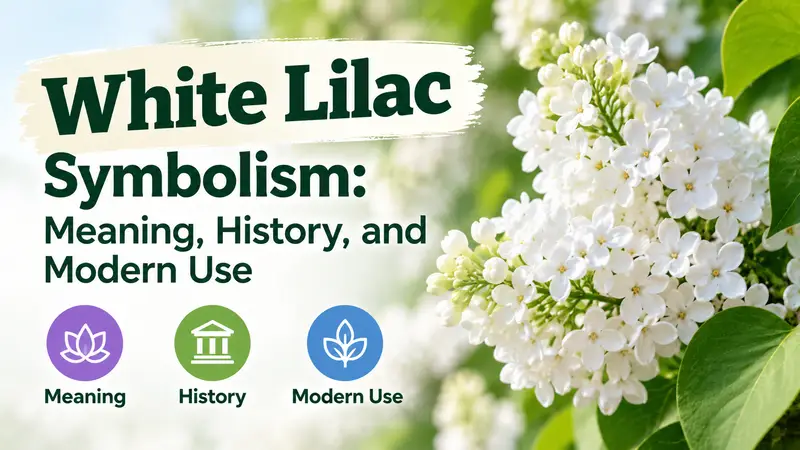
White lilac symbolism centers on purity, innocence, renewal, and the quiet beauty of new beginnings. With delicate white petals and a sweet spring fragrance, white lilacs are often associated with weddings, family celebrations, memorial arrangements, and moments when people want to express sincere affection without using bold or dramatic gestures.
Lilacs belong to the genus Syringa, a group of flowering shrubs known for their fragrant clusters of small, four-lobed flowers. Although purple lilacs are widely recognized, white varieties have their own visual appeal and emotional associations. Their pale blossoms can suggest simplicity, peacefulness, and a fresh start, making them a popular choice for gardens and floral arrangements.
In the United States, white lilacs are especially connected with spring, traditional gardens, and personal milestones. Their meaning depends on the occasion, however. A bouquet presented at a wedding may communicate innocence and hope, while the same flowers at a memorial can represent peaceful remembrance and enduring affection.
Understanding the symbolism of white lilacs means looking beyond their color. Their seasonal appearance, historical associations, fragrance, and place in everyday American life all help explain why these flowers continue to carry emotional significance.
Quick Answer
White lilac symbolism most commonly represents purity, innocence, renewal, and new beginnings in modern American culture, particularly in weddings, spring celebrations, and meaningful personal gifts. Historically, lilacs have also been associated with love, memory, and the arrival of spring, with white blossoms emphasizing simplicity, sincerity, and peace.
TL;DR
- Purity and innocence: White petals suggest sincerity, simplicity, and unspoiled beginnings.
- Renewal: Spring blossoms represent fresh starts, growth, and changing seasons.
- Love and affection: Fragrant flowers can express tenderness and appreciation.
- Remembrance: White lilacs may honor loved ones with a peaceful floral tribute.
- American garden traditions: Lilacs evoke springtime, family gardens, and nostalgia.
- Modern use: Weddings, memorials, home decor, gifts, and floral photography all feature white lilacs.
1. What White Lilacs Look Like and Why Their Appearance Matter
White lilacs grow in clusters of small, individual flowers that form rounded or cone-shaped arrangements along woody branches. Their petals are usually creamy white or bright white, while their green, heart-shaped leaves provide a natural contrast.
The plant’s appearance contributes to its symbolism in several ways:
- White petals suggest cleanliness, sincerity, innocence, and simplicity.
- Clusters of blossoms can represent togetherness, family connections, and shared happiness.
- Spring flowering creates associations with renewal, hope, and the beginning of a new season.
- A sweet fragrance can evoke memories, comfort, and familiar places.
These associations are interpretations rather than fixed botanical meanings. Nevertheless, they help explain why white lilacs suit occasions that call for a gentle, understated expression of emotion.
2. The Core Symbolic Meanings of White Lilacs
White lilacs have several overlapping meanings, but four associations are especially useful for understanding their place in modern American culture.
Purity and innocence are among the most recognizable interpretations. White flowers have long been used to communicate sincerity, and white lilacs fit this tradition through their pale, uncomplicated appearance.
New beginnings emerge from the plant’s seasonal cycle. Lilacs bloom in spring, making them natural reminders of growth after winter and the possibility of change.
Love and tenderness reflect the flower’s romantic associations. Lilacs are often connected with youthful affection and early love, while their white color can make that affection feel gentle rather than passionate.
Peace and remembrance are interpretations that suit quiet ceremonies and personal tributes. White lilacs can express affection without requiring a dramatic statement, particularly when words are difficult to find.
The meaning depends on the setting. A white lilac arrangement at a wedding may communicate hope for a shared future, whereas a branch placed beside a family photograph might evoke childhood memories or a loved one’s garden.
Common lilacs, botanically known as Syringa vulgaris, originated in southeastern Europe, particularly the Balkan region. They became popular in European gardens during the sixteenth century and spread through horticultural exchange.
The plants eventually reached North America through European settlement. By the eighteenth century, lilacs had become familiar garden shrubs in the American colonies.
Their ability to tolerate cold winters and their attractive, fragrant flowers made them practical choices for domestic gardens. Lilacs also carried a sense of familiarity for settlers who had grown accustomed to European gardens and wanted to recreate something recognizable in their new surroundings.
Early American garden enthusiasts, including George Washington and Thomas Jefferson, grew lilacs on their properties. Their presence in these gardens helped establish the plant as part of the country’s horticultural history.
However, the symbolism of white lilacs should not be traced to a single historical event or American tradition. The plant’s botanical history and the meanings later attached to its flowers developed along different paths.
The association between white lilacs and youthful innocence became particularly recognizable through nineteenth-century flower symbolism, when floral dictionaries helped popularize specific meanings for different flowers and colors.
4. White Lilacs in the Victorian Language of Flowers
During the nineteenth century, floriography, commonly called the language of flowers, became fashionable in Britain and the United States. People consulted flower dictionaries to select bouquets that expressed feelings that might otherwise remain unspoken.
The system assigned meanings to individual flowers, colors, and sometimes the way flowers were arranged. However, interpretations varied between publications, so there was never one universally accepted floral vocabulary.
In some Victorian flower dictionaries, white lilacs represented youthful innocence, while purple lilacs were associated with the first emotions of love. These distinctions offered a way to communicate subtle differences in affection.
For example, someone selecting white lilacs for a young person’s celebration might have intended to emphasize innocence or youthfulness. Purple lilacs, by contrast, could suggest the excitement of an emerging romantic attachment.
These meanings remain useful historical context, but they should not be treated as strict rules for modern bouquets. Today, most people choose lilacs because they appreciate their color, fragrance, season, or personal associations rather than because they have memorized a Victorian flower dictionary.
5. What White Lilacs Mean in American Culture Today
In contemporary American culture, white lilacs are more likely to communicate a general feeling than a precise coded message.
Their meaning often comes from the combination of flower color, occasion, and personal history.
At a spring gathering, they may suggest freshness and optimism. At a wedding, they can complement themes of commitment and a hopeful future. In a family garden, they may represent continuity between generations, especially when an established lilac bush has been growing for decades.
Lilacs also have a recognizable place in traditional American landscaping. They are frequently associated with older homes, cottage gardens, and the arrival of warmer weather.
This creates a particularly American emotional connection: white lilacs can feel familiar even to people who know little about formal flower symbolism. Their scent may remind someone of a grandparent’s yard, a childhood home, or the first warm days of spring.
The important distinction is that these associations are personal and cultural, not universal. Someone who has never encountered lilacs growing up may appreciate them primarily for their appearance and fragrance.
6. White Lilacs at Weddings and Romantic Celebrations
White lilacs work well in weddings because their appearance complements traditional themes of sincerity, commitment, and new beginnings.
Their symbolism can suit several parts of a wedding:
- Bridal bouquets: White lilacs can represent a fresh chapter and the hope of building a life together.
- Ceremony decorations: Their clustered blossoms create a soft, romantic atmosphere without overwhelming other flowers.
- Reception arrangements: Their fragrance and natural shape suit spring celebrations and garden-inspired designs.
- Anniversary gifts: They can recall an earlier milestone or express continuing affection.
White lilacs are not exclusively wedding flowers, and their meaning is not limited to purity or innocence. In a contemporary ceremony, a couple may select them because they are seasonal, beautiful, or connected to a meaningful memory.
They also combine well with roses, peonies, ranunculus, and other spring flowers. White roses can reinforce the traditional association with sincerity, while greenery adds a natural, relaxed appearance.
One practical consideration is availability. Common lilacs usually have a relatively short flowering season, and cut stems may be less readily available than some standard wedding flowers. Couples planning an event should confirm availability with their florist.
7. White Lilacs in Grief, Memorials, and Remembrance
White flowers are often chosen for memorial arrangements because their understated appearance can convey respect, tenderness, and peaceful remembrance.
White lilacs can serve a similar purpose. Their associations with memory, spring, and familiar gardens may make them especially appropriate when honoring someone who loved gardening or enjoyed flowering plants.
For example, a family might include white lilacs in a memorial arrangement for someone who maintained a garden every spring. The flowers would then represent not only remembrance but also a specific part of that person’s life.
Their seasonal nature can also offer a comforting image of continuity. Although individual blossoms fade, the shrub can return in subsequent years, creating a natural connection between memory and the passing of time.
However, white lilacs do not have a universal or formally established meaning in American funeral customs. White lilies, roses, and chrysanthemums are also common choices, and floral traditions vary among families, regions, and religious communities.
If you are choosing flowers for someone else’s memorial, consider the family’s preferences and the person’s own relationship with flowers. A meaningful personal connection is often more important than a general symbolic definition.
8. White Lilacs in Different Cultural and Religious Traditions
The meaning of a white lilac can change when it appears in a different cultural setting. It is useful to distinguish the history of lilac cultivation from the symbolic meanings associated with white flowers more broadly.
In European floral traditions, lilacs are closely connected with spring and romantic feeling. Nineteenth-century flower dictionaries also distinguished meanings according to color, although those definitions differed between books.
In Persian cultural history, lilacs are part of a broader history of ornamental plants and the movement of flowers between regions. The name of the plant has linguistic connections to Persian, but that does not establish one universal Persian religious or spiritual meaning for white lilacs.
In Christian contexts, white flowers may be used to suggest purity, hope, or spiritual devotion. White lilacs can complement those themes in a floral arrangement, but they do not have a single universally prescribed Christian meaning.
In other cultural settings, white flowers may be associated with mourning, celebration, respect, or ceremonial purity. Those associations should not automatically be transferred to lilacs without considering the local tradition.
For American readers, the most respectful approach is to recognize that flower symbolism is culturally shaped. White lilacs can be meaningful in a religious or cultural ceremony, but the intended meaning should come from the people and traditions involved.
9. Emotional and Psychological Associations of White Lilacs
Flowers can evoke feelings through more than symbolism alone. Their colors, scents, shapes, and personal associations all influence how people experience them.
White lilacs may create several emotional impressions.
Calmness: Their pale color and soft clusters can make a room or garden feel visually gentle. This is an aesthetic impression, not a guaranteed psychological effect.
Nostalgia: Lilac fragrance may remind people of a particular home, person, or season. Smell is closely involved in autobiographical memory, so a familiar floral scent can bring back vivid personal associations.
Hope: Because lilacs bloom in spring, they can serve as a reminder of seasonal change and the return of growth.
Tenderness: The flower’s delicate appearance often suits expressions of affection that are sincere but not overly dramatic.
These reactions differ from person to person. Someone may associate lilacs with a happy childhood garden, while another may connect the same scent with grief or a place they no longer visit.
The emotional meaning of white lilacs is therefore partly cultural and partly autobiographical. Their appearance provides a starting point, but personal experience often determines what they ultimately represent.
10. White Lilacs Compared With Other Flower Colors
Color is one of the easiest ways to distinguish the symbolic associations people attach to lilacs. The following table summarizes common interpretations in American floral culture rather than universal or scientifically fixed meanings.
| Flower or color | Common symbolic association | Typical context | Important distinction |
|---|---|---|---|
| White lilac | Innocence, sincerity, renewal | Weddings, spring gifts, memorials | Often emphasizes gentleness and simplicity |
| Purple lilac | First love, youthful romance | Romantic gifts, spring arrangements | Strongly associated with early affection in traditional flower symbolism |
| Pink lilac | Tenderness, affection | Personal gifts, decorative bouquets | Meaning varies considerably by arrangement |
| White rose | Sincerity, purity, remembrance | Weddings, anniversaries, memorials | Has a more established role in many formal floral traditions |
| White lily | Purity, solemnity, peace | Religious ceremonies and funerals | Often has stronger established religious and memorial associations |
These distinctions can help when selecting flowers, but there is no need to follow them rigidly. A white lilac can express romantic love, and a purple lilac can be chosen simply because someone likes its color.
The message becomes clearer when the flower, occasion, and relationship all support the intended feeling.
11. White Lilacs in Tattoos, Jewelry, and Personal Style
10
White lilacs can inspire personal designs because they combine a recognizable spring flower with associations of innocence, memory, and renewal.
In tattoos, a lilac branch may commemorate a childhood home, a family member, a significant relationship, or a particular stage of life. White blossoms can suggest peace or a fresh start, while the branch itself may represent growth and continuity.
Because white ink can be difficult to distinguish from natural skin tones and may change in appearance as a tattoo heals, many tattoo designs represent white lilacs using outlines, negative space, and contrasting leaves rather than relying on white pigment alone.
In jewelry, lilac motifs can appear in botanical pendants, enamel designs, or floral illustrations. Such pieces may appeal to gardeners, people who appreciate Victorian aesthetics, or anyone with a personal attachment to the flower.
In fashion, white lilac patterns suit spring dresses, scarves, accessories, and delicate floral prints. Their understated color makes them easy to combine with neutral shades, pale pinks, and soft greens.
There is no standardized tattoo or jewelry meaning for white lilacs. If you are choosing the flower for a permanent design, the most useful question is what you want it to commemorate or express.
12. White Lilacs in Home Decor, Gardens, and Modern Media
White lilacs are well suited to interiors and outdoor spaces where people want a natural, seasonal appearance.
In home decor, a vase of white lilacs can create a simple spring centerpiece. Their fragrance may make a room feel connected to the outdoors, while their white blossoms work with traditional, cottage, farmhouse, and minimalist interiors.
In gardens, a lilac shrub can become a recurring seasonal landmark. Because established shrubs may live for many years, they sometimes become part of a property’s identity or a family’s shared history.
On social media, white lilacs may appear in spring photography, wedding inspiration, garden posts, and floral arrangements. Captions may connect them with new beginnings, peaceful moments, nostalgia, or appreciation for nature.
These uses reflect an important change in how flower symbolism is communicated. In the nineteenth century, a person might have consulted a floral dictionary to interpret a bouquet. Today, people are more likely to explain the meaning in a caption, gift note, or personal story.
The flower remains a visual form of expression, but its message is increasingly shaped by the individual sharing it.
13. Common Misunderstandings About White Lilac Symbolism
Several misconceptions can make floral symbolism seem more rigid than it really is.
Misconception 1: White lilacs always mean innocence.
Innocence is a recognized traditional association, but white lilacs can also represent renewal, affection, nostalgia, or remembrance. The occasion and the sender’s intention matter.
Misconception 2: White lilacs have a universal religious meaning.
White flowers may carry spiritual associations in particular traditions, but there is no single religious interpretation that applies to all white lilacs.
Misconception 3: Giving white lilacs sends a secret romantic message.
Lilacs have historical connections with love and youthful affection, but a modern bouquet does not automatically declare romantic interest. It may simply express appreciation or celebrate spring.
Misconception 4: White lilacs are unlucky or symbolize death.
There is no universal rule that white lilacs bring bad luck. Their use in a memorial does not make them inherently negative; flowers can express love and remembrance in many different settings.
Misconception 5: Every flower color has one fixed definition.
Victorian flower dictionaries assigned specific meanings to flowers, but those meanings differed between publications. Modern floral symbolism is even more flexible, shaped by personal preference and cultural context.
Recognizing these limitations makes flower symbolism more useful. It allows people to appreciate historical associations without treating them as rules that everyone must follow.
14. How White Lilac Symbolism Has Evolved
The meaning of white lilacs has developed through several overlapping traditions.
In early American gardens, lilacs were valued primarily as ornamental plants that offered attractive blossoms and a recognizable connection to European horticulture. Their popularity helped make them familiar features of domestic landscapes.
During the nineteenth century, the language of flowers gave lilacs more specific emotional associations. Color distinctions, including the connection between white lilacs and youthful innocence, became part of a broader vocabulary for communicating feelings through plants.
Over time, those formal codes became less central to everyday flower giving. People continued to associate white blossoms with sincerity and peacefulness, but they increasingly selected flowers according to personal taste, seasonal availability, and the meaning of an occasion.
Today, white lilacs occupy both roles. They retain traditional associations with innocence and renewal, yet they also function as familiar spring flowers that can represent anything from family memories to a simple appreciation of nature.
This evolution illustrates how symbols work in everyday life: meanings can persist even when the original customs that popularized them become less familiar.
FAQs
1. What does a white lilac symbolize spiritually?
White lilacs may represent purity, peace, hope, and renewal in personal or spiritual interpretations. Their meaning depends on the person’s beliefs and the setting in which the flowers appear; there is no single universal spiritual definition.
2. What does a white lilac mean in a dream?
A white lilac in a dream might personally suggest a fresh start, a memory, affection, or a desire for peace. Dream symbols do not have scientifically established universal meanings, so the dreamer’s emotions and recent experiences are more useful than a fixed interpretation.
3. Are white lilacs associated with love?
Yes, lilacs have traditional associations with love, particularly youthful or early romantic feelings. White varieties can express gentle affection and sincerity, although a bouquet does not automatically communicate romantic interest.
4. Are white lilacs appropriate for funerals?
Yes, white lilacs can be appropriate for funerals and memorials, especially when the flowers have a personal connection to the deceased. Their associations with peace, affection, and memory make them a thoughtful option, provided they suit the family’s preferences and the ceremony.
5. What is the difference between white and purple lilac symbolism?
White lilacs are traditionally associated with youthful innocence, while purple lilacs are often linked to first love or the earliest emotions of romance. These distinctions come partly from historical flower symbolism, and modern interpretations are flexible.
6. What does it mean to give someone white lilacs?
Giving someone white lilacs can communicate appreciation, tenderness, sincerity, or a wish to celebrate a new beginning. The relationship between the giver and recipient, along with the occasion, helps determine the message.
7. Do white lilacs have a negative meaning?
White lilacs do not have a universally recognized negative meaning. Although white flowers may be used for mourning in some contexts, memorial associations are not inherently negative and can express affection, respect, and remembrance.
Conclusion
White lilacs symbolize purity, innocence, renewal, and gentle affection, with additional associations shaped by history and personal experience. Their connection to spring makes them especially suitable for celebrations, while their understated beauty can also express sympathy, nostalgia, and remembrance.
In modern American culture, white lilacs are appreciated both for their traditional symbolism and for their place in gardens, weddings, personal gifts, and family memories. Their meaning is not fixed by color alone; the occasion and the relationship behind the flowers matter just as much.
Ultimately, the most meaningful interpretation of white lilac symbolism is the one that connects the flower to a real feeling, relationship, or moment in life.