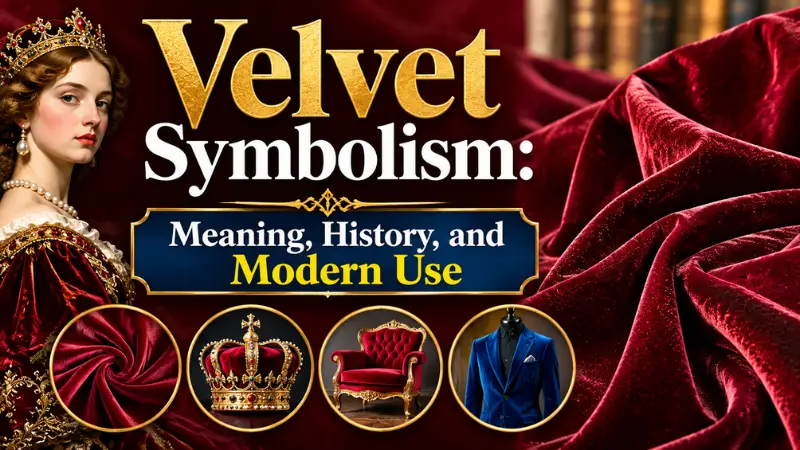
Velvet is more than a soft, decorative fabric. Its rich texture, gentle sheen, and association with formal clothing have made it a familiar symbol of luxury, elegance, comfort, and sophistication. Velvet symbolism is closely connected to wealth, social status, romance, refinement, and the desire for physical and emotional comfort.
In the United States, velvet appears in evening dresses, holiday decorations, theater curtains, furniture, religious garments, and fashion collections. A velvet jacket can suggest confidence and personal style, while velvet curtains can make a room feel formal, intimate, or dramatic. The fabric communicates something through both its appearance and the way it feels.
Its associations did not develop overnight. For centuries, velvet required considerable skill, time, and expensive materials to produce. Royal courts, wealthy families, and religious institutions used it to display authority and prestige. As manufacturing became more accessible, its meaning expanded beyond elite society.
Understanding velvet’s symbolism means looking at its history, cultural associations, colors, emotional qualities, and changing role in modern American life.
Quick Answer: What Does Velvet Symbolize?
Velvet commonly symbolizes luxury, elegance, wealth, comfort, and sophistication in modern American culture, especially in fashion, interior design, and formal celebrations. Historically, it was associated with royal authority, religious prestige, social rank, and artistic craftsmanship because producing high-quality velvet required expensive materials and specialized weaving skills.
TL;DR: Key Meanings of Velvet
- Luxury: Represents wealth, expensive taste, and refined living.
- Power: Historically associated with royalty, religious institutions, and influential families.
- Comfort: Its soft surface suggests warmth, security, and physical pleasure.
- Romance: Often communicates sensuality, intimacy, and elegant attraction.
- Tradition: Appears in ceremonial clothing, theater, and seasonal decorations.
- Individuality: Modern fashion uses velvet to express confidence and distinctive personal style.
1. What Velvet Looks Like and Why It Is Symbolic
Velvet is a woven fabric recognized by its short, dense surface fibers, often called its pile. These fibers create a soft texture that reflects light differently depending on the direction in which the fabric is brushed or viewed.
Traditional velvet was commonly made from silk, although wool, cotton, and other fibers have also been used. Modern versions frequently contain polyester, rayon, or blended materials.
Three physical characteristics contribute to its symbolism:
- Softness: Suggests comfort, gentleness, warmth, and tenderness.
- Visual depth: Gives colors a fuller appearance, suggesting richness and sophistication.
- Distinctive texture: Creates a sense of refinement and makes velvet noticeable without requiring elaborate decoration.
Unlike fabrics that communicate their value through bright patterns or metallic details, velvet often makes an impression through texture alone.
This explains why it is frequently chosen for formal clothing, decorative furniture, theatrical settings, and luxury-inspired interiors.
2. The Historical Origins of Velvet Symbolism
The history of velvet is closely connected to the development of skilled textile production across Asia, the Middle East, and Europe.
Ancient Egypt had piled linen textiles, but these should not automatically be treated as identical to the silk velvet that later became famous. Early examples of silk pile weaving have been identified in China, while the precise origins and routes through which velvet-making techniques spread remain subjects of historical discussion.
By the medieval period, velvet was associated with wealthy households and important institutions. Arabic historical references describe velvet-like textiles at the Umayyad court during the eighth century. Persian textile traditions also contributed to the wider history of luxurious pile fabrics.
In Europe, Italian cities became major centers of velvet production. Lucca was particularly important, and an early European written reference from 1311 records red velvet among the possessions of Pope Clement V.
The fabric’s expense was not simply a matter of appearance. Producing it required additional thread, specialized looms, skilled workers, and considerable time.
Consequently, velvet became associated with:
- Wealth and economic privilege.
- Royal and aristocratic households.
- Religious authority.
- Skilled craftsmanship.
- Access to rare and expensive materials.
Its symbolic reputation developed from the real social circumstances surrounding its production and ownership. trc-leiden.nl+2
3. Velvet as a Symbol of Wealth and Social Status
One of velvet’s most established associations is financial privilege.
In earlier centuries, owning velvet clothing or decorating a home with velvet furnishings indicated access to materials and craftsmanship that ordinary households could not easily afford.
European nobles used elaborate velvet garments to communicate their position. Some textiles incorporated gold and silver threads, family emblems, or decorative motifs that reinforced the owner’s identity and authority.
Velvet also appeared in Ottoman and Persian court settings, where luxurious fabrics could communicate political rank, honor, and diplomatic importance.
Today, the fabric no longer belongs exclusively to wealthy people. Affordable synthetic velvet is widely available, but its historical reputation still influences how people perceive it.
For example, a dark velvet sofa may make a living room appear more expensive, while a velvet evening jacket can create a polished appearance without elaborate accessories.
In modern America, velvet often represents the appearance of luxury rather than actual financial status.
4. Velvet Symbolism in Royalty, Power, and Authority
Velvet has a long association with political and religious authority.
Royal garments, ceremonial robes, and court furnishings frequently incorporated the fabric because it offered visual richness and an impressive appearance.
During the European Renaissance, expensive velvet textiles were used in clothing, church vestments, and household decoration. Family symbols and carefully designed patterns could communicate lineage, influence, and prestige.
Ottoman rulers also used luxurious textiles to distinguish officials and reward individuals. Certain robes of honor were especially prestigious because of their materials and construction.
These traditions helped establish velvet as a visual language of authority.
In contemporary American culture, the association survives in several familiar settings:
- Theater curtains that frame important performances.
- Formal ceremonial garments and academic regalia.
- Luxury hotel interiors.
- Decorative furnishings in prestigious institutions.
- Historical costumes representing monarchs and aristocrats.
Velvet does not automatically symbolize political power, but it often creates an atmosphere of ceremony, importance, and tradition.
5. What Different Velvet Colors Symbolize
Color changes the emotional meaning of velvet considerably. The fabric’s dense surface can make certain shades appear especially saturated, which strengthens their visual impact.
Red and Burgundy Velvet
Associated with romance, passion, confidence, celebration, and authority. Burgundy often feels more restrained and traditional than bright red.
Buy Wholesale Velvet Fabric: Luxurious Texture and Elegance | Zelouf Fabrics
Purple Velvet
Suggests royalty, creativity, dignity, spirituality, and individuality. Its historical connection with expensive dyes and elite clothing strengthens its association with prestige.
Black Velvet Fabric: Polyester Gown & Dress Material – 44″ Wide – Etsy UK
Black Velvet
Communicates sophistication, formality, mystery, restraint, and sometimes mourning. Its meaning depends heavily on the occasion.
Classic Emerald Green Velvet Fabric
Green Velvet
Often associated with nature, renewal, prosperity, stability, and traditional elegance. Dark green can also suggest an old-fashioned or heritage-inspired aesthetic.
Veludo – Azul Marinho – Violet Fabrics
Blue Velvet
Suggests calmness, trust, dignity, confidence, and emotional depth. Navy velvet is especially common in formal and sophisticated designs.
Kravet Rocco Velvet Snowcap Upholstery Fabric – DecoratorsBest
White and Cream Velvet
Communicates purity, simplicity, softness, celebration, and refinement. These shades are often used in wedding and winter decorations.
These are common cultural associations, not universal rules. A particular shade can communicate different things depending on its setting, design, and the person using it.
6. Velvet Symbolism in American Culture
In the United States, velvet occupies an interesting position between traditional elegance and everyday fashion.
Americans encounter it in formal events, seasonal celebrations, home decoration, entertainment, and personal style.
Its historical associations with wealth remain recognizable, but contemporary interpretations are more flexible.
Fashion and social identity: Velvet suits, jackets, dresses, and accessories are often chosen for events where someone wants to look distinctive. The material can communicate confidence, creativity, and attention to appearance.
Entertainment and performance: Velvet curtains are familiar in theaters and performance venues. They help create an atmosphere of anticipation and separate the audience from the stage.
Interior design: Velvet furniture is frequently used to introduce visual richness, texture, and comfort into living rooms, hotels, and formal spaces.
Holiday traditions: Red and green velvet decorations are especially recognizable during Christmas. Velvet ribbons, stockings, bows, and decorative cushions contribute to a traditional seasonal appearance.
Formal occasions: Velvet dresses and jackets are common choices for winter weddings, evening celebrations, holiday parties, and other special events.
The American interpretation is therefore not limited to wealth. It also includes creativity, nostalgia, celebration, and personal expression.
7. Velvet in Religion and Spiritual Traditions
Velvet has appeared in several religious traditions, particularly where ceremonial clothing and decorative textiles communicate honor and sacred importance.
In Christian settings, velvet has been used for vestments, church furnishings, altar coverings, and ceremonial decorations. Deep purple, red, and other richly colored fabrics can contribute to the formal atmosphere of religious observances.
However, the symbolism of a garment depends on the specific denomination, liturgical season, and local tradition. Velvet itself is not a universally prescribed Christian symbol.
In Islamic history, luxurious textiles, including velvet, appeared in royal courts and ceremonial settings. Ottoman robes of honor used fine materials to communicate rank, distinction, and recognition. The importance of these garments was connected to their social and political function, rather than to a universal religious meaning of velvet.
Persian textile traditions also produced elaborate velvet designs, including scenes and decorative patterns associated with idealized landscapes and paradise.
The important distinction is that velvet is a material, not a religious symbol with one fixed meaning. Its significance comes from the garments, colors, ceremonies, and cultural traditions in which it appears. The Metropolitan Museum of Art+2
8. The Emotional and Psychological Meaning of Velvet
Velvet has an unusual ability to communicate through touch and appearance simultaneously.
Its softness can create an impression of safety and physical comfort, while its rich surface can suggest exclusivity and formality.
This combination gives the material several emotional associations.
Comfort and security: Soft upholstery, cushions, and blankets can make a room feel welcoming. Velvet is often chosen when designers want a space to feel comfortable without looking casual.
Romance and intimacy: Red, burgundy, and dark purple velvet frequently appear in romantic settings because their colors and textures suggest warmth and sensuality.
Confidence and self-expression: A velvet jacket or dress can make an outfit feel more intentional. People who choose distinctive textures may use them to communicate individuality.
Nostalgia: Velvet can remind people of older theaters, historic homes, vintage clothing, and traditional holiday decorations.
Dignity and restraint: Dark velvet is sometimes associated with seriousness and formal behavior, particularly in ceremonial environments.
These interpretations are influenced by personal experience. Someone may associate velvet with childhood holiday traditions, while another person may connect it with formal clothing or an elegant interior.
The emotional response is therefore partly cultural and partly individual.
9. Velvet in American Weddings, Holidays, and Celebrations
Velvet has become a recognizable decorative material for celebrations in the United States.
Its popularity is partly connected to its ability to make ordinary decorative objects appear more formal.
Weddings: Burgundy, emerald, navy, and champagne velvet are often used in wedding dresses, bridesmaid accessories, ribbons, table decorations, and seasonal arrangements. The material can create a romantic and traditional atmosphere.
Christmas: Red velvet stockings, green velvet bows, and decorative cushions are familiar holiday accessories. Their rich colors help reinforce the traditional visual language of the season.
Thanksgiving and autumn gatherings: Rust, brown, burgundy, and forest-green velvet can complement seasonal decorations and create a warm dining atmosphere.
New Year’s celebrations: Black and jewel-toned velvet clothing often appears in evening outfits because it looks formal without requiring excessive ornamentation.
Graduations and ceremonies: Velvet can appear in academic regalia, particularly in the decorative trim and traditional garments used by certain institutions. Its presence reinforces the ceremonial character of the occasion.
In these contexts, velvet communicates more than decoration. It helps distinguish an ordinary gathering from an event intended to feel special.
10. Cross-Cultural Meanings of Velvet
Velvet’s associations developed across different regions, and its historical use was not limited to European aristocracy.
| Cultural contextCommon associationHistorical or modern setting | ||
|---|---|---|
| European Renaissance | Wealth, prestige, artistic refinement | Noble clothing and church textiles |
| Ottoman Empire | Rank, honor, political authority | Ceremonial robes and diplomatic gifts |
| Persian traditions | Luxury and artistic craftsmanship | Elaborate woven textiles and court decoration |
| Mughal India | Royal distinction and prosperity | Court furnishings, garments, and ceremonial objects |
| Modern United States | Elegance, comfort, individuality | Fashion, interiors, and celebrations |
In Ottoman and Mughal settings, velvet could be used for furnishings as well as garments. Expensive textiles decorated tents, coverings, cushions, and other objects associated with royal life.
Persian and other Islamic-world textile traditions also demonstrate that velvet production and design developed through international exchange rather than within a single cultural tradition.
These differences matter because velvet does not have one universal symbolic meaning. A textile associated with royal authority in one historical setting may communicate romantic style or personal comfort in another. digitalcommons.unl.edu+2
11. Velvet Symbolism in Fashion and Personal Identity
Fashion is one of the most visible ways velvet communicates personal identity today.
A person wearing velvet may be expressing a preference for classic style, dramatic clothing, vintage aesthetics, or distinctive textures.
The fabric can also challenge expectations about formal dress.
A velvet blazer paired with jeans creates a different impression from a traditional business suit. Similarly, velvet sneakers or a casual jacket can make an outfit look creative rather than strictly formal.
Velvet is also used in clothing associated with different cultural and creative identities:
- Vintage fashion: Connects modern clothing with earlier decades and traditional craftsmanship.
- Alternative fashion: Dark velvet can complement gothic, romantic, and theatrical styles.
- Luxury fashion: Designer collections use velvet to suggest exclusivity and refined taste.
- Gender-neutral styling: Velvet shirts, trousers, jackets, and accessories allow people to experiment with texture beyond traditional clothing categories.
- Personal expression: Brightly colored velvet can communicate confidence and originality.
The important point is that velvet does not determine someone’s identity. It provides a visual and tactile element that people can use to express their preferences.
12. Velvet in Interior Design and Home Decoration
Velvet has a strong place in American home design because it combines visual richness with a comfortable surface.
Its appearance changes depending on lighting, furniture shape, and the direction of its pile.
For example, a navy velvet sofa can make a living room look traditional and polished, while a green velvet accent chair may create a more contemporary atmosphere.
Common decorative uses include:
- Velvet curtains for formal or theatrical-looking rooms.
- Upholstered sofas and chairs for comfortable seating.
- Decorative pillows for adding texture.
- Velvet bedding for a softer bedroom appearance.
- Table runners and seasonal decorations for special occasions.
Velvet also works particularly well with contrasting materials.
Pairing it with wood can create a warm, traditional atmosphere. Combining it with glass and metal can make a room look more modern. Mixing velvet with linen or cotton can reduce its formal appearance.
Its symbolism in home decoration is therefore closely connected to the atmosphere a homeowner wants to create.
13. Velvet in Literature, Language, and Popular Culture
Velvet has meanings beyond clothing and decoration. It also appears in everyday expressions, literature, music, and political language.
One familiar expression is “the velvet glove.” It describes a gentle or polite approach that may conceal firmness, authority, or control. The expression is often paired with the idea of an iron fist, creating a contrast between outward softness and underlying strength.
Another example is the “velvet rope.” In American entertainment and nightlife culture, velvet ropes are used to separate exclusive areas from general public spaces. They have become a recognizable representation of privilege, restricted access, and social status.
The phrase “Velvet Revolution” also demonstrates how the material can acquire metaphorical meaning. It describes the largely peaceful political transition in Czechoslovakia in 1989. The word velvet helped distinguish the relatively nonviolent character of the movement from more violent revolutionary upheavals. The New York Review of Books
In music and entertainment, velvet is frequently used to describe smoothness and richness. Expressions such as a velvet voice suggest a warm, controlled, pleasant vocal quality.
These examples demonstrate that velvet has developed into a metaphor for qualities beyond its physical texture, including exclusivity, gentleness, refinement, and peaceful change.
14. Velvet Tattoos and Their Symbolic Interpretations
Velvet is not among the most conventional tattoo subjects, but it can appear in artistic tattoo designs through fabric folds, clothing, textures, and decorative imagery.
When used in tattoo art, velvet-inspired imagery may communicate several personal ideas.
Luxury and self-worth: A velvet garment or decorative design can represent appreciation for beauty, quality, and personal confidence.
Romance: Red or burgundy velvet imagery may express intimacy, passion, and affection.
Individuality: A detailed velvet-inspired design can represent creativity and an appreciation for distinctive aesthetics.
Nostalgia: Vintage velvet clothing, theater curtains, or antique furniture can symbolize memories of particular periods or personal experiences.
Softness and resilience: Some people may use velvet imagery to express the idea that gentleness and strength can exist together.
There is no established universal tattoo meaning for velvet. The design, accompanying objects, colors, and personal story determine its significance.
Someone who chooses a velvet curtain tattoo, for example, may be expressing a connection to theater or performance rather than wealth.
15. Common Misunderstandings About Velvet Symbolism
Although velvet has recognizable associations, several interpretations can become misleading when its history and context are ignored.
Misunderstanding 1: Velvet always represents wealth.
Historically, expensive silk velvet was a luxury material. However, modern manufacturing makes velvet available at many price points. Its presence does not necessarily indicate financial status.
Misunderstanding 2: Velvet always represents royalty.
Royal courts used velvet, but ordinary people have also worn and used it. Today, it appears in casual clothing, home accessories, and everyday fashion.
Misunderstanding 3: Velvet is always romantic or sensual.
The material can create a romantic impression, but it is also used in academic clothing, religious settings, theater, and traditional interiors.
Misunderstanding 4: Every velvet color has a fixed meaning.
Color associations depend on cultural background, design choices, and context. Purple velvet may suggest royalty in one setting and creativity in another.
Misunderstanding 5: Velvet has an inherently religious meaning.
Velvet has been used by religious institutions, but the material itself does not belong exclusively to any religion.
It is also important to distinguish historical symbolism from modern political language. Expressions such as velvet revolution use the word metaphorically; they do not establish a universal political meaning for velvet fabric.
16. How Velvet Symbolism Has Changed Over Time
Velvet’s symbolic development reflects changes in technology, fashion, economics, and social expectations.
Its earliest associations with luxury were strengthened by the time-consuming techniques and valuable materials required to produce it.
During the medieval and Renaissance periods, velvet became an important feature of elite clothing and ceremonial environments. Its use by wealthy families and religious institutions reinforced its connection with status and authority.
The Industrial Revolution gradually changed this relationship. Improvements in textile manufacturing made complex fabrics more accessible, allowing velvet to reach a wider range of consumers.
During the nineteenth century, velvet became increasingly visible in clothing, accessories, and household decoration. It was no longer restricted to the wardrobes and interiors of the wealthiest households.
In the twentieth century, synthetic fibers expanded its availability and encouraged new applications in fashion and furnishings.
By 2025–2026, velvet represents a mixture of traditional and contemporary ideas:
- Historical wealth and modern luxury.
- Formal elegance and creative fashion.
- Physical comfort and visual sophistication.
- Vintage nostalgia and contemporary design.
- Romantic expression and individual identity.
The material has retained much of its historical reputation while becoming more accessible and adaptable.
FAQs
1. What does velvet symbolize spiritually?
Velvet can represent dignity, honor, devotion, and reverence when used in religious or ceremonial environments. However, it has no single universal spiritual meaning, and its interpretation depends on the religious tradition and the context in which it appears.
2. Is velvet a positive or negative symbol?
Velvet is generally associated with positive qualities such as elegance, comfort, wealth, and refinement. In certain contexts, it can also suggest exclusivity, excessive luxury, or social separation, particularly when associated with velvet ropes and restricted spaces.
3. What does wearing velvet symbolize?
Wearing velvet commonly communicates confidence, sophistication, individuality, and an appreciation for distinctive clothing. The meaning changes with the garment, color, and occasion; a velvet evening jacket may suggest formal elegance, while a casual velvet shirt can express personal creativity.
4. What does black velvet symbolize?
Black velvet commonly represents sophistication, formality, elegance, and restraint. It can also suggest mourning or seriousness, although the meaning depends on whether it appears in fashion, ceremonial clothing, or a memorial setting.
5. Why is velvet associated with royalty?
Velvet became associated with royalty because its production historically required expensive materials, specialized weaving techniques, and skilled labor. European monarchs, wealthy families, and Ottoman rulers used luxurious velvet garments and furnishings to communicate authority, prestige, and social rank.
6. What does red velvet symbolize?
Red velvet commonly symbolizes romance, passion, confidence, celebration, and luxury. In American culture, it is also associated with Christmas decorations, formal evening clothing, and romantic interior design.
7. What does velvet symbolize in dreams?
Dream interpretations are subjective, and there is no scientifically established meaning for seeing velvet in a dream. Some popular interpretations associate soft velvet with comfort, luxury, affection, or a desire for security, while dark velvet may reflect privacy or formality.
Conclusion:
Velvet represents a combination of luxury, elegance, comfort, authority, and personal expression. Its historical association with royal courts, religious institutions, and wealthy households explains why it continues to suggest refinement and prestige.
In modern American culture, however, its meaning has expanded. Velvet appears in everyday fashion, holiday decorations, weddings, home interiors, entertainment, and artistic expression. It can communicate romance and individuality just as easily as traditional luxury.
Ultimately, velvet symbolism comes from the relationship between material, history, and human experience. Its softness suggests comfort, its appearance suggests refinement, and its history recalls a time when beautiful textiles communicated social position. Whether used in a simple jacket or an elaborate ceremonial setting, velvet remains a recognizable way to express style, atmosphere, and personal meaning.