Introduction
Leather has represented protection, strength, durability, craftsmanship, and social identity across different cultures. Made from treated animal hides, it is one of humanity’s oldest practical materials, appearing in clothing, footwear, armor, tools, furniture, and decorative objects. Leather symbolism reflects this long relationship between people, survival, personal identity, and the things they create.
In the United States, leather carries several recognizable cultural associations. A leather jacket may suggest independence and rebellion, while cowboy boots can represent Western heritage, hard work, and frontier traditions. A leather briefcase may communicate professionalism, and a handmade leather bag can represent quality and appreciation for traditional craftsmanship.
These meanings are not universal. Leather can symbolize luxury in one setting, survival in another, and cultural identity in a third. Its associations have changed as societies moved from relying on animal hides for basic necessities to using leather as a fashion material and personal statement.
Understanding its symbolism means looking beyond its appearance and considering how people have used, valued, and interpreted it throughout history.
Quick Answer
Leather symbolism commonly represents strength, protection, durability, independence, and craftsmanship in modern American culture, especially through clothing, fashion, workwear, and personal accessories. Historically, leather was associated with survival, practical skill, social status, and physical protection because of its essential role in everyday life.
TL;DR
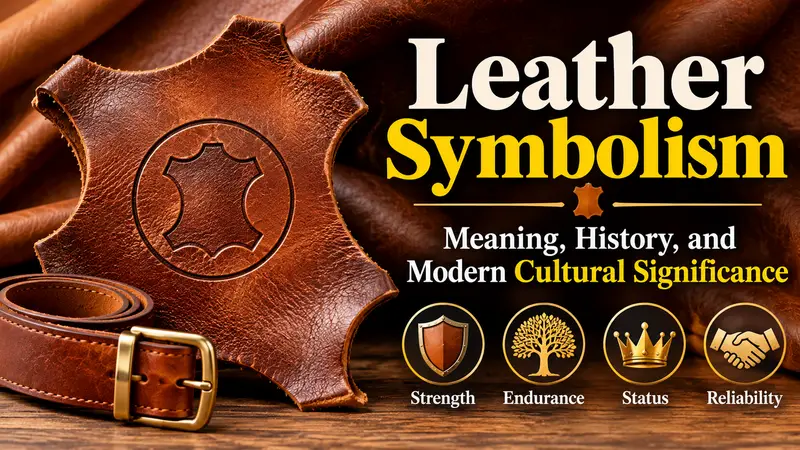
- Strength: Leather represents toughness, endurance, and the ability to withstand challenges.
- Protection: Its historical use in clothing, footwear, and armor connects it with safety.
- Independence: Leather jackets often communicate individuality and rebellion.
- Luxury: High-quality leather represents craftsmanship, quality, and social status.
- Cultural identity: Cowboy boots and traditional leatherwork reflect particular American histories.
- Modern meaning: Leather combines fashion, practicality, personal expression, and ethical debate.
What Does Leather Look Like and Why Is It Symbolic?
Leather is a durable material produced by treating animal hides to prevent decomposition and make them suitable for practical use. It can have a smooth, polished surface, a textured grain, a soft finish, or a rugged appearance depending on the animal source and processing method.
Common leather products include jackets, boots, belts, wallets, handbags, furniture, saddles, gloves, and protective equipment. Different finishes also influence how people perceive the material. A polished leather shoe may look formal, while a worn leather jacket can communicate experience and an unconventional personality.
Its physical qualities help explain its symbolic associations. Leather is flexible but resistant, comfortable when properly made, and capable of lasting for many years with appropriate care.
Unlike delicate materials that may lose their appearance quickly, leather often develops visible signs of use. Scratches, creases, and changes in color can become part of its character. This relationship between durability and aging contributes to its association with endurance, experience, and authenticity.
The Core Symbolic Meanings of Leather
Leather carries several meanings that developed through its practical uses and cultural associations.
Strength and toughness: Leather is commonly associated with physical strength because it has long been used in protective equipment, footwear, and durable clothing. Its rugged appearance reinforces the idea of resilience.
Protection and security: Before modern synthetic materials became widely available, leather helped protect people against cold, rough surfaces, injuries, and environmental conditions. This history connects it with safety and preparedness.
Independence and freedom: In modern American culture, leather jackets and boots often represent people who prefer individual expression over conventional expectations.
Luxury and quality: Fine leather goods can communicate attention to detail, skilled production, and an appreciation for materials that age with use.
Tradition and craftsmanship: Leatherworking requires specialized knowledge of cutting, stitching, shaping, and finishing. Handmade leather products therefore represent patience, practical intelligence, and respect for skilled labor.
These meanings are related, but they are not interchangeable. A leather work boot and a designer handbag may use the same basic material while communicating very different values.
Ancient Origins: How Leather Became a Symbol of Survival
Leather’s earliest importance came from necessity. Long before modern textile manufacturing, people used animal hides to create coverings, footwear, containers, and other objects needed for daily life.
Early communities learned to prepare skins so they would become more flexible and resistant to decay. Over time, different techniques developed for cleaning, drying, curing, and tanning hides.
Ancient Egyptians used leather for sandals, clothing, furniture components, bags, and military equipment. Archaeological discoveries also show that leather served practical and ceremonial purposes.
In other ancient societies, leather was used for shields, protective garments, water containers, belts, and writing materials. Its flexibility made it useful for objects that needed to bend without breaking.
These applications established its earliest symbolic associations: survival, resourcefulness, and the ability to turn available natural materials into useful tools.
Leather was not originally a luxury symbol for most people. Its importance came from how effectively it helped people meet everyday needs.
Leather Symbolism in Ancient Civilizations
Different civilizations developed their own relationships with leather based on climate, available animals, craftsmanship, and social organization.
In ancient Egypt, leather objects appeared in everyday life and burial contexts. The material could be decorated and incorporated into items associated with personal appearance, practical activity, and social position.
In the ancient Near East, leather was useful for sandals, containers, shields, and protective clothing. Its flexibility made it especially suitable for objects that needed to be carried or handled regularly.
The Greeks and Romans also used leather in footwear, military equipment, harnesses, and other practical products. Roman military clothing and equipment helped connect leather with discipline, preparedness, and organized strength.
In some societies, specialized leatherwork became an important craft. The quality of an item could reflect the skill of its maker and the resources available to its owner.
Although leather had different cultural meanings, its usefulness repeatedly connected it with survival, protection, practical knowledge, and skilled production.
Leather Symbolism in American History
Leather has a particularly recognizable place in American history because of its connection with frontier life, agriculture, transportation, military activity, and Western clothing.
During the expansion of European American settlements, leather was essential for boots, saddles, harnesses, belts, gloves, and other equipment. People traveling long distances or working outdoors depended on durable materials that could handle demanding conditions.
Buckskin clothing, leather moccasins, and other forms of hide-based clothing also have important histories among Indigenous communities. These traditions were diverse, with different nations developing their own materials, designs, decorative methods, and cultural practices.
Leather garments later became associated with popular images of the American West. Cowboy boots, saddles, holsters, and wide leather belts became recognizable elements of Western clothing.
The material also played a role in military history. Leather jackets, boots, belts, and protective equipment became associated with service, preparedness, and uniformed identity.
These historical uses helped establish leather as a material connected with American practicality, independence, and outdoor life.
What Leather Represents in Modern American Culture
Today, leather communicates several different identities in the United States.
For some people, it represents traditional American craftsmanship. A well-made leather belt, pair of boots, or saddle can reflect appreciation for practical skills and products designed for long-term use.
For others, leather represents individuality. Motorcycle jackets, distinctive boots, and customized leather accessories can communicate confidence and a willingness to stand apart from conventional fashion.
Leather also has an established place in professional and luxury markets. Briefcases, shoes, handbags, and furniture may use leather to suggest quality, sophistication, and attention to detail.
Its meaning can depend heavily on the object and the person wearing it.
A construction worker wearing leather boots may prioritize safety and durability. A musician wearing a leather jacket may use it as part of an artistic identity. Someone carrying a leather handbag may appreciate its design, appearance, or craftsmanship.
In modern America, leather is therefore both a functional material and a form of visual communication.
Leather Symbolism by Context
The following table explains how leather commonly communicates different ideas in American life.
| Context | Symbolic Meaning in the USA | Common Associations | Main Purpose |
|---|---|---|---|
| Leather jackets | Independence and rebellion | Confidence, individuality | Personal expression |
| Cowboy boots | Western heritage and hard work | Tradition, freedom | Cultural identity |
| Leather armor and gear | Protection and strength | Courage, preparedness | Physical safety |
| Designer handbags | Luxury and quality | Status, craftsmanship | Fashion and prestige |
| Handmade leather goods | Skill and authenticity | Patience, durability | Traditional craftsmanship |
| Motorcycle clothing | Freedom and toughness | Adventure, independence | Identity and protection |
Leather as a Symbol of Strength and Protection
One of the most established associations of leather is physical protection. Its historical use in shields, footwear, armor, gloves, and heavy clothing helped connect it with safety and resilience.
Leather armor appeared in different historical societies, sometimes used alone and sometimes combined with other materials. Although it was not equivalent to metal armor in every situation, it could offer useful protection while allowing greater flexibility.
This practical role influenced how people interpreted leather. It became associated with preparedness, toughness, and the ability to face difficult conditions.
In contemporary life, leather work boots and protective gloves maintain some of these associations. Their purpose is not simply decorative; they are designed to help people perform demanding tasks.
Symbolically, leather can represent a person’s desire to remain steady under pressure. It communicates a sense of readiness rather than vulnerability.
Why Leather Represents Rebellion and Independence
The leather jacket is one of the most recognizable examples of leather symbolism in American popular culture.
Its association with rebellion developed through military clothing, motorcycle culture, entertainment, and youth fashion. During the twentieth century, leather jackets became increasingly visible in films and popular music.
Hollywood helped establish the image of the leather-clad outsider: someone who challenged social expectations, valued personal freedom, and preferred an unconventional lifestyle.
Motorcycle communities also helped strengthen this association. Leather jackets and other protective garments became recognizable parts of riding culture, combining practical safety with group identity.
Later, punk and rock fashion adopted leather as a way to communicate resistance to conventional styles and mainstream expectations.
Today, a leather jacket can suggest confidence, independence, creativity, or simply an appreciation for a classic fashion design. Wearing one does not necessarily indicate rebellion, but its cultural history continues to influence how people interpret it.
Leather and the Symbolism of American Western Identity
Leather is closely connected with the American West through ranching, horseback riding, frontier clothing, and Western popular culture.
Cowboy boots, saddles, leather chaps, belts, and riding gloves are recognizable parts of this visual tradition. These objects communicate practical experience, outdoor work, and the skills associated with handling horses and livestock.
Western films, television, photography, and country music have further strengthened leather’s association with independence and rugged individualism.
However, American Western history is more complicated than the familiar cowboy image. Indigenous peoples, Mexican vaqueros, Spanish colonial traditions, ranching communities, and many other groups contributed to the development of Western clothing and leatherworking practices.
Recognizing these influences provides a more accurate understanding of the symbol. Leather does not belong to one single American tradition; its history reflects cultural exchange, regional differences, and the work of many communities.
The Emotional and Psychological Meaning of Leather
Leather can influence how people feel about themselves and how they believe others perceive them.
Its weight, texture, and appearance often communicate stability and confidence. A structured leather jacket or pair of boots may help someone feel prepared, capable, or comfortable with a particular personal identity.
Leather also carries associations with memory and experience. An older leather bag inherited from a family member, for example, may represent family history, responsibility, or a connection with the past.
The way leather changes over time contributes to this emotional significance. Scratches and creases can remind owners of journeys, work, or important experiences.
For some people, these signs of use make an item more meaningful rather than less attractive. They suggest that the object has been part of everyday life.
Leather can therefore symbolize not only toughness but also continuity, attachment, and the value people place on familiar possessions.
Leather in Fashion, Tattoos, and Personal Style
Modern fashion uses leather in many forms, including jackets, trousers, boots, handbags, belts, and accessories.
A leather jacket can communicate confidence or an alternative fashion identity. Leather boots may suggest practicality, while a polished leather handbag can create a formal and sophisticated appearance.
In tattoo culture, leather imagery is less standardized than traditional symbols such as roses, skulls, or anchors. People may choose leather jackets, biker imagery, saddles, or leatherworking tools to represent freedom, craftsmanship, family traditions, or a particular lifestyle.
The meaning depends on the surrounding imagery and the person’s experiences.
Some people also use leather accessories as identity markers. A customized belt, handcrafted wallet, or personalized jacket may represent individuality and appreciation for traditional skills.
In each case, the material becomes part of a larger personal statement rather than having one fixed meaning.
Leather in Religion and Cross-Cultural Traditions
Leather has appeared in religious and cultural traditions for practical, symbolic, and ceremonial purposes.
In biblical traditions, animal skins are mentioned in connection with clothing and protection. The Book of Genesis describes garments made from skins, while other biblical passages refer to leather containers, sandals, and garments associated with religious figures.
In Jewish tradition, leather has practical significance in certain religious objects, including tefillin. These objects have specific religious requirements and meanings that should not be reduced to general ideas about strength or protection.
In several Indigenous cultures, animal hides have been used for clothing, ceremonial objects, footwear, and decorated items. Their meaning depends on the particular community, animal, design, and cultural practice.
In other parts of the world, leatherworking developed into specialized traditions involving decorative patterns, footwear, saddles, and household objects.
These examples show that leather can carry cultural significance beyond its physical usefulness. However, there is no single universal religious meaning attached to leather.
Leather Symbolism in Luxury and Craftsmanship
Leather is often associated with quality because producing useful leather goods requires specialized knowledge and careful work.
Traditional leathercraft involves selecting materials, cutting patterns, preparing edges, stitching pieces together, and applying appropriate finishes. Each stage affects the final product’s appearance and durability.
Handmade leather goods can therefore symbolize patience, practical intelligence, and respect for skilled labor.
In the United States, luxury brands frequently use leather in handbags, shoes, luggage, wallets, and furniture. In these settings, the material may communicate financial status, exclusivity, and appreciation for design.
However, expensive leather is not automatically better made than less expensive leather. Material quality, tanning methods, construction, and finishing all influence the final result.
The symbolic connection between leather and luxury comes partly from its history as a valuable material and partly from modern marketing and fashion culture.
Common Misunderstandings About Leather Symbolism
One misconception is that leather always symbolizes toughness or aggression. Although it can communicate those qualities, leather is also associated with elegance, comfort, tradition, and craftsmanship.
Another misunderstanding is that leather automatically represents wealth. While premium leather products are associated with luxury, leather has historically been used for ordinary necessities such as shoes, bags, work gloves, and containers.
It is also inaccurate to assume that all leather products represent the same cultural identity. A motorcycle jacket, traditional moccasins, cowboy saddle, and designer handbag have different histories and associations.
Some people also overlook the ethical questions connected with animal-derived materials. Leather production involves animal hides, and its environmental impact depends on sourcing, tanning chemicals, manufacturing practices, and disposal. Concerns about animal welfare and pollution have encouraged interest in alternatives such as plant-based materials and synthetic leather.
These debates do not erase leather’s historical importance, but they influence how consumers understand its use today.
How Leather Symbolism Has Changed Over Time
Leather’s symbolic meaning has evolved alongside changes in technology, society, and fashion.
In early human communities, its main importance came from survival. It provided practical solutions for clothing, footwear, shelter, and protection.
As craftsmanship developed, leather became more than a basic necessity. Decorative techniques and specialized production allowed certain objects to communicate wealth, occupation, and social position.
During later historical periods, leather maintained its connection with military equipment, transportation, and working life. In the American West, it became associated with ranching, horseback riding, and frontier traditions.
The twentieth century introduced additional meanings through motorcycle culture, Hollywood, rock music, and youth fashion. Leather jackets became recognizable symbols of individuality and resistance to conventional expectations.
In 2026, leather represents a combination of traditional craftsmanship, fashion, durability, cultural identity, and personal expression. Discussions about sustainability and animal welfare have also become part of its modern interpretation.
Its meaning continues to change because people use the material in different ways and attach new values to it.
FAQs
What does leather symbolize spiritually?
Leather does not have one universally accepted spiritual meaning. Depending on religious and cultural context, it may be connected with protection, practical devotion, tradition, or ceremonial use.
What does wearing a leather jacket symbolize?
A leather jacket commonly represents independence, confidence, individuality, and rebellion in American popular culture. Its association with motorcycle riders, musicians, and Hollywood characters helped establish this meaning.
Is leather a symbol of strength?
Yes, leather is frequently associated with strength because of its durability and historical use in protective clothing, footwear, and equipment. Its rugged appearance also contributes to this interpretation.
What does a leather bag symbolize?
A leather bag can represent quality, organization, craftsmanship, and professional identity. Depending on its design and price, it may also communicate luxury or personal taste.
Does leather symbolize freedom?
Leather can symbolize freedom, particularly through motorcycle culture and Western fashion. Its association with independent lifestyles and unconventional personal expression helps explain this interpretation.
What does old or worn leather symbolize?
Worn leather often represents experience, endurance, memory, and the passage of time. Its visible marks can suggest that an object has been used, valued, and kept for many years.
Is leather considered a positive or negative symbol?
Leather is generally associated with positive qualities such as durability, protection, craftsmanship, and independence. However, modern discussions about animal welfare and environmental impacts can create more complicated interpretations.
Conclusion
Leather symbolism reflects a long relationship between human survival, practical craftsmanship, cultural identity, and personal expression. Its associations with strength, protection, independence, durability, and luxury developed through centuries of everyday use and changing social values.
In modern American culture, leather can represent the freedom of a motorcycle rider, the traditions of a ranching community, the skill of a craftsperson, or the sophistication of a carefully made accessory. Its meaning depends on the object, its history, and the person using it.
Ultimately, leather represents more than a material. It shows how something created for practical needs can become an expression of experience, identity, and the values people choose to carry.