Introduction
A locket is more than a piece of jewelry. It is a small pendant, usually designed to open and hold something personal, such as a photograph, a lock of hair, or a written message. Locket symbolism is closely connected to love, memory, emotional attachment, and the desire to keep someone or something meaningful close to the heart.
In the United States, lockets are often given as gifts between romantic partners, parents and children, grandparents and grandchildren, and close friends. They may commemorate weddings, anniversaries, births, graduations, or the memory of someone who has passed away. Their appeal comes partly from their private nature: the outside can look like ordinary jewelry, while the inside holds a personal story.
The history of lockets makes their meaning even more interesting. European portrait jewelry, Victorian mourning traditions, and American sentimental jewelry all helped establish the locket as a personal keepsake. Today, the tradition continues through modern photographs, engraved messages, and customized designs.
Quick Answer
Locket symbolism commonly represents love, remembrance, emotional connection, and keeping someone close, especially in modern American culture. Historically, lockets have also symbolized romantic commitment, family bonds, mourning, personal identity, and the preservation of cherished memories.
TL;DR
- Love: Represents affection and emotional commitment between people.
- Remembrance: Keeps photographs or personal mementos of loved ones nearby.
- Family connection: Celebrates relationships between parents, children, and generations.
- Mourning: Historically preserved memories of deceased family members and partners.
- Privacy: Holds personal messages, photographs, or meaningful objects.
- Modern use: Popular in romantic gifts, memorial jewelry, fashion, and family keepsakes.
What Is a Locket and Why Is It Symbolic?
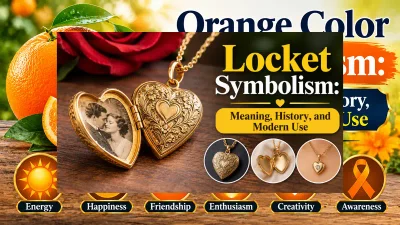
A locket is a small decorative case, usually worn as a pendant on a necklace, that opens to reveal an interior compartment. Traditional designs often feature a hinge and clasp, allowing the wearer to place a photograph, a small piece of hair, or another sentimental object inside.
Lockets come in different shapes, including hearts, ovals, circles, rectangles, and decorative designs. Some have a single compartment, while others open on both sides to hold two photographs. Modern versions may include engraved initials, birthstones, miniature messages, or customized illustrations.
The object’s physical design explains much of its symbolism. Unlike jewelry intended mainly for display, a locket protects something personal. Its contents are not always visible to other people, creating a connection between the object and the wearer’s private memories.
This combination of beauty and privacy makes the locket particularly meaningful. It can be worn every day while carrying a photograph or message that has importance only to the person who owns it.
The Core Meaning of Locket Symbolism
The most common meanings associated with lockets are love, remembrance, loyalty, emotional closeness, and personal history. Each meaning comes from the relationship between the jewelry and the object it protects.
Love and affection are among the strongest associations. A locket given by a romantic partner can represent a relationship that someone wants to keep close, even when the couple is physically apart.
Remembrance is another central meaning. A photograph or personal keepsake inside a locket allows someone to carry a reminder of a loved one throughout the day.
Loyalty and commitment can also be represented by a locket exchanged between partners or family members. Its continued presence may serve as a reminder of a promise, relationship, or shared experience.
Privacy and intimacy come from the hidden compartment. The wearer chooses what goes inside and whether to reveal it to others.
Finally, lockets can represent identity and personal history. An inherited locket may connect someone with earlier generations, preserving a family story through an object that can be passed down.
Historical Origins of Lockets
The tradition of keeping meaningful objects in jewelry dates back many centuries. Early forms included pendants, rings, and other wearable containers that could hold portraits, religious objects, perfume, or small personal items.
During the Renaissance, European lockets became particularly associated with miniature portraits. Wealthy individuals exchanged portrait jewelry as gifts, political tokens, and expressions of personal loyalty. Some pieces were designed to conceal their contents, while others displayed miniature paintings behind glass.
By the seventeenth century, lockets were also being used to preserve locks of human hair. Hair was considered an intimate personal keepsake, making it suitable for jewelry exchanged between romantic partners and family members. Portraits of important political figures could also be hidden inside lockets, allowing owners to express loyalty privately.
The eighteenth century brought additional designs, including eye miniatures. These small painted images showed the eye of a loved one rather than a complete portrait, offering an intimate reminder of someone important.
Over time, lockets became increasingly accessible beyond wealthy European families. Improvements in jewelry manufacturing helped make sentimental pieces available to a wider range of people.
Victorian Mourning Traditions and the Meaning of Remembrance
The Victorian era played an important role in strengthening the locket’s association with memory and mourning. During the nineteenth century, mourning practices became highly formalized in Britain and influenced sentimental jewelry traditions in the United States.
When someone died, family members sometimes preserved a photograph or lock of the deceased person’s hair inside a locket. Wearing the jewelry allowed the bereaved to maintain a physical connection with someone who was no longer present.
Queen Victoria’s mourning after the death of Prince Albert in 1861 helped popularize memorial jewelry. Her personal jewelry included keepsakes connected to her husband and children, contributing to public interest in sentimental objects.
Victorian mourning lockets often featured black enamel, dark stones, engraved dates, crosses, or symbolic decorations. However, not every locket from this period was intended for mourning. Many contained hair or portraits exchanged between living family members and romantic partners.
This distinction is important because the locket has historically represented both love and loss. The same object could celebrate a relationship during someone’s lifetime and later become a treasured memorial.
What Lockets Symbolize in American Culture
In the United States, lockets are commonly associated with family relationships, romantic affection, and personal remembrance. They are often selected as gifts for occasions that mark meaningful changes in someone’s life.
A parent might give a child a locket containing a family photograph before leaving for college. A husband or wife might exchange lockets to commemorate an anniversary. Grandparents may pass down inherited lockets to younger family members as a way of preserving family history.
Lockets also appear in American gift-giving traditions around Mother’s Day, Valentine’s Day, birthdays, Christmas, and milestone celebrations. A personalized pendant can feel more meaningful than an ordinary accessory because it contains something chosen specifically for the recipient.
Another important American interpretation involves independence and personal identity. Some people wear lockets containing photographs of their children, pets, partners, or relatives who live far away. Others use them to remember an important life experience.
The locket’s meaning is therefore not limited to romance. It can represent the relationships and memories that shape an individual’s sense of belonging.
Locket Symbolism in Love and Romantic Relationships
A locket given between romantic partners commonly represents affection, loyalty, and emotional closeness. Its association with the heart makes a heart-shaped locket especially suitable for expressing romantic feelings.
Historically, lovers exchanged lockets containing miniature portraits, initials, written messages, or locks of hair. These objects were particularly meaningful when couples faced long separations caused by travel, military service, or family circumstances.
Today, a romantic locket may contain a photograph of a couple, a wedding picture, an anniversary date, or a short engraved message. Some designs feature two compartments so that each partner can carry a photograph of the other.
The symbolism is particularly relevant to long-distance relationships. Although a locket cannot replace someone’s physical presence, it offers a personal reminder of the relationship.
A locket can also represent a promise. When exchanged during an engagement, anniversary, or special occasion, it may symbolize an intention to preserve affection and commitment over time.
Family, Motherhood, and Generational Connections
Lockets have a special place in family symbolism because they can preserve photographs and personal objects across generations.
A mother may wear a locket containing pictures of her children. A daughter might inherit a grandmother’s pendant, keeping both the jewelry and the family memories connected to it. Parents may also give lockets to children as gifts marking birthdays, religious milestones, or graduations.
These objects often become family heirlooms. Their financial value may be modest, but their emotional importance can increase as they pass from one generation to another.
For example, a locket inherited from a grandmother might contain a photograph taken decades earlier. The pendant becomes a reminder not only of the person pictured but also of family traditions, stories, and relationships that continue after her death.
This is why lockets are frequently associated with motherhood, ancestry, protection, and belonging.
Spiritual and Religious Interpretations of Lockets
Lockets can carry religious significance when their contents include devotional images, sacred inscriptions, or small religious objects.
In Christian traditions, some lockets contain miniature crosses, images of Jesus, the Virgin Mary, or patron saints. These pieces may represent faith, prayer, spiritual protection, and a personal connection to religious beliefs.
Other religious communities may use pendants or small containers to carry meaningful devotional objects, although their practices and interpretations differ.
A locket containing a religious image can also serve as a reminder of a person’s values and commitments. Someone might wear it during travel, difficult circumstances, or important life events.
However, a locket itself does not belong to one particular religion. Its symbolism depends primarily on the contents, the wearer’s beliefs, and the cultural setting in which it is used.
Emotional and Psychological Meaning of a Locket
Lockets are emotionally meaningful because they turn memories into something tangible. A photograph stored inside a pendant can provide comfort when someone feels lonely, misses a family member, or wants to remember an important relationship.
Psychologically, personal keepsakes can help people maintain a sense of continuity between past and present experiences. A locket may remind someone of a happy childhood, a successful relationship, or a person who helped shape their life.
For someone experiencing grief, the object can provide a private way to remember a deceased loved one. It allows the wearer to decide when to open the pendant and look at its contents.
Lockets can also represent emotional security. A person who carries a family photograph may feel connected to home while traveling or living far away.
These meanings are personal rather than automatic. A locket does not have the same emotional significance for everyone, but its ability to hold private memories gives it a distinctive place among sentimental objects.
Locket Meaning by Context
Different situations give lockets different symbolic meanings. The following table highlights common interpretations in contemporary American culture.
| Context | Common Meaning in the USA | Main Association | Typical Example |
|---|---|---|---|
| Romantic relationships | Love and commitment | Affection | A partner’s photograph inside |
| Family gifts | Belonging and connection | Family bonds | A mother’s gift to her daughter |
| Mourning jewelry | Remembrance and grief | Memorial traditions | A photograph of someone deceased |
| Religious jewelry | Faith and devotion | Spiritual identity | A miniature cross inside |
| Inherited jewelry | Heritage and continuity | Family history | A grandmother’s antique locket |
| Personal keepsakes | Identity and memories | Individual experiences | A meaningful date or private message |
Why People Wear Lockets Today
Modern lockets remain popular because they combine traditional jewelry design with personal customization. People can choose a pendant that reflects their style while keeping a meaningful object inside.
Some of the most common reasons include:
- Remembering a loved one who lives far away.
- Celebrating a romantic relationship or marriage.
- Preserving a photograph of children or family members.
- Honoring someone who has passed away.
- Carrying a religious image or personal message.
- Keeping a meaningful memory close during major life changes.
Modern technology has also changed what people place inside lockets. Traditional printed photographs remain popular, but miniature illustrations, engraved messages, QR-code inserts, and personalized designs offer additional possibilities.
The central idea remains similar: people use lockets to give an important memory a physical place in everyday life.
What Different Locket Designs Symbolize
The shape and decoration of a locket can influence its interpretation. Although there are no universal rules, certain designs have familiar associations.
Heart-shaped lockets: Usually represent romantic love, affection, and emotional attachment. They are common gifts between partners and family members.
Oval lockets: Often have a traditional or vintage appearance. They are frequently associated with family photographs, inheritance, and remembrance.
Round lockets: Can suggest completeness, continuity, and lasting relationships. Their simple shape makes them suitable for personalized jewelry.
Engraved lockets: Often communicate individuality and commitment. Names, initials, dates, and short messages make the pendant more personal.
Antique lockets: May symbolize family heritage, history, and the preservation of earlier generations’ memories.
Double-sided lockets: Can represent two people, two important memories, or different stages of someone’s life.
The contents often matter more than the shape. A heart-shaped pendant containing a photograph of a deceased parent may represent remembrance just as much as romance.
Locket Symbolism in Fashion, Tattoos, and Pop Culture
Lockets appear in modern fashion as both sentimental accessories and decorative jewelry. Vintage-inspired pendants are particularly popular among people who appreciate traditional designs, antique aesthetics, and personalized accessories.
In tattoo culture, locket imagery can represent a memory that someone wants to preserve permanently. A tattoo may depict an open pendant containing a portrait, initials, a date, or a symbolic object. Some designs include flowers, ribbons, or hearts to communicate additional personal meanings.
In films and literature, lockets frequently function as objects connected to family secrets, lost relationships, inherited memories, or important personal discoveries. A character may carry a locket as evidence of their identity or as a reminder of someone they have lost.
On social media, personalized lockets are often presented as meaningful gifts for anniversaries, birthdays, and family celebrations. Their visual appeal combines the familiar appearance of jewelry with the emotional interest of a hidden photograph or message.
These modern uses have expanded the locket’s meaning without removing its traditional connection to personal memories.
Common Misunderstandings About Locket Symbolism
One common misconception is that every locket represents romantic love. Although romantic relationships are an important part of its symbolism, lockets have also been used for family photographs, religious objects, political portraits, and memorial keepsakes.
Another misunderstanding is that lockets are exclusively mourning jewelry. Victorian mourning traditions helped establish this association, but lockets were exchanged between living people long before that period and continue to be used for joyful occasions.
Some people also assume that an expensive locket carries more emotional value. In reality, the significance of the object often comes from its contents and the relationship behind it. A simple pendant containing a handwritten message may be more meaningful than an expensive piece of jewelry.
Finally, not every antique locket contains a photograph. Historical examples may hold hair, perfume, miniature paintings, religious objects, or other small personal items.
Understanding these differences helps explain why lockets have remained relevant across changing fashion trends and social customs.
How Locket Symbolism Has Changed Over Time
The locket’s meaning has evolved alongside changes in jewelry design, photography, communication, and family traditions.
During the Renaissance, lockets were often associated with portraits, prestige, and personal relationships. In the seventeenth and eighteenth centuries, they became increasingly connected to romantic tokens, political loyalty, and keepsakes made with human hair.
The Victorian era strengthened their association with remembrance and mourning. Photographs and locks of hair allowed people to preserve personal connections after death.
In twentieth-century America, lockets remained popular as gifts exchanged between couples and family members. Soldiers and travelers also carried sentimental jewelry as reminders of loved ones waiting at home.
In the twenty-first century, customization has become a major part of their appeal. People can choose photographs, initials, dates, messages, and designs that reflect individual experiences.
Although the appearance of lockets has changed, their central purpose remains recognizable: preserving something personally meaningful in a form that can be carried.
FAQs
What does a locket symbolize in a relationship?
A locket commonly symbolizes love, loyalty, and emotional closeness between romantic partners. When it contains a photograph or personal message, it becomes a reminder of the relationship and the experiences shared by two people.
What does it mean when someone gives you a locket?
Receiving a locket often suggests that someone wants to give you a personal and meaningful keepsake. Depending on the relationship, it may express affection, family connection, remembrance, or a desire to celebrate an important occasion.
What does a locket symbolize after someone dies?
After a death, a locket often represents remembrance, continuing affection, and the preservation of someone’s memory. It may contain a photograph, a lock of hair, or another small item connected to the deceased person.
What does a heart-shaped locket mean?
A heart-shaped locket generally represents love, affection, and emotional attachment. It is commonly exchanged between romantic partners but can also express the love between parents, children, siblings, and close friends.
Is a locket a good gift for someone you love?
Yes, a personalized locket can be a thoughtful gift because it allows the giver to include a photograph, initials, or meaningful message. It is especially suitable for anniversaries, birthdays, Mother’s Day, and other occasions celebrating personal relationships.
What should you put inside a locket?
Popular choices include photographs, handwritten messages, initials, small notes, and carefully prepared locks of hair. The best choice is something meaningful to the wearer that fits safely inside the pendant.
Do lockets symbolize protection?
Some people associate lockets with emotional or spiritual protection, particularly when they contain religious images or personal keepsakes. However, protection is a secondary interpretation rather than the universally accepted meaning of the jewelry
Conclusion
Locket symbolism is primarily connected to love, remembrance, family relationships, and the preservation of personal memories. From Renaissance portrait jewelry to Victorian mourning keepsakes and modern personalized necklaces, lockets have provided a way to carry meaningful connections through everyday life.
Their significance does not depend on their price, age, or design. What matters most is the photograph, message, or memory they hold and the relationship that gives it meaning. A small pendant can preserve a story that its wearer never wants to lose.