Introduction
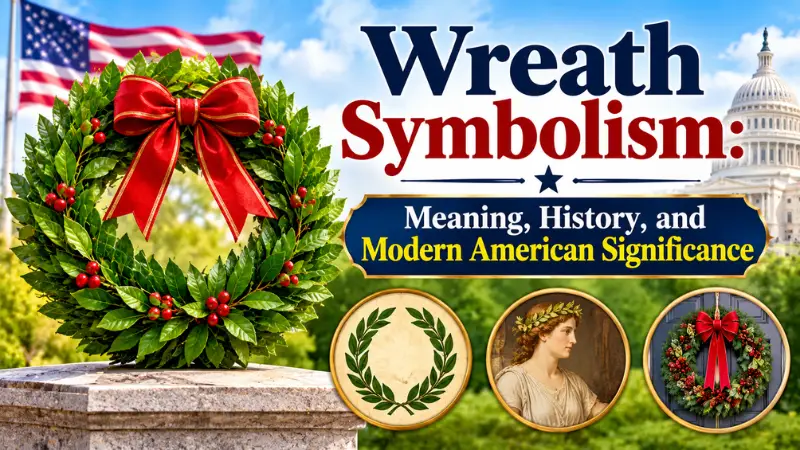
Wreaths are circular arrangements of flowers, leaves, branches, or other decorative materials that people use to mark celebrations, honor loved ones, and decorate homes. Wreath symbolism is closely associated with eternal life, renewal, welcome, victory, remembrance, and the changing seasons. Although wreaths are especially familiar as Christmas decorations in the United States, their significance reaches far beyond the holiday season.
The circular shape is central to their meaning. Because a wreath has no obvious beginning or end, it naturally suggests continuity, connection, and the repeated cycles of life. Its materials add another layer of meaning: evergreen branches suggest endurance, flowers represent beauty and growth, and dried leaves can reflect the passage of time.
Today, Americans encounter wreaths in many settings, from front doors and wedding ceremonies to military memorials and funeral services. Understanding their symbolism helps explain why such a simple decorative arrangement can communicate welcome, celebration, respect, and remembrance without words.
Quick Answer
Wreath symbolism most commonly represents welcome, continuity, renewal, and remembrance in modern American culture, particularly through holiday decorations, weddings, and memorial ceremonies. Historically, wreaths were also associated with victory, honor, religious devotion, seasonal change, and the enduring cycle of life.
TL;DR
- Circular wreaths represent continuity, unity, and the cycles of life.
- Ancient Greeks and Romans used wreaths to honor achievement and victory.
- Evergreen Christmas wreaths commonly symbolize endurance, hope, and seasonal celebration.
- Funeral wreaths express sympathy, respect, and remembrance.
- Wedding wreaths represent commitment, unity, and new beginnings.
- Modern wreath designs communicate hospitality, personal style, and seasonal identity.
1. What Is a Wreath and Why Does Its Shape Matter?
A wreath is a circular decorative arrangement typically made from flowers, leaves, twigs, vines, evergreen branches, or artificial materials. Some designs are simple rings of greenery, while others feature elaborate combinations of ribbons, berries, pinecones, ornaments, and seasonal decorations.
People commonly display wreaths on front doors, walls, gates, church entrances, gravesites, and ceremonial spaces. Their materials and decorations often reflect the occasion for which they are made.
The circle is the most recognizable feature of a traditional wreath. Unlike a straight branch or an arrangement with distinct endpoints, a circle returns to its starting point. This makes it a natural visual representation of:
- Continuity: Life and relationships continue beyond individual moments.
- Unity: Separate elements come together to form one complete arrangement.
- Eternity: The absence of a visible beginning or ending suggests something lasting.
- Renewal: Seasonal cycles repeat, bringing new growth after periods of change.
- Connection: The joined branches and flowers can represent relationships and shared experiences.
These associations help explain why wreaths appear in both joyful celebrations and solemn ceremonies.
2. The Main Symbolic Meanings of Wreaths
Wreaths do not have one universal interpretation. Their meaning depends on their materials, colors, placement, and cultural setting. Nevertheless, several associations appear repeatedly across different traditions.
Eternal Life and Continuity
The circular form is often interpreted as a representation of eternity. In religious and spiritual settings, this can suggest life beyond death, enduring faith, or an unbroken connection between generations.
Evergreen wreaths make this association especially visible. Their leaves remain green even during winter, when many other plants lose their foliage. This makes them a natural emblem of persistence and life during difficult seasons.
Renewal and New Beginnings
Wreaths made with fresh flowers, spring greenery, or budding branches frequently represent growth and renewal. They are particularly appropriate for spring celebrations, weddings, and seasonal transitions.
A wreath placed on a door can also communicate the beginning of a new season or a fresh chapter in family life.
Welcome and Hospitality
In American home decoration, a wreath on the front door often communicates that visitors are welcome. This interpretation is particularly common during Christmas, Thanksgiving, Easter, and autumn.
The message is usually informal rather than religious: the household is celebrating the season and inviting others to share in its warmth.
Victory and Achievement
Ancient wreaths were closely associated with honor and public recognition. Their modern descendants include ceremonial wreaths and decorative arrangements used to recognize accomplishments, commemorate service, and celebrate important achievements.
Remembrance and Respect
At funerals and memorial ceremonies, wreaths communicate respect for someone who has died. Their circular form can suggest lasting memory, while flowers express sympathy, affection, and appreciation.
3. Ancient Roots and Early Wreath Symbolism
Wreaths have a long history in the Mediterranean world, particularly in ancient Greek and Roman societies. Their early uses were not limited to decoration. They could communicate status, achievement, religious devotion, and public honor.
In ancient Greece, wreaths made from particular plants were presented to victors in athletic competitions and other public events. Olive wreaths became especially associated with the Olympic Games, where they represented athletic achievement and distinction.
Different plants carried different associations. Laurel was connected with Apollo and became a recognizable emblem of honor, accomplishment, and poetic achievement. Other wreaths used oak, ivy, or different plants according to the occasion and local tradition.
The Romans adopted and expanded the use of ceremonial wreaths. Military commanders and distinguished citizens could receive wreaths as public honors. Laurel wreaths, in particular, became strongly connected with victory and authority.
These practices helped establish an enduring association between wreaths and recognition. The modern image of a laurel wreath surrounding a name or achievement still draws on this classical tradition.
However, not every ancient wreath had the same meaning. Materials, religious practices, and the circumstances of presentation determined its significance.
4. Evergreen Wreaths and Their Connection to Winter
Evergreen wreaths have become especially important in winter celebrations because evergreen plants retain their foliage when many trees and shrubs become bare.
In regions with cold winters, this characteristic made evergreen branches noticeable reminders that plant life had not disappeared completely. Their continued greenness could suggest endurance, hope, and the possibility of renewal.
The practice of bringing evergreen branches indoors predates modern Christmas decorating. Different European communities used greenery in seasonal customs, although their specific meanings varied.
As Christian Christmas traditions developed and spread, evergreen decorations became increasingly associated with the celebration. The circular arrangement added associations with continuity and everlasting life.
By the time Christmas decorating became widespread in American homes, wreaths had become familiar seasonal ornaments. Their significance was shaped by both older winter customs and Christian interpretations.
Today, an evergreen wreath can be religious, traditional, or simply decorative. A household does not need to follow a particular belief system to appreciate its seasonal appearance.
5. What Wreaths Symbolize in American Culture
In the United States, wreaths are among the most recognizable forms of seasonal and ceremonial decoration. Their meanings are influenced by holidays, family traditions, religious customs, public commemorations, and everyday home design.
One of their strongest American associations is hospitality. A wreath hanging on a front door is often interpreted as a friendly expression of welcome. Families change their wreaths throughout the year to reflect holidays, weather, and personal preferences.
Wreaths also play an important role in national remembrance. During Veterans Day, Memorial Day, and other commemorative occasions, wreath-laying ceremonies honor military personnel and other individuals whose service or sacrifice is being remembered.
The arrangement’s meaning changes according to its setting:
- At a home, it often represents welcome and seasonal celebration.
- At a church, it may communicate faith, devotion, and the religious calendar.
- At a cemetery, it expresses remembrance and respect.
- At a wedding, it can represent unity and a shared future.
- At a public monument, it can communicate national gratitude and commemoration.
This flexibility explains why wreaths remain familiar across different generations and communities in America.
6. Christmas Wreath Symbolism: Hope, Faith, and Endurance
Cape Elizabeth Fresh Maine Christmas Wreath Delivered Free to Your Door
Brilliant Berries – Lynch Creek Farm
7
Christmas wreaths are among the most recognizable wreath designs in the United States. They are commonly made with pine, fir, cedar, or other evergreen branches and decorated with red ribbons, berries, pinecones, bells, and ornaments.
Their symbolism combines several ideas.
Evergreen branches represent endurance. Their ability to remain green during winter makes them associated with continued life and hope.
The circular shape suggests continuity. In Christian interpretations, it can represent eternal life and God’s unending love.
Red decorations often represent love and celebration. In Christian Christmas settings, red may also be associated with Christ’s sacrifice, although decorative meanings vary between households.
Natural materials suggest seasonal abundance. Pinecones, berries, and branches connect the decoration with the natural world during winter.
An Advent wreath has a more specific religious meaning. Traditionally, it is a circular arrangement of evergreen branches containing four candles, with an additional central candle in some versions. The four candles correspond to the Sundays of Advent, the period of preparation before Christmas.
Although Christmas wreaths are widely used by religious and nonreligious Americans, the Advent wreath remains a distinct Christian tradition.
7. Funeral and Memorial Wreaths: Remembrance and Respect
Treasured Tribute Wreath in Los Angeles, CA | Ninfa’s Flowers
Red & White Sympathy Wreath | Same-Day Houston Delivery – La Guadalupana Flowers & Gifts
White and red flowers adorn a floral wreath. – American Battle Monuments Commission (ABMC)
7
Wreaths have an important place in American funeral and memorial traditions. They are frequently displayed at funeral services, placed beside graves, and presented during ceremonies honoring people who have died.
In these settings, the circular shape can represent the continuation of love and memory beyond physical death. It offers a visual expression of the belief that a person’s influence does not simply disappear when their life ends.
Different flowers contribute additional meanings:
- White lilies: Often associated with peace, purity, and sympathy.
- White roses: Commonly communicate respect, remembrance, and sincere affection.
- Red roses: Can express love, devotion, and profound emotional connection.
- Chrysanthemums: Used in mourning and memorial arrangements in several cultural traditions.
- Evergreen branches: Suggest endurance and memories that remain.
Memorial wreaths are also used in public ceremonies. Officials, military representatives, veterans’ organizations, and community groups may place wreaths at monuments to honor people who served or died.
A wreath laid at a military memorial is not simply a floral decoration. It is a formal gesture of recognition. Its placement communicates that the people being remembered have not been forgotten.
8. Wedding Wreath Symbolism: Love, Unity, and Commitment
15 Round Wedding Arch Ideas for Elegant Ceremony Style
Vignon Manor Farm + Updated Prices – The Knot
9
Wreaths are also used in weddings, where their circular form makes them suitable representations of commitment and togetherness.
The absence of an obvious beginning or ending can suggest a relationship intended to continue through changing circumstances. Two people come together to create a shared life, much as separate flowers and branches form one complete arrangement.
Wedding wreaths can appear in several ways:
- Ceremony decorations: Floral wreaths may frame wedding arches, entrances, or seating areas.
- Bridal accessories: Flower crowns and small wreath-like arrangements can represent beauty, celebration, and connection with nature.
- Reception decorations: Greenery wreaths often appear on tables, doors, and walls.
- Wedding gifts: Decorative wreaths can serve as reminders of a marriage and a new household.
White flowers are frequently chosen for their associations with celebration and new beginnings. Green foliage adds ideas of growth and continued development.
Not every wedding wreath carries a formal religious meaning. In contemporary American weddings, many couples choose wreath designs simply because they complement the venue, seasonal flowers, or overall wedding style.
9. Different Types of Wreaths and What They Represent
The meaning of a wreath often depends on its design and purpose. The following comparison explains how common American wreath styles communicate different ideas.
| Wreath Type | Common Meaning in the USA | Common Associations | Typical Setting |
|---|---|---|---|
| Christmas wreath | Hope, continuity, and celebration | Evergreen, faith, winter | Front doors and churches |
| Funeral wreath | Remembrance and respect | Sympathy, love, honor | Funerals and gravesites |
| Wedding wreath | Unity and commitment | Marriage, growth, new beginnings | Wedding ceremonies |
| Spring wreath | Renewal and fresh starts | Flowers, growth, optimism | Homes and gardens |
| Laurel wreath | Achievement and recognition | Victory, honor, excellence | Awards and ceremonies |
| Thanksgiving wreath | Gratitude and abundance | Harvest, family, togetherness | Homes and dining spaces |
These meanings are common associations rather than fixed rules. A person may choose a wreath because of its appearance without intending to communicate every traditional meaning connected with it.
10. The Symbolism of Wreath Colors and Materials
The materials used in a wreath can change its emotional tone. Color, texture, and plant selection all influence how people interpret the finished design.
Green Wreaths
Green is one of the most recognizable colors in wreath design. It is associated with nature, growth, freshness, and renewal.
Evergreen wreaths are especially connected with endurance because their foliage remains present during winter. Green floral arrangements are also common in weddings and spring decorations.
White Wreaths
White wreaths frequently appear in funerals, weddings, and religious settings. They can represent peace, purity, sincerity, and respect.
In memorial arrangements, white flowers often provide a calm and dignified appearance. In weddings, the same color may communicate celebration and a fresh beginning.
Red Wreaths
Red is commonly associated with love, affection, warmth, and celebration. Red berries and ribbons are particularly familiar in American Christmas decorations.
Red floral wreaths can also express strong affection when given as gifts or used in commemorative arrangements.
Gold Wreaths
Gold decorations suggest achievement, prestige, celebration, and prosperity. They are sometimes used in holiday wreaths and formal seasonal displays.
Natural and Dried Wreaths
Wreaths made from dried flowers, wheat, vines, grasses, and branches often communicate simplicity, seasonal change, and appreciation of nature.
Their appearance can also suggest the passage of time. Rather than representing permanent freshness, they celebrate the beauty of materials as they change.
The following distinction is useful: the traditional meaning of a plant or color does not automatically determine the meaning of every arrangement. Personal intention and cultural setting matter just as much.
11. Wreath Symbolism in Other Cultures and Religions
Wreaths appear in different cultural and religious traditions, but their meanings are not identical everywhere.
Ancient Greek and Roman Traditions
In classical societies, wreaths were important symbols of achievement, religious honor, and public recognition. Laurel and olive wreaths became particularly associated with victory and distinction.
Their influence remains visible in modern medals, academic imagery, official emblems, and representations of excellence.
Christian Traditions
In Christianity, wreaths are frequently associated with eternal life, faith, and the cycle of religious observances.
The Advent wreath is particularly significant because its candles represent the weeks of preparation before Christmas. Evergreen branches provide a visual reminder of enduring life.
Northern and Central European Traditions
Evergreen decorations have long been part of winter customs in several European regions. Their continued presence during cold weather made them suitable symbols of life and endurance.
These seasonal practices influenced the development of modern Christmas decorations, including the wreaths familiar in American homes.
Eastern Orthodox and Other Christian Communities
Evergreen decorations, floral arrangements, and circular designs may appear in different Christian communities, although their use and interpretation vary. It is important not to assume that all Christian traditions follow the same wreath customs.
Broader Cultural Interpretations
Circular floral arrangements also appear in celebrations, mourning customs, and decorative traditions outside the Western world. Their meanings depend on local practices, the flowers selected, and the ceremony involved.
A wreath should therefore be understood within its particular cultural context rather than assigned one universal spiritual meaning.
12. Emotional and Psychological Meaning of Wreaths
Wreaths can communicate feelings without requiring written messages. Their familiar shape, natural materials, and placement often create an immediate emotional impression.
One reason is that people associate plants with recognizable experiences. Fresh flowers may remind someone of spring, celebrations, or a special relationship. Evergreen branches may recall winter holidays and family gatherings.
The circular arrangement adds another emotional dimension. Its connected structure can suggest belonging, stability, and relationships that continue over time.
A Sense of Belonging
A wreath displayed on a family home can become part of a household’s identity. Seasonal decorations may remind family members of shared celebrations and traditions passed between generations.
Comfort During Difficult Times
Memorial wreaths offer a visible expression of sympathy. They allow people to participate in mourning even when they struggle to find the right words.
Hope During Change
Spring wreaths and fresh floral designs can communicate optimism after difficult periods. Their new growth and bright colors make them suitable for celebrating transitions.
Pride and Recognition
Laurel wreath imagery continues to appear in educational, professional, and athletic settings. Its historical connection with achievement makes it an understandable visual choice for recognizing excellence.
These associations are not universal psychological responses. A person’s experiences, beliefs, and memories influence how they interpret a particular design.
13. Modern Uses: Home Decor, Tattoos, Fashion, and Social Media
Faux Eucalyptus And Flower Hoop Wreath – World Market
Laurel wreath tattoo by Daniel Bedoya | Post 28379 | Laurel wreath tattoo, Tattoos, Wreath tattoo
10
Wreaths have moved beyond traditional holiday and ceremonial settings. Modern designs allow people to use their symbolism in personal style, home decoration, and digital communication.
Home Decor
In American homes, wreaths are used throughout the year rather than only during Christmas. Autumn designs may include dried leaves, pumpkins, and wheat, while spring arrangements feature colorful flowers and fresh greenery.
A front-door wreath often reflects the personality of the household. Some people prefer simple natural arrangements, while others choose elaborate designs for holidays and celebrations.
Tattoos
Wreath tattoos are popular among people who want to represent achievement, personal growth, remembrance, or continuity.
A laurel wreath tattoo may symbolize discipline, success, or an important accomplishment. A floral wreath surrounding a name, date, or initial can represent love and remembrance.
Small circular wreath tattoos may also communicate personal development and the desire to maintain balance through different stages of life.
Jewelry
Laurel wreaths and floral circles appear in necklaces, bracelets, rings, earrings, and pendants. Their compact shape makes them suitable for delicate designs.
A laurel pendant may represent ambition or a personal milestone, while a floral wreath can communicate affection and appreciation of nature.
Fashion
Wreath-inspired designs appear in clothing prints, embroidered accessories, hairpieces, and seasonal fashion collections.
Flower crowns and circular floral headpieces are especially recognizable at weddings, festivals, and outdoor celebrations.
Social Media and Digital Culture
Wreath imagery appears in seasonal profile pictures, holiday posts, wedding announcements, memorial messages, and digital greeting cards.
An evergreen wreath with a red ribbon is immediately recognizable as a Christmas image. A white floral wreath may communicate sympathy or remembrance.
The digital meaning is usually determined by the surrounding message. The same circular arrangement can communicate celebration in one post and mourning in another.
14. Common Misunderstandings and Misuse of Wreath Symbolism
Although wreaths generally have positive or respectful associations, their meaning can sometimes be misunderstood.
Misunderstanding 1: Every wreath represents eternity.
The circular shape can suggest continuity, but not every wreath is intended to communicate eternal life. A simple autumn wreath may be nothing more than seasonal decoration.
Misunderstanding 2: Wreaths are exclusively Christian symbols.
Wreaths existed in ancient Mediterranean societies long before modern Christmas traditions. Their uses included public honor, religious ceremonies, and athletic recognition.
Misunderstanding 3: Every evergreen wreath has a religious meaning.
Many Americans display evergreen wreaths for their seasonal appearance without attaching a Christian interpretation to them.
Misunderstanding 4: Laurel wreaths always represent victory in a military sense.
Laurel wreaths have also represented artistic excellence, academic accomplishment, public honor, and achievement.
Misunderstanding 5: A wreath always communicates happiness.
Funeral and memorial wreaths demonstrate that the same decorative form can express grief, sympathy, and respect.
There is also an important distinction between the historical symbolism of a laurel wreath and its use in modern political or institutional imagery. A wreath can be adopted by organizations to communicate authority, achievement, heritage, or collective identity. Its presence alone does not establish a particular political belief or affiliation.
Understanding the occasion and the organization using the symbol is more reliable than assuming that every wreath carries the same message.
15. How Wreath Symbolism Has Changed Over Time
The meaning of wreaths has developed as societies have adopted them for different purposes.
In ancient Greece, wreaths were closely connected with athletic achievement, religious practices, and public honor. Roman society expanded their ceremonial use, making them recognizable symbols of recognition and distinction.
During later European periods, evergreen decorations became associated with winter customs and seasonal celebrations. Christian communities incorporated wreaths into religious observances, particularly those connected with Advent and Christmas.
As European customs influenced American traditions, wreaths became common household decorations. Their meaning gradually expanded beyond religious settings to include hospitality, seasonal identity, and family celebration.
In the twentieth and twenty-first centuries, commercial home decorating introduced even more variations. Artificial materials, personalized designs, and year-round decorative collections made wreaths accessible for almost any occasion.
Today, a wreath can communicate several different ideas depending on where it appears. It might welcome guests, celebrate a marriage, recognize a public achievement, or honor someone who has died.
This evolution demonstrates how symbols remain relevant when people adapt their forms and meanings to changing cultural needs.
FAQs
1. What does a wreath symbolize spiritually?
Spiritually, a wreath often represents eternal life, continuity, renewal, and the connection between the physical and spiritual worlds. In Christian traditions, evergreen wreaths can symbolize enduring faith and God’s everlasting love.
2. What does a wreath on a front door mean?
A wreath on a front door commonly represents hospitality, welcome, and seasonal celebration in American culture. Its decorations often indicate the season or holiday being celebrated, such as Christmas, Easter, or autumn.
3. What does a wreath symbolize at a funeral?
A funeral wreath represents remembrance, sympathy, respect, and enduring affection for someone who has died. Its circular form can suggest that love and memories continue even after a person’s death.
4. What does a laurel wreath symbolize?
A laurel wreath traditionally represents victory, achievement, honor, and excellence. Its historical connection with ancient Greek and Roman recognition makes it a popular design for academic awards, athletic achievements, and commemorative artwork.
5. Are wreaths positive or negative symbols?
Wreaths are generally associated with positive ideas such as welcome, renewal, achievement, and continuity. However, their meaning depends on context, as funeral and memorial wreaths are also connected with grief, loss, and remembrance.
6. What does a wreath tattoo mean?
A wreath tattoo can represent personal growth, achievement, unity, remembrance, or an important life milestone. Laurel designs often suggest success, while floral wreaths may represent love, family connections, and meaningful relationships.
7. Why are Christmas wreaths circular?
The circular shape traditionally represents continuity and eternity because it has no obvious beginning or ending. Combined with evergreen branches, it can symbolize enduring life and hope during winter, with additional religious meaning in Christian Christmas traditions.
Conclusion
Wreaths represent much more than seasonal decoration. Their circular shape commonly communicates continuity, unity, and the cycles of life, while their flowers, leaves, and evergreen branches add meanings connected with renewal, achievement, remembrance, and hope. From ancient Greek and Roman ceremonies to modern American homes, weddings, and memorials, wreaths have adapted to different cultural and personal purposes.
Understanding wreath symbolism means recognizing the importance of context. A Christmas wreath may express faith and celebration, a wedding wreath may represent commitment, and a funeral wreath may honor a life and preserve its memory.
Ultimately, a wreath’s meaning comes from the combination of its shape, materials, history, and the occasion on which it is displayed. It remains a simple but recognizable way to express welcome, honor relationships, celebrate new beginnings, and remember those who matter.