Introduction
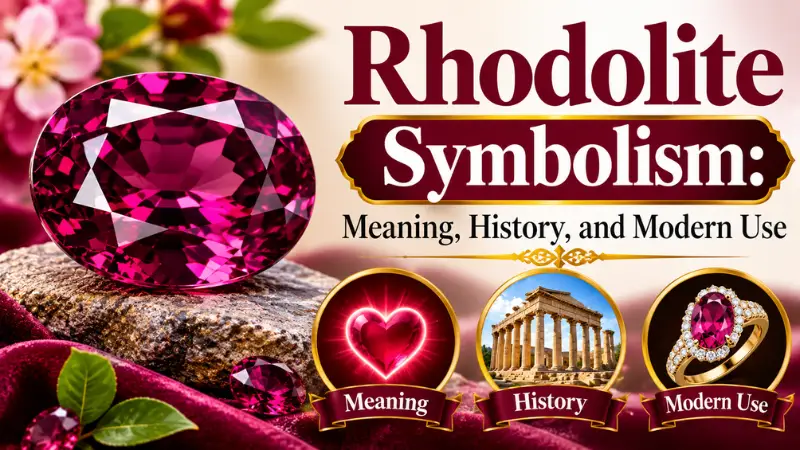
Rhodolite is a beautiful variety of garnet known for its raspberry-red, purplish-red, and rose-pink colors. Its name comes from the Greek word rhodon, meaning rose, a reference to the gemstone’s distinctive rosy appearance. In rhodolite symbolism, the stone is commonly associated with love, emotional healing, confidence, compassion, and personal growth.
Unlike gemstones whose meanings are strongly tied to a single religion or ancient civilization, rhodolite has a relatively modern identity within the garnet family. Its symbolic associations have developed largely through gemstone traditions, jewelry culture, and contemporary interpretations of color.
In the United States, rhodolite appeals to people who appreciate gemstones that combine beauty with personal meaning. It appears in engagement rings, necklaces, earrings, bracelets, and meaningful gifts. Understanding its symbolism helps explain why this pinkish-red gemstone is often chosen to represent affection, self-worth, and emotional strength.
Quick Answer
Rhodolite symbolism commonly represents love, compassion, confidence, emotional balance, and personal growth in modern American gemstone culture. As a raspberry-colored variety of garnet, it also draws on the garnet family’s historical associations with protection, commitment, vitality, and enduring relationships.
TL;DR
- Core meaning: Love, compassion, confidence, and emotional strength.
- Color symbolism: Raspberry-red shades suggest affection, passion, and warmth.
- Historical connection: Rhodolite belongs to the ancient and historically valued garnet family.
- Modern American use: Popular in romantic jewelry, personal accessories, and meaningful gifts.
- Emotional associations: Often represents self-respect, courage, and relationship harmony.
- Birthstone connection: Garnet is the traditional January birthstone.
What Is Rhodolite? Understanding the Gemstone
Rhodolite is a pink to purplish-red variety of garnet, usually classified as a mixture within the pyrope-almandine garnet series. Its color can range from soft rose and raspberry to rich purple-red, depending on its chemical composition.
The gemstone is valued for its attractive color, glass-like luster, and ability to display good brilliance when properly cut. Unlike some darker red garnets, rhodolite often has a lighter, more romantic appearance that makes it especially popular in fine jewelry.
Rhodolite is a natural gemstone, although its appearance can vary considerably from one specimen to another. It is typically transparent and commonly cut into oval, round, pear, and cushion shapes.
People encounter rhodolite most often in:
- Engagement rings and wedding jewelry
- Pendant necklaces and gemstone bracelets
- Earrings and statement rings
- Birthstone-inspired jewelry collections
- Custom-designed gemstone accessories
Its rosy color is an important part of its symbolic appeal. Red traditionally suggests passion and vitality, while pink is frequently associated with tenderness and affection. Rhodolite combines elements of both color families.
The Core Meaning of Rhodolite Symbolism
The most common symbolic interpretations of rhodolite center on love, emotional confidence, compassion, and personal development. These meanings are modern gemstone associations rather than universally established religious beliefs.
Love and affection are among its most recognizable associations. Its pinkish-red appearance connects it with romantic feelings, warmth, and appreciation. A rhodolite necklace or ring may therefore serve as a gift expressing affection or commitment.
Confidence and courage represent another common interpretation. The gemstone’s rich color suggests energy and determination, making it an appealing personal symbol for someone entering a new stage of life.
Emotional balance is also frequently connected with rhodolite in contemporary crystal and gemstone traditions. Its combination of red and pink tones is interpreted as a balance between passion and gentleness.
Personal growth reflects the idea of becoming more comfortable with one’s identity, relationships, and decisions. People may choose rhodolite jewelry to commemorate a personal achievement or a period of change.
These associations are best understood as personal and cultural interpretations. There is no scientific evidence that wearing rhodolite automatically produces confidence, emotional healing, or improved relationships.
Historical Origins and the Garnet Family
To understand rhodolite’s background, it helps to look at garnet history. Garnets have been valued for thousands of years and have appeared in jewelry, decorative objects, and personal ornaments across several ancient societies.
Ancient Egyptians used garnet gemstones in jewelry and burial-related objects. Garnet also appeared in Roman jewelry, where it was valued for its rich colors and decorative qualities. During the Middle Ages, garnets continued to be used in rings, religious objects, and ornamental designs.
The word garnet is commonly connected with the Latin granatum, meaning seed or pomegranate, because some garnets resemble the fruit’s red seeds.
Rhodolite, however, should not be confused with the entire history of garnet. It is a particular garnet variety whose distinctive rose-red color received its own name in the nineteenth century. Its modern identity developed through mineralogical classification and the growing gemstone trade.
This distinction matters because many historical meanings associated with garnet are sometimes applied to rhodolite today. While that connection is reasonable, it does not mean ancient cultures specifically used or recognized rhodolite under its modern name.
What Rhodolite Represents in American Culture
In the United States, rhodolite is generally appreciated as a gemstone that combines attractive color with personal significance. It does not have one nationally established symbolic meaning, but its associations with affection, individuality, and confidence make it suitable for several occasions.
American jewelry buyers often select gemstones according to appearance, personal preference, birthstone traditions, and the message they want a gift to communicate.
Rhodolite fits particularly well into romantic jewelry because its color sits between traditional ruby red and softer pink gemstones. It can express affection without appearing as conventional as a diamond or ruby.
It is also used in personalized jewelry. Someone might choose a rhodolite pendant to celebrate a milestone, mark a birthday, or represent a new chapter in life.
Unlike garnet’s traditional January birthstone status, rhodolite itself does not have a separate, widely recognized national birthstone designation. Its appeal is based more on its specific color and gemstone identity.
Rhodolite and the Traditional January Birthstone
Rhodolite has an indirect connection to January because it belongs to the garnet family. Garnet is the traditional birthstone for January, and rhodolite is one of its recognized varieties.
This connection makes rhodolite an appealing choice for people born in January who prefer pinkish-purple gemstones over traditional dark-red garnets. It offers a different appearance while retaining the broader garnet birthstone association.
Garnet is also traditionally associated with the second wedding anniversary. Consequently, rhodolite jewelry can be a thoughtful anniversary gift, particularly for couples who appreciate unusual gemstone colors.
It is important to distinguish between the traditional birthstone designation and modern personal preferences. January’s birthstone is garnet as a mineral group, not rhodolite exclusively.
The Emotional and Psychological Meaning of Rhodolite
Rhodolite’s emotional symbolism is closely connected to its color. Its reddish-pink appearance combines visual qualities commonly associated with affection, energy, warmth, and tenderness.
People who appreciate its symbolism often connect it with three emotional ideas.
Self-love: Rhodolite can serve as a reminder to value personal needs, maintain healthy boundaries, and recognize individual achievements. Someone might purchase a ring after completing an important personal goal.
Emotional courage: Its red undertones are commonly interpreted as signs of determination and confidence. The stone can represent the willingness to face difficult conversations, make important decisions, or move forward after disappointment.
Compassion: Its pink and rose-colored appearance suggests gentleness and understanding. As a personal symbol, it may represent the intention to treat others with patience while maintaining self-respect.
These interpretations belong to gemstone symbolism and color associations. They should not be confused with established psychological findings or medical benefits. A gemstone can carry personal meaning without having a scientifically demonstrated effect on emotions.
Rhodolite Symbolism in Love and Relationships
Love is one of the most recognizable modern associations of rhodolite. Its raspberry and rose-red colors make it a natural choice for jewelry intended to express affection.
Unlike a traditional bright-red ruby, rhodolite often has a softer purple or pink undertone. This gives it a romantic appearance that can communicate tenderness alongside passion.
In relationships, people may associate the gemstone with:
- Romantic commitment: A reminder of affection and loyalty.
- Mutual understanding: The importance of listening and respecting differences.
- Lasting friendship: Appreciation for relationships that develop over time.
- Renewed connection: A meaningful gift after a challenging period.
- Self-love: Recognition that healthy relationships begin with self-respect.
Rhodolite is sometimes chosen for anniversary presents, Valentine’s Day gifts, and personalized jewelry. However, it does not have an official or universally recognized connection with these occasions.
Its appeal comes from the meaning the giver and recipient attach to it. A small rhodolite pendant, for example, can represent a shared memory just as effectively as a more expensive gemstone.
Rhodolite in Different Cultural and Spiritual Traditions
Rhodolite does not have the same established religious history as gemstones such as jade or lapis lazuli. Its name and classification are relatively modern, so it is important not to assign ancient religious beliefs specifically to this variety.
Its broader garnet family, however, has appeared in several cultural settings.
In ancient Egypt, garnets were used in jewelry and decorative objects. Their red appearance made them suitable for ornaments connected with vitality and life.
In ancient Rome, carved garnets were used in signet rings. These rings had a practical role in identifying the owner and sealing documents, showing that gemstones could communicate status and personal authority as well as beauty.
During medieval Europe, garnets appeared in jewelry worn by members of the nobility and religious communities. Their red color also contributed to associations with blood, vitality, and devotion.
In contemporary crystal traditions, rhodolite is sometimes connected with the heart, emotional openness, and personal confidence. These interpretations are modern spiritual beliefs rather than established teachings shared by all religious communities.
For American readers, the distinction is useful: rhodolite’s modern emotional associations are largely personal, while its wider historical background comes from the much older garnet tradition.
What the Different Shades of Rhodolite Represent
Rhodolite does not have one fixed color. Its appearance ranges from rose-red and raspberry to purplish-red and violet-tinged pink. These variations give jewelry buyers different ways to express personal preferences.
Color symbolism is not universal, but the following interpretations are common in contemporary American gemstone culture.
| Rhodolite Shade | Common Symbolic Meaning | Emotional Association | Popular Use |
|---|---|---|---|
| Rose pink | Love and tenderness | Affection and kindness | Romantic pendants |
| Raspberry red | Passion and vitality | Energy and determination | Statement rings |
| Purplish red | Confidence and individuality | Self-expression | Designer jewelry |
| Deep wine red | Commitment and loyalty | Stability and devotion | Anniversary gifts |
| Light pink-red | Compassion and warmth | Gentleness and appreciation | Everyday accessories |
These meanings are interpretive rather than scientific. The gemstone’s actual color depends on its mineral composition and should not be treated as a reliable indicator of its owner’s personality.
Why Rhodolite Is Popular in Jewelry and Personal Style
Rhodolite has a distinctive appearance that works with several jewelry styles. Its transparent quality and attractive reddish-purple color allow it to stand out without requiring an especially large stone.
In engagement rings, it offers an alternative to traditional diamonds and rubies. Some couples prefer it because it feels personal and less conventional.
In necklaces, rhodolite pendants are often selected as gifts representing affection, friendship, or individual milestones. Small stones can be worn regularly, while larger cuts create more noticeable statement pieces.
The gemstone also works well with different metals:
- Yellow gold: Creates a warm, traditional appearance.
- White gold: Emphasizes the gemstone’s pink and purple tones.
- Rose gold: Complements its rosy color.
- Sterling silver: Provides a cooler contrast and a more understated style.
For people who prefer jewelry with personal meaning, rhodolite offers both visual appeal and flexible symbolism. Its significance can be romantic, emotional, or simply connected to an appreciation of natural gemstones.
Rhodolite Tattoos and Personal Identity
Although rhodolite is primarily known as a jewelry gemstone, its color and associations can also inspire tattoo designs.
A gemstone tattoo may represent confidence, self-respect, personal transformation, or a commitment to living according to one’s values. Someone who has overcome a difficult experience might choose a raspberry-colored gemstone design as a reminder of that achievement.
Rhodolite-inspired tattoos can take several forms:
- A realistic faceted gemstone.
- A small red-purple crystal outline.
- A gemstone surrounded by flowers.
- A pendant-style design representing a personal memory.
- A combination of rhodolite imagery and initials or meaningful dates.
Unlike a traditional religious symbol, a rhodolite tattoo does not carry one widely established cultural interpretation. Its meaning generally comes from the individual wearing it.
The gemstone’s visual identity also makes it suitable for minimalist and decorative tattoo styles. People should remember that a tattoo inspired by a gemstone is a personal design choice, not evidence of any particular spiritual belief.
Rhodolite in Gifts, Celebrations, and Special Occasions
Rhodolite makes an appealing gift because it combines a recognizable gemstone appearance with associations of affection and appreciation.
In the United States, it can be selected for birthdays, anniversaries, Valentine’s Day, graduations, and personal milestones. These are modern gifting applications rather than traditional ceremonies specifically associated with rhodolite.
A few examples illustrate how people may use its symbolism:
For a romantic partner: A rhodolite ring or pendant can express affection, commitment, and appreciation.
For a close friend: A bracelet can represent loyalty, encouragement, and a valued friendship.
For a January birthday: Rhodolite offers a colorful alternative within the traditional garnet birthstone family.
For a personal milestone: A gemstone accessory can mark a career achievement, graduation, or new beginning.
For a family member: A rhodolite necklace may serve as a sentimental gift connected with a shared memory.
The most meaningful gift is not necessarily the most expensive one. Its value often comes from the reason it was chosen and the relationship it represents.
Rhodolite Compared With Other Red and Pink Gemstones
Rhodolite is sometimes confused with ruby, pink tourmaline, and other reddish gemstones because their colors can overlap. However, each stone has a different mineral identity and a different history of symbolic interpretation.
Understanding these differences helps explain why someone might choose rhodolite instead of another gemstone.
| Gemstone | Common Symbolism | Main Color | Traditional Association |
|---|---|---|---|
| Rhodolite | Love, confidence, compassion | Raspberry or purplish red | Garnet traditions |
| Ruby | Passion, courage, devotion | Red | Love and vitality |
| Rose quartz | Love and emotional tenderness | Pale pink | Affection and harmony |
| Pink tourmaline | Compassion and emotional expression | Pink | Contemporary crystal traditions |
| Amethyst | Wisdom and spiritual awareness | Purple | Spirituality and clarity |
Rhodolite occupies an interesting position between traditional red gemstones and softer pink stones. Its color makes it suitable for people who want a gemstone associated with affection but also appreciate the visual intensity of red.
These symbolic differences are cultural interpretations, not fixed properties of the minerals.
Common Misunderstandings About Rhodolite Symbolism
Several misconceptions surround rhodolite because gemstone descriptions sometimes combine mineralogical facts, historical traditions, and modern spiritual beliefs.
Rhodolite is not a separate mineral species. It is a variety within the garnet family, generally described as an intermediate composition between pyrope and almandine.
Its symbolism is not entirely ancient. Garnets have an extensive historical record, but the specific name rhodolite emerged in the late nineteenth century. Claims that ancient civilizations specifically assigned today’s rhodolite meanings to the stone should therefore be treated cautiously.
It does not guarantee romantic success. Although contemporary gemstone traditions associate rhodolite with love and relationship harmony, wearing it cannot guarantee loyalty, attraction, or a successful relationship.
It is not a medical treatment. Some crystal enthusiasts associate rhodolite with emotional healing and physical vitality. However, there is no reliable scientific evidence that the gemstone treats anxiety, depression, circulation problems, or other medical conditions.
It is not exclusively a January gemstone. Garnet is the traditional January birthstone, and rhodolite belongs to that family. However, people born in any month can wear and appreciate it.
Understanding these distinctions makes it easier to appreciate the gemstone without confusing personal beliefs with established history or science.
How Rhodolite Symbolism Has Changed Over Time
The meaning associated with rhodolite has developed alongside changing attitudes toward gemstones.
Before rhodolite received its modern name, red garnets were already used in ancient jewelry and decorative objects. Their durability, availability, and rich colors made them valuable materials for personal ornaments.
During the nineteenth century, interest in colored gemstones expanded, and the distinctive rose-red garnet variety became recognized as rhodolite. Its appearance gave it an identity separate from the darker red garnets commonly found in traditional jewelry.
In the twentieth century, the gemstone became more familiar through the jewelry trade and growing interest in alternative colored stones. Its pinkish-purple appearance helped distinguish it from conventional red garnets.
Today, its symbolic identity includes both traditional garnet associations and contemporary interpretations. Love, confidence, self-expression, emotional balance, and personal development are among the meanings people commonly attach to it.
This evolution demonstrates how gemstone symbolism develops. A stone can inherit historical associations from its mineral family while gaining new meanings through modern design, personal experiences, and changing cultural preferences.
FAQs
1. What does rhodolite symbolize spiritually?
Rhodolite is commonly associated with compassion, emotional openness, confidence, and personal development in modern crystal traditions. These interpretations are contemporary spiritual beliefs rather than universal religious teachings.
2. Is rhodolite a stone of love?
Yes, rhodolite is frequently described as a gemstone of love and affection. Its raspberry and rose-red colors contribute to associations with romance, commitment, kindness, and appreciation.
3. What does rhodolite mean in a relationship?
In relationships, rhodolite can represent loyalty, mutual understanding, affection, and emotional connection. It can also serve as a personal reminder to maintain respect and healthy communication.
4. Is rhodolite the January birthstone?
Rhodolite is a variety of garnet, which is the traditional January birthstone. It is therefore an alternative color choice for people who enjoy wearing their birthstone.
5. What is the difference between rhodolite and regular garnet?
Rhodolite is a particular type of garnet recognized for its pinkish-red to purplish-red color. Other garnets can have darker red, orange, green, yellow, or even unusual blue colors.
6. Does rhodolite have healing properties?
Some crystal traditions associate rhodolite with emotional healing, confidence, and balance. However, scientific research has not established that wearing rhodolite produces medical or psychological healing effects.
7. Is rhodolite a good gemstone for an engagement ring?
Yes, rhodolite can be an attractive alternative to traditional diamond and ruby engagement rings. Its distinctive color and associations with affection make it suitable for couples who prefer personalized jewelry.
Conclusion
Rhodolite symbolism centers on love, compassion, confidence, emotional balance, and personal growth. Its distinctive raspberry-red appearance contributes to these associations, while its connection to the garnet family provides a historical background rooted in ancient jewelry traditions.
In modern American culture, rhodolite is appreciated in engagement rings, anniversary gifts, necklaces, and personalized accessories. Although many people connect it with emotional healing and spiritual development, these meanings are best understood as personal interpretations rather than scientifically proven effects.
Whether someone chooses rhodolite for its color, its connection to January’s birthstone, or its association with affection and confidence, the gemstone offers a meaningful way to express personal values through jewelry.