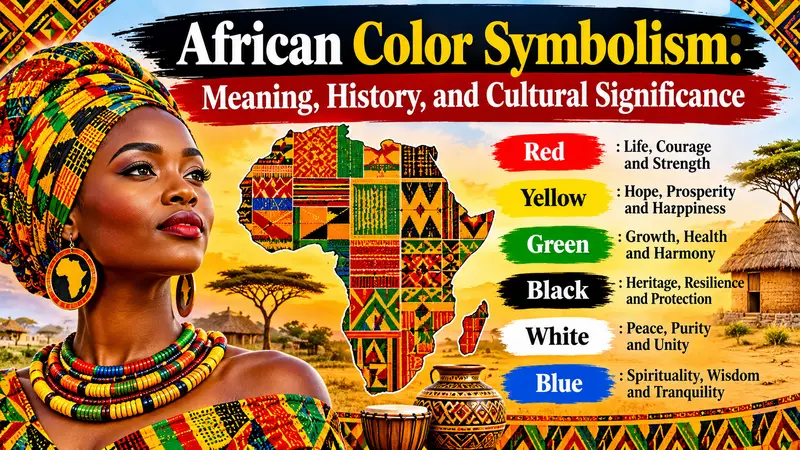
African color symbolism refers to the meanings, cultural values, spiritual associations, and historical messages communicated through colors in African societies. These meanings appear in traditional clothing, woven textiles, ceremonial objects, national flags, religious practices, artwork, and community celebrations. Colors such as red, black, green, gold, white, and blue are particularly recognizable in African-inspired designs.
However, there is no single system of color symbolism shared by every African country or ethnic group. Meanings differ across regions, languages, religious traditions, and historical periods. A color associated with royalty in one community might communicate mourning, spirituality, or another idea in a different setting.
In the United States, these colors have an additional cultural significance. They appear in African American heritage celebrations, Black History Month displays, Juneteenth decorations, Pan-African clothing, jewelry, and contemporary art. Understanding their origins helps explain why these colors communicate more than visual style: they can express ancestry, belonging, independence, spirituality, and cultural pride.
Quick Answer
African color symbolism commonly represents cultural identity, African heritage, unity, freedom, spirituality, prosperity, and connection to the natural world. Historically, colors have carried different meanings across African societies, particularly in textiles, ceremonies, religious practices, and royal traditions.
TL;DR
- Red often represents sacrifice, struggle, life, and spiritual or political commitment.
- Black can symbolize African identity, ancestral connections, maturity, and spiritual awareness.
- Green commonly represents vegetation, fertility, growth, and renewal.
- Gold and yellow are associated with wealth, royalty, prosperity, and preciousness.
- White can communicate purification, peace, spirituality, and ceremonial celebration.
- In America, Pan-African colors frequently express heritage, solidarity, and Black pride.
What African Colors Look Like and Where They Appear
African color symbolism is most visible in textiles, traditional garments, flags, beadwork, paintings, ceremonial objects, and decorative arts. Rather than appearing as isolated colors, they often work together with patterns, shapes, materials, and designs to communicate particular ideas.
One recognizable example is Kente cloth, a handwoven textile associated with the Asante and Ewe peoples of Ghana. Its brightly colored strips feature geometric patterns, and individual designs can carry names, proverbs, historical references, and social messages. The colors contribute to the meaning, but the pattern and occasion matter just as much. Timothy S. Y. Lam Museum of Anthropology+1
What Is Kente Cloth? A Look at the African Textile
African jewelry of the Turkana tribe – Piekiełko
MG Chief Obama Hand Weaved Kente Cloth R41
10
Other examples include:
- Adinkra cloth: Traditionally associated with the Akan people of Ghana, it features symbolic motifs that communicate philosophical ideas, values, and proverbs.
- Bògòlanfini: Also called Malian mud cloth, it uses distinctive patterns created through dyeing techniques and carries cultural associations connected to particular communities.
- Kanga fabric: Popular in East Africa, this printed cloth often combines colorful designs with written messages or sayings.
- African national flags: Different combinations of green, yellow, red, black, and other colors communicate national histories and political identities.
These examples demonstrate why it is important to understand the cultural setting before interpreting an African-inspired color combination.
The Historical Origins of African Color Symbolism
The use of color in African societies developed through everyday life, spiritual traditions, political systems, trade, craftsmanship, and relationships with the natural environment.
Natural materials played an important role in producing colors. Plants, roots, leaves, minerals, clays, and other substances provided dyes and pigments for fabrics, body decoration, pottery, and artistic objects. The availability of particular materials influenced the colors artisans could produce.
Over time, colors became associated with recognizable experiences and cultural values. Gold could communicate wealth and royal authority, while earth-colored pigments could express a relationship with the land. Certain colors also became appropriate for particular ceremonies, religious practices, or stages of life.
Textile traditions provide especially useful historical examples. In Ghana, Kente weaving developed among Akan and Ewe communities, with elaborate cloth becoming associated with status, leadership, and important occasions. Its designs and colors were not simply decorative choices; they could communicate social position and cultural knowledge. Cambridge University Press+2
However, these traditions did not develop identically across the continent. West African textile symbolism, East African printed fabrics, Southern African beadwork, and North African artistic traditions have their own histories and visual languages.
What the Main African Colors Symbolize
Although interpretations differ between communities, several colors have become widely recognized through traditional textiles, Pan-African movements, and contemporary African-inspired design.
Red: Sacrifice, Life, and Struggle
MG Authentic Hand Weaved Kente Cloth A6820
Red is frequently associated with blood, life, sacrifice, courage, and political struggle. Its meaning can be celebratory or solemn, depending on the occasion.
In some Ghanaian Kente traditions, red communicates heightened spiritual or political feeling, bloodshed, and sacrifice.
Red also became significant in African liberation movements because it could represent the sacrifices made by people resisting colonialism, racial oppression, and political domination.
In modern American settings, red in Pan-African designs often recalls historical struggles and the lives affected by the fight for freedom. It can also communicate determination and solidarity.
Black: Identity, Ancestry, and Spiritual Awareness
Lot – A Large Vintage Ghanan Asante Kente Silk
Black is an important color in Pan-African identity and is commonly associated with African people, heritage, maturity, and ancestral connections.
In some Akan traditions, black also communicates spiritual awareness, age, and the connection between the living and ancestors.
Its meaning extends beyond mourning or darkness. In the Pan-African flag, black specifically affirms the identity and collective dignity of people of African descent.
For African Americans, the color can communicate cultural pride, historical continuity, and recognition of shared experiences.
Green: Nature, Growth, and Renewal
Green is commonly associated with vegetation, agriculture, fertility, natural resources, and new beginnings.
In Ghanaian Kente traditions, it can represent forests, planting, harvesting, growth, and spiritual renewal.
Green also has an important political meaning. In the Pan-African flag, it represents Africa’s natural wealth and resources.
In contemporary African American design, green frequently communicates hope, cultural continuity, and an enduring connection to African heritage.
Gold and Yellow: Wealth, Royalty, and Prosperity
MG Authentic Hand Weaved Kente Cloth A443
Gold and yellow are associated with preciousness, prosperity, fertility, beauty, royalty, and high social standing.
Their association with gold as a valuable material helps explain why these colors frequently appear in ceremonial clothing and royal textiles.
In Ghanaian Kente traditions, gold can communicate wealth, status, glory, and spiritual purity. Yellow may carry related meanings, including preciousness and fertility. Timothy S. Y. Lam Museum of Anthropology+1
In American African-inspired fashion, gold is frequently used to create an appearance of celebration, dignity, achievement, and cultural elegance.
White: Purification, Peace, and Spirituality
Naa Ashorkor Mensah-Doku | Ghana | Beyond The Airwaves
White can symbolize purification, peace, sanctification, spiritual contact, and celebration.
In some Ghanaian religious and ceremonial traditions, white clothing is worn during purification practices and important spiritual occasions.
White also has associations with healing, new beginnings, and ceremonial cleanliness in particular communities.
Its meaning should not automatically be equated with Western wedding symbolism. In African religious and cultural settings, white may communicate relationships with spiritual forces, ancestors, or particular ceremonial practices.
Blue: Peace, Harmony, and Love
Blue is associated with peacefulness, harmony, affection, and spiritual sanctity in some Ghanaian textile traditions.
Its appearance in ceremonial fabrics can create a visual impression of calmness and balance.
In modern clothing and jewelry, blue is often selected for its associations with stability, affection, and peaceful relationships. These are contextual interpretations rather than universal African beliefs.
African Color Symbolism in the United States
African colors have a distinctive place in American cultural life because they connect African heritage with the history and identity of African Americans.
The red, black, and green combination is especially recognizable. It became an international emblem of Black identity through the Pan-African movement and later gained wider visibility during the Black liberation movements of the 1960s.
Today, these colors appear in clothing, community events, educational displays, artwork, and celebrations of African heritage.
Pan African Flag – ASALH Store
Black History Parade returns to Anaheim on Saturday
Senior Mwambo ceremony celebrates Black graduates
9
Several American settings demonstrate their continuing significance:
- Black History Month: Red, black, and green decorations often communicate African heritage, historical awareness, and cultural pride.
- Juneteenth celebrations: Some organizers incorporate Pan-African colors into their displays, although the official Juneteenth flag uses a different red, white, and blue design.
- College graduations: African American graduates frequently wear Kente stoles to recognize ancestry, academic achievement, and cultural identity.
- Community celebrations: African-inspired clothing, flags, and artwork can express solidarity and shared heritage.
- Fashion and interior design: These colors appear in clothing collections, wall art, accessories, and decorative fabrics.
Kente stoles have become particularly recognizable at American college graduations. Their use connects academic accomplishment with African cultural heritage, rather than treating graduation as an exclusively individual achievement. eiu.edu+2
The Pan-African Flag and Its Three Main Colors
The Pan-African flag is one of the clearest examples of African color symbolism in modern American culture.
Pan African Flag | UNIA Flag | The Flag Shop
The flag was adopted in 1920 by Marcus Garvey’s Universal Negro Improvement Association (UNIA). It emerged during a period when Black communities were challenging racial discrimination and seeking symbols that affirmed their collective identity and dignity.
Its three colors have specific meanings:
| Color | Symbolic meaning | Historical association |
|---|---|---|
| Red | Blood, sacrifice, and struggle | The sacrifices made in the pursuit of liberation |
| Black | Black people and collective identity | Recognition of people of African descent |
| Green | Africa’s natural wealth | The continent’s resources and potential |
The flag became an important symbol of Pan-African identity and Black pride, particularly during the twentieth-century liberation movements. ICAEW+1
It is important to distinguish this flag from the national flags of individual African countries. Although several countries adopted related color combinations, their flags have separate histories and meanings.
Color Symbolism in African Kente Cloth
Kente cloth deserves special attention because it demonstrates how color, craftsmanship, and cultural identity work together.
Originating among the Asante and Ewe peoples of Ghana, Kente is made by weaving narrow strips of fabric and joining them to create larger pieces. Traditional examples often feature brightly colored geometric patterns, with individual designs carrying names and meanings.
THE GOLDEN STOOL | Asanteman Association
What Is Kente Cloth? A Look at the African Textile
★AGOTIME KENTE FESTIVAL2025★ | ガーナ便り(ガーナ事務所) | JICA海外協力隊の世界日記
11
The following examples illustrate commonly documented associations in Ghanaian Kente traditions:
| Kente color | Common association | Cultural context |
|---|---|---|
| Yellow | Preciousness, fertility, beauty | Value and prosperity |
| Red | Blood, sacrifice, struggle | Spiritual and political significance |
| Green | Growth, vegetation, renewal | Agriculture and nature |
| Gold | Royalty, wealth, status | Leadership and prestige |
| Blue | Peace, harmony, love | Positive relationships |
| Black | Maturity, spiritual awareness | Ancestral and spiritual connections |
| White | Purification and sanctification | Religious and ceremonial occasions |
These associations are not a universal color dictionary. A cloth’s name, pattern, wearer, and intended occasion can change how its colors are understood. Timothy S. Y. Lam Museum of Anthropology+2
African Color Symbolism in Different Cultural Traditions
Africa contains thousands of cultural communities, so the meaning of color depends heavily on regional history and local customs.
Here are several examples that demonstrate this diversity.
Ghanaian Akan and Ewe traditions: Kente weaving uses combinations of color and geometric patterns to communicate social values, proverbs, prestige, and ceremonial meaning. Gold, red, green, black, and white are among the recognizable colors.
Yoruba traditions: Colors can have specific associations with Orisha, spiritual practices, and religious ceremonies. White, for example, is particularly associated with Obatala, a Yoruba divinity connected with wisdom and purity.
East African traditions: Kanga fabrics communicate through combinations of printed patterns, color, and written Swahili messages. The meaning may come from the text as much as the visual design.
Malian traditions: Bògòlanfini, or mud cloth, uses earth-based dyeing techniques and distinctive patterns associated with Malian cultural heritage. Its significance cannot be reduced to a simple list of color meanings.
Southern African traditions: Beadwork and textiles can communicate identity, social relationships, community affiliation, and cultural practices through carefully selected colors and arrangements.
These examples show why describing one color as having a fixed meaning throughout Africa would be misleading. The same visual choice can communicate different things depending on its cultural setting. University of Rwanda+3
Religious and Spiritual Meanings of African Colors
Color can have an important role in African religious traditions, including Indigenous African religions, Christianity, and Islam as practiced in different African communities.
In some traditions, colors are selected for particular ceremonies, spiritual leaders, sacred objects, and religious garments.
White is a useful example. In certain Akan practices, white clothing and materials are connected with purification, sanctification, and relationships with spiritual beings. In Yoruba traditions, white is strongly associated with Obatala.
Red can communicate sacrifice, spiritual intensity, or serious ritual activity in particular communities. Black may represent ancestral relationships, maturity, or spiritual awareness.
These meanings should be understood within their religious traditions rather than interpreted through general color psychology.
African Christianity also incorporates cultural textiles and colors into worship. In African American churches, Kente-inspired vestments, altar decorations, and ceremonial garments can connect Christian faith with African heritage.
Religious symbolism is therefore not simply about choosing a preferred color. It often reflects a community’s understanding of sacred relationships, spiritual responsibility, and cultural continuity.
Emotional and Psychological Meaning of African Colors
Colors influence how people respond to visual environments, but their emotional meanings are also shaped by experience, culture, and personal associations.
African-inspired colors can communicate several emotional ideas in contemporary American settings.
- Red: Determination, courage, sacrifice, and remembrance.
- Black: Dignity, identity, belonging, and historical awareness.
- Green: Hope, renewal, growth, and connection with nature.
- Gold: Achievement, confidence, prosperity, and celebration.
- White: Peace, reflection, purification, and new beginnings.
- Blue: Calmness, affection, harmony, and stability.
For example, a person wearing a red, black, and green bracelet may be expressing pride in African ancestry or solidarity with Black communities.
Someone decorating a room with green, gold, and black may be drawing inspiration from African textiles while creating an environment associated with heritage and celebration.
However, these emotional responses are not automatic. A person’s family history, religious background, personal experiences, and knowledge of a particular tradition all influence how the colors are interpreted.
Why African Colors Are Popular in Modern Fashion and Jewelry
African-inspired colors have become recognizable elements of contemporary fashion because they combine visual appeal with opportunities for cultural expression.
Designers use traditional color combinations in clothing, handbags, shoes, scarves, jewelry, and accessories. Some pieces reproduce traditional textile patterns, while others reinterpret African-inspired colors through contemporary designs.
Adiza Ankara High Waisted Trouser | Green and Blue Multicoloured Afric – M.A.DKollection
RED BLACK AND GREEN Necklace & Bracelet Set – Nubian Luxuries Brand
African Print Corset Dress – Zola | Fle Clothing
14
Common examples include:
- Bracelets: Red, black, and green beads can express Pan-African pride and cultural identity.
- Necklaces: Gold-colored materials and colorful beads can reflect African-inspired craftsmanship.
- Clothing: Ankara prints and Kente-inspired patterns bring traditional visual elements into modern outfits.
- Headwraps: Colorful fabrics can communicate personal style, cultural connection, and celebration.
- Shoes and handbags: Designers frequently incorporate African-inspired patterns into everyday accessories.
Not every colorful African-inspired product has a traditional symbolic meaning. Some designs are primarily aesthetic, while others intentionally preserve or reference particular cultural practices.
The distinction matters because wearing a traditional pattern and understanding its history are two different things.
African Colors in Tattoos, Home Decor, and Personal Expression
African color symbolism also appears in tattoos and interior decoration, particularly among people who want their surroundings or personal style to reflect heritage and identity.
Black Culture Tattoo Ideas – Design Talk
Obrempong Home: African Luxury Black-Owned Pillows and Throw Blankets
9
Tattoos: Some people choose red, black, and green tattoos to represent African ancestry, Black pride, or connection with Pan-African history. Others incorporate traditional patterns or symbols alongside these colors. It is important to understand the specific design rather than assuming that every African-inspired tattoo has the same meaning.
Home decor: Kente-inspired cushions, woven wall hangings, colorful artwork, and African-patterned rugs can bring cultural references into a living space. Gold and green may create associations with prosperity and nature, while red and black can provide a strong visual connection to Pan-African identity.
Jewelry: Beaded necklaces and bracelets often combine colors associated with particular communities, religious traditions, or personal identities.
Social media: African color combinations frequently appear in profile graphics, cultural celebration posts, Black History Month artwork, and educational content.
Personal expression is most meaningful when people understand the origin of the designs they choose and distinguish specific cultural symbols from generalized African-inspired decoration.
African Color Symbolism During Celebrations and Important Occasions
Colors often become especially meaningful during occasions when communities gather to recognize shared history, achievements, or important life events.
In Ghana, Kente is worn at weddings, festivals, funerals, graduations, and other significant ceremonies. The selected cloth may reflect the importance of the occasion, the wearer’s status, or the meaning of a particular design.
In the United States, African-inspired colors appear in several cultural celebrations.
Black History Month: Red, black, and green are frequently used in educational displays and community decorations to recognize African heritage and the history of Black communities.
Juneteenth: African-inspired decorations sometimes accompany celebrations of emancipation and Black cultural identity. The Pan-African flag may appear alongside the distinct Juneteenth flag.
Graduation ceremonies: Kente stoles connect academic achievement with cultural pride and ancestral recognition.
Weddings: African-inspired fabrics and coordinated colors can celebrate family traditions, cultural backgrounds, and the joining of families.
Religious celebrations: Churches and other religious communities may use African textiles to recognize heritage and incorporate cultural craftsmanship into worship.
In these settings, colors help communicate the purpose of an occasion. Their meaning comes from the people, customs, and traditions involved.
Controversies and Misunderstandings About African Color Symbolism
African color symbolism is sometimes misunderstood when traditional meanings are separated from their original cultural settings.
One common mistake is treating all African colors as if they belong to a single ancient symbolic system. Africa is a continent with distinct countries, languages, religions, and artistic traditions. A color association documented among the Akan people of Ghana should not automatically be attributed to Yoruba communities in Nigeria or Maasai communities in East Africa.
Another misunderstanding involves the Pan-African flag. Its red, black, and green combination is historically connected with a modern political and cultural movement. Although the colors have broader cultural associations, the flag itself was established in 1920 rather than being an ancient African national symbol.
Commercialization also creates challenges. Traditional textiles such as Kente are sometimes marketed as generic African patterns without acknowledging their Ghanaian origins. This can remove important information about the people who developed the craft and the cultural knowledge preserved through weaving.
The Seattle Art Museum has discussed the tension between Kente’s use as a symbol of African identity in America and concerns among some Ghanaians about its commercialization as a general symbol for everything African. eMuseum+2
A respectful approach involves identifying the particular cultural tradition, recognizing the artisans behind it, and avoiding claims that one interpretation represents the entire continent.
How African Color Symbolism Has Evolved Over Time
African color symbolism has changed alongside political movements, migration, religious developments, international trade, and modern design.
In earlier societies, color choices were often closely connected to locally available materials, ceremonial customs, religious practices, and social status. Traditional textiles communicated information through their patterns, materials, and colors.
During the colonial period and the independence movements of the twentieth century, African colors increasingly appeared in political and national expressions. The red, black, and green Pan-African flag became an especially recognizable symbol of Black solidarity and self-determination.
After Ghana gained independence in 1957, Kente became increasingly visible internationally. Its association with African heritage grew, particularly among African Americans seeking cultural connections with the continent.
Today, African-inspired colors appear in international fashion, museums, educational institutions, digital artwork, and cultural celebrations. Traditional artisans continue to preserve established techniques while contemporary designers experiment with new materials and combinations.
The result is a living visual tradition. Its meanings are not frozen in the past; they continue to develop as communities interpret their heritage in modern settings.
How to Interpret African Colors Respectfully
Understanding African color symbolism requires more than memorizing a list of meanings.
When encountering an African-inspired design, consider these questions:
- Where does the design originate? Identify the country, community, or artistic tradition associated with it.
- What is the occasion? A color used at a wedding may communicate something different from the same color at a funeral.
- Are there recognizable patterns? In textiles such as Kente, the pattern can be as important as the color.
- Does the combination have a political meaning? Red, black, and green may specifically reference Pan-African identity.
- Is the design traditional or contemporary? A modern fashion interpretation may not follow historical symbolic conventions.
These distinctions help prevent inaccurate assumptions and encourage a more informed appreciation of African artistic traditions.
FAQs
1. What are the six main colors in African symbolism?
Red, black, green, gold, yellow, and white are among the most recognizable colors in African-inspired symbolism. Blue is also important in several cultural traditions, particularly Ghanaian Kente. Their meanings vary according to regional customs and historical context.
2. What do red, black, and green mean in African culture?
In the Pan-African flag, red represents the sacrifices made in the struggle for liberation, black represents Black people and their collective identity, and green represents Africa’s natural wealth. Together, they communicate solidarity, heritage, and self-determination.
3. What does gold symbolize in African traditions?
Gold commonly represents wealth, royalty, prosperity, status, and preciousness. In Ghanaian Kente traditions, it has particular associations with leadership, glory, and spiritual purity.
4. What does white represent in African spirituality?
White can represent purification, sanctification, peace, and spiritual relationships in certain African religious traditions. Its specific significance depends on the community and religious practice involved.
5. Why do African Americans wear African colors?
Many African Americans wear African colors to recognize ancestral heritage, express cultural pride, and celebrate connections with African history. The Pan-African flag and Kente clothing are particularly recognizable examples.
6. What do African colors mean in Kente cloth?
Kente colors communicate ideas such as prosperity, sacrifice, growth, harmony, maturity, and purification. Their meanings depend on the particular weaving tradition, color combination, pattern, and ceremonial purpose.
7. Are African colors considered lucky or protective?
Some African religious and cultural traditions associate particular colors with blessings, healing, spiritual protection, or favorable circumstances. However, there is no universal African belief that specific colors automatically bring good luck or protection.
Conclusion
African color symbolism connects visual expression with history, identity, spirituality, community, and cultural heritage. Red, black, green, gold, white, and blue each carry recognizable associations, but their meanings depend on the traditions and circumstances in which they appear.
In modern American culture, these colors are especially important for expressing African ancestry, Black pride, solidarity, and historical awareness. From Pan-African flags and Kente graduation stoles to jewelry, fashion, and home decor, they provide visible ways to recognize cultural connections.
The most meaningful way to appreciate these colors is to understand their origins rather than treat them as interchangeable decorations. Behind each traditional combination may be a particular community, an artistic tradition, or a history worth recognizing.