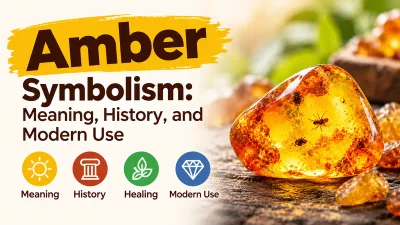
Amber color symbolism connects the golden-orange shade of amber with warmth, optimism, confidence, and natural beauty. In the United States, this color appears in autumn leaves, glowing lamps, jewelry, interior design, and traffic signals, giving it associations that range from comfort and abundance to caution and alertness.
Amber sits between yellow, orange, and gold. Depending on its intensity, it can look like honey, polished tree resin, a glowing ember, or the light of a late-afternoon sun. These visual qualities help explain why people often associate it with energy, friendliness, warmth, and an inviting atmosphere.
However, amber does not communicate only positive ideas. Its use in warning lights and road signals gives it a practical meaning connected to attention, changing conditions, and careful decision-making. Understanding amber’s symbolism means looking at both its natural appearance and the cultural experiences that have shaped how people interpret it.
Quick Answer
Amber color symbolism commonly represents warmth, optimism, confidence, and natural energy in modern American culture, while its use in warning lights also communicates caution and awareness. Historically, amber’s golden glow connected it with sunlight, precious materials, protection, and ideas about life and renewal.
TL;DR
- Warmth and comfort: Amber evokes sunlight, firelight, honey, and cozy surroundings.
- Optimism: Its golden-orange appearance suggests enthusiasm and positive energy.
- Caution: Amber warning lights signal changing conditions and the need for attention.
- Historical roots: Natural amber was valued in ancient societies for its glow and rarity.
- American culture: The color appears in autumn décor, fashion, lighting, and safety signals.
- Personal meaning: Amber can express confidence, creativity, groundedness, or a desire for balance.
What Is the Amber Color?
Amber is a warm color that falls between yellow and orange, often with golden, brown, or reddish undertones. Its appearance changes according to lighting and saturation. Pale amber may resemble honey or golden sunlight, while darker amber can look closer to burnt orange, caramel, or polished resin.
The color takes its name from natural amber, a material formed when ancient tree resin hardens and undergoes changes over geological time. Natural amber can range from pale yellow to deep orange and reddish brown, sometimes appearing transparent and sometimes cloudy.
In everyday American life, amber appears in several familiar forms:
- Golden-orange autumn foliage and seasonal decorations.
- Amber glass bottles, lamps, and vintage glassware.
- Honey-colored jewelry and decorative objects.
- Warm lighting designed to create a relaxed atmosphere.
- Yellow-orange warning lights on vehicles and road equipment.
These examples show why amber has more than one symbolic meaning. Its resemblance to sunlight and fire encourages positive associations, while its use in safety systems gives it a more urgent function.
The Core Meaning of Amber Color Symbolism
Amber is most commonly associated with warmth, optimism, confidence, energy, and caution. These meanings arise from different aspects of the color’s appearance and practical use.
Warmth comes from amber’s resemblance to firelight, glowing embers, and late-afternoon sunlight. In design, it can make a space feel more welcoming than a cooler blue or gray palette.
Optimism is linked to its golden-yellow qualities. Yellow often suggests brightness and cheerfulness, while orange contributes a sense of movement and enthusiasm. Amber combines these impressions in a softer, earthier form.
Confidence and vitality reflect its visibility and richness. Amber can attract attention without the intensity of bright red, making it useful in clothing, branding, and decorative accents.
Caution comes from its role in warning lights and traffic signals. Here, the color is less about emotion and more about information: conditions are changing, so people should pay attention.
Natural beauty and endurance connect the color with fossilized resin, which can preserve traces of ancient plants and animals. This gives amber a distinctive association with the passage of time and the preservation of the past.
No single meaning applies in every situation. The setting, brightness, and surrounding colors all influence how amber is understood.
Ancient Origins of Amber’s Symbolism
The history of amber begins with the natural material rather than the modern color category. Long before standardized color names became common, people collected and traded amber for its attractive appearance, manageable texture, and unusual properties.
Archaeological evidence shows that amber was used for ornaments and objects placed in burials thousands of years ago. Its presence in graves suggests that it sometimes held significance beyond decoration, although the exact beliefs of prehistoric communities cannot always be reconstructed.
In ancient Greece and Rome, amber was admired for its glow and was traded across considerable distances. Greek writers connected it with sunlight and developed stories to explain its origin. One famous myth associated amber with the tears of the Heliades, the sisters of Phaethon, who mourned his death.
Amber’s ability to attract small particles after being rubbed also attracted attention. The ancient Greek word elektron, associated with amber, eventually contributed to the word electricity. This unusual property helped distinguish amber from ordinary decorative materials.
These historical associations help explain why amber can suggest light, rarity, protection, and natural wonder. They do not establish that every ancient society understood amber in the same way, nor do they mean that all modern amber-colored objects carry religious or magical significance.
Amber Color in American Culture
In the United States, amber is strongly connected with autumn, warm interiors, outdoor landscapes, and practical safety systems. Its cultural meaning often depends on whether it appears in a decorative, natural, or functional setting.
During fall, amber shades appear in leaves, pumpkins, dried grasses, seasonal wreaths, and Thanksgiving decorations. Combined with brown, rust, cream, and deep red, the color helps create a familiar autumn palette associated with harvest, family gatherings, and the transition to colder weather.
In home design, amber lighting and glass accents can make rooms feel intimate and relaxed. Restaurants, bars, and living spaces sometimes use warm-toned illumination to create a comfortable atmosphere.
Amber also appears in American workwear, automotive lighting, outdoor equipment, and public safety applications. In these contexts, visibility matters more than beauty. The color helps distinguish a warning or signal from its surroundings.
The important point is that American culture does not assign amber one fixed emotional message. A glowing amber lamp might suggest relaxation, while a flashing amber light on a roadside vehicle signals that a person should remain alert.
Amber as a Symbol of Warmth, Comfort, and Belonging
Amber’s warmth is one of its most familiar associations. Unlike a pale, cool yellow, amber often has enough orange or brown in it to feel grounded and substantial.
This makes it useful in spaces intended for conversation and relaxation. Amber glass lamps, golden textiles, wooden furniture, and warm-toned lighting can create a sense of intimacy without relying on bright or highly saturated colors.
The same association appears in descriptions of food and drink. Honey, caramel, toasted sugar, and certain teas have amber tones that people may connect with sweetness, hospitality, and familiar routines.
In personal style, amber accessories can communicate a warm, approachable aesthetic. A golden-orange scarf or piece of jewelry may add visual richness without the stronger statement of vivid red.
These associations are cultural and perceptual rather than universal. A person’s memories, preferences, and surroundings can make the color feel comforting, nostalgic, or even overwhelming.
Amber and the Symbolism of Optimism and Energy
Amber’s relationship with yellow and orange gives it associations with brightness, enthusiasm, and forward movement. It can suggest the energy of sunlight while retaining the earthier quality of gold or brown.
In graphic design and branding, amber may be used to make an image feel friendly, lively, or approachable. It can draw the eye toward an important detail without necessarily conveying the urgency often associated with red.
The color can also suggest creativity and confidence. Artists may use amber to add warmth to a composition, while fashion designers may choose it to introduce a noticeable accent into neutral clothing.
Still, amber’s visual energy depends on its shade. A bright yellow-orange may feel playful and active, whereas a dark, muted amber can appear traditional, mature, or understated.
It is therefore more accurate to say that amber can support an optimistic impression than to claim that the color automatically creates optimism in everyone who sees it.
Why Amber Also Symbolizes Caution
Amber’s caution-related meaning is especially clear in traffic and safety systems. In American traffic signals, the corresponding yellow signal generally warns drivers that the signal is changing and that they should prepare to stop when it is safe and required.
Amber-colored warning lights also appear on construction vehicles, roadside assistance trucks, maintenance equipment, and certain emergency or service vehicles. Their purpose is to attract attention and communicate that the surrounding situation may require additional care.
This meaning differs from the emotional symbolism of warmth and optimism. In a safety setting, amber is not primarily intended to make people feel positive. It communicates a practical message about awareness, visibility, and changing conditions.
The distinction matters when interpreting the color in artwork or personal symbolism. Amber can represent a thoughtful pause, a decision point, or the need to consider consequences before moving forward. These are reasonable metaphorical extensions of its warning function, rather than universal historical meanings.
Amber Color and Emotional Psychology
People often interpret amber through visual experiences they already know: sunlight, fire, autumn landscapes, and glowing materials. Those associations can shape how the color feels in a particular setting.
Warm shades are often used in environments designed to feel inviting, and amber lighting can make surfaces appear softer or more golden. However, the emotional response depends on brightness, context, individual preference, and the surrounding colors.
A soft amber glow may feel restful, while a highly saturated orange-yellow can feel stimulating or attention-grabbing. In a warning signal, the same color may create alertness rather than comfort.
Amber can also evoke nostalgia because it appears in vintage glassware, old photographs with warm color grading, and objects made from natural resin. Its association with ancient materials may suggest continuity or a connection with the past.
Color psychology should not be treated as a reliable way to diagnose personality or predict behavior. Amber may help communicate a mood, but it cannot establish that someone is confident, optimistic, cautious, or creative simply because they prefer the color.
Amber in Spirituality and Cultural Traditions
Amber has been used as an ornament and ritual object in different societies, but its meaning varies by place and period. In some historical contexts, amber pendants and carved objects may have been worn for protection or used in burial practices. The exact beliefs attached to individual objects are not always known.
In European folklore, amber has sometimes been associated with protective qualities, vitality, and the natural world. Its warm appearance and ability to preserve small organisms made it an unusual material that could inspire stories about life, memory, and transformation.
In contemporary spiritual and wellness settings, amber-colored objects may be used to suggest grounding, warmth, or balance. These interpretations are modern or tradition-specific rather than universal religious rules.
It is also important to distinguish amber the color from amber the material. A golden-orange wall or digital graphic does not automatically inherit the historical meanings of fossilized resin. Symbolic connections are possible, but they depend on how the color is used and what the creator intends it to communicate.
Amber Color in Fashion, Jewelry, and Personal Style
Amber works well in fashion because it can be both noticeable and natural-looking. Its range includes light honey shades, rich golden orange, coppery amber, and dark brown-orange tones.
In clothing, amber can add warmth to neutral colors such as cream, navy, charcoal, and brown. It also pairs naturally with olive green and rust, making it a common choice for fall wardrobes.
Jewelry introduces another distinction. An amber-colored glass bead, a synthetic imitation, and a piece of natural fossilized resin may look similar but are different materials. Their symbolic meanings can overlap, yet the material’s origin may matter to the person wearing it.
People may choose amber accessories to express individuality, confidence, an appreciation for nature, or a preference for warm colors. Others simply like the way the shade complements their skin tone or clothing.
Unlike a formal emblem, amber clothing usually communicates mood and taste rather than a precise message. Its interpretation remains open to personal choice.
Amber in Home Décor, Art, and Design
Amber is widely useful in interior design because it can create warmth without making every surface appear intensely orange. Designers use it in glass, lighting, textiles, paint accents, and decorative objects.
An amber lamp or glass shade can soften the appearance of a room, especially when paired with wood, cream, muted green, or deep brown. In a contemporary interior, a small amber accent can introduce warmth into a palette dominated by gray or black.
In visual art, amber tones can suggest sunset, fire, age, autumn, or the glow of an old object. Artists may use a transparent golden-orange glaze to create a sense of light or layer darker amber shades to add depth.
Digital designers use amber to draw attention to selected elements, including buttons, icons, and notifications. However, the color should be paired with adequate contrast and clear labels when conveying important information; color alone may not be accessible to every viewer.
These design uses show that amber’s symbolic meaning is often reinforced by function. The color can make a space feel warmer, make a detail more visible, or help establish a particular visual atmosphere.
Amber Color in Nature and the Seasons
Autumn is one of the strongest sources of amber’s meaning in the United States. As leaves change color, yellow-orange and golden-brown tones become associated with seasonal transition, harvest, cooler weather, and outdoor scenery.
Amber also appears in sunlight filtered through trees, dry grasses, certain minerals, and the glow of embers. These natural examples link the color with both vitality and change: sunlight sustains life, while autumn foliage marks a transition in the growing season.
The color of natural amber adds another layer. Because the material can preserve ancient inclusions, it may evoke time, memory, and the relationship between present life and the distant past.
In seasonal décor, amber often works alongside rust, burgundy, forest green, and cream. The palette can suggest abundance and familiarity without relying on a single holiday or religious tradition.
Its seasonal associations are particularly strong in fall, but amber is not limited to autumn. Used in a lamp, garment, or artwork, it can communicate warmth throughout the year.
Amber Color Meaning by Context
The following table summarizes common interpretations of amber in contemporary American settings.
| Context | Common Meaning | Typical Associations | Important Distinction |
|---|---|---|---|
| Home décor | Warmth and comfort | Lamps, glass, textiles | Depends on lighting and surrounding colors |
| Fashion and jewelry | Confidence and individuality | Accessories, warm-toned clothing | Does not indicate a fixed personality |
| Traffic and safety | Caution and awareness | Warning lights, signals | A practical signal, not simply a mood |
| Autumn celebrations | Harvest and seasonal change | Leaves, wreaths, Thanksgiving décor | Often part of a broader seasonal palette |
| Art and branding | Energy and visual emphasis | Illustrations, logos, highlights | Meaning depends on the design |
| Spiritual or historical objects | Possible protection or vitality | Pendants, carved amber | Interpretations vary by culture and period |
Common Misunderstandings About Amber Symbolism
One common misconception is that amber always represents happiness or good fortune. Its warm appearance supports positive associations, but its role in warning systems gives it a very different meaning in other contexts.
Another mistake is treating amber-colored objects as identical to natural amber. The color may imitate the appearance of fossilized resin, but it does not mean the object has the same material history or cultural associations.
It is also misleading to claim that amber has one universal spiritual meaning. Historical beliefs about the material varied, and modern interpretations of the color may be entirely secular.
Finally, color preferences do not reliably reveal personality. Choosing amber for clothing or home décor may reflect taste, seasonal preference, or a practical design decision rather than a particular emotional state.
A more accurate understanding considers the color’s visual qualities, the setting in which it appears, and the purpose it serves.
How Amber’s Meaning Has Changed Over Time
Amber’s earliest cultural significance was closely tied to the natural material: its glow, rarity, unusual physical properties, and use in ornaments. Ancient people developed explanations for its origin and sometimes incorporated it into burial practices or objects believed to provide benefits.
Over time, amber also became a recognizable color category associated with honey, gold, firelight, and warm natural tones. Its appearance continued to inspire decorative and artistic uses even as scientific understanding of the material changed.
In modern American life, the color has developed several overlapping roles. It can signal comfort in a living room, seasonal abundance in autumn décor, individuality in fashion, or caution in a traffic setting.
This evolution does not mean older associations have disappeared. Rather, different meanings coexist, and context determines which one becomes most noticeable.
The history of amber illustrates a broader principle of color symbolism: meanings develop through repeated use, shared visual experiences, practical conventions, and cultural storytelling.
FAQs
What does amber symbolize spiritually?
Amber is sometimes associated with protection, vitality, and a connection with the natural world in historical and modern spiritual practices. These interpretations differ by tradition, and there is no single spiritual meaning accepted across all cultures.
Is amber a positive or negative color?
Amber is generally associated with positive ideas such as warmth, optimism, and confidence, but it can also signal caution. Its meaning depends on whether it appears in a decorative, emotional, or safety-related context.
What does amber mean in a traffic light?
In the United States, the yellow signal commonly called yellow rather than amber warns drivers that the light is changing. Drivers should prepare to stop and follow the applicable traffic rules rather than accelerate automatically.
What does amber mean in clothing and fashion?
Amber clothing often creates a warm, confident, and expressive appearance. It pairs particularly well with neutral shades, earth tones, and other autumn colors.
Does amber symbolize protection and good luck?
Some historical and contemporary traditions associate natural amber with protection or good fortune, particularly when it is worn as jewelry. These are cultural beliefs rather than scientifically established effects, and they should not be assumed to apply to every amber-colored object.
What is the difference between amber and gold symbolism?
Gold is commonly associated with wealth, achievement, prestige, and celebration, while amber often emphasizes warmth, natural beauty, comfort, and caution. Their meanings overlap because both can have a golden glow, but their visual and cultural associations are not identical.
Why is amber associated with autumn?
Amber resembles the golden-orange and brown shades of changing leaves, dried grasses, and late-season sunlight. In American seasonal décor, these colors help communicate harvest, abundance, and the transition from summer to cooler weathe
Conclusion
Amber color symbolism combines warmth, optimism, natural beauty, confidence, and caution. Its associations come from the glow of sunlight and fire, the appearance of natural resin, seasonal landscapes, and its practical role in warning systems. These different uses explain why amber can feel welcoming in a home while signaling alertness on the road.
In modern American culture, amber remains a versatile color for fashion, interior design, artwork, and seasonal decoration. Its meaning is not fixed: the setting, shade, and purpose determine whether it communicates comfort, energy, nostalgia, or a need for caution. Understanding amber color symbolism begins with recognizing those differences and the experiences that give the color meaning.