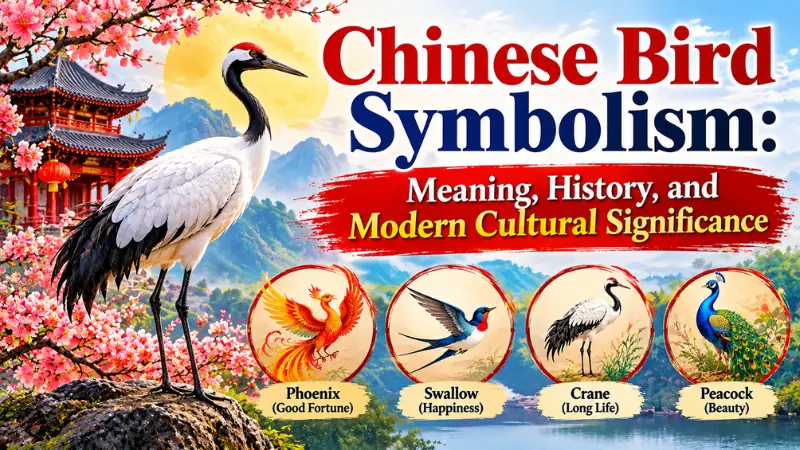
Birds have an important place in Chinese art, mythology, literature, and traditional beliefs. Chinese bird symbolism connects different bird species with ideas such as happiness, longevity, prosperity, wisdom, loyalty, and harmony. Some birds represent good fortune in relationships, while others are associated with authority, spiritual development, or a long and successful life
In traditional Chinese culture, birds were more than decorative subjects. Their colors, movements, calls, and relationships with other creatures helped communicate wishes and values. Artists used recognizable birds in paintings, embroidered clothing, ceramics, and household decorations to express messages that were sometimes understood through familiar stories, word associations, and cultural traditions.
Today, these images continue to appear in Chinese celebrations, jewelry, interior design, tattoos, and contemporary artwork. Understanding the individual birds makes it easier to appreciate what these symbols communicate and why their meanings remain relevant.
Quick Answer: What Does Chinese Bird Symbolism Mean?
Chinese bird symbolism commonly represents happiness, good fortune, longevity, prosperity, love, and harmony. Historically, individual birds such as cranes, phoenixes, magpies, and mandarin ducks carried specific meanings connected with imperial authority, marriage, spiritual beliefs, and traditional Chinese ideas about a well-balanced life.
TL;DR
- Happiness: Magpies traditionally represent joyful news and fortunate encounters.
- Longevity: Cranes symbolize long life, wisdom, and spiritual elevation.
- Prosperity: Phoenixes represent auspicious leadership, peace, and good fortune.
- Marriage: Mandarin ducks communicate devotion and marital harmony.
- Personal growth: Flying birds can represent ambition, freedom, and advancement.
- Modern culture: Bird imagery remains popular in Chinese-inspired art, jewelry, and celebrations.
1. What Birds Represent in Traditional Chinese Culture
Birds traditionally represent positive qualities that people hope to experience in their personal and social lives. Their ability to fly connects them with the sky, while their seasonal movements, nesting habits, and calls make them natural subjects for stories about renewal, family, and the passage of time.
Chinese artists often selected birds according to the message they wanted to communicate. A crane could express a wish for longevity, while a pair of mandarin ducks could represent a happy marriage. A phoenix might suggest prosperity and virtuous leadership.
These associations were not random. Some developed through folklore, religious ideas, literary references, and observations of nature. Others emerged from Chinese language, where the pronunciation of a bird’s name could resemble words associated with happiness or good fortune.
The surrounding details also matter. A bird pictured with flowers, trees, the sun, or another animal may communicate a more specific message than the bird alone.
2. The Historical Origins of Bird Symbolism in China
Bird imagery has appeared in Chinese decorative arts, mythology, textiles, and paintings for centuries. Early representations connected birds with nature, seasonal changes, ritual practices, and ideas about the relationship between the human and spiritual worlds.
As Chinese artistic traditions developed, individual birds acquired increasingly recognizable associations. During the Song dynasty (960–1279), bird-and-flower painting became an important artistic tradition. Painters combined careful observations of living creatures with literary references and symbolic arrangements.
During the Ming (1368–1644) and Qing (1644–1911) dynasties, birds appeared extensively in decorative objects, embroidered garments, porcelain, and official clothing. Certain birds also became associated with positions in the imperial administration. For example, civil officials wore rank badges featuring particular bird designs, with the crane representing the highest civil rank in the established Qing system.
These traditions helped turn bird imagery into a visual language. People could recognize messages about status, family relationships, prosperity, and longevity by looking at familiar combinations of animals and natural elements.
3. Phoenix Symbolism: Prosperity, Peace, and Imperial Authority
The Chinese phoenix, known as the fenghuang (鳳凰), is among the most recognizable mythical birds in Chinese culture.
Unlike the familiar Western phoenix, which is strongly associated with death and rebirth through fire, the Chinese fenghuang traditionally represents auspicious conditions, virtue, peace, and harmonious leadership.
It was sometimes described as the king of birds and associated with the authority and prestige of the emperor. Its appearance was traditionally regarded as an extraordinary favorable sign connected with a virtuous ruler.
The phoenix also has an important relationship with the Chinese dragon. In traditional symbolism, the dragon is commonly associated with masculine authority and the emperor, while the phoenix is associated with feminine authority and the empress. Together, they can communicate marital harmony, complementary qualities, and balanced power.
Its elaborate appearance contributes to its symbolic role. Traditional depictions combine features associated with several birds, including the pheasant, peacock, duck, and crane.
Common phoenix meanings include:
- Peaceful and virtuous leadership.
- Prosperity and favorable circumstances.
- Feminine dignity and imperial status.
- Harmony between complementary forces.
- Good fortune and auspicious beginnings.
In contemporary Chinese-inspired jewelry, wedding decorations, and artwork, the phoenix frequently communicates elegance, prosperity, and harmonious relationships.
4. Crane Symbolism: Longevity, Wisdom, and Spiritual Growth
The crane is particularly important in Chinese symbolism because it represents longevity, wisdom, dignity, and spiritual refinement.
Its graceful appearance and association with long life helped establish its traditional connection with longevity. In Chinese mythology and Daoist traditions, cranes are also associated with immortals and journeys toward spiritual realms.
Crane imagery appeared in paintings, textiles, and imperial clothing. During the Qing dynasty, a crane on an official’s rank badge represented the highest civil official rank.
Different compositions communicate additional meanings. A crane flying toward the sun may express ambition and a desire for advancement. A crane standing beside a pine tree or peach can reinforce the wish for a long life because these plants also have traditional longevity associations.
For this reason, cranes frequently appear in artwork intended for older family members or people celebrating important milestones.
Common crane meanings include:
- Long life and healthy aging.
- Wisdom and moral character.
- Spiritual refinement.
- Honor and high social standing.
- Personal achievement and advancement.
A crane painting can therefore serve as a meaningful birthday or retirement gift, particularly when the intention is to wish someone a long and honorable life.
5. Magpie Symbolism: Happiness, Good News, and Good Fortune
The magpie is traditionally associated with happiness and favorable news in Chinese culture.
One reason for its positive reputation comes from folklore and language-based associations. The bird’s name, xique (喜鹊), contains the character for happiness or joy (喜). This association helped establish the magpie as a familiar symbol of cheerful events.
A magpie appearing in traditional artwork can communicate a wish for pleasant news, a joyful meeting, or a fortunate change in circumstances.
The number and arrangement of magpies may also influence the intended message. Two magpies can be associated with happiness shared between people or a favorable encounter.
Magpies are especially common in decorative paintings, embroidery, and household artwork. Their association with joyful news makes them suitable for celebratory occasions and gifts.
Common magpie meanings include:
- Happy news and positive developments.
- Good fortune and celebration.
- Friendship and joyful reunions.
- Hopeful changes in personal life.
- Shared happiness between loved ones.
Unlike the crane, which emphasizes longevity and dignity, the magpie communicates more immediate happiness and pleasant developments.
6. Mandarin Duck Symbolism: Love, Loyalty, and Marriage
Mandarin ducks are among the most recognizable symbols of romantic relationships in Chinese culture.
They are frequently depicted in pairs because traditional beliefs associate them with devotion, marital happiness, and loyalty between partners. Their appearance together in water or among flowers often communicates a wish for a lasting and harmonious marriage.
This symbolism explains why mandarin ducks appear in traditional wedding decorations, paintings, embroidered textiles, and gifts for couples.
Their association with marriage also reflects the importance historically placed on partnership and family harmony in Chinese society.
However, their meaning should not be reduced to romantic attraction alone. A pair of mandarin ducks can also represent companionship, mutual affection, and the hope that two people will build a stable life together.
Common mandarin duck meanings include:
- Romantic love and affection.
- Marital happiness.
- Loyalty and companionship.
- Emotional commitment.
- Family harmony.
In modern decorative settings, a pair of mandarin ducks can be used as a reminder of commitment and the importance of maintaining a supportive relationship.
7. Peacock Symbolism: Beauty, Dignity, and Social Status
The peacock is traditionally associated with beauty, dignity, elegance, and high status.
Its colorful feathers and distinctive appearance made it a popular subject in Chinese decorative art. Its visual qualities also supported associations with prestige and refinement.
During imperial times, peacock imagery had connections with official status. Peacock feathers were used as marks of distinction in certain court and administrative contexts, while peacock designs also appeared in decorative objects and clothing.
In traditional paintings, the bird’s impressive plumage could communicate wealth, social standing, and admiration.
In contemporary settings, peacocks are often selected for decorative artwork because they combine visual elegance with associations of confidence and individuality.
Common peacock meanings include:
- Beauty and refinement.
- Dignity and prestige.
- Confidence and individuality.
- Wealth and prosperity.
- Recognition and admiration.
Its symbolism is generally celebratory, although the exact interpretation depends on the artwork and cultural setting.
8. Rooster Symbolism: Courage, Reliability, and Recognition
The rooster has a distinct place in Chinese folklore and traditional symbolism.
Its connection with daylight gives it associations with alertness, reliability, and the beginning of a new day. Its confident behavior also supports traditional interpretations involving courage and determination.
The rooster is particularly interesting because Chinese symbolic traditions connect its characteristics with desirable personal qualities. Traditional interpretations associate it with bravery, reliability, benevolence, and other virtues.
It also appears in auspicious artwork connected with achievement and recognition.
The rooster’s association with fame and official success makes it a meaningful subject in certain traditional decorative compositions.
Common rooster meanings include:
- Courage and determination.
- Reliability and responsibility.
- Confidence and alertness.
- Recognition and achievement.
- New beginnings and daily renewal.
In modern Chinese-inspired art, rooster imagery can represent independence, ambition, and the willingness to face challenges.
9. Other Birds and Their Traditional Chinese Meanings
Although the phoenix, crane, magpie, and mandarin duck receive considerable attention, other birds also carry symbolic associations.
Their meanings can vary according to the historical period, artistic composition, and cultural tradition.
Here are several additional examples:
Swallow: Swallows are associated with spring, renewal, and the return of favorable seasons. Their arrival can suggest the restoration of warmth and the beginning of new opportunities.
Pheasant: Pheasants are connected with beauty, good fortune, and official distinction. Their elaborate feathers made them especially suitable for decorative and ceremonial imagery.
Goose: Geese can symbolize loyalty, fidelity, and relationships. Their tendency to travel in groups also makes them suitable for themes of companionship and social connection.
Quail: Quails have appeared in traditional compositions associated with courage and favorable wishes. Their meaning can become more specific when combined with other objects or visual references.
Heron: Herons are associated in some traditional compositions with longevity and good fortune. Their relationship with water, reeds, and lotus plants adds further visual possibilities.
These examples show that Chinese bird symbolism is not limited to a few famous mythical creatures. Real birds also communicate meaningful ideas through their appearance, behavior, and relationships with other elements.
10. Bird Symbolism in Chinese Art, Paintings, and Decoration
Chinese art uses birds to communicate messages that extend beyond the animals themselves. Their placement, posture, colors, and relationships with flowers or trees can change the meaning of an entire composition.
Bird-and-flower painting is an important example. Artists traditionally combined living creatures with plants to express seasonal changes, moral qualities, prosperity, and wishes for a fortunate life.
A well-known example is the composition called Hundred Birds Paying Court to the Phoenix. In this arrangement, numerous birds gather around the phoenix, which occupies the central position.
The scene communicates peace under virtuous leadership, with the phoenix representing authority and the surrounding birds acknowledging its position.
Other combinations create more personal messages:
- A crane with a pine tree suggests longevity.
- Mandarin ducks with water plants suggest marital happiness.
- A magpie among flowering branches suggests joyful news.
- A phoenix with a dragon suggests complementary authority and marital harmony.
- A bird flying toward the sun suggests advancement and aspiration.
These combinations are especially important because traditional Chinese artwork often communicates through several symbols at once rather than relying on one isolated image.
11. The Role of Birds in Chinese Weddings and Family Celebrations
Bird imagery has a long association with important family occasions, particularly marriage and celebrations honoring older relatives.
The mandarin duck is a natural choice for wedding decorations because it represents loyalty and a harmonious partnership. Its paired appearance makes it suitable for gifts, embroidered fabrics, and decorative objects intended for newly married couples.
The phoenix also appears in traditional wedding imagery. Its connection with feminine dignity, prosperity, and harmony makes it an appropriate symbol for celebratory clothing and decorations.
Cranes serve a different purpose. Because they traditionally represent longevity, they are often suitable for birthday celebrations honoring parents, grandparents, and older family members.
Magpies can be used in celebratory artwork because they communicate happiness and favorable news.
These examples illustrate how bird symbolism connects with different stages of family life. Some birds represent the beginning of a relationship, while others express wishes for long life, happiness, and family continuity.
12. Chinese Bird Symbolism in the United States
In the United States, Chinese bird imagery appears in museums, Asian-inspired interior design, jewelry, fashion, cultural celebrations, and contemporary artwork.
For many Americans, these birds are introduced through Chinese decorative objects or exposure to Chinese cultural traditions. Their meanings are often appreciated through recognizable themes such as love, longevity, happiness, and prosperity.
Chinese American communities also maintain and reinterpret these traditions through family celebrations, artistic practices, and cultural events. The meaning of a particular bird may be familiar within one family or community while remaining less widely understood outside it.
The symbols appear in several modern settings:
Interior design: Crane and phoenix paintings are used as decorative pieces associated with longevity, harmony, and prosperity.
Jewelry: Mandarin duck pendants and phoenix-inspired designs can communicate love, commitment, and personal identity.
Weddings: Phoenix and dragon imagery may appear in Chinese-inspired wedding decorations and clothing.
Cultural celebrations: Bird imagery can be incorporated into festive artwork, gifts, and decorations.
Tattoos: Cranes and phoenixes are selected for their associations with personal growth, elegance, resilience, and meaningful relationships.
For American audiences, the most important distinction is that Chinese bird symbolism has its own cultural history. It should not automatically be interpreted using Western ideas about birds or the familiar European phoenix legend.
13. Emotional and Psychological Meaning of Chinese Birds
Birds can communicate emotional ideas because people naturally associate flight, movement, color, and companionship with particular human experiences.
In Chinese symbolism, these qualities become more specific through established cultural traditions.
A flying crane may represent the desire to move forward in life. Its association with wisdom and longevity can make it especially meaningful to someone entering retirement or celebrating a major personal milestone.
A pair of mandarin ducks can express the desire for a secure and supportive relationship. Someone choosing this image for jewelry or artwork may value commitment and companionship.
The phoenix can represent the hope for a peaceful future, personal dignity, or the achievement of an important goal. Its meaning is different from the Western image of a bird rising from ashes, although contemporary interpretations sometimes bring the two ideas together.
The magpie communicates a more cheerful emotional message. Its association with happiness makes it suitable for people who want to celebrate good news or express optimism.
These emotional interpretations are not universal psychological rules. They are cultural associations that individuals may accept, adapt, or interpret according to their own experiences.
14. Modern Uses in Tattoos, Jewelry, Fashion, and Home Decor
Chinese bird imagery continues to influence modern visual culture, particularly when people want artwork that combines attractive design with an established cultural meaning.
Tattoos: Cranes are popular choices for designs representing longevity, wisdom, and personal growth. Phoenix tattoos can communicate dignity, prosperity, and transformation, although the latter meaning is often influenced by Western phoenix traditions.
Jewelry: Small bird pendants, phoenix ornaments, and paired mandarin duck designs can represent love, good fortune, or personal identity.
Fashion: Bird motifs appear in embroidered garments, decorative patterns, scarves, and accessories inspired by traditional Chinese art.
Home decor: Paintings of cranes, magpies, and phoenixes are used to introduce traditional themes of longevity, happiness, and prosperity into living spaces.
Social media: Bird imagery can communicate celebration, romantic commitment, cultural appreciation, or an interest in traditional Chinese aesthetics.
When choosing a design, it is worth understanding the bird’s original cultural association rather than selecting an image solely because it looks attractive.
15. Common Misunderstandings About Chinese Bird Symbolism
Chinese bird symbolism is sometimes misunderstood when people assume that every bird has one fixed meaning across all cultures.
One common mistake involves the phoenix. The Chinese fenghuang and the Western phoenix share a mythical bird identity, but their traditional meanings are not identical. The Western phoenix is strongly associated with death and rebirth, whereas the Chinese fenghuang traditionally represents auspicious leadership, harmony, and peace.
Another misunderstanding is treating every bird as a universal sign of good luck. Although many traditional Chinese bird associations are favorable, the meaning depends on the species, its position, and the surrounding imagery.
It is also misleading to assume that all Chinese communities interpret every symbol in precisely the same way. Regional traditions, historical periods, religious influences, and family customs can produce different interpretations.
Finally, modern decorative uses should not automatically be treated as ancient traditions. A contemporary tattoo combining a phoenix with Western rebirth imagery may be a personal interpretation rather than a historically established Chinese design.
Understanding these differences helps preserve the cultural meaning of the symbols without limiting how people can use them creatively.
16. How Chinese Bird Symbolism Has Evolved Over Time
Chinese bird symbolism has changed as artistic practices, social structures, and cultural values have developed.
In earlier traditions, birds were connected with mythology, nature, spiritual beliefs, and favorable signs. Their images communicated ideas about the natural world and the relationship between people and the heavens.
During imperial periods, bird imagery became more closely associated with social hierarchy, official positions, court culture, and decorative traditions. The use of birds on rank badges is an important example of how symbolic imagery could communicate a person’s position in society.
Later, traditional bird motifs became widely established in paintings, ceramics, textiles, household objects, and celebratory decorations.
Today, the same birds appear in both traditional and contemporary settings. Some people use them to preserve cultural heritage, while others choose them for their artistic qualities or personal associations.
The underlying meanings remain recognizable, but their application has expanded. A crane may appear on a traditional birthday painting, a modern necklace, or a contemporary tattoo. Each use can communicate a slightly different personal message while drawing on the same cultural background.
FAQs
1. What is the luckiest bird in Chinese culture?
The magpie is one of the most recognizable birds associated with happiness and good fortune in Chinese culture. The phoenix is also considered highly auspicious because it represents peace, prosperity, and virtuous leadership.
2. What does a Chinese phoenix symbolize?
The Chinese phoenix, or fenghuang, traditionally represents peace, prosperity, harmony, and feminine authority. Unlike the Western phoenix, its traditional symbolism is not primarily centered on rising from ashes.
3. What does a crane symbolize in Chinese culture?
A crane symbolizes longevity, wisdom, dignity, and spiritual refinement. It also has historical connections with high-ranking civil officials and traditional ideas about moral character.
4. What do two birds symbolize in Chinese art?
Two birds can represent companionship, marital harmony, or shared happiness, depending on the species. Two mandarin ducks, in particular, traditionally represent romantic devotion and a successful marriage.
5. What does a magpie symbolize in Chinese culture?
A magpie traditionally represents happiness, joyful news, and favorable encounters. Its association with the Chinese character for happiness helps explain its positive reputation in traditional artwork.
6. Are Chinese bird symbols associated with Feng Shui?
Yes. Certain bird images are used in Feng Shui-inspired decorative practices to represent prosperity, longevity, relationship harmony, and favorable circumstances. Their intended meaning depends on the bird, its placement, and the specific tradition being followed.
7. What does a Chinese bird tattoo represent?
A Chinese-inspired bird tattoo can represent longevity, love, wisdom, prosperity, or personal growth. The meaning depends on the species: cranes often represent long life, mandarin ducks represent relationships, and phoenixes represent harmony and auspicious transformati
Conclusion
Chinese bird symbolism connects the natural world with traditional ideas about happiness, prosperity, longevity, love, wisdom, and social harmony. Each bird carries its own cultural associations, from the crane’s connection with long life to the magpie’s association with joyful news and the phoenix’s relationship with virtuous leadership.
These meanings developed through mythology, language, religious traditions, imperial history, and artistic expression. They continue to influence Chinese-inspired paintings, celebrations, jewelry, tattoos, and home decorations in the United States and beyond.
Understanding the individual birds makes their imagery more meaningful. Rather than treating every bird as a general symbol of good luck, recognizing its particular history reveals the specific wishes and values that Chinese artists and communities have expressed through these remarkable creatures.