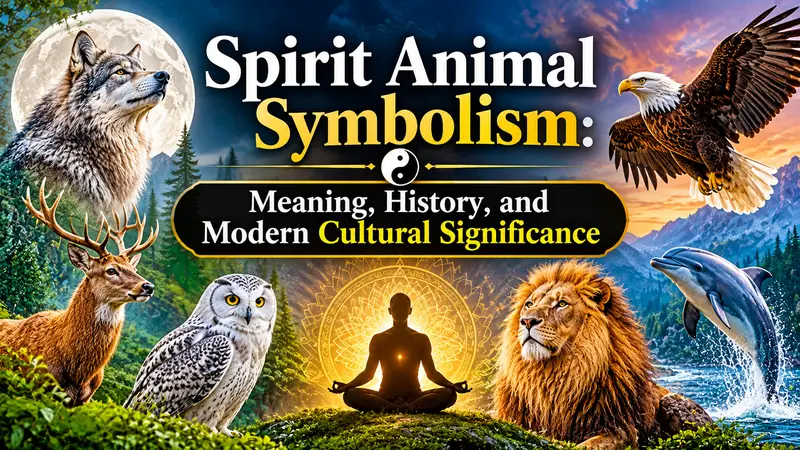
Spirit animal symbolism explores the spiritual, emotional, and cultural meanings people associate with animals and their characteristics. In the United States, the expression spirit animal is commonly used to describe an animal that represents someone’s personality, instincts, values, or sense of identity. However, the concept has more complicated roots in Indigenous spiritual traditions, where relationships between humans and animals can carry religious, familial, and cultural significance.
People are naturally drawn to particular animals. Someone might admire the courage of a lion, the independence of a wolf, or the patience of an elephant. These connections often become ways of expressing personal qualities that are difficult to describe through ordinary language.
Yet not every animal association means the same thing. An animal can represent a personal characteristic in popular culture while having a completely different meaning within a particular religious or cultural tradition. Understanding these distinctions makes the subject more meaningful and respectful.
Quick Answer: What Does Spirit Animal Symbolism Mean?
Spirit animal symbolism commonly refers to the qualities, instincts, and characteristics people associate with particular animals, such as courage, wisdom, independence, and protection. Historically, animal helpers and spiritual relationships with animals have appeared in various Indigenous and other cultural traditions, where their meanings are specific to particular communities and beliefs.
TL;DR
- Animals often represent personality traits, instincts, and personal values.
- Indigenous traditions include distinct relationships between people and animal relatives.
- American popular culture uses the expression as a metaphor for personal identification.
- Wolves, eagles, bears, and owls carry different symbolic associations.
- Animal imagery appears frequently in tattoos, jewelry, art, and fashion.
- Casual uses of the phrase can raise concerns about cultural appropriation.
1. What Is the Meaning of a Spirit Animal?
The expression spirit animal has two different uses in contemporary American culture.
The first is spiritual. In certain cultural and religious traditions, an animal may be understood as a spiritual helper, protector, relative, or source of guidance. Its significance depends on the particular community’s beliefs and practices.
The second is informal and personal. People use animal imagery to describe qualities they recognize in themselves or admire in others.
For example:
- A wolf might represent independence and loyalty.
- An eagle might represent freedom and vision.
- A bear might represent strength and protection.
- A butterfly might represent transformation and renewal.
- An owl might represent observation and knowledge.
These interpretations are not universal religious definitions. They are common symbolic associations that can vary according to personal experience, literature, folklore, and cultural background.
The important distinction is that identifying with an animal is not automatically the same as participating in a traditional spiritual practice.
2. The Historical Origins of Animal Spirituality
Human relationships with animals existed long before the modern expression spirit animal became popular.
Ancient communities depended on animals for food, clothing, transportation, protection, and knowledge about the natural environment. As people observed animal behavior, they also incorporated animals into stories, religious beliefs, ceremonies, and artistic traditions.
Animals became associated with qualities that people observed in nature.
A bird flying above the landscape could represent freedom or a connection with the sky. A bear’s strength could become associated with protection. A snake shedding its skin could suggest renewal or transformation.
These associations developed differently across societies.
In various Indigenous North American communities, relationships with animals have included kinship, clan identity, creation stories, spiritual helpers, and responsibilities toward the natural world.
Some communities have traditions involving guardian beings or animal-related spiritual experiences. However, these practices are not identical across Native American nations, and there is no single belief system shared by all Indigenous peoples.
It is also important to recognize that the modern phrase spirit animal should not be treated as the original name for every Indigenous animal-related tradition.
3. Animal Symbolism in Indigenous North American Traditions
Animal relationships hold important places in the histories and worldviews of many Indigenous communities in North America.
In some traditions, animals are understood as relatives rather than simply resources or decorative symbols. They may appear in creation accounts, family histories, ceremonial practices, and teachings about relationships with the natural world.
For example, certain Indigenous nations have clan systems connected with particular animals.
Among the Anishinaabe, traditional clan identities, known as doodemag (the plural of doodem), have included animals such as the loon, crane, bear, fish, and marten.
These identities can connect individuals through family history, responsibilities, and community relationships.
This is different from choosing an animal through an online personality quiz.
An animal connected to a clan may carry inherited cultural responsibilities and historical meaning. Its significance cannot necessarily be separated from the community that maintains the tradition.
Another important distinction is that not all Indigenous spiritual knowledge is intended for public use. Some teachings and ceremonies are private or restricted to particular members of a community.
Respectful understanding begins by recognizing Indigenous peoples as diverse living communities rather than treating their traditions as one general spiritual system.
4. What Different Animals Commonly Symbolize
Animal symbolism varies considerably, but certain associations appear frequently in American literature, art, popular culture, and personal expression.
The Iconic American Bald Eagle
Here are some commonly recognized animal associations.
| Animal | Common symbolic meaning | Associated qualities |
|---|---|---|
| Wolf | Independence and loyalty | Instinct, teamwork, determination |
| Eagle | Freedom and vision | Leadership, perspective, courage |
| Bear | Strength and protection | Resilience, confidence, guardianship |
| Owl | Wisdom and observation | Knowledge, patience, awareness |
| Deer | Gentleness and sensitivity | Peace, compassion, alertness |
| Butterfly | Transformation and renewal | Growth, change, new beginnings |
| Lion | Courage and authority | Confidence, leadership, bravery |
| Fox | Adaptability and cleverness | Intelligence, resourcefulness, strategy |
These meanings are symbolic interpretations rather than fixed definitions. The same animal may represent different qualities depending on the cultural setting.
For example, an owl is often associated with wisdom in American popular culture, but owls have also carried associations with darkness, death, or supernatural events in certain historical traditions.
5. What Commonly Recognized Spirit Animals Represent in American Culture
In the United States, animal symbolism frequently appears in personal identity, entertainment, sports, storytelling, and decorative design.
Certain animals have become especially recognizable because their characteristics fit familiar American cultural ideas.
Scientists: No, those are definitely not “resurrected” dire wolves – Earth.com
American Bald Eagle Sitting on Tree Branch
Monarch butterflies face migration challenges as temperatures plummet – The Weather Network
4
Wolf: Independence and loyalty
Wolves are often associated with self-reliance, family bonds, and teamwork. Their social behavior makes them useful symbols of the balance between individual independence and group responsibility.
Eagle: Freedom and ambition
The bald eagle has a particularly important place in American national symbolism. It represents freedom, strength, and national identity, making it recognizable on government seals, coins, military insignia, and public monuments.
Butterfly: Personal transformation
Butterflies are commonly used to represent change, emotional growth, and new beginnings. Their transformation from caterpillar to adult butterfly makes them especially popular in artwork and memorial designs.
Fox: Intelligence and adaptability
Foxes frequently represent cleverness, curiosity, and the ability to respond to changing circumstances. They appear in folklore and contemporary illustrations as resourceful characters.
Deer: Gentleness and awareness
Deer are often associated with sensitivity, peacefulness, and attentiveness. Their alert behavior and graceful movement contribute to these interpretations.
These examples show why people connect with animals. They offer recognizable images for expressing personal qualities and experiences.
6. The Role of Animal Symbolism in American Culture
Animal imagery is deeply established in American public and private life.
One of the clearest examples is the bald eagle, which became the national bird in 1782 when it was adopted for the Great Seal of the United States. Its image continues to communicate national independence, authority, and freedom.
Animals also play an important role in American sports.
Football, baseball, basketball, and other professional sports teams frequently use animal names and mascots. Lions, bears, hawks, panthers, and eagles communicate qualities such as strength, speed, competitiveness, and determination.
In advertising, animals help brands establish recognizable personalities. A fox may suggest cleverness, a bull may suggest strength, and a horse may suggest freedom or reliability.
In personal life, animal imagery appears in:
- Home decorations and wall art.
- Clothing and fashion accessories.
- Graduation and achievement gifts.
- Memorial artwork and remembrance jewelry.
- Personal tattoos and illustrations.
- Children’s books and educational materials.
These examples demonstrate that animal symbolism in America is not limited to religious beliefs. It is also a familiar visual language used to express identity, emotion, and shared cultural values.
7. Spiritual and Religious Interpretations of Animal Guides
Different religions and spiritual traditions have developed their own understandings of animals and their relationships with human beings.
It would be inaccurate to combine all these beliefs under one definition.
Indigenous spiritual traditions
Some Indigenous communities recognize animals as relatives, spiritual helpers, or important figures in their traditional teachings. The specific meaning depends on the nation and its cultural practices.
Ancient Egyptian religion
Animals had significant religious associations in ancient Egypt. For example, cats were connected with the goddess Bastet, while the falcon was associated with Horus.
Hindu traditions
Animals appear in Hindu religious stories and iconography. The elephant-headed Ganesha, the sacred cow, and Hanuman, who is represented with monkey-like features, illustrate the importance of animal imagery in Hindu religious life.
Christian traditions
Christianity uses animals as symbols throughout scripture and religious art. The lamb is associated with innocence and sacrifice, the dove with the Holy Spirit and peace, and the lion with strength and majesty.
Buddhist traditions
Animals appear in Buddhist teachings, stories, and artistic representations. The deer, for example, is associated with the Buddha’s first teaching at Deer Park.
These examples illustrate that animals can carry spiritual meaning without necessarily being considered personal spirit guides.
8. The Emotional and Psychological Meaning of Animal Connections
People often connect with animals because they provide an understandable way to describe emotions, personality traits, and personal experiences.
An animal can become a reflection of something someone values or wants to develop.
For example, a person who admires wolves might appreciate their social bonds and independence. Someone attracted to butterflies might associate them with overcoming difficult experiences and beginning again.
There are several psychological reasons behind these connections.
Personal identification: People recognize familiar characteristics in animal behavior and use those qualities to describe themselves.
Emotional comfort: Images of certain animals can create feelings of safety, affection, or reassurance.
Personal aspiration: An animal may represent qualities someone hopes to develop, such as courage, patience, or confidence.
Memory and association: A childhood pet, family experience, or meaningful encounter with wildlife can create a lasting emotional connection.
Self-expression: Animal imagery allows people to communicate complex feelings through a simple recognizable image.
These experiences do not require supernatural explanations. A personal connection with an animal can be meaningful as a form of reflection, even when someone does not hold spiritual beliefs.
9. Why People Choose Animals as Personal Symbols
People do not always choose animals because of their traditional meanings.
Sometimes the connection develops through an experience.
Someone who grew up around horses may associate them with freedom and companionship. A person who rescued a dog might connect dogs with loyalty and unconditional affection. Another person may admire owls because they represent qualities such as patience and observation.
The animal’s meaning can also change throughout someone’s life.
A teenager might identify with a lion because it represents confidence. Years later, that same person might feel more connected to a deer because gentleness and patience have become more important.
This flexibility explains why personal animal symbolism is so common in modern creative expression.
The animal becomes a visual reminder of a quality, memory, goal, or part of someone’s identity.
10. Spirit Animal Symbolism in Tattoos and Jewelry
Animal designs are popular in American tattoo and jewelry culture because they combine recognizable imagery with personal meaning.
Wolf tattoo by Mo Ganji | Post 30576
Best Butterfly Tattoo Ideas to Inspire Your Next Ink — Certified Tattoo Studios
4
A person might choose an animal design to commemorate a life experience, celebrate a relationship, or represent a personal value.
Common examples include:
- Wolf tattoos: Often represent loyalty, independence, and family connections.
- Butterfly tattoos: Commonly represent personal transformation and recovery.
- Eagle tattoos: Frequently symbolize freedom, ambition, and American identity.
- Lion tattoos: Often communicate courage, confidence, and leadership.
- Owl jewelry: May represent learning, knowledge, and thoughtful observation.
Placement and design can also influence interpretation.
A small butterfly on the wrist might represent a personal milestone, while a detailed eagle across the back might express national pride or individual strength.
However, there is an important cultural consideration.
Using an animal image as personal inspiration is not the same as reproducing Indigenous ceremonial imagery, clan designs, or sacred objects. People should avoid copying culturally specific artwork without understanding its origins and permissions.
11. The Meaning of Spirit Animals in Dreams
Animals appearing in dreams can feel particularly memorable, especially when the same animal appears repeatedly.
Some people interpret these dreams spiritually, while others understand them through personal experiences, emotions, and memory.
There is no scientifically established universal dictionary that assigns one fixed meaning to every animal dream.
Still, common symbolic interpretations can provide a starting point for personal reflection.
Dreaming about a wolf: May bring up questions about independence, trust, family, or belonging.
Dreaming about an eagle: May reflect ambitions, freedom, or a desire to see a difficult situation from a wider perspective.
Dreaming about a bear: May connect with feelings about personal boundaries, protection, or strength.
Dreaming about a butterfly: May reflect change, uncertainty, or a new stage in life.
Dreaming about a snake: May be associated with fear, renewal, hidden concerns, or transformation, depending on the dreamer’s experiences and cultural background.
The most useful approach is to consider what the animal represents personally and what was happening in the dream.
For example, a peaceful encounter with a bear may create a different emotional impression from a dream in which the bear is threatening.
12. Modern Uses in Social Media and Popular Culture
The expression spirit animal became particularly familiar in American internet culture during the 2000s and 2010s.
People began using it humorously to describe celebrities, fictional characters, animals, food, and everyday experiences that reflected their personalities.
Someone might say that a sleepy cat represents their Monday morning mood or that a fictional character is exactly like them.
Memes, personality quizzes, entertainment articles, and social media posts helped spread this informal meaning.
However, the popularity of the expression also brought criticism.
Many Indigenous people and organizations have explained that casually assigning the term to celebrities, food, or personality traits can trivialize sacred relationships and oversimplify different Indigenous traditions.
As cultural awareness has increased, alternative expressions have become more common.
People can communicate the same informal idea by saying:
- My favorite animal.
- The animal I identify with.
- My kindred spirit.
- An animal that represents my personality.
- The animal I feel most connected to.
These expressions allow people to describe personal connections without presenting them as participation in someone else’s spiritual tradition.
13. Cultural Appropriation and Common Misunderstandings
The modern use of the expression spirit animal is controversial because it is frequently associated with Indigenous spiritual concepts.
The issue is not that people admire animals or find personal meaning in them.
The concern is that a culturally significant concept can become a casual joke when removed from its original context.
Several misunderstandings contribute to the problem.
Assuming all Native American traditions are the same
There are hundreds of distinct federally recognized Tribal Nations in the United States, along with other Indigenous communities. Their histories, spiritual practices, languages, and relationships with animals are not interchangeable.
Treating animal relationships as personality quizzes
A short online quiz cannot accurately represent a community’s spiritual practices, family systems, or ceremonial knowledge.
Confusing clan animals with personal preferences
A clan relationship may involve ancestry, community identity, and responsibilities. Choosing a wolf because someone admires its behavior is a different kind of relationship.
Copying sacred or culturally specific artwork
Some animal designs have meanings connected to particular families, communities, or ceremonies. Reproducing them as generic decoration can disregard those meanings.
A respectful approach is to learn about the specific tradition being discussed, avoid making assumptions about Indigenous beliefs, and use ordinary language when describing personal preferences.
14. How Animal Symbolism Has Changed Over Time
Animal symbolism has evolved as societies, religions, and communication methods have changed.
In earlier communities, animals were closely connected to everyday survival and the natural environment. Their behavior, movements, and physical characteristics influenced cultural stories and spiritual understandings.
In ancient civilizations, animals became associated with gods, rulers, religious ceremonies, and ideas about life and death.
During the development of European heraldry, animals such as lions and eagles became recognizable emblems of authority, family identity, and political power.
In the United States, animal imagery expanded into national symbols, sports mascots, commercial branding, and popular entertainment.
More recently, the internet has encouraged individuals to use animal comparisons as shorthand for personality and emotion.
This evolution has created an important distinction between traditional spiritual relationships and modern personal symbolism.
Both can involve meaningful connections with animals, but they should not be treated as identical practices.
15. Is Spirit Animal Symbolism Positive or Negative?
Animal symbolism is not automatically positive or negative.
Its meaning depends on the animal, cultural setting, personal experience, and circumstances in which it appears.
For example, a wolf can represent loyalty and family relationships, but it can also symbolize isolation or aggression in certain stories.
A snake might represent healing and renewal in one tradition while representing danger or temptation in another.
Even the eagle, which is widely recognized as a positive American national symbol, can carry different meanings in other historical and cultural settings.
A helpful way to understand animal symbolism is to separate three questions:
- What does the animal represent in a particular culture?
- What characteristics do people commonly associate with it?
- What does the animal mean to the individual using its image?
Considering all three prevents people from assuming that one symbolic interpretation applies everywhere.
FAQs
1. What does a spirit animal symbolize?
The expression commonly describes an animal associated with someone’s personality, instincts, values, or emotional identity. In certain spiritual traditions, animal helpers and relatives have more specific cultural or religious meanings.
2. What is the difference between a spirit animal and a totem animal?
A totem animal is generally associated with a group’s identity, ancestry, or relationship with the natural world in traditions that practice totemism. The phrase spirit animal has several modern uses, but it should not be treated as a universal alternative name for Indigenous clan or totem traditions.
3. Are spirit animals part of Native American culture?
Animal relationships are important in many Indigenous North American traditions, including clan identities, creation accounts, and spiritual practices. However, beliefs differ significantly between Tribal Nations, and the popular expression spirit animal does not accurately describe every tradition.
4. What does it mean when someone calls an animal their spirit animal?
In casual American conversation, the person usually means that the animal reflects their personality, habits, or interests. For example, someone might identify with an owl because they value observation and knowledge.
5. Can animals represent different meanings in different cultures?
Yes. The same animal can represent completely different ideas depending on the cultural and religious context. A snake, for example, can symbolize healing, transformation, danger, or temptation in different traditions.
6. Why is the expression spirit animal considered offensive by some people?
Some Indigenous individuals and organizations consider casual uses of the phrase culturally appropriative because they reduce complex spiritual and cultural relationships to jokes or personality comparisons. Using alternatives such as favorite animal or animal I identify with avoids much of this concern.
7. Can an animal symbolize personal growth?
Yes. Animal imagery is frequently used to communicate personal development and changing identity. Butterflies, snakes, and eagles, for example, are often used in contemporary art to represent transformation, renewal, and new perspectives.
Conclusion
Spirit animal symbolism brings together ideas about animal behavior, human identity, cultural history, and spiritual relationships. In modern American culture, people often use animals to represent qualities such as courage, independence, wisdom, loyalty, and personal growth. However, these informal associations are different from the specific animal relationships maintained within Indigenous and other religious traditions.
Understanding the subject requires more than assigning a personality trait to an animal. It means recognizing where particular beliefs come from, appreciating the diversity of cultural traditions, and distinguishing personal inspiration from sacred cultural practices.
Animals can remain meaningful symbols in art, storytelling, jewelry, and everyday life without overlooking the communities and traditions that give some animal relationships their deeper historical significance.