
Japanese Maple Symbolism: 9 Powerful Meanings, History, and Modern Use

# Japanese Maple Symbolism: 9 Powerful Meanings, History, and Modern Use **Meta Description:** Discover 9 Japanese maple symbolism meanings, from autumn beauty and change to impermanence, and explore its Japanese heritage and modern American uses. ## Introduction Japanese maple symbolism connects the beauty of autumn with change, reflection, balance, and the passage of time. Known for its delicate, deeply lobed leaves and brilliant seasonal colors, the Japanese maple is admired in traditional Japanese gardens, American landscapes, and decorative art. Its appearance changes throughout the year, giving people a natural way to express ideas about growth, maturity, and life's changing seasons. In Japan, maple leaves are closely associated with autumn and the tradition of *momijigari*, the practice of going outdoors to appreciate colorful fall foliage. Poets, artists, and gardeners have celebrated this seasonal display for centuries. In the United States, Japanese maples are popular ornamental trees, and their graceful shapes and vivid leaves often suggest tranquility, refinement, and a thoughtful connection with nature. The tree does not have one universal symbolic meaning. Its interpretation depends on cultural context, leaf color, personal experience, and how it appears in a garden, artwork, tattoo, or memorial. Understanding these differences helps explain why a relatively small ornamental tree can carry so many associations. ## Quick Answer: What Does Japanese Maple Symbolize? Japanese maple symbolism most commonly represents autumn beauty, change, impermanence, and peaceful appreciation of nature. In Japanese cultural traditions, its colorful leaves are associated with seasonal reflection and the passing of time, while modern American interpretations often emphasize balance, elegance, renewal, and a connection with nature. ## TL;DR: Key Japanese Maple Meanings - **Autumn beauty:** Celebrates the vivid colors and atmosphere of fall. - **Change:** Represents life's transitions and the natural rhythm of the seasons. - **Impermanence:** Reminds us that beautiful moments do not last forever. - **Peace:** Reflects the calm atmosphere of carefully designed gardens. - **Renewal:** Suggests fresh perspectives and the beginning of another season. - **Elegance:** Expresses refinement through graceful branches and distinctive leaves. ## 1. Autumn Beauty and Seasonal Appreciation The Japanese maple is one of the most recognizable symbols of autumn in Japanese culture. Its leaves may turn brilliant shades of scarlet, crimson, orange, and gold before falling, creating a display that marks the transition from warm weather to winter. This association goes beyond the tree's appearance. Japan has a longstanding tradition called *momijigari*, which means going out to view autumn foliage. People visit mountains, temples, gardens, and parks to appreciate the changing leaves. The custom developed through literary and aristocratic traditions before becoming a popular seasonal activity. For Americans, the Japanese maple can carry a similar meaning. Its fall colors fit naturally into the familiar traditions of autumn walks, landscape photography, and enjoying seasonal scenery. A Japanese maple planted near a home may become a reminder to notice the beauty of a particular time of year rather than rushing through it. Unlike a general autumn decoration, the living tree also shows how seasonal beauty develops gradually. Its leaves change color, reach their brightest stage, and eventually fall, making the tree a fitting emblem of nature's seasonal cycle. ## 2. Change and Life Transitions A Japanese maple offers a clear visual example of change. In spring, many varieties produce fresh foliage in green, red, or bronze tones. During summer, the leaves form a full canopy, and autumn brings another transformation before winter dormancy. Because these changes occur naturally, the tree can symbolize transitions that are neither entirely good nor entirely bad. Starting a new job, moving to a different city, becoming a parent, ending a relationship, or entering a new stage of life may involve both excitement and uncertainty. In modern American settings, this interpretation can make the Japanese maple a meaningful gift for someone beginning a new chapter. It may also be planted after a move or used in a garden designed to mark an important milestone. The symbolism does not mean that every change will lead to a better outcome. Rather, the tree offers a reminder that transformation is part of living and that different stages have their own character. ## 3. Impermanence and the Passage of Time One of the most significant cultural associations of Japanese maple leaves is impermanence. Their colors are striking partly because they do not remain that way indefinitely. After reaching their autumn peak, the leaves eventually fall. Japanese literature and seasonal aesthetics have long explored the relationship between beauty and passing time. The maple leaf fits this tradition because its most vivid display is temporary. A scene that looks completely different a few weeks later encourages people to recognize the limits of any single moment. This idea is sometimes discussed alongside *mono no aware*, a Japanese aesthetic concept commonly associated with sensitivity to the transience of things and the emotions that arise from recognizing it. It is important not to treat this concept as the only meaning of every Japanese maple or assume that every Japanese person interprets the tree in the same way. In American life, the association can be meaningful during retirement, a child's graduation, a wedding anniversary, or a period of personal reflection. The tree can represent gratitude for experiences that cannot be repeated exactly as they were. Impermanence is not necessarily a negative message. It can encourage people to appreciate relationships, accomplishments, and ordinary moments while they are still present. ## 4. Peace, Balance, and Tranquility Japanese maples are widely used in Japanese gardens, where their branching patterns, leaf shapes, and seasonal colors contribute to the arrangement of the landscape. Their presence can create a sense of visual balance without requiring a large or imposing tree. This is particularly noticeable in gardens that combine maples with stones, water, moss, gravel, or carefully placed paths. The tree becomes part of a larger composition in which empty space, texture, light, and seasonal change matter as much as the plants themselves. In the United States, Japanese maples often appear in residential gardens, meditation spaces, courtyard landscapes, and areas designed for quiet relaxation. Their association with peace generally grows from these settings and the feelings they inspire, rather than from a universal religious rule. A Japanese maple can therefore symbolize the desire to slow down, make room for reflection, or create a calmer environment. It may be especially meaningful to someone who enjoys gardening as a way to step away from everyday pressures. ## 5. Elegance, Refinement, and Grace The Japanese maple's appearance helps explain its association with elegance. Many varieties have delicate leaves with five to nine pointed lobes, fine branching, and a naturally sculptural form. Some develop cascading branches, while others grow into upright shapes with distinctive seasonal color. Unlike trees valued mainly for height or fruit production, Japanese maples are often selected for their visual character. Gardeners may choose a particular cultivar because of its leaf shape, growth habit, bark, or color changes throughout the year. In contemporary American design, these qualities can suggest understated refinement. A Japanese maple may serve as a focal point in a landscaped yard, a feature beside an entryway, or a living accent in a courtyard. The symbolism of elegance is also relevant to illustrations, stationery, fabric patterns, and home decor. A maple-leaf motif can communicate careful design and appreciation for natural forms without needing elaborate decoration. This meaning is an interpretation of the tree's appearance and use, rather than a fixed historical definition. Its appeal lies in the way a relatively small tree can make a space feel considered and complete. ## 6. Renewal, Growth, and New Beginnings Although Japanese maple leaves are strongly associated with autumn, the living tree also represents the return of growth. New buds emerge in spring, foliage develops through summer, and the tree enters dormancy before beginning another seasonal cycle. This recurring pattern makes renewal a reasonable modern interpretation. The tree does not remain in its brightest autumn condition, but its seasonal changes are part of a larger process of continued growth. For American gardeners, planting a Japanese maple can mark a fresh start. It might celebrate a new home, commemorate a major achievement, or become part of a landscape created after a period of change. A young tree can also serve as a long-term reminder of patience. Its shape and size develop over years, and its seasonal display becomes more familiar as people observe it repeatedly. Renewal should not be confused with a guaranteed promise of good fortune. The tree's symbolism is more grounded when understood as a representation of continuing life, adaptation, and the opportunity to begin again. ## 7. Japanese Maple Symbolism in Japanese Culture and History The cultural history of the Japanese maple is closely connected with the appreciation of seasonal landscapes. Japanese maple species are native to East Asia, including Japan, and have been cultivated in Japan for generations. Selected varieties became valued garden plants because of their distinctive foliage and autumn colors. Autumn leaves appear in Japanese poetry and literature, including classical works associated with the Heian period (794–1185). During this era, members of the aristocracy enjoyed seasonal excursions and gatherings in which nature, poetry, music, and refined social life came together. Over time, viewing autumn foliage became more widely accessible. By the Edo period (1603–1868), autumn-leaf excursions had developed into a popular pastime beyond the aristocratic class. The Japanese maple also became an important motif in visual culture. Red and orange leaves appear in seasonal textiles, paintings, decorative objects, and garden designs. Their appearance can help identify autumn in much the same way that cherry blossoms signal spring. These traditions support associations with seasonal beauty, contemplation, and the passage of time. They do not establish a single official meaning for every maple tree, and contemporary interpretations may differ from those of earlier periods. ## 8. What Japanese Maple Colors Symbolize Different leaf colors can influence how people interpret a Japanese maple. These associations are flexible modern readings rather than a universal Japanese color code. | Leaf color | Common symbolic association | Why it fits | |---|---|---| | Red or crimson | Passion, vitality, autumn beauty | The vivid color attracts attention and marks the fall season. | | Orange | Warmth, transition, enthusiasm | It suggests the changing landscape and the shift toward winter. | | Gold or yellow | Maturity, reflection, warmth | Golden foliage often creates a softer, more contemplative autumn scene. | | Green | Growth, freshness, balance | Spring and summer foliage emphasizes the tree's continuing life. | | Bronze or burgundy | Individuality, refinement, depth | These colors are common in ornamental cultivars valued for distinctive foliage. | A red Japanese maple may suit a dramatic garden design, while a green-leaved variety may feel quieter and more understated. Color can shape the emotional impression of the tree, but its meaning also depends on the surrounding landscape and the person's own associations. ## 9. Japanese Maple Symbolism in the United States In the United States, Japanese maples are particularly familiar as ornamental landscape trees. Their manageable size, varied forms, and attractive foliage make them useful in gardens where a large shade tree would be impractical. Their symbolism often reflects the places where people encounter them. In a residential garden, a Japanese maple may represent care, patience, and pride in one's home. In a public botanical garden, it may invite visitors to observe seasonal changes and appreciate plant diversity. The tree is also associated with Japanese-inspired landscape design. In these settings, its cultural background can encourage an appreciation for seasonal awareness and the thoughtful arrangement of natural elements. However, a Japanese-style garden is not automatically a religious or spiritual space; its purpose depends on the designer and the people who use it. American interpretations often combine the tree's Japanese heritage with broader ideas about autumn, tranquility, and personal growth. This blending of meanings is common in contemporary decorative culture, but it is helpful to distinguish a personal interpretation from a documented Japanese tradition. ## 10. Emotional and Psychological Meaning The Japanese maple can evoke different emotions depending on its color, setting, and personal significance. A tree beside a childhood home may bring back memories of family gatherings. One planted in a new garden may represent independence or the satisfaction of creating a place of one's own. Its seasonal cycle can also encourage reflection. People who regularly observe the same tree may notice changes in light, weather, and foliage that they would otherwise overlook. This kind of attention can make a familiar landscape feel more meaningful. The association with impermanence may bring comfort to some people and sadness to others. A red leaf can be a beautiful sign of autumn while also reminding someone of a passing year or a loved one who is no longer present. There is no scientific basis for claiming that a Japanese maple carries a universal psychological effect or transmits a particular spiritual message. Its emotional value is better understood through the person's experiences, cultural background, and the setting in which the tree appears. ## 11. Japanese Maple Symbolism in Tattoos, Art, and Jewelry Japanese maple leaves can make distinctive motifs in tattoos, prints, pendants, and other personal designs. Their pointed shapes and branching veins remain recognizable even when rendered in a simple outline. In tattoo culture, a Japanese maple leaf may represent a life transition, acceptance of change, a connection with Japanese aesthetics, or an appreciation of autumn. Some designs show a single falling leaf to emphasize passing time, while others use a cluster of red leaves to create a more vivid seasonal image. In jewelry and decorative art, the leaf may be chosen mainly for its graceful shape. A small maple pendant can serve as a personal reminder of a place, a season, or a meaningful experience without carrying an elaborate symbolic message. When used alongside other imagery, context matters. A maple leaf combined with a stream or mountain landscape may emphasize nature and seasonal beauty, while a design incorporating a date or name may function as a personal memorial. People choosing Japanese-inspired designs should avoid assuming that every traditional motif has a fixed spiritual meaning. Learning the cultural context and choosing imagery thoughtfully can make the design more personal and respectful. ## 12. Japanese Maple Symbolism in Gardens and Home Decor A Japanese maple can become a living centerpiece in a garden because its appearance changes throughout the year. Some cultivars have finely divided leaves and cascading branches, while others have broader foliage and an upright shape. Their different forms allow gardeners to create very different moods. In home landscaping, the tree may be used to frame a path, soften a stone wall, or provide a focal point near a patio. Its changing colors can make the garden feel connected to the seasons rather than static. Decorative maple-leaf designs also appear in wall art, ceramics, textiles, table settings, and seasonal arrangements. In the United States, red maple imagery often fits autumn decor, while green leaves can work in designs intended to suggest freshness and simplicity. A living tree and an artificial leaf motif are not quite the same symbol. The living tree expresses change through its growth and seasonal cycle, whereas a decorative image freezes a particular form or color. Both can be meaningful, but the reasons for choosing them may differ. ## 13. Japanese Maple Symbolism in Weddings, Memorials, and Remembrance The Japanese maple is not a universal traditional symbol for weddings or funerals. However, its associations with changing seasons, enduring memories, and the passage of time can make it suitable for personal ceremonies. At a wedding, a Japanese maple may represent the beginning of a shared life and the intention to grow together through changing circumstances. A couple might plant one as part of a garden ceremony or choose maple imagery for invitations and keepsakes. In a memorial garden, the tree can serve as a living tribute. Its annual return of fresh leaves may help families remember that grief and remembrance can coexist with the continuation of everyday life. Autumn foliage can be especially meaningful to someone who associates the season with a loved one. For these uses, the personal story behind the tree matters more than a supposedly universal definition. A tree planted in memory of a parent, for example, may carry a meaning that no dictionary of symbols could fully capture. ## 14. Common Misunderstandings About Japanese Maple Symbolism Several popular interpretations of Japanese maples deserve careful qualification. First, not every Japanese maple represents a spiritual message. Some people plant these trees simply because they like their colors, shape, and size. Others attach personal or philosophical meaning to them. Second, Japanese maple symbolism should not be confused with the symbolism of the Canadian maple leaf. The maple leaf is an official national emblem of Canada, but a Japanese maple's cultural associations arise from a different context, particularly Japanese autumn traditions and ornamental gardening. Third, the tree is not inherently a symbol of luck, wealth, protection, or romance. Those meanings may appear in individual designs or contemporary interpretations, but they should not be presented as universally established Japanese beliefs. Finally, impermanence does not mean that beauty is worthless because it ends. In the context of autumn foliage, the temporary nature of the display can be precisely what makes it worth noticing. Recognizing these distinctions helps preserve the cultural background of the tree while leaving room for personal meaning. ## Frequently Asked Questions ### 1. What is the main symbolic meaning of a Japanese maple? A Japanese maple most commonly represents autumn beauty, change, and the passing of time. Its colorful leaves also encourage associations with reflection and an appreciation for nature's seasonal cycle. ### 2. What does a Japanese maple symbolize in Japanese culture? The Japanese maple is closely associated with autumn foliage and *momijigari*, the tradition of viewing colorful leaves. In poetry, art, and garden design, maple imagery can express seasonal beauty and awareness of life's transience. ### 3. Is a Japanese maple a symbol of good luck? A Japanese maple is not universally recognized as a traditional symbol of good luck. Some people may choose it to express hope, growth, or a positive new beginning, but these are personal or contemporary interpretations. ### 4. What does a Japanese maple tattoo mean? A Japanese maple tattoo may represent change, impermanence, autumn, or a personal connection with nature. Its meaning depends on the design and the wearer's experiences rather than a fixed symbolic rule. ### 5. Does a Japanese maple symbolize peace? It can symbolize peace in modern garden design, particularly when planted in a quiet landscape with stones, water, or other natural elements. This association is an interpretation of the tree's appearance and setting, not a universal religious meaning. ### 6. What does a red Japanese maple leaf symbolize? A red leaf commonly suggests autumn beauty, vitality, and seasonal transition. In Japanese cultural contexts, red maple foliage is especially recognizable as a sign of the fall season and the tradition of appreciating changing leaves. ### 7. Is a Japanese maple appropriate for a memorial garden? Yes. Its seasonal cycle can make it a meaningful living tribute to someone who has died, especially for families who associate the tree with remembrance, change, and continuing life. The most significant meaning is the one connected to the person being remembered. ## Conclusion Japanese maple symbolism centers on autumn beauty, change, impermanence, and thoughtful appreciation of nature. Its strongest cultural associations come from Japan's longstanding traditions of viewing autumn foliage, while its graceful shape and changing colors have helped it become a beloved ornamental tree in American gardens and decorative art. japanese maple symbolism

Japanese maple symbolism connects the beauty of autumn with change, reflection, balance, and the passage of time. Known for its delicate, deeply lobed leaves and brilliant seasonal colors, the Japanese maple is admired in traditional Japanese gardens, American landscapes, and decorative art. Its appearance changes throughout the year, giving people a natural way to express ideas about growth, maturity, and life’s changing seasons.

In Japan, maple leaves are closely associated with autumn and the tradition of momijigari, the practice of going outdoors to appreciate colorful fall foliage. Poets, artists, and gardeners have celebrated this seasonal display for centuries. In the United States, Japanese maples are popular ornamental trees, and their graceful shapes and vivid leaves often suggest tranquility, refinement, and a thoughtful connection with nature.

The tree does not have one universal symbolic meaning. Its interpretation depends on cultural context, leaf color, personal experience, and how it appears in a garden, artwork, tattoo, or memorial. Understanding these differences helps explain why a relatively small ornamental tree can carry so many associations.

Quick Answer: What Does Japanese Maple Symbolize?

Japanese maple symbolism most commonly represents autumn beauty, change, impermanence, and peaceful appreciation of nature. In Japanese cultural traditions, its colorful leaves are associated with seasonal reflection and the passing of time, while modern American interpretations often emphasize balance, elegance, renewal, and a connection with nature.

TL;DR: Key Japanese Maple Meanings

  • Autumn beauty: Celebrates the vivid colors and atmosphere of fall.
  • Change: Represents life’s transitions and the natural rhythm of the seasons.
  • Impermanence: Reminds us that beautiful moments do not last forever.
  • Peace: Reflects the calm atmosphere of carefully designed gardens.
  • Renewal: Suggests fresh perspectives and the beginning of another season.
  • Elegance: Expresses refinement through graceful branches and distinctive leaves.

1. Autumn Beauty and Seasonal Appreciation

The Japanese maple is one of the most recognizable symbols of autumn in Japanese culture. Its leaves may turn brilliant shades of scarlet, crimson, orange, and gold before falling, creating a display that marks the transition from warm weather to winter.

This association goes beyond the tree’s appearance. Japan has a longstanding tradition called momijigari, which means going out to view autumn foliage. People visit mountains, temples, gardens, and parks to appreciate the changing leaves. The custom developed through literary and aristocratic traditions before becoming a popular seasonal activity.

For Americans, the Japanese maple can carry a similar meaning. Its fall colors fit naturally into the familiar traditions of autumn walks, landscape photography, and enjoying seasonal scenery. A Japanese maple planted near a home may become a reminder to notice the beauty of a particular time of year rather than rushing through it.

Unlike a general autumn decoration, the living tree also shows how seasonal beauty develops gradually. Its leaves change color, reach their brightest stage, and eventually fall, making the tree a fitting emblem of nature’s seasonal cycle.

2. Change and Life Transitions

A Japanese maple offers a clear visual example of change. In spring, many varieties produce fresh foliage in green, red, or bronze tones. During summer, the leaves form a full canopy, and autumn brings another transformation before winter dormancy.

Because these changes occur naturally, the tree can symbolize transitions that are neither entirely good nor entirely bad. Starting a new job, moving to a different city, becoming a parent, ending a relationship, or entering a new stage of life may involve both excitement and uncertainty.

In modern American settings, this interpretation can make the Japanese maple a meaningful gift for someone beginning a new chapter. It may also be planted after a move or used in a garden designed to mark an important milestone.

See also  Carrot Symbolism: Meaning, Spiritual Significance, Dreams & Modern Interpretations

The symbolism does not mean that every change will lead to a better outcome. Rather, the tree offers a reminder that transformation is part of living and that different stages have their own character.

3. Impermanence and the Passage of Time

One of the most significant cultural associations of Japanese maple leaves is impermanence. Their colors are striking partly because they do not remain that way indefinitely. After reaching their autumn peak, the leaves eventually fall.

Japanese literature and seasonal aesthetics have long explored the relationship between beauty and passing time. The maple leaf fits this tradition because its most vivid display is temporary. A scene that looks completely different a few weeks later encourages people to recognize the limits of any single moment.

This idea is sometimes discussed alongside mono no aware, a Japanese aesthetic concept commonly associated with sensitivity to the transience of things and the emotions that arise from recognizing it. It is important not to treat this concept as the only meaning of every Japanese maple or assume that every Japanese person interprets the tree in the same way.

In American life, the association can be meaningful during retirement, a child’s graduation, a wedding anniversary, or a period of personal reflection. The tree can represent gratitude for experiences that cannot be repeated exactly as they were.

Impermanence is not necessarily a negative message. It can encourage people to appreciate relationships, accomplishments, and ordinary moments while they are still present.

4. Peace, Balance, and Tranquility

Japanese maples are widely used in Japanese gardens, where their branching patterns, leaf shapes, and seasonal colors contribute to the arrangement of the landscape. Their presence can create a sense of visual balance without requiring a large or imposing tree.

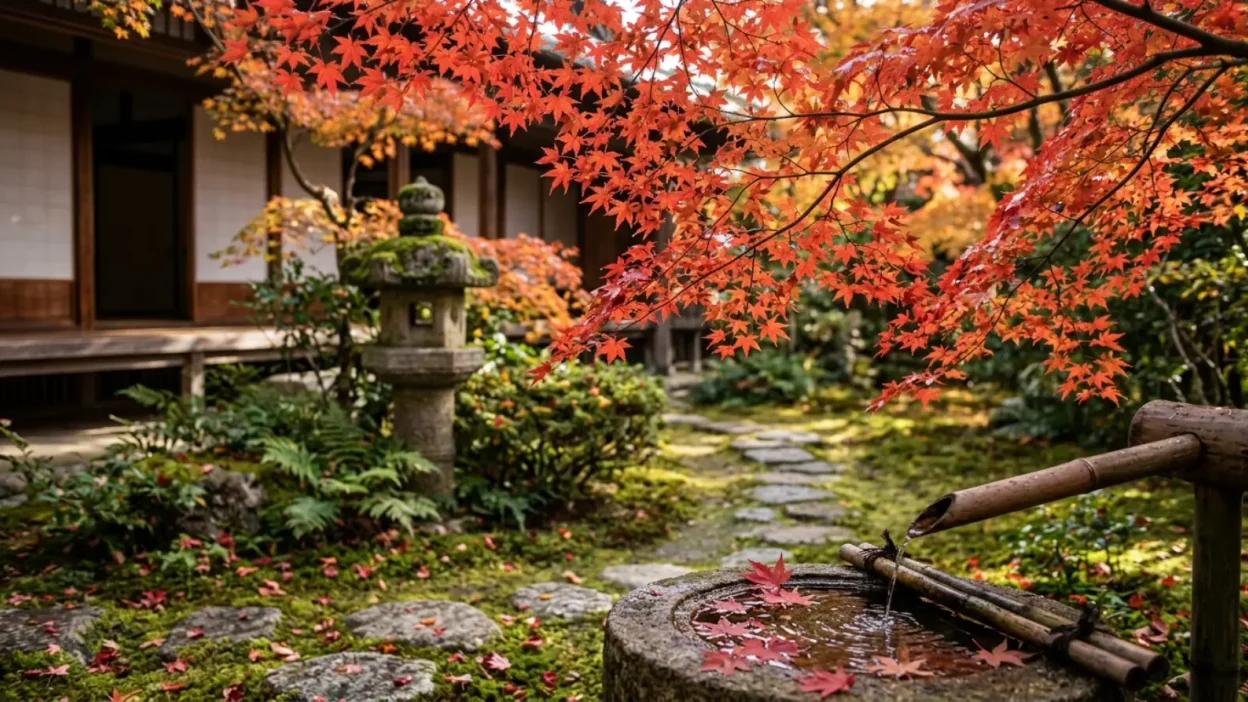
This is particularly noticeable in gardens that combine maples with stones, water, moss, gravel, or carefully placed paths. The tree becomes part of a larger composition in which empty space, texture, light, and seasonal change matter as much as the plants themselves.

In the United States, Japanese maples often appear in residential gardens, meditation spaces, courtyard landscapes, and areas designed for quiet relaxation. Their association with peace generally grows from these settings and the feelings they inspire, rather than from a universal religious rule.

A Japanese maple can therefore symbolize the desire to slow down, make room for reflection, or create a calmer environment. It may be especially meaningful to someone who enjoys gardening as a way to step away from everyday pressures.

5. Elegance, Refinement, and Grace

The Japanese maple’s appearance helps explain its association with elegance. Many varieties have delicate leaves with five to nine pointed lobes, fine branching, and a naturally sculptural form. Some develop cascading branches, while others grow into upright shapes with distinctive seasonal color.

Unlike trees valued mainly for height or fruit production, Japanese maples are often selected for their visual character. Gardeners may choose a particular cultivar because of its leaf shape, growth habit, bark, or color changes throughout the year.

In contemporary American design, these qualities can suggest understated refinement. A Japanese maple may serve as a focal point in a landscaped yard, a feature beside an entryway, or a living accent in a courtyard.

The symbolism of elegance is also relevant to illustrations, stationery, fabric patterns, and home decor. A maple-leaf motif can communicate careful design and appreciation for natural forms without needing elaborate decoration.

This meaning is an interpretation of the tree’s appearance and use, rather than a fixed historical definition. Its appeal lies in the way a relatively small tree can make a space feel considered and complete.

6. Renewal, Growth, and New Beginnings

Although Japanese maple leaves are strongly associated with autumn, the living tree also represents the return of growth. New buds emerge in spring, foliage develops through summer, and the tree enters dormancy before beginning another seasonal cycle.

This recurring pattern makes renewal a reasonable modern interpretation. The tree does not remain in its brightest autumn condition, but its seasonal changes are part of a larger process of continued growth.

For American gardeners, planting a Japanese maple can mark a fresh start. It might celebrate a new home, commemorate a major achievement, or become part of a landscape created after a period of change.

A young tree can also serve as a long-term reminder of patience. Its shape and size develop over years, and its seasonal display becomes more familiar as people observe it repeatedly.

Renewal should not be confused with a guaranteed promise of good fortune. The tree’s symbolism is more grounded when understood as a representation of continuing life, adaptation, and the opportunity to begin again.

7. Japanese Maple Symbolism in Japanese Culture and History

The cultural history of the Japanese maple is closely connected with the appreciation of seasonal landscapes. Japanese maple species are native to East Asia, including Japan, and have been cultivated in Japan for generations. Selected varieties became valued garden plants because of their distinctive foliage and autumn colors.

See also  Aspen Tree Symbolism: Meaning, Spiritual Significance, Dreams & Modern Interpretations

Autumn leaves appear in Japanese poetry and literature, including classical works associated with the Heian period (794–1185). During this era, members of the aristocracy enjoyed seasonal excursions and gatherings in which nature, poetry, music, and refined social life came together.

Over time, viewing autumn foliage became more widely accessible. By the Edo period (1603–1868), autumn-leaf excursions had developed into a popular pastime beyond the aristocratic class.

The Japanese maple also became an important motif in visual culture. Red and orange leaves appear in seasonal textiles, paintings, decorative objects, and garden designs. Their appearance can help identify autumn in much the same way that cherry blossoms signal spring.

These traditions support associations with seasonal beauty, contemplation, and the passage of time. They do not establish a single official meaning for every maple tree, and contemporary interpretations may differ from those of earlier periods.

8. What Japanese Maple Colors Symbolize

Different leaf colors can influence how people interpret a Japanese maple. These associations are flexible modern readings rather than a universal Japanese color code.

Leaf colorCommon symbolic associationWhy it fits
Red or crimsonPassion, vitality, autumn beautyThe vivid color attracts attention and marks the fall season.
OrangeWarmth, transition, enthusiasmIt suggests the changing landscape and the shift toward winter.
Gold or yellowMaturity, reflection, warmthGolden foliage often creates a softer, more contemplative autumn scene.
GreenGrowth, freshness, balanceSpring and summer foliage emphasizes the tree’s continuing life.
Bronze or burgundyIndividuality, refinement, depthThese colors are common in ornamental cultivars valued for distinctive foliage.

A red Japanese maple may suit a dramatic garden design, while a green-leaved variety may feel quieter and more understated. Color can shape the emotional impression of the tree, but its meaning also depends on the surrounding landscape and the person’s own associations.

9. Japanese Maple Symbolism in the United States

In the United States, Japanese maples are particularly familiar as ornamental landscape trees. Their manageable size, varied forms, and attractive foliage make them useful in gardens where a large shade tree would be impractical.

Their symbolism often reflects the places where people encounter them. In a residential garden, a Japanese maple may represent care, patience, and pride in one’s home. In a public botanical garden, it may invite visitors to observe seasonal changes and appreciate plant diversity.

The tree is also associated with Japanese-inspired landscape design. In these settings, its cultural background can encourage an appreciation for seasonal awareness and the thoughtful arrangement of natural elements. However, a Japanese-style garden is not automatically a religious or spiritual space; its purpose depends on the designer and the people who use it.

American interpretations often combine the tree’s Japanese heritage with broader ideas about autumn, tranquility, and personal growth. This blending of meanings is common in contemporary decorative culture, but it is helpful to distinguish a personal interpretation from a documented Japanese tradition.

10. Emotional and Psychological Meaning

The Japanese maple can evoke different emotions depending on its color, setting, and personal significance. A tree beside a childhood home may bring back memories of family gatherings. One planted in a new garden may represent independence or the satisfaction of creating a place of one’s own.

Its seasonal cycle can also encourage reflection. People who regularly observe the same tree may notice changes in light, weather, and foliage that they would otherwise overlook. This kind of attention can make a familiar landscape feel more meaningful.

The association with impermanence may bring comfort to some people and sadness to others. A red leaf can be a beautiful sign of autumn while also reminding someone of a passing year or a loved one who is no longer present.

There is no scientific basis for claiming that a Japanese maple carries a universal psychological effect or transmits a particular spiritual message. Its emotional value is better understood through the person’s experiences, cultural background, and the setting in which the tree appears.

11. Japanese Maple Symbolism in Tattoos, Art, and Jewelry

Japanese maple leaves can make distinctive motifs in tattoos, prints, pendants, and other personal designs. Their pointed shapes and branching veins remain recognizable even when rendered in a simple outline.

In tattoo culture, a Japanese maple leaf may represent a life transition, acceptance of change, a connection with Japanese aesthetics, or an appreciation of autumn. Some designs show a single falling leaf to emphasize passing time, while others use a cluster of red leaves to create a more vivid seasonal image.

See also  Green Rose Symbolism: 9 Powerful Meanings, History, and Modern Uses

In jewelry and decorative art, the leaf may be chosen mainly for its graceful shape. A small maple pendant can serve as a personal reminder of a place, a season, or a meaningful experience without carrying an elaborate symbolic message.

When used alongside other imagery, context matters. A maple leaf combined with a stream or mountain landscape may emphasize nature and seasonal beauty, while a design incorporating a date or name may function as a personal memorial.

People choosing Japanese-inspired designs should avoid assuming that every traditional motif has a fixed spiritual meaning. Learning the cultural context and choosing imagery thoughtfully can make the design more personal and respectful.

12. Japanese Maple Symbolism in Gardens and Home Decor

A Japanese maple can become a living centerpiece in a garden because its appearance changes throughout the year. Some cultivars have finely divided leaves and cascading branches, while others have broader foliage and an upright shape. Their different forms allow gardeners to create very different moods.

In home landscaping, the tree may be used to frame a path, soften a stone wall, or provide a focal point near a patio. Its changing colors can make the garden feel connected to the seasons rather than static.

Decorative maple-leaf designs also appear in wall art, ceramics, textiles, table settings, and seasonal arrangements. In the United States, red maple imagery often fits autumn decor, while green leaves can work in designs intended to suggest freshness and simplicity.

A living tree and an artificial leaf motif are not quite the same symbol. The living tree expresses change through its growth and seasonal cycle, whereas a decorative image freezes a particular form or color. Both can be meaningful, but the reasons for choosing them may differ.

13. Japanese Maple Symbolism in Weddings, Memorials, and Remembrance

The Japanese maple is not a universal traditional symbol for weddings or funerals. However, its associations with changing seasons, enduring memories, and the passage of time can make it suitable for personal ceremonies.

At a wedding, a Japanese maple may represent the beginning of a shared life and the intention to grow together through changing circumstances. A couple might plant one as part of a garden ceremony or choose maple imagery for invitations and keepsakes.

In a memorial garden, the tree can serve as a living tribute. Its annual return of fresh leaves may help families remember that grief and remembrance can coexist with the continuation of everyday life. Autumn foliage can be especially meaningful to someone who associates the season with a loved one.

For these uses, the personal story behind the tree matters more than a supposedly universal definition. A tree planted in memory of a parent, for example, may carry a meaning that no dictionary of symbols could fully capture.

14. Common Misunderstandings About Japanese Maple Symbolism

Several popular interpretations of Japanese maples deserve careful qualification.

First, not every Japanese maple represents a spiritual message. Some people plant these trees simply because they like their colors, shape, and size. Others attach personal or philosophical meaning to them.

Second, Japanese maple symbolism should not be confused with the symbolism of the Canadian maple leaf. The maple leaf is an official national emblem of Canada, but a Japanese maple’s cultural associations arise from a different context, particularly Japanese autumn traditions and ornamental gardening.

Third, the tree is not inherently a symbol of luck, wealth, protection, or romance. Those meanings may appear in individual designs or contemporary interpretations, but they should not be presented as universally established Japanese beliefs.

Finally, impermanence does not mean that beauty is worthless because it ends. In the context of autumn foliage, the temporary nature of the display can be precisely what makes it worth noticing.

Recognizing these distinctions helps preserve the cultural background of the tree while leaving room for personal meaning.

FAQs

1. What is the main symbolic meaning of a Japanese maple?

A Japanese maple most commonly represents autumn beauty, change, and the passing of time. Its colorful leaves also encourage associations with reflection and an appreciation for nature’s seasonal cycle.

2. What does a Japanese maple symbolize in Japanese culture?

The Japanese maple is closely associated with autumn foliage and momijigari, the tradition of viewing colorful leaves. In poetry, art, and garden design, maple imagery can express seasonal beauty and awareness of life’s transience.

3. Is a Japanese maple a symbol of good luck?

A Japanese maple is not universally recognized as a traditional symbol of good luck. Some people may choose it to express hope, growth, or a positive new beginning, but these are personal or contemporary interpretations.

4. What does a Japanese maple tattoo mean?

A Japanese maple tattoo may represent change, impermanence, autumn, or a personal connection with nature. Its meaning depends on the design and the wearer’s experiences rather than a fixed symbolic rule.

5. Does a Japanese maple symbolize peace?

It can symbolize peace in modern garden design, particularly when planted in a quiet landscape with stones, water, or other natural elements. This association is an interpretation of the tree’s appearance and setting, not a universal religious meaning.

6. What does a red Japanese maple leaf symbolize?

A red leaf commonly suggests autumn beauty, vitality, and seasonal transition. In Japanese cultural contexts, red maple foliage is especially recognizable as a sign of the fall season and the tradition of appreciating changing leaves.

7. Is a Japanese maple appropriate for a memorial garden?

Yes. Its seasonal cycle can make it a meaningful living tribute to someone who has died, especially for families who associate the tree with remembrance, change, and continuing life. The most significant meaning is the one connected to the person being remembered.

Conclusion

Japanese maple symbolism centers on autumn beauty, change, impermanence, and thoughtful appreciation of nature. Its strongest cultural associations come from Japan’s longstanding traditions of viewing autumn foliage, while its graceful shape and changing colors have helped it become a beloved ornamental tree in American gardens and decorative art.

Whether planted to mark a new beginning, included in a memorial garden, or chosen for its striking leaves, the Japanese maple can express a personal connection with the seasons. Its most grounded message is simple: change is part of life, and noticing it can make ordinary moments more meaningful.

Previous Article

Jacaranda Symbolism: 9 Beautiful Meanings, History, and Modern Use

Next Article

Larkspur Flower Symbolism: 9 Powerful Meanings, History, and Modern Use

Subscribe to our Newsletter

Subscribe to our email newsletter to get the latest posts delivered right to your email.
Pure inspiration, zero spam ✨