Dirt symbolism represents grounding, humility, growth, mortality, hard work, renewal, fertility, and connection with the natural world. Although dirt can sometimes symbolize mess, shame, or something unwanted, it also represents the foundation from which life grows.
In everyday American culture, dirt may be associated with gardening, farming, childhood, work, construction, and the outdoors. Symbolically, however, it can carry a much deeper meaning. Soil holds seeds, supports plants, returns organic matter to the earth, and connects human life with natural cycles.
The meaning of dirt depends heavily on context. Clean soil in a garden may represent growth and possibility, while dirty clothing may symbolize hard work or embarrassment. Dirt covering a grave can represent mortality, remembrance, and the natural cycle of life.
Quick Answer: What Does Dirt Symbolize?
Dirt commonly symbolizes grounding, humility, growth, fertility, hard work, mortality, renewal, and connection to nature.
In difficult contexts, dirt can symbolize mess, shame, degradation, neglect, or feeling emotionally “unclean.” Its meaning depends on how the dirt appears and what it represents in the situation.
Dirt Symbolism: TL;DR
- Dirt symbolizes grounding and connection to the earth.
- Soil represents growth, fertility, and new beginnings.
- Dirt can symbolize humility and simplicity.
- Muddy ground may represent confusion or instability.
- Dirt can represent hard work and effort.
- Grave soil symbolizes mortality and remembrance.
- Dirt in dreams may reflect change, growth, or emotional concerns.
9 Powerful Meanings of Dirt Symbolism
1. Grounding and Stability
One of the strongest meanings of dirt is grounding.
Dirt is literally beneath our feet, making it a natural symbol of stability, physical reality, and connection to the earth.
When dirt appears symbolically, it may represent the need to return to basics and focus on what is solid and dependable.
Grounding can also mean becoming more present instead of being overwhelmed by worries about the future.
2. Growth and New Beginnings
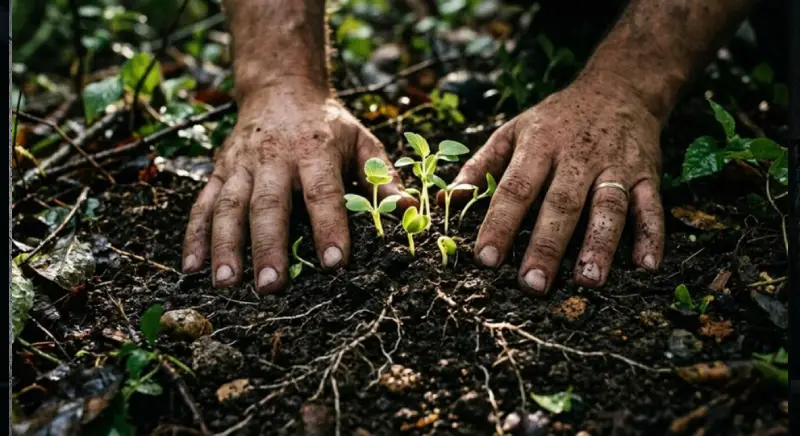
Dirt is the environment where many plants begin their lives.
Seeds are placed into soil before roots develop and new growth becomes visible. Because of this, dirt can symbolize potential, beginnings, patience, and transformation.
A patch of soil may look empty, but beneath its surface something may already be developing.
This makes dirt a powerful reminder that growth is not always immediately visible.
3. Fertility and Abundance
Healthy soil supports plants, crops, flowers, trees, and other forms of life.
For this reason, dirt can symbolize fertility, nourishment, abundance, and productivity.
In agricultural cultures, fertile land has traditionally represented security and prosperity because food and survival depend on productive soil.
The symbolism can extend beyond agriculture. A person may view fertile soil as a metaphor for fertile ideas, creative projects, relationships, or opportunities.
4. Humility and Simplicity
Dirt can also symbolize humility.
Because everyone ultimately depends on the earth, dirt can represent the basic conditions of human life. It can remind people that status, wealth, and social position do not remove anyone’s connection to nature.
Working with soil can also encourage a simpler relationship with the physical world.
Gardening, planting, digging, and caring for land can create a sense of connection that has little to do with status or appearance.
5. Hard Work and Effort
Dirty hands, dusty clothes, and soil-covered tools can symbolize hard work.
People who work in farming, gardening, landscaping, construction, and other physical jobs may regularly come into contact with dirt.
In this context, dirt can represent effort, persistence, discipline, and the willingness to do practical work.
A person with dirt on their hands may symbolically represent someone who is actively building, growing, repairing, or creating something.
6. Mortality and the Cycle of Life
Dirt has a strong connection with mortality because human bodies eventually return to the earth.
Soil around a grave can therefore symbolize death, remembrance, impermanence, and the natural cycle of life.
This meaning can be emotionally difficult, but it does not necessarily represent something frightening. It may also symbolize acceptance of life’s natural limits.
In memorial settings, earth can represent the physical connection between generations and the continuing cycles of nature.
7. Renewal and Transformation
Dirt can symbolize renewal because life repeatedly emerges from the earth.
Old organic material becomes part of the soil, plants grow, die, and return nutrients to the ground, and new life develops from the same environment.
This creates a symbolic cycle of transformation:
Life → decay → soil → growth → new life
The symbolism can apply to personal experiences as well. Difficult periods may eventually become the foundation for new growth.
8. Connection With Nature
Dirt symbolizes a direct connection with the natural world.
Modern life can involve buildings, technology, screens, roads, and artificial environments. Dirt provides a reminder that human beings remain part of a physical ecosystem.
Walking barefoot on soil, gardening, hiking, planting trees, or working with the land can all carry symbolic meanings of reconnection.
For this reason, dirt may represent a return to something natural and fundamental.
9. Imperfection and Messiness
The less positive side of dirt symbolism involves mess, imperfection, disorder, and neglect.
Dirt on a clean floor may represent something unwanted. Dirt on clothing can symbolize embarrassment or inconvenience. In language, calling something “dirty” can also imply moral wrongdoing or inappropriate behavior.
This meaning demonstrates how context changes symbolism.
The same dirt that represents fertile soil in a garden may represent disorder inside a home.
Dirt Symbolism Table
| Dirt Symbol | Possible Meaning | Modern Interpretation |
|---|---|---|
| Fresh soil | New beginnings | Potential and growth |
| Garden dirt | Fertility | Nurturing something valuable |
| Dirty hands | Hard work | Effort and persistence |
| Mud | Instability | Confusion or difficult circumstances |
| Grave soil | Mortality | Remembrance and life cycles |
| Dry earth | Scarcity | Neglect or lack of nourishment |
Dirt Symbolism in History and Culture
The symbolic importance of dirt comes from its basic role in human survival.
Agricultural societies have historically depended on fertile land for food, shelter, and economic stability. As a result, soil could represent prosperity, security, fertility, and community.
At the same time, many cultural traditions connected earth with human origins and mortality. Stories and religious traditions around the world have used earth or soil to describe creation, human beginnings, burial, and return to nature.
These interpretations vary considerably between cultures. Dirt does not have one universal symbolic meaning.
Its meaning may change depending on whether the focus is farming, spirituality, death, childhood, labor, cleanliness, or nature.
Dirt Symbolism in Gardening
Gardening gives dirt one of its most positive symbolic meanings.
A gardener places seeds into soil without immediately seeing the results. The process requires patience, care, water, sunlight, and time.
Because of this, garden dirt can symbolize:
- Patience
- Nurturing
- Growth
- Potential
- Hope
- Responsibility
- Long-term effort
A garden also demonstrates that growth often begins beneath the surface.
Dirt Symbolism in Agriculture
For farmers, soil represents much more than an abstract symbol.
Healthy soil supports crops, livelihoods, communities, and food systems. Because of this, dirt can represent sustenance, abundance, work, responsibility, and survival.
Agricultural symbolism also emphasizes the importance of patience. A farmer cannot force a seed to become a mature plant overnight.
Dirt therefore represents the slow process behind visible results.
Dirt Symbolism and Childhood
Dirt can also symbolize freedom, exploration, play, and innocence.
Children often interact with soil naturally by digging, building, gardening, playing outside, or exploring nature.
A child with dirty hands may symbolize curiosity rather than neglect.
This creates an interesting contrast with adult ideas about cleanliness. What an adult sees as a mess may represent discovery and imagination to a child.
Dirt Symbolism in Funerals and Memorials
Dirt and soil have a natural place in funeral and memorial symbolism.
Earth placed over a grave can represent return, mortality, remembrance, and the continuation of natural cycles.
For some people, touching or placing soil at a burial can also provide a physical way to acknowledge loss.
Memorial gardens offer another interpretation. Plants growing from the soil can symbolize remembrance, renewal, and continuing life.
These meanings vary according to personal beliefs and funeral traditions.
Spiritual Meaning of Dirt Symbolism
In spiritual and religious contexts, dirt or earth may symbolize creation, humility, mortality, grounding, purification, or return to the natural world.
Some traditions use earth imagery to emphasize human limitations and the importance of humility.
Others interpret contact with the earth as grounding or spiritually meaningful.
These interpretations are cultural and personal rather than universal. A person’s spiritual understanding of dirt depends on their beliefs, traditions, and experiences.
Dirt Symbolism in Dreams
Dreams involving dirt can have many possible meanings.
If you dream about digging in dirt, it may represent searching for something hidden, working toward a goal, or exploring an issue beneath the surface.
If you dream about planting in soil, the image may suggest new beginnings, patience, or personal growth.
If you are covered in dirt, the dream may reflect hard work, embarrassment, exhaustion, or a desire to reconnect with something practical.
Common examples include:
- Digging dirt: searching, discovery, or effort.
- Planting seeds: new beginnings and potential.
- Dirty clothes: hard work, embarrassment, or stress.
- Walking on dirt: grounding or a return to basics.
- Muddy ground: uncertainty or emotional confusion.
- Dry soil: lack of growth, opportunity, or nourishment.
- Rich soil: abundance and potential.
Dream interpretation is personal. The emotions you experienced during the dream can be more important than the dirt itself.
Dirt Symbolism in Love and Relationships
In relationships, dirt can symbolize grounding, honesty, imperfection, and growth.
Healthy relationships are not always perfectly clean or uncomplicated. Couples may experience conflict, mistakes, difficult conversations, and periods of uncertainty.
In this context, dirt can symbolize accepting the imperfect parts of a relationship while continuing to nurture it.
On the other hand, dirt associated with stains, mess, or contamination may represent unresolved problems or emotional baggage.
The meaning depends on whether the dirt appears as something natural and productive or something unwanted and neglected.
Dirt Symbolism in Personal Growth
Dirt offers a powerful metaphor for personal development.
A seed does not begin as a visible tree. It first develops beneath the soil.
Similarly, personal growth may happen privately before anyone else notices the change.
Dirt can therefore symbolize:
Preparation → patience → struggle → growth → transformation
This interpretation is especially useful when someone is going through a difficult period.
The current situation may feel like being buried, but it may also become the environment in which something new develops.
Dirt Symbolism and Hard Times
Dirt can represent difficult circumstances and getting through unpleasant experiences.
Someone may describe a challenging period as “getting their hands dirty.” Symbolically, this suggests being willing to confront real problems instead of avoiding them.
Dirt can therefore represent resilience.
The symbolism does not romanticize hardship. Instead, it recognizes that meaningful progress often requires effort, discomfort, and patience.
Negative Dirt Symbolism
Dirt has several difficult symbolic meanings, including:
- Shame
- Neglect
- Disorder
- Embarrassment
- Contamination
- Humiliation
- Moral judgment
- Feeling unworthy
- Emotional baggage
These meanings often come from cultural associations between cleanliness and goodness.
However, it is important to remember that “dirty” does not automatically mean morally bad. Symbolic interpretations are shaped by context and cultural attitudes.
Dirt Symbolism in Modern American Culture
In modern American culture, dirt can carry very different meanings depending on where it appears.
In gardening and environmental movements, soil can represent sustainability, nature, food, and ecological responsibility.
In childhood memories, dirt may represent outdoor play and freedom.
In physical work, it can represent dedication and effort.
In homes and workplaces, however, dirt may symbolize disorder or something that needs to be cleaned.
This variety makes dirt an unusually flexible symbol.
Dirt Symbolism in Art and Literature
Artists and writers can use dirt to explore themes of origin, mortality, class, labor, nature, transformation, and imperfection.
A character with dirty hands may symbolize someone who works hard. A buried object may represent a hidden memory. A field of soil may symbolize possibility.
Dirt can also challenge ideas about beauty.
Something visually plain or messy may still contain the potential for life.
Dirt vs. Soil Symbolism
Although the words “dirt” and “soil” are often used interchangeably in everyday conversation, their symbolic associations can differ.
Soil usually has a more positive association with fertility, agriculture, growth, and ecology.
Dirt can have a broader emotional range, including messiness, shame, contamination, and hard work.
The distinction is not absolute, but it can influence how a symbol is interpreted.
How to Use Dirt Symbolism Positively
Dirt symbolism can offer a simple reminder that meaningful growth often starts with ordinary foundations.
You can interpret it as an invitation to:
- Stay grounded.
- Be patient with progress.
- Accept imperfection.
- Work toward long-term goals.
- Reconnect with nature.
- Appreciate practical effort.
- Allow difficult experiences to teach you.
The central lesson is that what looks ordinary or messy on the surface may contain enormous potential underneath.
Frequently Asked Questions
What does dirt symbolize?
Dirt commonly symbolizes grounding, growth, fertility, humility, hard work, mortality, renewal, and connection with nature. In negative contexts, it can represent mess, shame, neglect, or contamination.
What does dirt symbolize spiritually?
Dirt may symbolize creation, humility, mortality, grounding, and connection with the earth in spiritual or religious contexts. These meanings vary between traditions and personal beliefs.
What does dirt mean in dreams?
Dirt in dreams may represent growth, hard work, grounding, uncertainty, hidden issues, or new beginnings. Digging, planting, walking through mud, and being covered in dirt can each create different interpretations.
What does dirt symbolize in a garden?
Garden dirt commonly symbolizes fertility, patience, nourishment, potential, and growth. It represents the hidden foundation from which plants and new life develop.
What does dirt symbolize at a funeral?
Dirt at a funeral can symbolize mortality, return to the earth, remembrance, and the natural cycle of life and death. Personal and cultural beliefs strongly influence this interpretation.
Is dirt a positive symbol?
Dirt can be both positive and negative. It may represent growth, fertility, grounding, hard work, and renewal, but it can also symbolize mess, shame, neglect, or emotional difficulty.
What does dirty soil symbolize?
Dirty or contaminated soil may symbolize neglected opportunities, environmental concerns, emotional burdens, or circumstances that need attention. Its meaning depends on the surrounding context.
Conclusion
Dirt symbolism carries a surprisingly rich range of meanings. It can represent grounding, growth, fertility, humility, hard work, mortality, renewal, and connection with nature, while also symbolizing mess, shame, neglect, or difficult circumstances.
Its deepest meaning often comes from the contrast between what appears ordinary and what is happening beneath the surface. A handful of soil may look simple, yet it can contain the conditions necessary for new life.
Ultimately, dirt can remind us that growth takes time, meaningful work is not always clean, and even difficult periods can become the foundation for renewal, resilience, and transformation.