Elevator Symbolism
Introduction
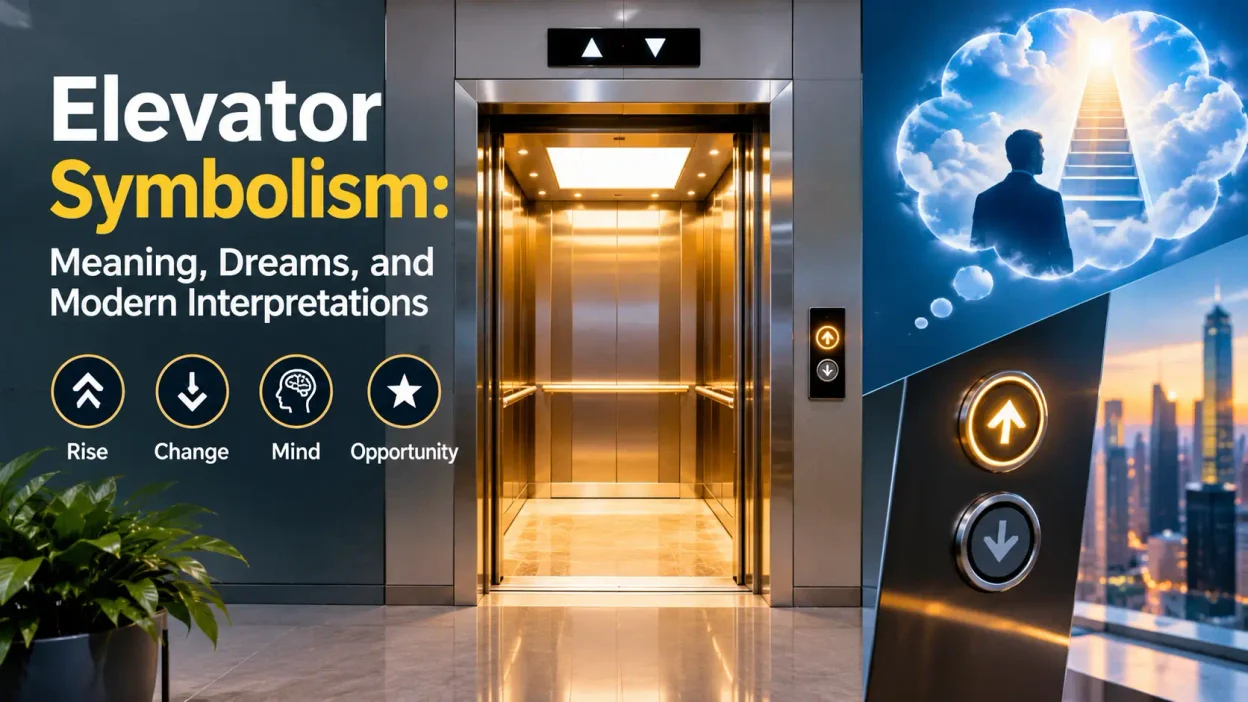
Elevators are everyday machines that move people between floors, but their symbolic meaning often goes beyond transportation. Elevator symbolism commonly connects with progress, ambition, changing circumstances, and the feeling of moving from one stage of life to another. Because elevators travel upward and downward, they can also represent success, setbacks, uncertainty, and changes in personal direction.
In American culture, elevators are familiar features of office buildings, hotels, apartment complexes, hospitals, shopping centers, and skyscrapers. Their presence in everyday life makes them useful symbols in movies, literature, dreams, advertising, and personal conversations.
An elevator journey also creates a recognizable experience: entering a confined space, choosing a destination, waiting, and eventually arriving somewhere different. These details help explain why elevators are often used to represent the choices, opportunities, and circumstances that shape people’s lives.
Quick Answer
Elevator symbolism commonly represents personal progress, ambition, life transitions, and changing levels of success in modern American culture. Going upward may suggest achievement or improvement, while descending can represent reflection, setbacks, or exploring less familiar aspects of life.
TL;DR
- Upward movement: Ambition, achievement, and personal advancement.
- Downward movement: Reflection, uncertainty, or changing priorities.
- Life transitions: Moving between different stages or circumstances.
- Loss of control: Dependence on situations or decisions beyond your influence.
- American culture: Connected with skyscrapers, business success, and social mobility.
- Dream interpretation: Often reflects emotions about progress, pressure, and direction.
What Does an Elevator Symbolize?
An elevator can symbolize movement between different levels of experience, achievement, responsibility, or personal development. Its direction and destination often shape the interpretation.
An elevator moving upward is commonly associated with progress. It can represent a promotion, reaching a goal, gaining recognition, or improving one’s circumstances. In a workplace setting, it may suggest professional ambition or the desire to advance.
A descending elevator can represent a different kind of movement. It may suggest reconsidering priorities, returning to earlier experiences, or facing issues that have been avoided. Going down does not automatically mean failure; sometimes it represents necessary reflection.
The elevator itself can also represent the process of transition. Unlike walking up stairs, riding an elevator involves allowing a mechanism to carry you toward a destination. This can symbolize trust, dependence, patience, or uncertainty about how a situation will develop.
The Historical Origins of Elevator Symbolism
The symbolic meaning of elevators developed alongside their practical importance in modern cities. Before passenger elevators became common, reaching the upper floors of tall buildings required climbing stairs. As buildings grew taller during the nineteenth century, elevators helped make vertical architecture practical for everyday use.
The introduction of safer passenger elevator systems, particularly following Elisha Otis’s famous safety demonstration in 1854, helped change public confidence in vertical transportation. Commercial buildings, hotels, and department stores increasingly adopted elevators as urban architecture developed.
In the United States, elevators became closely connected with skyscrapers and the growth of major cities. They made upper floors more accessible and helped transform how people worked, lived, shopped, and conducted business.
This practical change also created symbolic associations. Higher floors became connected with prestige, desirable views, executive offices, and professional status. The elevator consequently became an image of upward mobility and modern achievement.
Its meaning was not created by one ancient religious tradition or universal belief. Instead, elevator symbolism largely emerged from modern technology, architecture, social expectations, and popular culture.
What Going Up in an Elevator Represents
An elevator moving upward is one of the clearest visual representations of progress. In everyday American language, people often describe professional advancement as moving up the ladder or climbing to the next level.
This association makes upward elevator movement especially relevant to career ambitions. Someone entering an elevator in a corporate skyscraper may be visually associated with professional growth, authority, or the pursuit of success.
Upward movement can also represent personal improvement outside the workplace. It may suggest developing confidence, learning new skills, reaching a milestone, or overcoming a difficult period.
However, upward movement does not always represent positive change. In a suspense film, an elevator climbing toward an unfamiliar floor may create anxiety. The same direction that suggests success in one situation can represent approaching danger or an uncertain experience in another.
The surrounding context determines whether upward movement feels exciting, threatening, or simply necessary.
What Going Down in an Elevator Represents
A descending elevator often represents movement toward something less visible, familiar, or comfortable. In storytelling and visual imagery, going underground or entering lower floors can suggest secrets, hidden problems, private thoughts, or unexplored experiences.
In personal symbolism, downward movement may represent taking time to reflect rather than constantly pursuing achievement. It can suggest reconsidering a decision, examining past experiences, or recognizing that progress sometimes requires stepping back.
The meaning also depends on the destination. Going down to a parking garage is an ordinary part of daily life, while descending into a dark basement in a thriller can create tension.
In some situations, downward movement may represent disappointment or a loss of status. For example, a person who experiences a professional setback might associate a descending elevator with declining expectations.
Still, going down should not automatically be interpreted as something negative. It can represent rest, preparation, grounding, or a necessary change in direction.
Elevator Symbolism in American Culture
In the United States, elevators have a strong relationship with urban development, business culture, and social mobility. The country’s skyscrapers have made vertical movement a familiar visual language for success and professional ambition.
In cities such as New York and Chicago, elevators are essential parts of office towers, hotels, residential buildings, and commercial spaces. Their movement between floors reflects the organization of modern urban life.
Elevators also appear in American workplace imagery. An executive elevator, for example, may suggest authority or exclusivity, while a crowded office elevator can represent the routine pressures of professional life.
The expression of moving up in the world reinforces this association. A person who receives a promotion or achieves a major financial goal may be described as moving to a higher level.
At the same time, elevators can represent differences in access and opportunity. Not everyone has equal access to prestigious workplaces, expensive buildings, or the opportunities associated with higher social positions. This makes the elevator a useful image for discussing economic mobility and social hierarchy.
Elevator Symbolism in Dreams
Elevators are common subjects in dream interpretation because they involve movement, destinations, waiting, and control. People sometimes connect elevator dreams with changes in their careers, relationships, personal goals, or emotional circumstances.
However, there is no scientifically established universal meaning for a particular elevator dream. Dreams are influenced by personal experiences, memories, stress, and individual associations.
The emotions experienced during the dream are often more useful than the elevator’s direction alone.
For example, an elevator moving smoothly upward may reflect confidence about an upcoming opportunity. A rapidly falling elevator may reflect anxiety about losing control, although it does not predict that something bad will happen.
An elevator that refuses to reach the selected floor may reflect frustration with delays or obstacles. Someone waiting for a promotion, relationship decision, or important result might recognize this feeling.
The following interpretations are common symbolic associations rather than fixed psychological rules.
Common Elevator Dream Scenarios and Their Meanings
Different elevator situations can suggest different emotional experiences. The details surrounding the journey often provide more context than the movement itself.
- Riding an elevator upward: May represent ambition, confidence, or progress toward a personal goal.
- Riding an elevator downward: Can suggest reflection, changing priorities, or concerns about a setback.
- An elevator falling: Often represents anxiety, instability, or fear of losing control.
- An elevator stuck between floors: May reflect feeling trapped, delayed, or uncertain about a decision.
- Missing an elevator: Can symbolize concerns about missed opportunities or timing.
- Entering an unfamiliar elevator: May represent approaching a new situation without knowing what to expect.
- An elevator with broken controls: Can suggest frustration with limited choices or dependence on other people.
For a more personal interpretation, consider what was happening in your life when you had the dream. A stressful work situation may create different associations from a major relationship change.
The Emotional and Psychological Meaning of Elevators
Elevators create a particular emotional experience because passengers temporarily surrender some control over their movement. They choose a floor, press a button, and wait for the machine to complete the journey.
This experience can symbolize dependence on circumstances, patience, or trust in a process. Someone waiting for an important decision may relate to the feeling of being inside an elevator without knowing exactly when the doors will open.
The enclosed space can also represent vulnerability. Unlike walking through an open hallway, riding an elevator places people in a small shared environment where movement is restricted.
For some individuals, elevators may also bring feelings of discomfort or claustrophobia. In symbolic storytelling, this makes them effective settings for exploring anxiety, isolation, and uncertainty.
On the positive side, reaching the selected floor can create a sense of arrival. It provides a simple image of completing a stage and becoming ready for what comes next.
Elevators as Symbols of Social Status and Success
Elevators are frequently associated with social position because modern buildings often organize spaces vertically. In many office towers, upper floors contain executive offices, conference rooms, or premium business facilities.
This arrangement has helped create the association between height and status. A person traveling to a prestigious upper-floor office may be portrayed as someone who has achieved professional success.
The idea also appears in entertainment and advertising. A glass elevator overlooking a city can suggest wealth, influence, and access to exclusive spaces.
Yet the symbolism has another side. Service elevators, freight elevators, and restricted-access elevators reveal how buildings separate different functions and groups of workers. These differences can make elevators symbols of social hierarchy rather than achievement alone.
The elevator therefore represents both the possibility of advancement and the structures that determine who receives access to particular opportunities.
Elevator Symbolism in Movies, Literature, and Popular Culture
Elevators are especially useful in films and television because they create suspense within a small space. The doors close, movement begins, and characters are temporarily separated from the outside world.
In thrillers and horror stories, an elevator may stop unexpectedly, open onto an unfamiliar floor, or move without anyone controlling it. These situations create uncertainty because passengers cannot easily leave or understand what is happening.
In romantic comedies and workplace dramas, elevators often create brief encounters between characters. Two people who might never interact otherwise are placed together during a short journey.
Elevators can also represent social change in literature. A character moving from a basement to a penthouse may reflect a shift in economic position, authority, or personal circumstances.
Their meaning is flexible because almost everyone understands the basic experience of entering, traveling, waiting, and arriving.
What a Broken or Stuck Elevator Symbolizes
A broken or stuck elevator commonly represents interruption, frustration, or a lack of control. It creates a situation in which movement becomes impossible even though the destination remains clear.
In everyday symbolic interpretation, this can relate to delayed plans, workplace obstacles, relationship difficulties, or uncertainty about the future.
An elevator stuck between floors is particularly effective as a metaphor for being between two stages of life. Someone leaving an old job but not yet starting a new one may feel neither fully settled nor completely ready for what comes next.
A malfunctioning elevator can also represent dependence on systems or people that are not functioning as expected. For example, a project may be delayed because a decision-maker has not responded or an essential resource is unavailable.
In stories, a broken elevator often increases tension by removing the characters’ ability to choose where they go. Its symbolic meaning comes from the contrast between having a destination and being unable to reach it.
Elevator Symbolism in Relationships and Personal Life
In relationships, elevators can represent changes in emotional closeness, communication, and shared direction. Two people traveling together may symbolize a relationship developing through similar experiences or working toward a common goal.
An elevator moving upward may suggest that a relationship is improving, becoming more stable, or reaching a new stage. This could include moving in together, getting engaged, or developing greater trust.
A descending elevator may represent emotional distance, unresolved disagreements, or a period of reconsideration. However, it can also suggest the need to discuss difficult subjects rather than avoid them.
An elevator that stops between floors may reflect uncertainty about where a relationship is heading. It can represent a situation in which neither person wants to move forward or return to the way things were.
These interpretations are not predictions. They are ways of using a familiar experience to describe complicated emotional situations.
Elevator Symbolism and Life Transitions
One of the most practical meanings of an elevator is the movement from one stage of life to another. Each floor represents a different destination, and the journey between them provides a natural comparison with personal change.
Graduating from college, beginning a new career, moving to another city, or becoming a parent can all feel like entering a new level of life.
The elevator also represents the time between decisions and results. Someone waiting for a job offer, preparing for retirement, or adjusting to a major change may identify with the uncertainty of traveling toward an unknown floor.
Unlike stairs, an elevator does not require passengers to make each step themselves. This detail can symbolize situations in which outside circumstances, opportunities, or other people influence the direction of life.
The important distinction is that reaching a new level does not always mean reaching a better one. Sometimes a transition is valuable because it brings a person closer to what they genuinely need.
Cultural Differences in Elevator Symbolism
Elevators do not have one established meaning across all cultures. Their interpretations are largely shaped by modern architecture, technology, social structures, and the way people use buildings.
In the United States, vertical movement is frequently connected with professional advancement and the country’s skyscraper culture. In other urban societies, similar associations may exist, but the emotional meaning can depend on local architecture and social expectations.
In literature and visual storytelling, elevators can also represent boundaries between public and private spaces. A journey from a crowded lobby to a private apartment, for example, can suggest a movement away from public responsibilities toward personal life.
Unlike flowers, religious objects, or ancient mythological figures, elevators do not have a single widely recognized sacred meaning across major religious traditions. Their symbolism is primarily modern and contextual.
Recognizing this distinction helps prevent ordinary interpretations from being presented as ancient cultural beliefs.
Common Misunderstandings About Elevator Symbolism
Several simplified interpretations can make elevator symbolism seem more predictable than it really is.
Going up does not always mean success. In a suspense story, an elevator traveling upward may take someone toward danger or an unfamiliar situation.
Going down does not automatically mean failure. Descending can represent reflection, rest, exploration, or a necessary return to unresolved matters.
A falling elevator is not a prediction. Dreams involving falling elevators may reflect personal anxiety, but they do not establish that an accident or setback will happen.
Every elevator dream is not about career progress. Relationships, family circumstances, personal confidence, and everyday stress can influence the way someone experiences elevator imagery.
Elevators do not have a universal ancient spiritual meaning. Most of their symbolic associations developed alongside modern buildings and transportation technology.
The most reasonable interpretation considers the situation, emotional atmosphere, and personal experiences connected with the image.
FAQs
What does an elevator symbolize spiritually?
An elevator can represent movement between stages of personal awareness, reflection, or spiritual development. These are modern symbolic interpretations rather than established meanings shared by all religious traditions.
What does going up in an elevator mean symbolically?
Going up commonly represents progress, ambition, achievement, and new opportunities. Depending on the situation, it may also represent approaching unfamiliar responsibilities or expectations.
What does a falling elevator symbolize in a dream?
A falling elevator may represent anxiety, instability, or fear of losing control over an important situation. It should not be treated as a prediction of an actual accident or future failure.
What does a stuck elevator mean spiritually?
A stuck elevator may symbolize feeling trapped between two decisions or experiencing a delay during a period of change. It can encourage reflection on what is preventing progress.
Are elevators symbols of success?
Yes, elevators are often associated with achievement and social advancement, especially in American business culture. Their connection with skyscrapers and prestigious upper floors reinforces the idea of moving up in the world.
What does dreaming about missing an elevator mean?
Missing an elevator may symbolize concerns about timing, opportunities, or being left behind while others move forward. The interpretation depends on whether the dream creates feelings of disappointment, urgency, or relief.
Is elevator symbolism positive or negative?
Elevator symbolism can be positive or negative depending on its direction, condition, destination, and surrounding circumstances. Smooth upward movement often suggests progress, while a malfunctioning elevator may represent uncertainty or frustration.
Conclusion
Elevator symbolism represents progress, ambition, life transitions, uncertainty, and the changing circumstances that influence personal experiences. In modern American culture, elevators are especially connected with professional advancement, social mobility, and the movement between different stages of life.
Their meaning becomes more personal in dreams, films, relationships, and everyday situations. An elevator moving upward may suggest achievement, while one moving downward can represent reflection or a change in priorities. Neither direction has to be interpreted as entirely positive or negative.
Ultimately, an elevator is a reminder that reaching a destination is only one part of a journey. The direction people choose, the circumstances they encounter, and what they discover along the way all help define where they are going.